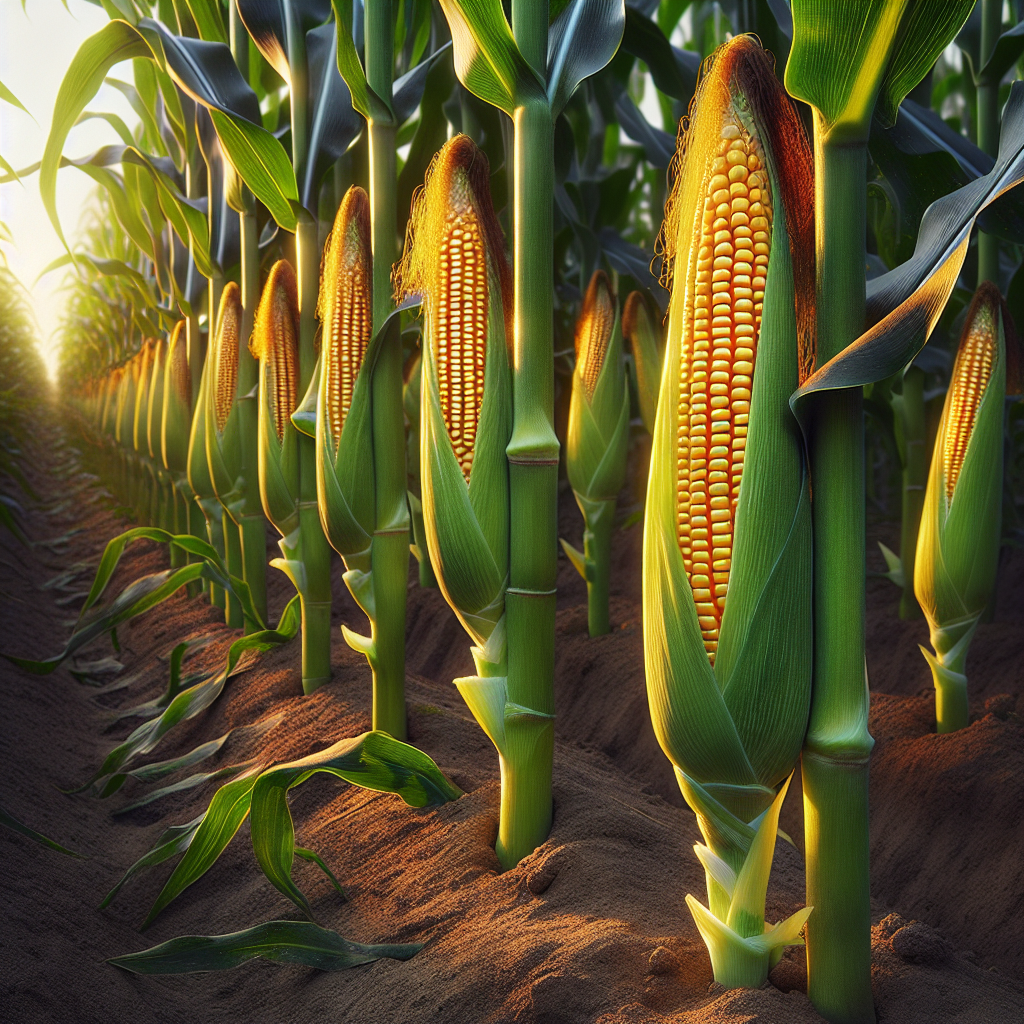
Introduction to Incredible Sweet Corn
A classic main-season sweet corn variety, this cultivar is widely valued for combining old-fashioned corn flavor with improved sweetness, strong seedling vigor, and dependable ear fill. It is generally considered a sugary-enhanced, or se, type sweet corn, which means it is sweeter than standard sugary sweet corn but usually more tender and less sharply sugary than supersweet sh2 types. For many growers, that balance is exactly the appeal: robust field performance, attractive ears, creamy kernels, and a harvest quality that suits both home use and roadside sales.
Plants are typically tall, sturdy, and productive, often producing well-filled ears around 8 to 9 inches long with 16 to 18 kernel rows under favorable conditions. Maturity is commonly around 82 to 85 days from seeding, placing it in the midseason category. Its adaptability has made it especially popular across temperate regions where spring soils warm reasonably well and summer heat is adequate for full ear development.
Compared with fragile supersweet lines, this cultivar tends to emerge more reliably in less-than-perfect conditions, although it still benefits enormously from warm soil and even moisture. If you want a broad overview of maize growth habit and crop biology, see our Corn guide. For better bed preparation and long-term fertility, growers may also benefit from soil health strategies.
Botanical Profile of Incredible Sweet Corn
This crop belongs to the grass family, Poaceae, and is a warm-season annual monocot. Like all sweet corn, it is a selected form of maize harvested at the immature kernel stage, when sugars are still high and starch conversion has not yet progressed too far. The sweet eating quality comes from mutations affecting carbohydrate metabolism in the endosperm. In sugary-enhanced types, sweetness and tenderness are elevated while maintaining stronger emergence and a somewhat broader harvest window than many supersweets.
Growth begins with a fibrous root system that rapidly expands in the upper soil profile, though nodal roots later anchor plants more deeply. Early root growth is sensitive to cold, compaction, and oxygen-poor soils. Above ground, plants produce a central stalk composed of nodes and internodes, with broad linear leaves emerging alternately. Each leaf contributes heavily to photosynthesis, so damage from hail, wind shredding, nutrient deficiency, or foliar disease can directly reduce ear size and kernel fill.
Corn is monoecious, meaning male and female flowers occur separately on the same plant. The tassel at the top produces pollen, while the ear forms in leaf axils along the stalk. Each silk is attached to a single ovule, so complete pollination requires pollen grains to land on and fertilize each silk individually. This is why poor pollination causes patchy ears with missing kernels. Heat stress, drought during silking, and isolated single-row plantings are all common reasons for incomplete fill.
Incredible is known for relatively strong stalks, good husk cover, and attractive ears. Husk cover matters because it helps reduce bird feeding, insect entry, and sunscald of the ear tip. The cultivar's eating quality is often described as rich, sweet, and tender without becoming watery. Because it is not an sh2 supersweet type, postharvest sugar-to-starch conversion is faster, so harvest timing and rapid cooling are important for best flavor.
Soil, pH, and Climate Requirements for Incredible Sweet Corn
This cultivar performs best in deep, fertile, well-drained loam or sandy loam with high organic matter and good moisture-holding capacity. The ideal soil pH is 6.0 to 6.8, though a workable range of about 5.8 to 7.2 is possible if nutrients are well managed. Below pH 5.8, phosphorus availability often declines and root growth may be impaired. Above pH 7.2, certain micronutrients, especially zinc, manganese, and iron, can become less available, leading to striping or chlorosis.
Soil structure matters as much as fertility. Sweet corn roots need oxygen. In compacted ground, roots remain shallow, plants become uneven, and the crop becomes far more vulnerable to drought stress during tasseling. Avoid planting where water stands for more than 24 hours after rain. Saturated conditions can trigger seed rot, poor emergence, and weak purple-tinged seedlings due to restricted phosphorus uptake in cold, wet soil.
Target a pre-plant soil organic matter level that allows steady water retention without creating a boggy seed zone. A friable seedbed with fine aggregates on top and firm soil beneath is ideal. Seed needs close contact with moisture, but not a crusted, sealed surface. On heavier clay soils, raised beds or ridged rows often improve drainage and early warming.
Temperature is a major driver of success. Seed germinates best when soil temperatures are 65 to 86°F (18 to 30°C). While corn can technically germinate around 50°F (10°C), emergence is slower and disease risk rises sharply. Wait until the top 2 inches of soil consistently reach at least 60°F (16°C), with warmer conditions preferred for faster, more uniform stands.
Air temperature requirements are similarly warm. Optimal vegetative growth generally occurs around 75 to 86°F (24 to 30°C). Sustained temperatures above 95°F (35°C), especially during pollination, can reduce pollen viability and silk receptivity. Cool nights are acceptable, but prolonged chilly weather slows nutrient uptake and leaf expansion.
Incredible Sweet Corn needs full sun, ideally 8 or more hours daily. Even modest shading reduces sugar accumulation and ear size. Wind exposure should also be considered. Moderate airflow helps dry foliage and limit disease, but very exposed sites can lodge tall plants, especially if nitrogen is excessive or stalks are shallow-rooted from frequent light irrigation.
Moisture demand increases dramatically as plants approach tasseling. The crop generally needs 1 to 1.5 inches of water per week, but not all weeks are equal. During germination and early establishment, the top 3 to 4 inches of soil should remain evenly moist, never dusty-dry and never sticky-saturated. During tasseling, silking, and ear fill, soil moisture should be especially stable in the root zone down to 8 to 12 inches. If plants roll leaves by midmorning rather than during late afternoon heat only, moisture stress is already affecting yield.
Step-by-Step Planting & Propagation
This crop is propagated by seed and is almost always direct sown. Transplanting is possible but not ideal because corn roots dislike disturbance and often pause after setting out, resulting in uneven stands and delayed maturity.
- Choose an isolated block planting rather than a single long row. Corn is wind-pollinated, so plant in blocks of at least 4 short rows for good kernel set.
- Prepare the bed 2 to 3 weeks before sowing. Incorporate finished compost and base fertility according to soil test recommendations. Avoid adding uncomposted high-carbon residue immediately before planting because it can immobilize nitrogen.
- Create a smooth, weed-free seedbed. Break clods and avoid overly fluffy soil that dries quickly.
- Sow only after frost danger has passed and the soil is warm. For succession harvests, sow additional blocks every 10 to 14 days within your planting window.
- Plant seed 1 to 1.5 inches deep in cool or medium soils, and up to 2 inches deep in sandy soils or if the surface dries rapidly.
- Space seeds 8 to 12 inches apart in rows 30 to 36 inches apart. For intensive garden blocks, many growers use 10 to 12 inches between plants in all directions within a square block, provided fertility and irrigation are excellent.
- Thin weak doubles after emergence to maintain uniform spacing. Crowding leads to smaller ears and weaker stalks.
- Water immediately after planting to settle the seed zone, then keep the upper soil evenly moist until emergence.
A realistic stand target for high-quality sweet corn is about 14,000 to 22,000 plants per acre in lower-input systems and somewhat higher under excellent fertility and irrigation, though overly dense stands can reduce ear size. For home gardens, uniformity matters more than maximum density.
If planting near other corn types, isolate by distance or timing to avoid cross-pollination that can affect eating quality. Isolation of at least 250 feet is useful in small-scale production, though more is better. A 2- to 3-week difference in pollination timing can also reduce crossing.
Care & Maintenance regimes for Incredible Sweet Corn
Fertility management should be deliberate because sweet corn is a heavy feeder, especially for nitrogen. A soil test is the best guide, but in general the crop needs moderate phosphorus and potassium with a strong, staged nitrogen program. Avoid front-loading all nitrogen before planting. A common professional approach is to apply 25 to 40 percent pre-plant and side-dress the rest when plants are 8 to 12 inches tall and again just before rapid stalk elongation if needed.
Nitrogen deficiency appears first as pale green color and older leaves yellowing from the tip along the midrib in a V-shaped pattern. Severe deficiency causes stunting and small ears. Excess nitrogen creates lush, dark growth, delayed maturity, and increased lodging risk. With sweet corn, excessive vegetative growth can also worsen insect pressure in dense canopies.
Irrigation is most effective when deep and infrequent enough to encourage rooting, but frequent enough to prevent stress during key stages. As a field rule, keep moisture consistent in the top 8 inches during early growth, then in the top 12 inches from knee-high stage through ear fill. Drip irrigation can work well, but because corn is often closely spaced, overhead or furrow irrigation is also common. If using drip, install enough lines to wet the full row area rather than a narrow strip.
Watch the plants closely for water stress signals. Mild afternoon leaf rolling that resolves by evening can occur in high heat; persistent rolling by morning indicates meaningful stress. Dull, bluish-green foliage often precedes serious drought effects. On the other hand, overwatered corn may appear yellowish, slow-growing, and weak-rooted, with leaves losing sheen and lower stalk bases staying constantly wet. In saturated soils, plants may wilt despite excess water because roots cannot respire.
Mulching is optional but can help in garden-scale production. Apply only after the soil is warm. Organic mulch suppresses weeds and stabilizes moisture, but keep it from piling tightly against stems in humid climates where stalk rot risk is present.
Weed control is critical during the first 4 to 6 weeks. Corn is a poor competitor when young. Shallow hoeing is effective, but do not cultivate deeply once brace and feeder roots spread into row middles. Hill soil lightly around the base of plants when 12 to 18 inches tall if anchorage is needed, but do not bury lower leaves excessively.
Because pollination determines marketable quality, the period from tassel emergence through silk browning is the most sensitive management window. Prevent any interruption from drought, nutrient shortage, or severe insect attack during this stage. Avoid broad handling or shaking wet plants in humid weather, which can spread disease.
Pests, Diseases & Organic Management
The most common insect problem is Corn earworm, whose larvae enter through the silk channel and feed on kernel tips. Early planting can reduce exposure in some regions because later moth flights are often heavier. Mineral oil applications to silk channels are sometimes used on small plantings, but timing must be precise after pollination begins. Bacillus thuringiensis products can help when directed at young larvae, though coverage is challenging.
European corn borer and related Stalk-boring caterpillars can tunnel into stalks and ears, causing breakage and reducing plant vigor. Remove and destroy infested residues after harvest to reduce overwintering populations. Fall tillage or residue chopping may help where these pests are established.
Sap-feeding pests such as Aphids can cluster on tassels or undersides of leaves. Heavy populations produce sticky honeydew and can interfere with silk health. Encourage beneficial insects and avoid excess nitrogen that promotes lush, attractive growth. Strong water sprays may suppress minor infestations.
Seedcorn maggot and Wireworms can damage germinating seed, especially in cool, wet soils rich in fresh organic matter. This is another reason to plant into warm, biologically active ground and avoid burying raw manure before sowing.
Raccoons, Birds, and Deer can devastate maturing sweet corn. Good husk cover helps, but physical exclusion is often the only reliable solution. Electric fencing is especially effective for Raccoons and Deer in small plantings.
Common diseases include Common rust, Northern corn leaf blight, Stewart's wilt in some areas, Smut, and a range of Seedling blights. Disease severity depends on weather, field history, residue management, and varietal tolerance. Sweet corn generally benefits from full sun, balanced spacing, and irrigation timed to reduce prolonged leaf wetness.
Common rust appears as cinnamon-brown pustules on leaves. Severe infection reduces photosynthetic area. Northern corn leaf blight produces elongated gray-green lesions that expand in humid conditions. Smut causes swollen, silvery galls on ears, tassels, or stalk tissue. Remove galls before they rupture if you want to limit spore spread, though eradication is unrealistic once established.
Organic disease management starts with crop rotation. Avoid planting corn in the same location more than once every 2 to 3 years when possible. Rotate with non-grass crops. Remove heavily infected debris, manage weeds that host pests, and keep nutrition balanced. Excess nitrogen without adequate potassium can predispose plants to weak tissue and greater disease pressure.
Harvesting, Curing & Optimal Storage
Sweet corn is harvested in the milk stage, not at physiological maturity. Timing is everything. Ears are usually ready about 18 to 24 days after silk emergence, depending on weather. Fresh green husks, plump ear tips, and silks that have turned brown and dry are practical indicators. The best confirmation is the kernel test: puncture a kernel on the side of the ear. If the fluid is watery, it is too early; if it is creamy and milky, harvest now; if it is doughy, quality is declining.
Pick in the cool morning when field heat is lowest. Grasp the ear, twist downward, and snap cleanly from the stalk without tearing the plant. Handle gently because bruised kernels lose quality rapidly.
Unlike dry grain corn, there is no curing phase for sweet corn intended for fresh eating. The goal is immediate cooling. Sugars begin converting to starch as soon as the ear is picked, and this is especially noticeable in non-supersweet types. Cool harvested ears as fast as possible to near 32 to 36°F (0 to 2°C) with very high humidity, ideally 95 percent or higher. Hydrocooling or refrigerated storage preserves tenderness and sweetness far better than leaving ears at ambient temperature.
For home storage, keep ears unshucked in perforated bags or high-humidity crisper conditions and use within 1 to 3 days for top quality, though they may remain acceptable for about 5 to 7 days if well chilled. If you intend to freeze, blanch promptly after harvest. Peak flavor is always closest to picking time.
If saving seed, do not use isolated fresh-harvest ears. Seed saving requires full maturity on the stalk, genetic isolation, and understanding that hybrid offspring will not come true to type. In commercial and home production alike, this variety is usually grown from purchased seed each season.
Companion Planting for Incredible Sweet Corn
The most time-tested partnership is the traditional "Three Sisters" style pattern, where corn provides support, legumes contribute nitrogen, and sprawling cucurbits shade the soil. For practical modern gardens, the best companions are often Soybeans, Peas, and Squash. Legumes can modestly improve system diversity and help occupy surrounding space, while squash acts as a living mulch that suppresses weeds and reduces soil moisture loss.
Sunflower can also function as a useful biodiversity companion nearby, though it should not be packed tightly into the corn block where competition for light and nutrients may increase. Insectary flowers at the perimeter may help beneficial insects, but avoid creating excessive shade or airflow restriction.
Good companions are not only about pest deterrence. They should fit the corn's water demand, root depth, and harvest logistics. Low, spreading companions work better than tall aggressive crops that compete with tasseling plants. Avoid placing heavy feeders too close to the row unless fertility is excellent. Also avoid companions that make cultivation difficult during the first month, when weed control is most important.
In field-scale production, companion planting is often less useful than clean rotations and edge habitat management. In gardens and diversified farms, however, combining corn with legumes and ground-covering vines can create a more resilient planting so long as spacing remains generous and the corn is never shaded during early growth.