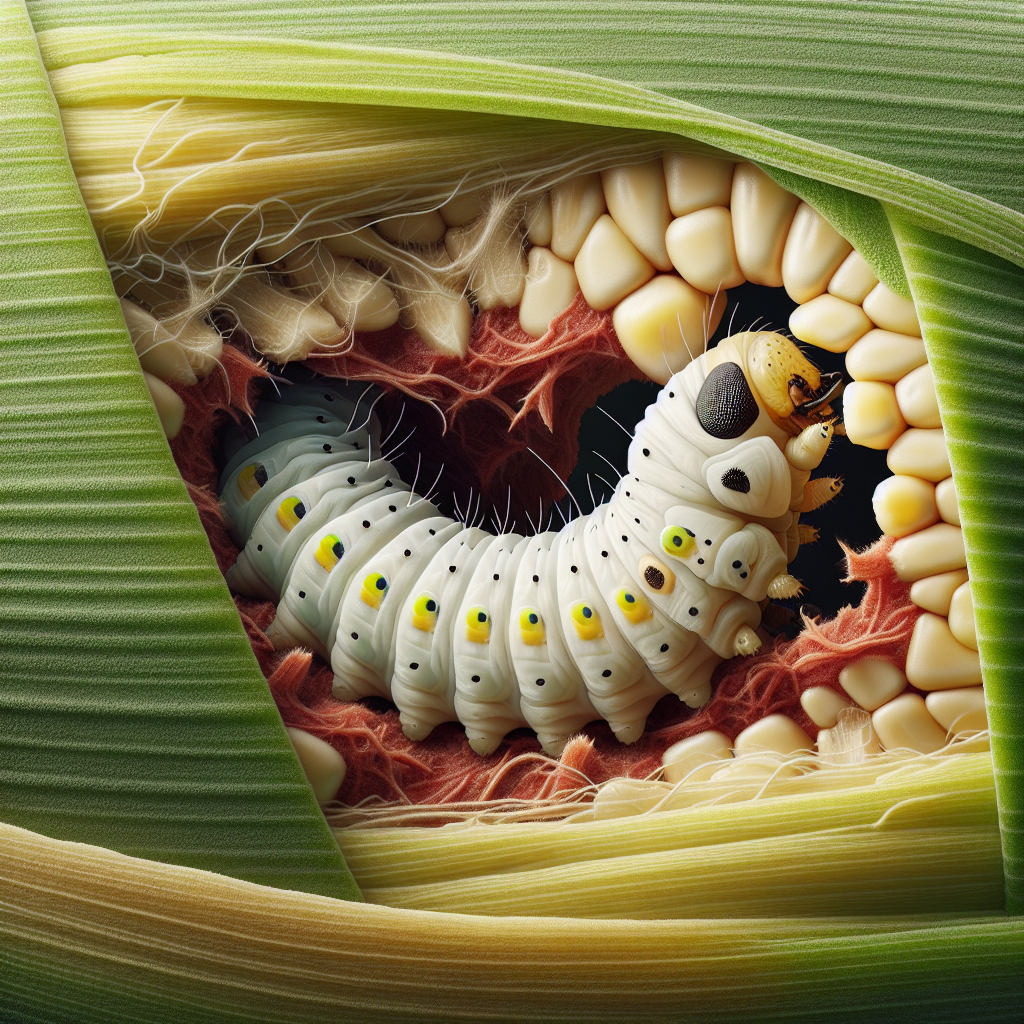
Introduction to Stalk-boring caterpillars
Stalk-boring caterpillars represent one of the most insidious threats to global agriculture, particularly in cereal and grass crops. These pests, primarily the larvae of nocturnal moths from families like Crambidae and Noctuidae, bore into plant stalks, disrupting nutrient and water transport while creating entry points for pathogens. Common culprits include the European Corn Borer (Ostrinia nubilalis), Asian corn borer (Ostrinia furnacalis), maize stalk borer (Busseola fusca), and spotted stem borer (Chilo sacchariphagus). Their damage leads to weakened stems, ear drop, and yield losses up to 80% in severe infestations, costing farmers billions annually.
Understanding stalk-boring caterpillars is crucial for sustainable farming. These pests thrive in warm, humid environments and can complete multiple generations per season, amplifying their impact. Early identification and integrated management are key to minimizing economic losses. This definitive guide equips growers with professional-grade diagnostics, lifecycle knowledge, organic treatments, and prevention strategies tailored for small to large-scale operations. For real-world insights, check out this Spring Pest Patrol on proactive defense.
Identifying Symptoms & Damage
Diagnosing stalk-boring caterpillar infestations requires keen observation of both external and internal plant symptoms. Early signs include small, round 'entry holes' (1-3 mm diameter) at the base or mid-stem, often surrounded by reddish-brown frass (insect excrement resembling sawdust). Stems may show wilting, yellowing, or 'dead heart' in young plants where the growing point is destroyed, causing tillers to die back.
As larvae tunnel deeper, stalks become brittle, leading to lodging—plants falling over in wind or rain. Split open affected stems to confirm: creamy-white to pinkish caterpillars (10-30 mm long) with dark heads and spots, feeding inside vascular tissue. Secondary damage includes bacterial or fungal infections like stalk rots, oozing sap, or discoloration. Ears or panicles may drop prematurely due to weakened peduncles.
Damage severity varies by crop stage: vegetative phase hits tillering; reproductive phase affects grain fill. Scout weekly from seedling stage, checking 20-25 plants per 100 m². Differentiate from cutworms (surface chewers) or stem borers (similar but often in rice). Use a knife to longitudinally split stems—live larvae confirm active infestation. Economic thresholds: 10-20% plants with entry holes or 1-2 larvae per plant in corn.
Lifecycle and Progression of Stalk-boring caterpillars
Stalk-boring caterpillars undergo complete metamorphosis: egg, larva (6-8 instars), pupa, adult moth. Females lay 100-500 flattened, scale-like eggs in clusters on leaf undersides or whorls, hatching in 3-7 days. Larvae (1-4 weeks) bore into whorls then stalks, overwintering as mature larvae or pupae in crop residue.
Pupation occurs in stalks or soil (7-14 days), emerging as small (20-40 mm wingspan) beige-brown moths with zigzag wing patterns. In tropical regions, 4-8 generations/year; temperate areas, 1-3. Peak activity aligns with crop growth: eggs in V4-V8 corn stages, larvae during tasseling. Diapause in cool weather allows survival.
Monitoring pheromone traps tracks adult flights; dissect 10-20 stalks weekly for larvae counts. Lifecycle duration: 30-60 days at 25-30°C. Understanding progression enables timed interventions, like targeting neonate larvae before boring.
Environmental Triggers & Risk Factors
Warm temperatures (24-32°C) and high humidity (>70%) accelerate development, with optimal egg hatch at 27°C. Monsoon seasons in Asia/Africa trigger outbreaks in rice and sorghum. Continuous monocropping, late planting, and excessive nitrogen promote lush growth attractive to moths.
Risk factors include crop residues harboring pupae, adjacent weed hosts (e.g., Johnson grass), and drought-stressed plants with thinner stalks. No-till fields without residue management see 2-3x higher populations. Migratory adults spread from wild grasses. Climate change extends generations northward, per IPM studies. Mitigate by crop rotation and balanced fertility.
Organic Control & Treatment Plans
Organic management emphasizes IPM: cultural, biological, and mechanical tactics over synthetics. Cultural: Destroy residues post-harvest by deep plowing (20-30 cm) to expose pupae to predators/sun. Rotate with non-hosts like soybeans or legumes (2-3 years). Plant early-maturing varieties resistant to boring (e.g., Bt hybrids where certified organic).
Biological: Release Trichogramma wasps (egg parasitoids) at 20,000-40,000/ha weekly during egg-lay peaks—80% parasitism possible. Bacillus thuringiensis (Bt) kurstaki sprays (2-5 L/ha) target young larvae; apply evenings to leaf whorls with 100-200 L water/ha. Neem oil (azadirachtin 0.03%) disrupts hormones; 3-5 applications at 7-10 day intervals.
Mechanical: Pheromone traps (10-20/ha) for monitoring/mass-trapping. Hand-pick and destroy egg masses/larvae in small fields. Whorl-stage applications of spinosad (organic-approved) at 100-200 ml/ha. Scout-based: treat if >15% whorls infested. Integrate with armyworms controls for synergism. Success rates: 60-90% yield protection.
Preventing Stalk-boring caterpillars in the Future
Prevention is the cornerstone of long-term control. Implement 3-year rotations: cereals with potato, legumes, or brassicas to break lifecycle. Use certified clean seed; avoid infested transplants. Plant refuges (20% non-Bt) near Bt fields for natural enemies.
Timing: Sow early to avoid peak moth flights; use degree-day models (base 10°C) for predictions. Fertilize balanced (N <120 kg/ha) to avoid succulent tissue. Trap crops like Sudan grass border rows divert moths. Encourage predators: birds, ants, spiders via hedgerows. Post-harvest, shred/flail residues and till. Monitor with apps or sticky traps. Resistant varieties (e.g., corn hybrids with tight husks) reduce boring by 50%. Annual scouting prevents buildup.
Crops Most Affected by Stalk-boring caterpillars
Stalk-borers devastate Gramineae family: corn (20-80% losses), rice, wheat, sorghum, sugarcane, millet, barley. Corn suffers stalk breakage, ear rots; rice shows 'dead hearts,' whiteheads. Sorghum yields drop 30-50% from panicle exertion failure. Emerging threats in sweet corn and turf grasses. Tropical staples like maize in Africa/Asia hit hardest; temperate corn in US/Europe by European borer. Link to corn borers wiki for specifics.