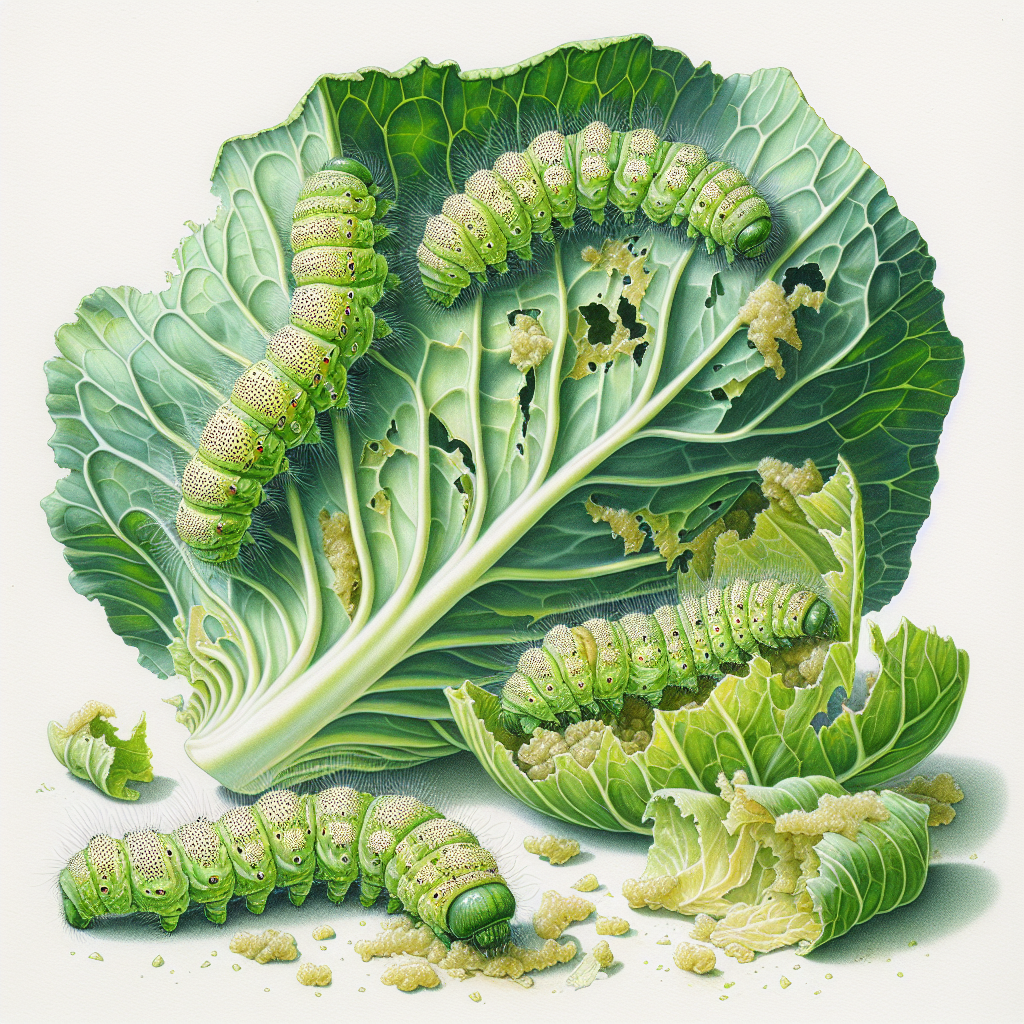
Introduction to imported cabbage white larvae
Imported cabbage white larvae, the immature stage of the small white butterfly (Pieris rapae), represent one of the most notorious pests in vegetable gardens and commercial brassica fields worldwide. Native to Europe, this invasive species arrived in North America in the late 19th century and has since proliferated across temperate regions, causing significant economic losses estimated at millions annually in crop damage. These velvety green caterpillars with faint yellow dorsal lines and black spots are voracious feeders, capable of defoliating entire plants in days, leaving only tough veins behind.
Adult butterflies are familiar sights: creamy white wings with black tips and spots, fluttering erratically over brassica patches. Females lay clusters of 20-100 pale yellow eggs on leaf undersides, hatching into larvae within 4-7 days. A single generation can produce dozens of caterpillars per plant, multiplying damage exponentially. Understanding this pest's biology is crucial for effective integrated pest management (IPM), combining cultural, biological, and organic controls to minimize chemical use. This comprehensive guide equips growers with diagnostic tools, lifecycle knowledge, and actionable strategies to safeguard yields.
In organic systems, vigilance is key—early detection prevents outbreaks. Commercial farmers report up to 80% yield reductions from unchecked infestations, underscoring the need for proactive defense. Whether managing small plots or large acreages, mastering imported cabbage white larvae control enhances sustainability and profitability. For related brassica pests, see cabbage worms and caterpillars.
Identifying Symptoms & Damage
Spotting imported cabbage white larvae early hinges on recognizing telltale signs before severe defoliation occurs. Primary damage manifests as large, irregular holes in leaves, often starting from outer edges and progressing inward. Larvae chew voraciously between veins, creating a skeletonized appearance—bare frameworks of leaf ribs with minimal green tissue remaining. Fresh frass (dark green, granular droppings) scattered across foliage or under plants is a hallmark indicator, distinguishing it from slug slime trails or flea beetles.
Examine leaf undersides for pale yellow egg clusters (1-2mm), tiny and dome-shaped. Newly hatched larvae are pale green, hairless, up to 4cm long at maturity, with a black head spot visible upon close inspection. Heavily infested plants wilt, stunt growth, and fail to head properly; broccoli florets may abort, while cabbage forms loose, unmarketable heads riddled with entry holes.
Secondary symptoms include sooty mold on honeydew excretions (less common than in aphids) and increased vulnerability to diseases like Alternaria leaf spot or clubroot due to wounding. Differentiate from cabbage loopers, which arch their bodies and lack prolegs, or diamondback moth larvae, smaller and seed-like. Use a hand lens for confirmation; scout weekly during warm weather, checking 20-25 plants per row. Thresholds: 1-2 larvae per plant warrants action in organic systems.
Economic impact peaks in cool springs and falls; larvae avoid hot midday sun, feeding nocturnally. Severely damaged plants divert energy from roots and heads, reducing marketable yield by 50-100%. Prompt identification via these symptoms enables targeted interventions, preserving crop integrity.
Lifecycle and Progression of imported cabbage white larvae
The imported cabbage white completes 3-6 generations annually, depending on climate, with a lifecycle spanning 3-6 weeks per cycle. Eggs hatch in 4-7 days into first-instar larvae (0.5mm), which mine leaves initially before emerging to feed openly. Larvae progress through five instars over 10-20 days, molting as they grow from pale green specks to 3-4cm behemoths. Mature larvae pupate on plant stems or debris, forming yellow-green chrysalids with black dorsal dots, eclosing as adults in 10-14 days.
Adults live 2-3 weeks, mating soon after emergence; females oviposit preferentially on young brassicas. Diapause pupae overwinter in mild climates, hatching in spring. Optimal temperatures: 15-25°C (59-77°F); development halts below 10°C or above 30°C. In northern regions, 4 generations; tropics support continuous breeding.
Monitoring lifecycle stages informs timing: target eggs/young larvae for highest efficacy. Parasitoids like Cotesia glomerata wasps attack mid-instar larvae, visible as white cocoons clustered on hosts. Understanding progression—egg (4-7d), larva (12-21d), pupa (10-14d), adult (14-21d)—allows precise IPM timing, disrupting cycles before peak damage.
Environmental Triggers & Risk Factors
Warm, moist springs (15-25°C, 60-80% humidity) trigger outbreaks, favoring egg hatch and larval survival. Proximity to weedy brassicas like wild mustard harbors overwintering pupae, serving as reservoirs. Monoculture fields amplify infestations; lack of diversity invites mass oviposition. Wind currents disperse adults up to 10km, infesting new plots.
Soil rich in nitrogen promotes lush foliage, prime larval food. Poor sanitation—leaving crop residues—shelters pupae. Climate change extends seasons, boosting generations. Risk soars near flowering weeds or kale volunteers. Scout high-risk zones: field edges, windward sides. Mitigate with crop rotation, breaking brassica cycles over 2-3 years.
Organic Control & Treatment Plans
Organic management emphasizes prevention and biologicals. BTI Application: Bacillus thuringiensis var. kurstaki (BTK) is gold-standard, ingested by larvae causing gut paralysis within hours. Apply evenings to young instars (1-3), reapply every 5-7 days; 1-2qt/acre rates yield 90% control. Compatible with Spring Pest Patrol: Organic AI Strategies to Shield Your Crops from Common Invaders.
Row Covers: Exclude adults with Agribon AG-19 (0.9oz/yd²), sealing before bloom. Ventilate to prevent heat buildup. Companion Planting: Interplant with thyme, nasturtium, or dill attracting parasitoids. Handpicking: Viable for <1/4 acre; drop into soapy water dawn/dusk.
Biologicals: Release Trichogramma wasps (egg parasitoids, 100k/acre) or nematodes (Steinernema carpocapsae). Neem oil/azadirachtin disrupts feeding/molting (OMRI-listed, 0.5-1% sprays). Spinosad (0.02-0.04lb ai/acre) for severe cases, rotating modes-of-action.
Integrated Plan: Scout weekly; BTK at 0.5 larvae/plant; covers on high-value crops; till residues post-harvest. Yields recover 70-90% with timely action.
Preventing imported cabbage white larvae in the Future
Prevention trumps cure: Rotate brassicas with non-hosts like potato or corn, 3-year minimum. Destroy volunteers/weeds. Trap crops (early mustard) divert oviposition. Reflective mulches deter adults. Plant resistant varieties: 'Copenhagen Market' cabbage, 'Belstar' broccoli.
Sanitation: Flame-weed residues, deep till to expose pupae to predators. Yellow sticky traps (10/acre) monitor adults. Encourage natives: birds, Cotesia wasps via habitat strips. Timing: Delay planting until post-peak flights (scout via pheromone traps). Long-term: Polyculture reduces risk 50%; cover crops suppress weeds.
Crops Most Affected by imported cabbage white larvae
Brassicas top the list: cabbage (all varieties), broccoli, cauliflower, kale, Brussels sprouts. Also kohlrabi, collards, mustards. Secondary: bok choy, radish greens, turnips. Rare on non-crucifers. Economic hits hardest on organic markets demanding intact foliage/heads.