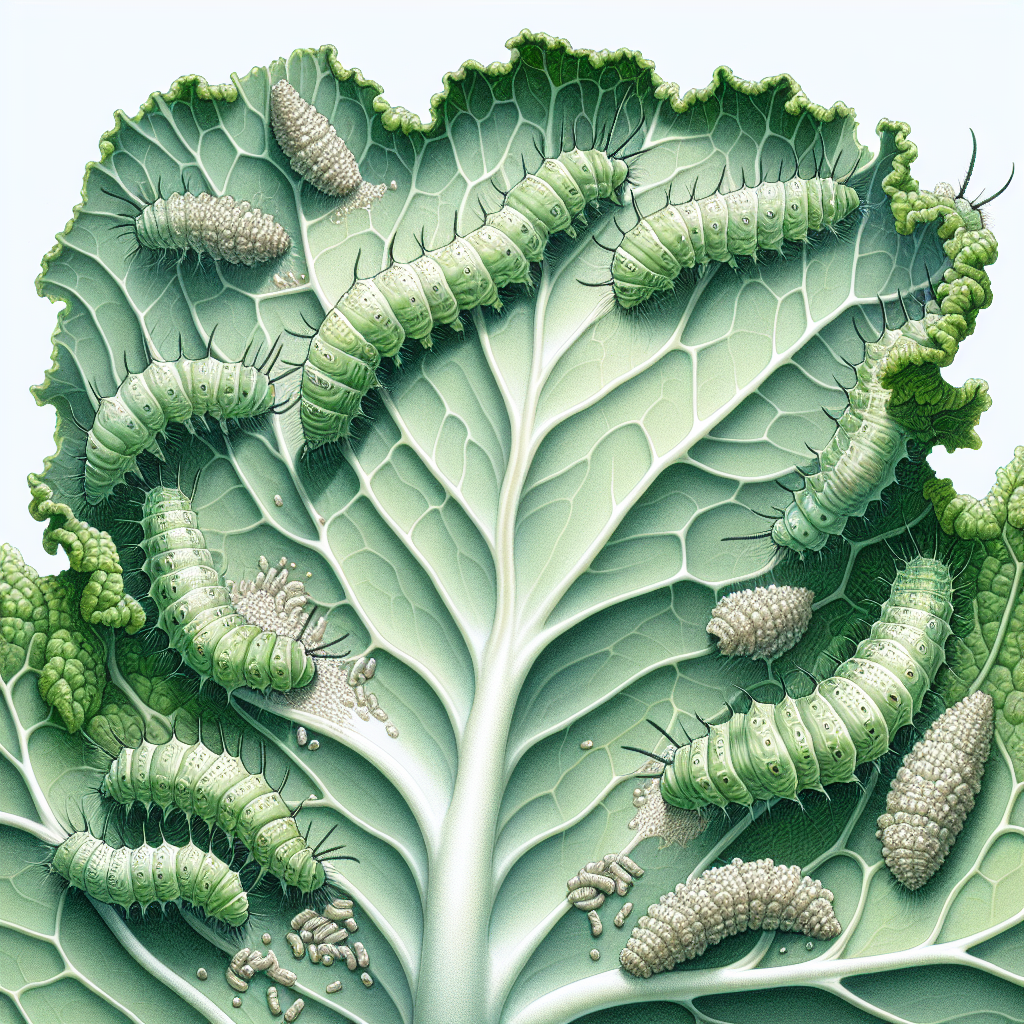
Introduction to diamondback moth larvae
Diamondback moth larvae (Plutella xylostella) represent one of the most notorious pests in global agriculture, particularly targeting cruciferous vegetables. Known scientifically as the larvae of the diamondback moth, these pests inflict substantial damage by feeding voraciously on foliage, leading to reduced photosynthesis, stunted growth, and significant yield losses. Originating from the Mediterranean region, they have spread worldwide, becoming a persistent challenge in regions with mild winters and suitable hosts like cabbage, broccoli, cauliflower, kale, and related crops.
Farmers often underestimate the threat until infestations explode, as larvae can complete multiple generations per season—up to 20 in tropical areas. Their ability to develop resistance to over 500 insecticide types makes chemical control unreliable, pushing growers toward integrated pest management (IPM). Early detection through scouting is crucial, as larvae are active primarily at night and hide in leaf folds during the day. This guide provides comprehensive diagnostics, lifecycle insights, and proven organic strategies to safeguard your crops. For small farms, timely intervention can prevent losses exceeding 50% in severe outbreaks. Understanding their biology empowers proactive defense, ensuring healthy harvests of brassicas year after year.
Identifying Symptoms & Damage
Recognizing diamondback moth larvae damage starts with inspecting the undersides of leaves, where tiny, pale green caterpillars (1/3 inch long) cling, often covered in silken webbing or frass (dark pellets). Unlike cabbage loopers or imported cabbageworm, these larvae lack a distinct mid-line and move in a looping motion, scraping epidermal layers to create windowpaning—transparent leaf patches where only veins remain.
Early symptoms include small, irregular holes clustered near leaf margins or midribs. As feeding intensifies, leaves skeletonize, appearing lacy with extensive chew marks. Severe infestations defoliate plants entirely, exposing heads and promoting secondary issues like Alternaria leaf spot or downy mildew. On broccoli and cauliflower, damage targets wrapper leaves, reducing marketable head size by 30-70%. Distinguish from other caterpillars by the larvae's tapered body and ability to spin silk threads to escape when disturbed.
Examine plants weekly using a hand lens: look for eggs (yellowish ovals in clusters of 20-50 on leaf undersides) and pupae (open cocoons on leaves). Frass patterns—fine, granular—differ from larger pellets of loopers. Economic thresholds: 5-10 larvae per plant for young crops, 20-30 for mature ones. Use sticky traps for adults (small, grey moths with diamond patterns on wings) to predict larval influx. Accurate ID prevents misapplication of controls, saving time and resources.
Lifecycle and Progression of diamondback moth larvae
The diamondback moth lifecycle spans 14-30 days, depending on temperature (optimal 70-80°F), enabling 4-12 generations annually. Adults (1/4-inch grey moths) emerge at dusk, mate, and females lay 100-150 eggs over 10 days on host foliage. Eggs hatch in 2-3 days into first-instar larvae, which mine leaves internally.
Second to fourth instars feed externally, skeletonizing tissue for 7-14 days total larval stage. Mature larvae (green, spindle-shaped) pupate in loose cocoons on leaves or debris, lasting 4-7 days. Full cycle shortens in heat, accelerating outbreaks. Overwinter as pupae or adults in mild climates; migrate via wind in cooler areas.
Progression peaks in spring on early brassicas, with larvae most damaging during vegetative growth. Monitor with pheromone traps: 10+ moths/week signals imminent larval surge. Lifecycle knowledge aids timing of Spring Pest Patrol: Organic AI Strategies to Shield Your Crops from Common Invaders, disrupting at vulnerable egg/young larvae stages for maximum efficacy.
Environmental Triggers & Risk Factors
Diamondback moth larvae flourish above 50°F, with rapid development above 68°F; prolonged mild winters (>45°F) boost survival, triggering early-season outbreaks. High nitrogen fertilizers promote lush foliage, ideal for feeding—avoid excess N on kale or cabbage. Dense plantings (>20,000 plants/acre) foster humidity, aiding egg survival and spread.
Risk spikes near weedy borders harboring wild crucifers (mustard, shepherd's purse). Drought stress weakens plants, increasing susceptibility; irrigation maintains vigor. Monocultures amplify infestations—rotate with non-hosts like tomato or potato. Wind currents carry adults 50+ miles; scout after southerly winds. Climate change extends seasons, heightening pressure in temperate zones.
Organic Control & Treatment Plans
Organic management hinges on IPM: scout twice weekly, targeting <5 larvae/plant. Biologicals: Release Diadegma insulare or Cotesia wasps (200-500/acre); apply Bacillus thuringiensis (Bt) kurstaki at 0.5-1 lb/acre weekly for young larvae—highly selective, safe for caterpillars. Neem oil (0.5-2% azadirachtin) disrupts molting; spinosad (OMRI-listed) at 4-6 oz/acre for knockdown.
Cultural: Hand-pick larvae evenings; destroy residue post-harvest. Use row covers (0.25mm mesh) from transplant until flowering. Reflective mulches deter adults. Trap crops: Plant mustard borders to concentrate pests for localized spraying.
Treatment plan: Week 1: Scout + Bt if eggs present. Week 2: Neem if larvae <1/2 inch. Escalate to spinosad if >10/plant. Rotate modes to prevent resistance. Foliar feeds (compost tea) bolster plant immunity. Success rates: 80-95% with consistent IPM.
Preventing diamondback moth larvae in the Future
Prevention starts with sanitation: deep-plow residues, till soil to expose pupae to predators/sun. Crop rotation (2-3 years off brassicas) starves survivors—follow with corn or soybeans. Plant resistant varieties like 'Starlight' cabbage or 'Fiesta' broccoli.
Yellow sticky traps (20/acre) monitor adults; destroy weeds quarterly. Encourage predators: ladybugs, lacewings via yarrow or marigold borders. Fallow fields with cover crops like clover suppress pupae. Timing transplants post-peak moth flights (use local data). Long-term: diverse rotations, beneficial habitats reduce incidence 70%.
Crops Most Affected by diamondback moth larvae
Primary targets: all Brassica oleracea (cabbage, broccoli, cauliflower, Brussels sprouts), B. rapa (turnip, Chinese cabbage), Raphanus sativus (radish), and wild mustards. Kale, collards, bok choy suffer heavy defoliation. Secondary: bok choy, arugula. Global losses: $1B+ yearly, worst in Asia/Australia on cabbage (up to 100% yield loss untreated).