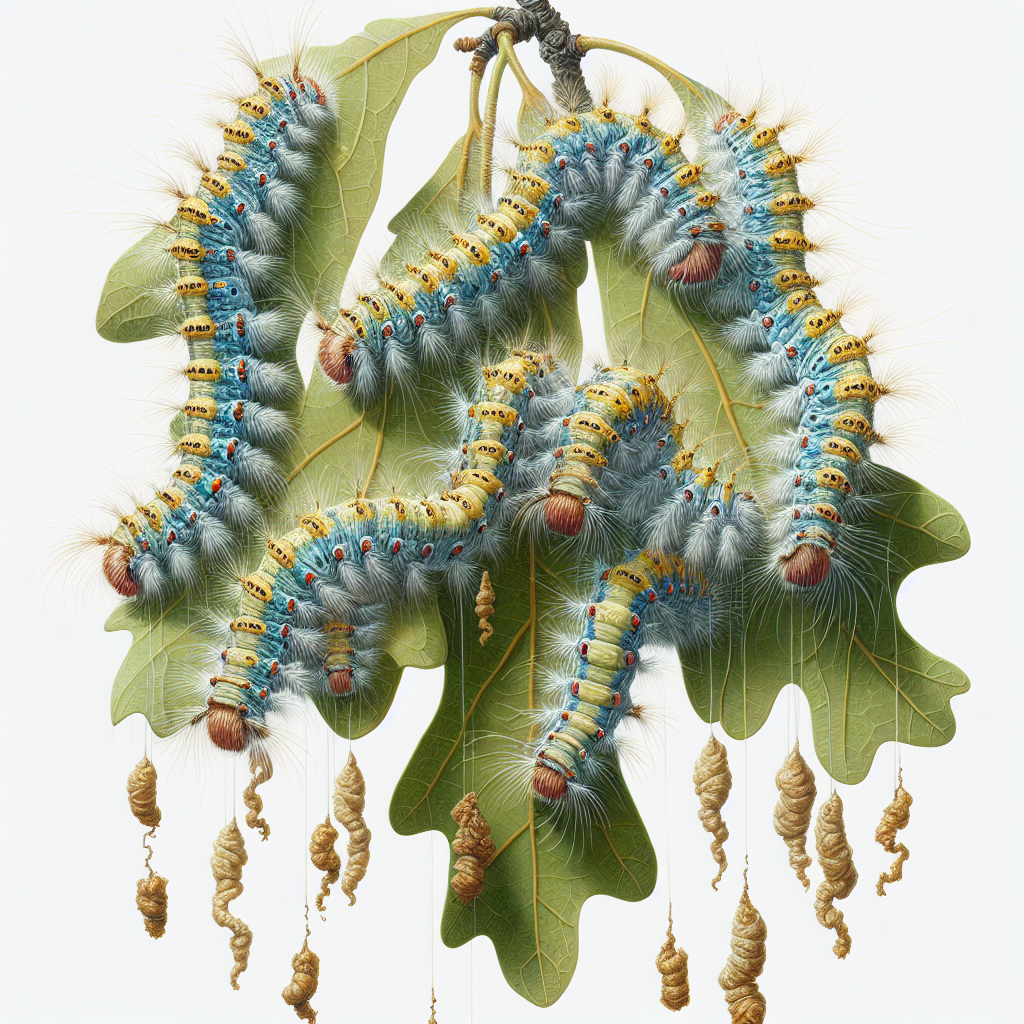
Introduction to gypsy moths
Gypsy moths, scientifically known as Lymantria dispar, are among the most notorious invasive pests in North America, capable of defoliating vast areas of forests, orchards, and landscapes. Native to Europe and Asia, they were introduced to the U.S. in the late 19th century and have since spread across the northeastern and midwestern states, posing significant threats to agricultural and silvicultural systems. Adult moths are present from late spring to early summer, but it's the voracious caterpillars that inflict the real damage, stripping trees of foliage and weakening them over multiple seasons.
These pests thrive in temperate climates, particularly in hardwood-dominated regions. Outbreaks can last 10-15 years, cycling through population booms and crashes influenced by natural predators, weather, and human intervention. For farmers, gypsy moths represent a high-risk pest due to their polyphagous nature—they feed on over 500 plant species, with a preference for apple, oak (though not listed, implied in forestry), and other deciduous trees. Early identification and management are crucial, as severe defoliation can reduce crop yields by up to 100% in affected orchards and stress trees to the point of mortality. This definitive guide equips agricultural professionals with diagnostic tools, lifecycle knowledge, and organic control strategies to mitigate infestations effectively. Learn more about Spring Pest Patrol: Organic AI Strategies to Shield Your Crops from Common Invaders for timely interventions.
Identifying Symptoms & Damage
Recognizing gypsy moth damage begins with scouting for telltale signs during the larval stage, typically from April to June in most regions. The most obvious symptom is complete defoliation: leaves are skeletonized, leaving only veins and midribs intact. Affected trees appear bare from the top down, starting with tender new growth. Look for large, silken egg masses (1-1.5 inches long, buff-colored with yellowish-brown hairs) on tree trunks, branches, or under loose bark from July to August—these hatch into caterpillars the following spring.
Caterpillars are the primary culprits: early instars (1-2 inches) are dark brown with long yellowish hairs; later instars (up to 2 inches) develop blue and red wart-like spots along their backs, with pairs of red spots on the final segments distinguishing males from females. They dangle from silk threads, dispersing to new hosts via "ballooning." Frass (droppings) piles up beneath trees like dark green BB pellets, and heavy webbing may appear in branch crotches during high populations.
Damage escalates quickly: first-year infestations cause 50-70% defoliation on preferred hosts like apple, maple, and cherry trees. Repeated attacks lead to branch dieback, reduced fruit quality, and vulnerability to secondary pests like armyworms or diseases such as powdery mildew. In orchards, yield losses can exceed 80%, with weakened trees more susceptible to fire blight in rosaceous crops. Differentiate from similar pests like tent caterpillars (less hairy, web tents in crotches) or leaf-feeding caterpillars by the diagnostic red dorsal spots and egg mass morphology. Use a hand lens to confirm tiny mouthparts on larvae feeding on leaf edges.
Lifecycle and Progression of gypsy moths
Understanding the gypsy moth lifecycle is key to timed interventions. It spans one year with four distinct stages: egg, larva (caterpillar), pupa, and adult moth.
- Egg Stage (Summer-Fall): Females lay 300-1,000 eggs in fuzzy masses covered in their abdominal hairs, overwintering through winter. Hatching occurs when leaf buds swell (400-600 growing degree days, base 50°F).
- Larval Stage (Spring-Early Summer, 4-6 weeks): Caterpillars emerge tiny (1/8 inch), feeding initially on expanding leaves. They molt six times, growing rapidly and ballooning to new trees. Peak feeding coincides with tender flush growth.
- Pupal Stage (Mid-Late Summer, 10-14 days): Larvae spin thin silken cocoons on trunks or debris, transforming into moths. Pupae are teardrop-shaped, 1-1.5 inches.
- Adult Stage (July-August): Females are creamy white with wingspans up to 3 inches, flightless and egg-laden; males are tan moths, 1.5-inch wingspan, actively flying to mate. No feeding occurs; lifespan is 1-2 weeks.
Populations explode every 10-15 years due to reduced parasitism (e.g., from virus epizootics). In outbreak years, densities reach 1,000+ larvae per square yard. Monitor with burlap wraps or pheromone traps set in March to predict larval waves. Lifecycle aligns with hardwood flush, making apple and pear orchards prime targets.
Environmental Triggers & Risk Factors
Gypsy moth outbreaks are driven by a mix of climatic, biological, and human factors. Warm, dry springs favor larval survival by reducing fungal pathogens like Entomophaga maimauga. Mild winters fail to kill eggs, with survival rates doubling above -20°F thresholds. Drought stress weakens host trees, increasing palatability—defoliation is 3x higher on water-stressed maple and oak.
High-risk areas include urban-wildland interfaces where oaks and hardwoods dominate, as in the Northeast U.S. Invasive spread occurs via egg masses on vehicles, firewood, or nursery stock—quarantines restrict movement from infested counties. Poor natural enemy complexes (e.g., low Lymantria dispar nucleopolyhedrovirus prevalence) trigger booms. Monocultures like young orchards amplify damage; interplanting with conifers (unpalatable) reduces risk. Over-fertilization boosts flush growth, attracting hordes. Climate change extends ranges southward, with models predicting establishment in the Southeast by 2050. Scout high-risk sites: south-facing slopes, forest edges, and stressed stands.
Organic Control & Treatment Plans
Organic management emphasizes integrated pest management (IPM) with layered defenses. Cultural Controls: Remove egg masses manually (scrape into soapy water) before April hatching. Wrap trunks with burlap bands (3-4 inches wide, checked daily for larvae) to trap crawlers. Encourage predators via diverse understory planting.
Biological Controls: Apply Bacillus thuringiensis var. kurstaki (BtK) at 1-2 billion IU/acre when larvae are <1 inch (early instars most susceptible)—reapply every 7-10 days. Nucleopolyhedrosis virus (NPV/Gypchek) at 10^11 viral units/acre targets late larvae. Release predators like Stiretrus anchoratus (shield bug) or Calosoma sycophanta beetles at 200-500/acre.
Mechanical/Physical: Pheromone traps (disrupt males) at 40/acre; sticky bands (Tanglefoot) on trunks. For small infestations, vacuum larvae or use BtK hand-sprayers.
Treatment Timeline:
| Stage | Timing | Method |
|---|---|---|
| Egg | Winter-Spring | Scrape/destroy |
| Early Larva | Budbreak +200 DD | BtK spray |
| Late Larva | Peak feeding | NPV + predators |
| Adult | July | Pheromone traps |
Monitor with delta traps; threshold: 10+ males/trap/week triggers action. Combine with caterpillars management for synergy. Avoid broad-spectrum sprays to preserve Entomophaga fungi.
Preventing gypsy moths in the Future
Prevention focuses on exclusion and resilience. Inspect nursery stock, firewood, and vehicles for egg masses—quarantine compliance is mandatory in regulated areas. Plant resistant species like spruce, fir, or black walnut over susceptible apple and aspen. Maintain tree vigor via mulching, irrigation, and balanced nutrition to withstand 1-2 defoliations.
Establish hedgerows with Bt-producing plants and flowering understory for parasitoids. Use reflective mulches or kaolin clay barriers on trunks. Annual scouting (March-June) with pheromone traps predicts outbreaks—act at <5 moths/trap. Landscape diversity dilutes host availability; avoid oak-maple monocultures. Long-term, introduce sterile insect technique or CRISPR-edited NPV strains. For small farms, integrate with Soil Health Mastery: 5 Proven Strategies for Small Farms to Build Fertile Ground Without Breaking the Bank to boost tree resilience. Community-wide efforts, like aerial BtK in outbreaks, prevent spread.
Crops Most Affected by gypsy moths
Gypsy moths are oligophagous on hardwoods but devastate orchards and forests. Top targets:
- Orchards: Apple (primary), cherry, peach, pear—yield losses 70-100%.
- Nut Trees: Walnut, almond, pecan—defoliation stresses nut production.
- Shade/Ornamentals: Maple, oak, poplar, birch—urban losses exceed $100M/year.
- Forestry: Red oak, white oak—timber value drops 20-50% post-outbreak.
Less affected: Conifers (e.g., pine, spruce) fed on only in starvation. In mixed plantings, protect grapes and plum via barriers. Secondary effects include increased Japanese beetles on stressed trees.