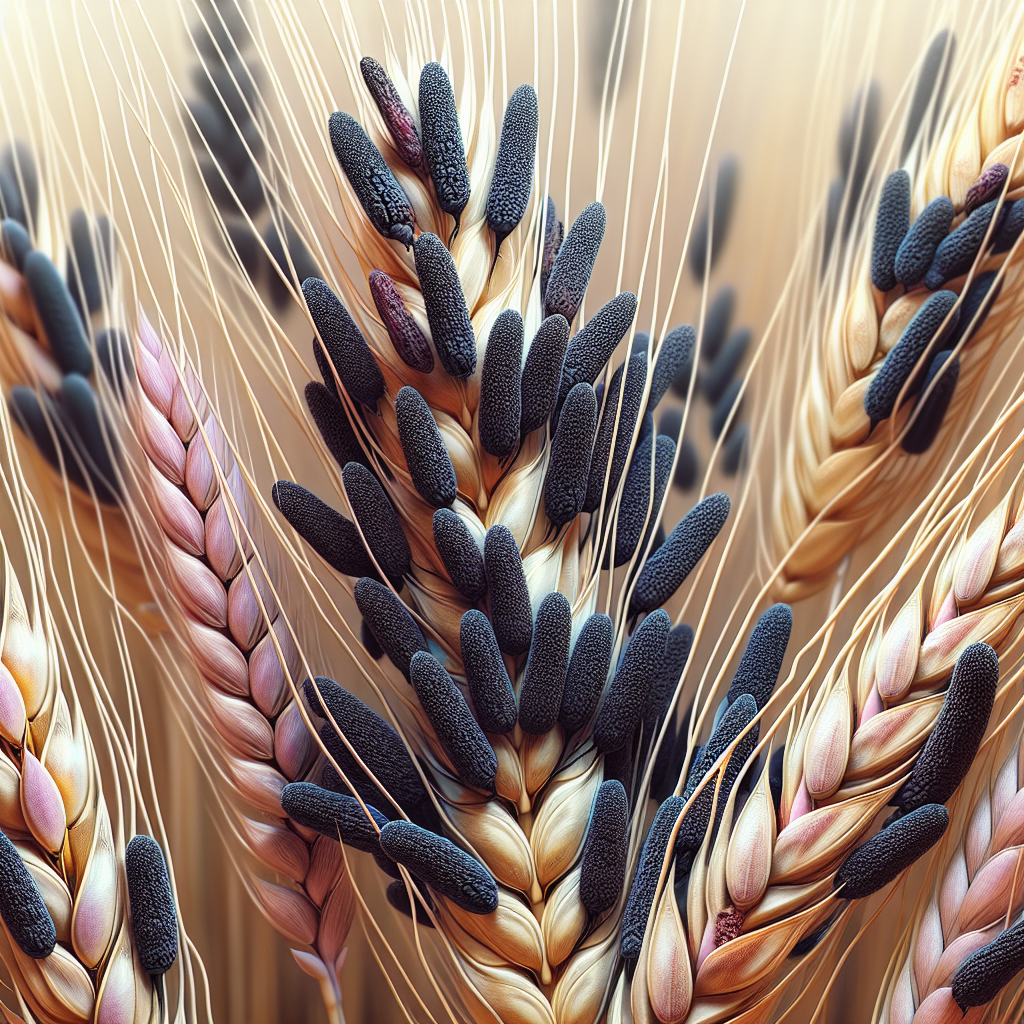
Introduction to ergot
Ergot represents one of the most notorious fungal diseases in agriculture, infamous for its historical role in devastating harvests and causing ergotism outbreaks that plagued medieval Europe. Caused by the ascomycete fungus Claviceps purpurea, ergot thrives in cool, humid conditions, infiltrating cereal crops by colonizing developing grain florets. The fungus produces hard, black sclerotia—ergot bodies—that replace healthy kernels, rendering grain unusable and toxic due to ergot alkaloids like ergotamine and ergometrine. These toxins can induce severe symptoms in consumers, including convulsions, hallucinations, gangrene (known as St. Anthony's Fire), and even death.
In modern farming, ergot remains a persistent threat, particularly in organic systems where chemical fungicides are avoided. Global outbreaks have been documented in wheat fields from North America to Europe, with economic losses exceeding millions annually from rejected grain shipments. Early detection is crucial, as sclerotia can persist in soil for years, perpetuating infection cycles. This guide provides comprehensive diagnostic criteria, lifecycle insights, and organic management strategies to safeguard yields. Farmers dealing with wheat or rye crops should prioritize ergot scouting, especially post-flowering. For deeper insights into fungal threats, check this Soil Health Mastery blog post.
Understanding ergot's biology empowers proactive defense. The disease favors grasses and cereals, spreading via airborne ascospores during anthesis (flowering). Contaminated seed lots amplify risks, underscoring the need for certified, clean planting material. Beyond direct yield loss—up to 100% in severe cases—ergot imposes indirect costs through dockage at elevators and livestock feed restrictions. Regulatory thresholds vary: the FDA limits ergot sclerotia in grain to 0.3% by weight for human consumption, while animal feed tolerances are higher but still stringent.
Identifying Symptoms & Damage
Ergot manifests in distinct phases, starting subtly during crop flowering. Initial signs include the formation of honeydew—a sticky, yellowish exudate from infected florets, swarming with fungal conidia (spores). This stage, resembling sugary dew, appears 5-10 days post-infection and attracts insects, aiding dispersal. As honeydew dries, it forms white fungal mats, but the diagnostic hallmark is sclerotia development: elongated, purplish-black structures 1-5 cm long, resembling rodent droppings or cockroach eggs.
Sclerotia protrude from spikelets, often curving like a rooster's spur—hence 'ergot' from the French 'ergo,' meaning spur. Infected heads show bleached or discolored glumes with fewer grains. Damage escalates as sclerotia replace 10-80% of kernels in heavy infections, drastically reducing test weight and milling quality. Yield losses correlate with sclerotia incidence: 1% contamination cuts wheat value by 2-5%, per USDA estimates.
Visual diagnosis hinges on sclerotia traits: hard, longitudinally furrowed, with pointed ends and a white interior when bisected. Differentiate from bunt (common bunt) or loose smut (loose smut), which produce powdery spores rather than solid bodies. Microscopic confirmation reveals clavicipitaceous hyphae. Field scouting involves shaking heads into water: sclerotia sink, grains float. Post-harvest cleaning via gravity tables or air screeners mitigates contamination, but prevention trumps remediation.
Livestock poisoning risks peak when sclerotia exceed 0.1-0.2% in feed. Cattle exhibit lameness, agalactia; horses show gangrene. Human cases, rare today, stem from contaminated rye bread. Always test suspect grain via HPLC for alkaloids.
Lifecycle and Progression of ergot
Claviceps purpurea's lifecycle is a masterclass in fungal opportunism, spanning one to two years. Overwintering sclerotia in soil or crop residue germinate in spring under cool (45-60°F), moist conditions, producing perithecia (fruiting bodies) with thread-like asci. Each ascus ejects 200-500 ascospores, propelled by wind or rain splash up to miles away.
Primary infection targets open florets during 2-5 days of anthesis, when stigmas exude nectar laced with fungal attractants. Ascospores germinate on stigmas, hyphae colonize ovaries, forming sphacelial tissue that oozes conidial honeydew. Insects vector conidia to nearby flowers, fueling secondary spread. Mycelium consumes ovary contents, forming sclerotia by grain maturity. Mature sclerotia drop into soil, awaiting next season.
Progression accelerates in dense canopies with prolonged dew. Infection peaks at 95-100% relative humidity, halting at 75% grain moisture. Sclerotia viability lasts 2-10 years, reduced by tillage or decay. Crop rotation disrupts cycles, as the fungus persists on wild grasses like quackgrass, serving as green bridges.
Environmental Triggers & Risk Factors
Ergot epidemics brew from a perfect storm of climate, agronomy, and inoculum. Cool springs (50-65°F) with frequent rains during heading-anthesis trigger ascospore release. Nighttime temps below 55°F and >12 hours leaf wetness amplify infection. Humid, overcast summers favor honeydew persistence.
Agronomic culprits include high seeding rates fostering dense stands, delaying drying. Late-maturing varieties extend floret susceptibility windows. Volunteer cereals or grassy weeds harbor inoculum. Acidic soils (pH <6.0) enhance sclerotial germination. Nitrogen excess promotes lodging, trapping humidity.
Risk spikes in no-till fields with residue buildup or continuous cereals. Seed lots with >0.05% sclerotia guarantee outbreaks. Proximity to infected fields or grass pastures compounds threats. Climate change may intensify ergot via erratic springs, per recent models.
Organic Control & Treatment Plans
Organic ergot management integrates cultural, biological, and mechanical tactics, eschewing synthetics. Start with certified sclerotia-free seed; hot water treatment (130°F for 30 min) kills 90% without viability loss. Deep fall plowing (8-12 inches) buries sclerotia beyond germination depth, promoting decay.
Crop rotation: 2-3 years out of host grasses, incorporating clover or brassicas. Resistant varieties like 'Whoberry' rye or 'PostRock' wheat suppress infections by 50-70%. Scout weekly during bloom; rogue infected heads pre-honeydew. Promote airflow via wider rows (8-10 inches), lower N rates.
Biologicals: Aureobasidium pullulans yeast sprays compete for florets, reducing incidence 40%. Trichoderma soil drenches antagonize sclerotia. Post-harvest, blend sclerotia-infested grain with lime (10:1) to neutralize alkaloids via pH shock.
Cleaning: Use gravity docks or color sorters; discard waste away from fields. Monitor livestock feed rigorously. Integrated plans cut ergot to <0.1% consistently.
Preventing ergot in the Future
Long-term prevention hinges on breaking the sclerotial cycle. Scout wild grasses near fields; mow to eliminate green bridges. Use GPS-guided tillage targeting hotspots. Seed only pedigreed stock, testing via flotation or microscopy.
Forecast models integrate weather data for bloom alerts. Diversify rotations with non-hosts like potato or soybeans. Enhance soil health to boost plant vigor, per Soil Health Mastery—strong plants resist colonization. Monitor adjacent fields; buffer strips of non-suscepts help. Annual audits ensure <0.01% seed contamination. Resilient systems yield sustainably ergot-free.
Crops Most Affected by ergot
Ergot strikes grasses foremost: rye (most susceptible, up to 90% infection), wheat (10-50%), barley, oats, triticale. Sorghum, millet suffer sporadically. Wild hosts: quackgrass, orchardgrass, Poa species. Non-grass crops rarely affected, though Claviceps paspali hits bermudagrass. In grains, rye bread historically amplified ergotism risks.