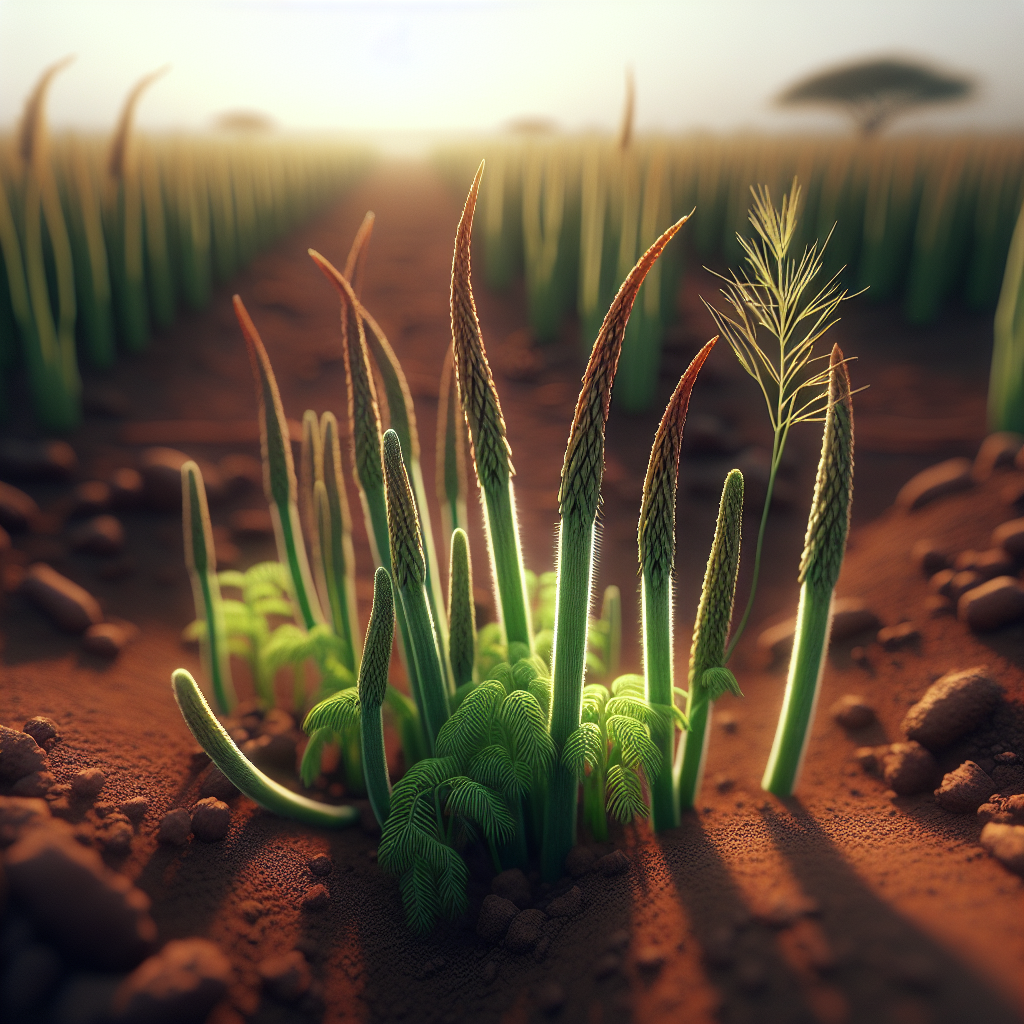
Introduction to Fonio
One of the oldest cultivated cereals in Africa, fonio has been grown for centuries across the Sahel and the savanna belts of West Africa, especially in Guinea, Mali, Senegal, Burkina Faso, and neighboring regions. It is sometimes divided into white fonio, usually identified as Digitaria exilis, and black fonio, often classified as Digitaria iburua. In most commercial and agronomic contexts, however, “fonio” refers primarily to white fonio.
Its value lies in its speed and reliability. Depending on rainfall pattern, soil depth, and variety, fonio can mature in roughly 60 to 120 days, with very early landraces reaching harvest before other cereals such as sorghum or millet are ready. This makes it highly strategic in subsistence systems: it bridges the hunger gap before the main grain harvest arrives. It also fits modern regenerative and climate-adapted agriculture because it tolerates low fertility, light drought, and marginal soils better than many mainstream grains.
From a production standpoint, fonio is not a high-biomass, high-input cereal. It is a fine-stemmed annual grass with tiny seeds and a delicate canopy, so management must emphasize careful seedbed preparation, shallow sowing, weed control in the first month, and timely harvest. These factors matter more than heavy fertilization. Farmers familiar with other cereals may compare its field ecology with millet, but fonio is generally even more fine-seeded, faster cycling, and more sensitive to weed competition at emergence.
Nutritionally and commercially, fonio has earned renewed attention because the grain cooks quickly, has a mild nutty taste, and is often marketed as a gluten-free ancient grain. That said, it remains first and foremost an agronomic crop adapted to dryland systems. A successful fonio crop depends less on expensive inputs and more on precise timing, clean land preparation, and postharvest discipline.
Botanical Profile of Fonio
Fonio belongs to the grass family, Poaceae, and is closely related to other species in the genus Digitaria. White fonio, Digitaria exilis, is an annual tufted grass forming slender tillers from a shallow fibrous root system. Plants commonly range from 30 to 80 cm in height under low-input field conditions, though this varies with fertility, moisture, and accession. In better soils with moderate rainfall, plants may tiller more heavily and produce slightly taller culms.
Leaves are narrow, linear, and delicate, often with a fine texture compared with sorghum or maize. The inflorescence is a digitately arranged panicle, meaning multiple finger-like racemes emerge from a common point near the top of the stem. This arrangement is one reason the crop is grouped with “finger grasses.” The grains themselves are extremely small, among the smallest of cultivated cereals, which has important consequences for sowing depth, seed handling, threshing, dehulling, and storage.
Growth habit is strongly influenced by day length, local ecotype, and rainfall distribution. Traditional landraces often show broad variation in maturity date, panicle compactness, seed color, lodging tendency, and threshability. Some are selected for extra-early maturity to secure food during short rainy seasons; others are longer-duration types with somewhat higher yield potential under more dependable moisture.
Rooting depth is modest compared with deep-rooted cereals, but fonio compensates through rapid establishment and efficient use of early-season moisture. It is not a swamp grain and should not be treated like paddy rice, although growers interested in cereal diversification may find useful contrasts in water management by reviewing soil health practices. Fonio is best understood as a dryland, fine-seeded cereal that rewards low-disturbance moisture conservation and early weed suppression.
In botanical terms, seed shattering can be a major issue. Many traditional types readily drop mature grain if harvest is delayed or if panicles are handled roughly once fully ripe. This trait is adaptive in wild or semi-domesticated systems but challenging in commercial production. Selection pressure for reduced shattering, more synchronous maturity, and easier threshing is central to modern improvement efforts.
Soil, pH, and Climate Requirements for Fonio
Fonio performs best in light to medium-textured soils that drain well and warm quickly after the onset of rains. Sandy loam, loam, and light gravelly upland soils are often suitable. It can survive on poor, depleted land where other cereals fail, but survival should not be confused with optimum production. For strong tillering and better grain fill, the ideal field still needs reasonable structure, moderate organic matter, and freedom from prolonged waterlogging.
A target soil pH of 5.5 to 6.8 is generally suitable, although the crop tolerates somewhat more acidic conditions than many cereals. Below about pH 5.0, nutrient availability and root efficiency may decline, especially where aluminum toxicity is present. In alkaline soils above pH 7.5, micronutrient tie-up can limit vigor. If soil testing is available, aim for moderate phosphorus, modest but adequate potassium, and restrained nitrogen. Excess nitrogen can produce lush vegetative growth, increase lodging risk, delay maturity, and worsen weed pressure relative to crop canopy development.
The ideal climate is tropical to semi-arid with a distinct rainy season. Fonio is particularly well adapted to annual rainfall zones around 600 to 1,200 mm, though early varieties can produce under lower totals if rainfall is well distributed during establishment and heading. It is best suited to mean growing-season temperatures of 25 to 32°C. Germination is stronger when the top 2 to 5 cm of soil has warmed above about 20°C. Cool conditions slow emergence and increase vulnerability to crusting and weeds.
Moisture management is critical even for a drought-tolerant crop. Fonio tolerates dry spells better than many cereals once established, but it is not drought-proof at all stages. The most sensitive windows are germination, early seedling establishment, tillering, and flowering to early grain fill. Soil should be moist but not saturated in the top 5 to 8 cm during establishment. In practical terms, if a squeezed handful of soil from the seed zone barely holds together and breaks apart with light pressure, moisture is usually adequate; if it forms a sticky ribbon or leaves a wet sheen on the palm, it is too wet.
Waterlogging is one of the most common avoidable problems. Symptoms include yellowing from the base upward, weak tiller formation, shallow rooting, and eventual stand thinning. In heavy soils after storms, standing water for more than 24 to 48 hours can reduce oxygen enough to impair root function. Raised beds, tied ridges with drainage exits, or contour-based runoff control on sloping ground can help, but fonio is usually most reliable on naturally free-draining uplands.
Because the seed is tiny, surface crusting after intense rain is a major establishment risk. Fields with high silt content and low organic matter may seal over, causing patchy emergence. In such soils, retaining a light mulch before sowing, minimizing aggressive pulverization, and sowing just before a reliable light rain rather than a violent storm can improve stand uniformity.
Step-by-Step Planting & Propagation
Fonio is propagated by seed. Vegetative propagation is not used in normal production. Because of the grain’s small size, the difference between excellent and poor establishment often comes down to seedbed quality and planting depth.
Choose clean seed carefully. Use mature, well-dried seed from a recent harvest with high purity and minimal inert matter. Tiny seed lots often contain dust, chaff, and weed seeds, so sieving and winnowing before planting is essential. If seed has been stored in humid conditions, test germination before sowing. A simple field test of 100 seeds on moist cloth should ideally show at least 75 to 85% germination.
Prepare a fine, firm seedbed. The topsoil should be crumbly enough for shallow seed placement but not powdery. Overly fluffy soil causes seed to be buried too deeply after rain. After final tillage, lightly firm the seedbed by rolling, trampling, or irrigation settling if appropriate. A firm base with a fine surface tilth is ideal.
Time sowing with the first effective rains. Plant when the rainy season has truly started, not after a single isolated shower. The topsoil should be evenly moist to at least 5 cm depth, with additional rainfall expected within several days. Delayed sowing shortens the effective season and can expose grain filling to terminal drought.
Use shallow sowing. Broadcast sowing is traditional and widely practiced, but drilling in narrow rows improves seed economy and weeding efficiency. Sow only 0.5 to 1.5 cm deep. In very light sandy soil, 2 cm may be acceptable, but deeper planting often causes failure because seedlings lack the energy to emerge.
Seed rate and spacing. Under broadcast systems, approximately 10 to 20 kg seed per hectare is common depending on purity and germination. In drilled systems, rates may be lower, often around 8 to 15 kg/ha. Row spacing of 20 to 30 cm supports hand or mechanical weeding while preserving canopy closure. Within-row spacing is typically not managed seed by seed because the grain is too fine; instead, aim for an even, moderately dense stand.
Cover seed lightly. After broadcasting, brush, rake, or drag a light branch over the field, then firm gently. Seed should not disappear deeply into the profile. Uneven burial is a major cause of staggered emergence.
Monitor emergence within 4 to 10 days. In warm, moist soil, emergence is rapid. If crusting follows heavy rain, very light surface disturbance between rows may help, but avoid damaging seedlings.
Direct seeding is the standard method. Transplanting is not practical or economical. In mechanized systems, precision handling equipment must be calibrated carefully because the seed flows differently from larger grains.
Care & Maintenance regimes for Fonio
The first 30 to 40 days define the crop. Once fonio establishes a clean stand and begins active tillering, it becomes much more resilient. Before that stage, weeds, crusting, and erratic moisture can cause severe yield loss.
Weed management: Fonio seedlings are small and initially poor competitors. Keep the field as weed-free as possible from sowing through early tillering. The first weeding is usually needed 2 to 3 weeks after emergence, or sooner if fast-growing broadleaf weeds or annual grasses appear. A second weeding 2 to 3 weeks later is often enough in well-managed fields. Delaying the first weeding beyond 25 days after emergence can reduce yield sharply because weeds capture light, moisture, and nutrients before fonio canopy expands.
Water management: In rainfed systems, the objective is moisture conservation rather than irrigation volume. If irrigating experimentally or in small plots, maintain light, frequent watering during germination so the top 2 cm remains evenly moist but never saturated. After establishment, allow the upper soil surface to dry slightly between irrigations while preserving moisture deeper in the root zone. Stress signs include leaf rolling during the cooler morning hours, bluish-gray leaf cast, and arrested tillering. Overwatering shows up as pale leaves, weak stems, algae or moss on soil, and persistently soggy conditions. As a practical target, root-zone soil should feel moist and friable, not sticky, at roughly 5 to 10 cm depth.
Nutrient management: Fonio is commonly grown with little or no fertilizer, but modest feeding can improve yields. If soil fertility is low, incorporate 2 to 5 tons/ha of well-matured compost before sowing. Where mineral fertilizer is used, small nitrogen doses are preferable to heavy applications. A general low-input guideline may be 20 to 40 kg/ha nitrogen, 15 to 30 kg/ha P2O5, and 15 to 30 kg/ha K2O, adjusted to soil tests. Apply most phosphorus and potassium at planting. Split nitrogen, with half at planting or soon after emergence and the rest at early tillering. Avoid late nitrogen, which encourages lodging and uneven maturity.
Lodging prevention: Excess fertility, heavy late rain, and overly dense stands can cause lodging. Once stems bend and panicles contact the soil, shattering, rot, and harvest loss rise quickly. Balanced fertility, timely sowing, and moderate seed rates reduce risk.
Thinning and stand correction: Usually unnecessary. However, severely patchy areas from crusting or washout can be resown early if enough season remains.
Mulching and residue: Heavy mulch directly over the seeded row can impede emergence because seedlings are delicate. However, thin residue retention between rows or from minimum tillage can help reduce evaporation and surface sealing if it does not physically obstruct emergence.
Pests, Diseases & Organic Management
Fonio is often considered relatively hardy, but that does not mean pest-free. Its short cycle helps it escape some pressure, yet losses can still occur from Birds, Seed-eating insects, foliar diseases, and postharvest pests.
Birds: These are among the most serious threats near maturity. Small granivorous Birds can strip panicles rapidly, especially in isolated plantings or where surrounding food sources have dried down. Use synchronized community planting where possible, visual deterrents, reflective tape, moving flags, human guarding, and early harvest at physiological maturity before full field exposure escalates.
Grasshoppers and Caterpillars: Seedlings and leaves may be chewed during early growth. Light infestations are often tolerable, but repeated defoliation reduces tillering. Organic management includes field sanitation, encouraging Birds and beneficial insects, and using botanical sprays such as neem where locally permitted and effective. Young stands should be inspected at least twice weekly during vulnerable stages.
Stem borers and Sap feeders: Less commonly severe than in maize or sorghum, but occasional local infestations can occur. Avoid continuous cereal monoculture and destroy heavily infested residues after harvest.
Fungal diseases: Leaf spots, Smuts, and Head molds may appear under humid or prolonged wet conditions, especially in dense stands or where harvest is delayed. Good airflow from proper spacing, avoiding excess nitrogen, and harvesting promptly are the main controls. Seed hygiene is important because contaminated seed can introduce pathogens.
Damping-off and poor emergence syndromes: Usually tied to overly wet seedbeds, crusting, or low-vigor seed rather than a single pathogen. Use fresh seed, shallow planting, and well-drained ground.
Nematodes and root issues: Generally less documented as major constraints than in vegetables, but severely degraded soils with poor biological balance may suppress root performance indirectly.
Organic management strategy: Build prevention around rotation, clean seed, field sanitation, and timing. Rotate with legumes such as cowpea, groundnut, or other pulses to interrupt pest and disease cycles and improve soil structure. Avoid planting fonio repeatedly in the same field without residue management. Remove volunteer cereal hosts and large weed escapes that can shelter pests. If using homemade botanical extracts, test them on a small area first because fonio foliage is fine and can scorch.
Postharvest insect control is especially important because the tiny grain can be difficult to clean once infested. Drying below safe storage moisture before bagging is more effective than trying to rescue grain later.
Harvesting, Curing & Optimal Storage
Harvest timing is one of the most technically important parts of fonio production because the grain is tiny and prone to shattering. Mature panicles typically change from green to straw-colored or light tan, and grains become hard enough that they cannot be dented easily with a fingernail. Plants often mature unevenly, especially in traditional landraces, so growers must balance maximum filling against shattering losses.
A practical approach is to harvest when the majority of panicles have reached physiological maturity but before the driest heads begin shedding heavily. In many systems, cutting is done in the morning when dew slightly reduces shattering. Plants may be cut by sickle, uprooted where soils are loose, or gathered in handfuls. Handle gently; rough transport can drop a surprising amount of grain.
After cutting, bundle loosely and dry on clean tarps, mats, or raised platforms rather than directly on bare soil. If panicles are placed on the ground, contamination with sand and stones becomes a serious milling problem. Drying should continue until grain moisture is roughly 10 to 12% for safe storage. In field terms, the grain should feel hard and dry, and panicles should rustle crisply rather than bend limply. If a bite test is used, grains should be brittle, not soft.
Threshing may be done by beating, trampling on clean surfaces, or mechanical threshing adapted for very small seed. Winnowing must be gentle but repeated, because separating chaff from fonio grain is more delicate than for larger cereals. Traditional processing often includes dehulling and washing because the tiny grains retain dust and fine bran.
Storage requires dryness, cleanliness, and protection from insects and rodents. Use clean sacks, sealed bins, or hermetic containers if available. Relative humidity in the storage room should remain low; damp walls and condensation are warning signs. Grain stored above safe moisture may heat, cake, develop mold, or attract insects. Because the grains are so small, even slight moisture gain can create clumping and rapid quality loss.
For seed storage, keep only the cleanest, healthiest lot from the earliest and most uniform part of the field. Store in cool, dry, dark conditions. Label by variety and harvest date. Seed viability declines faster in hot humid stores, so renewing planting stock regularly is wise.
Companion Planting for Fonio
At field scale, fonio is more often discussed in terms of intercropping and rotation than classic garden-style companion planting. The best companions are species that do not overwhelm its delicate seedlings during the first month. Because fonio establishes as a fine grass, it should not be paired too densely with tall, fast-shading crops at sowing.
The safest strategy is rotational companionship: plant fonio after legumes that leave the field relatively clean and contribute residual nitrogen without excessive shading. Groundnut, cowpea, and short-duration pulses are especially useful in dryland systems. These improve soil structure, interrupt cereal pest cycles, and may leave enough residual fertility for fonio to tiller well without lush, lodging-prone growth.
If intercropping is attempted, use spatial separation and temporal staggering. Widely spaced rows of pigeon pea or cowpea can work in some systems, but fonio must receive full sun during establishment. Avoid aggressive companions such as sprawling cucurbits, dense maize stands, or tall sorghum planted simultaneously at close spacing. Their early shade can suppress fonio irreversibly.
Border plantings can help with wind moderation and bird distraction, though they should not cast excessive shade on the fonio field. Flowering insectary strips may support beneficial insects, but keep them outside the cropped rows so harvest remains straightforward.
In smallholder systems, the most successful companion concept for fonio is usually not mixed sowing but smart sequence design: legume before fonio, then a heavier feeder after fonio if moisture allows. This reflects the crop’s role as a fast, strategic cereal that fits between or alongside larger staples without competing for the richest land.
For growers seeking a resilient dryland rotation, fonio excels where the goal is dependable grain from modest inputs, fast maturity, and good fit within diversified rainfed farming. When treated as a precise, fine-seeded cereal rather than a neglected fallback crop, it can be remarkably productive and dependable.