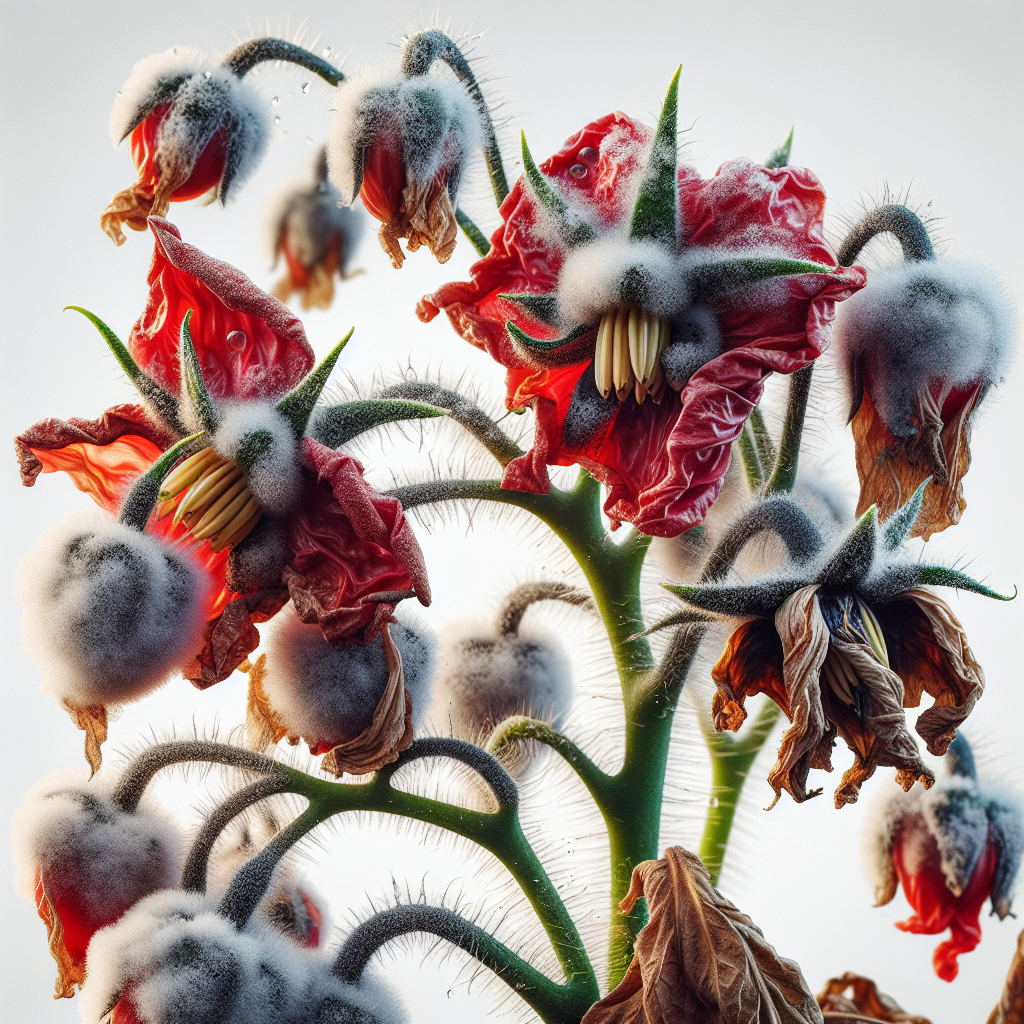
Introduction to flower blights
Flower blights represent a group of destructive fungal diseases that target the blossoms of plants, causing rapid tissue decay, wilting, and premature flower drop. These pathogens thrive in moist, humid conditions, making them a common threat in greenhouses, high-density plantings, and regions with frequent rain or dew. Unlike leaf spots or root rots, flower blights specifically attack reproductive structures, leading to significant aesthetic damage in ornamentals and yield losses in edible crops like tomato and strawberry.
The primary culprits include Botrytis cinerea (gray mold blight), Sclerotinia sclerotiorum (white mold), and Phytophthora species, which produce spores that spread via wind, water splash, or contaminated tools. In agricultural settings, flower blights can wipe out entire harvests if unchecked, costing growers thousands in lost revenue. This guide provides professional-grade diagnostics, organic treatments, and prevention strategies tailored for small farms and home gardens, drawing on botanical and entomological expertise to help you protect your blooms effectively.
Understanding flower blights is crucial for sustainable farming. These diseases not only reduce flower production but can also weaken plants, making them susceptible to secondary infections like powdery mildew or root rot. By recognizing early signs and implementing integrated management, growers can maintain healthy flowering crops year-round.
Identifying Symptoms & Damage
Diagnosing flower blights requires keen observation of specific symptoms that distinguish them from other issues like nutrient deficiencies or pest damage. Initial signs often appear as water-soaked lesions on petals, quickly turning brown or black as the tissue blights and collapses. Infected flowers may wilt dramatically within hours, even under adequate watering, accompanied by a fuzzy gray or white mycelial growth under humid conditions.
For Botrytis flower blight, look for grayish fuzz on petals and brown spotting that spreads rapidly, often with a musty odor. Sclerotinia causes white, cottony growth at the base of flowers, leading to stem cankers and black sclerotia (resting bodies) resembling mouse droppings. Phytophthora blights present as dark, firm rot with a sharp demarcation line between healthy and diseased tissue.
Damage extends beyond aesthetics: in fruit crops like bell pepper, blighted flowers abort, reducing fruit set by up to 50%. Ornamentals suffer total bloom loss, while secondary effects include plant stress and increased vulnerability to aphids or thrips. Use a hand lens to check for sporulation; confirm diagnosis by incubating suspect tissue in a moist chamber to observe pathogen growth. Differentiate from bacterial blights by the absence of oozing sap and slower progression.
Economic impact is severe in cut-flower production, where even 10% infection can render batches unsellable. Regular scouting—checking 20-30 plants per row weekly—is essential for early intervention.
Lifecycle and Progression of flower blights
Flower blight pathogens follow a predictable lifecycle tied to environmental cues. Most are polycyclic, producing multiple generations per season. Spores (conidia) germinate on wet flower surfaces within 4-6 hours at 15-25°C (59-77°F), penetrating tissues directly or via wounds. Mycelium colonizes petals, producing more spores that disseminate via splashing rain, overhead irrigation, or wind.
Overwintering occurs as sclerotia in soil/debris (Sclerotinia), mycelium in plant residue (Botrytis), or oospores in soil (Phytophthora). In spring, these structures release ascospores or zoospores during wet periods, infecting new blooms. Progression is rapid: infection to full blight takes 2-5 days under optimal humidity (>90% RH). Peak activity aligns with flowering stages, with secondary cycles every 7-10 days.
In greenhouses, constant humidity accelerates epidemics, while field crops see flare-ups post-rain. Understanding this cycle allows timed interventions, such as removing debris to break overwintering reservoirs. Links to Botrytis highlight its broad host range and resilience.
Environmental Triggers & Risk Factors
Flower blights explode under high humidity, poor ventilation, and temperatures of 18-24°C (64-75°F). Overhead watering splashes spores, while dense canopies trap moisture. Cool nights followed by warm days promote dew formation, ideal for germination.
Risk factors include wounded tissues from hail or mechanical injury, excessive nitrogen favoring succulent growth, and monocultures lacking diversity. Susceptible varieties, like certain rose hybrids, amplify outbreaks. Soil-borne Phytophthora thrives in poorly drained, compacted fields with pH <6.0.
Climate change intensifies risks with erratic rains. For more on predictive tools, see Why 80% of Small Farms Battle Weather Disasters - And How Hyper-Local AI Forecasts Can Save Your Harvest. Monitor leaf wetness hours (>12/day signals danger) and prune for airflow.
Organic Control & Treatment Plans
Organic management emphasizes cultural, biological, and minimal chemical controls. Start with sanitation: remove and destroy infected flowers promptly, avoiding composting to prevent sclerotia survival. Improve airflow by spacing plants 30-45 cm apart and pruning lower leaves.
Biological agents like Trichoderma harzianum or Bacillus subtilis suppress pathogens via antagonism; apply as foliar sprays every 7-14 days (e.g., Serenade). Baking soda (1 tbsp/gal water + 1 tsp hort oil) raises leaf pH, inhibiting Botrytis. Neem oil or potassium bicarbonate provide contact control without residues.
For severe cases, copper octanoate (e.g., Cueva) offers protectant action, rotating with sulfur to avoid resistance. Integrate with companion planting using marigold to deter vectors. In greenhouses, use fans for 1 m/s airflow and silica supplements to toughen tissues.
Treatment timeline: Scout weekly; apply preventives pre-bloom; curatives at first symptoms. Yields recover 70-90% with early action. Avoid night watering; morning applications dry quickly.
Preventing flower blights in the Future
Prevention is the cornerstone of long-term control. Select resistant varieties, such as disease-tolerant strawberry cultivars. Implement crop rotation (2-3 years away from solanaceous crops) and soil solarization to kill overwintering propagules.
Mulch with straw to reduce soil splash and maintain even moisture via drip irrigation. Boost plant immunity with compost teas rich in mycorrhizae and seaweed extracts. Monitor with weather stations tracking RH and leaf wetness; intervene at 10% incidence.
Clean tools with 10% bleach between plants. For small farms, AI-driven scheduling optimizes timings—check Why Timing Kills Small Farm Profits - And How AI Task Scheduling Saves Your Harvests. Annual soil tests guide amendments; aim for balanced fertility.
Crops Most Affected by flower blights
Flower blights strike a broad spectrum, but ornamentals and fruit crops suffer most. Top victims include roses, gerbera daisies, petunias, and snapdragons in cut-flower ops. Edibles like tomato, bell pepper, chili pepper, strawberry, raspberry, and cherry face chronic losses, with blossoms aborting and yields dropping 30-80%.
Brassicas (cabbage) and legumes (peas) are vulnerable during bloom. In tropics, mango and avocado flowers blight readily. Greenhouse cucumber and eggplant report high incidences. Always cross-reference with fungal blights for specifics.