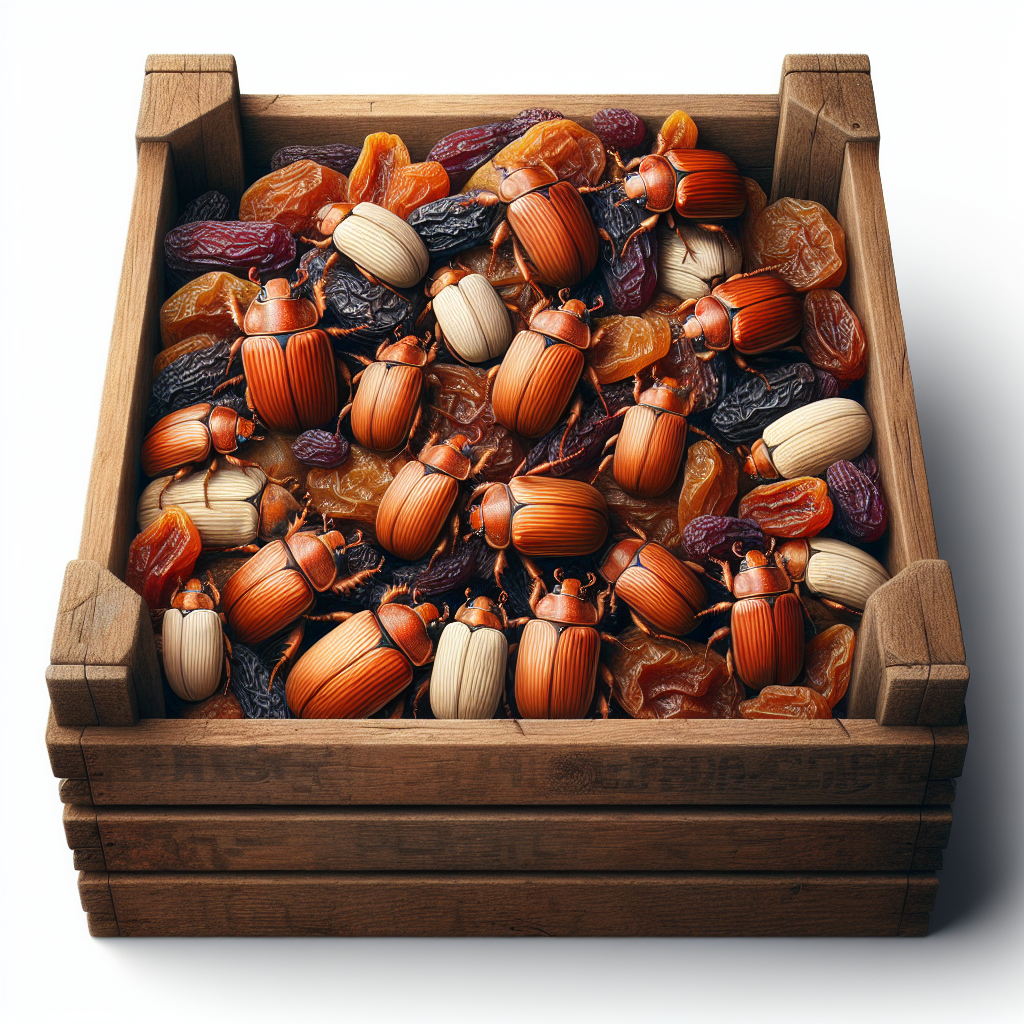
Introduction to Dried fruit beetles
Dried fruit beetles, scientifically known as Carpophilus species within the Nitidulidae family, represent a critical threat to post-harvest agriculture worldwide. These small, oval-shaped beetles (typically 2-4 mm long) are notorious scavengers, targeting dried fruits like fig, raisins, dates, and apricots, as well as fresh produce, grains, and even fungi. Unlike primary pests that attack living plants, dried fruit beetles excel in exploiting damaged or decaying organic matter, making them pervasive in storage warehouses, packing houses, and transport systems.
Farmers and agricultural professionals encounter these pests most frequently during harvest and storage seasons, where populations can explode from just a few individuals to infestations numbering in the thousands. Native to tropical and subtropical regions, species like Carpophilus hemipterus (dried fruit beetle) and Carpophilus mutilatus have spread globally via international trade. Their resilience stems from a broad diet—including fermented fruits, yeasts, and molds—allowing them to survive in diverse environments. Annual losses from dried fruit beetle damage can exceed millions in the dried fruit industry alone, with contamination rendering products unsalable due to frass (insect waste), cast skins, and live adults.
This guide provides definitive diagnostic tools, lifecycle insights, and proven organic management strategies tailored for small to medium-scale farms. By understanding their biology and implementing integrated pest management (IPM), growers can minimize losses and maintain marketable yields. Early detection is key, as these beetles are prolific breeders capable of completing a generation in as little as 2-3 weeks under optimal conditions. For more on related storage threats, see our entry on Storage Beetles. Check out this Spring Pest Patrol: Organic AI Strategies to Shield Your Crops from Common Invaders for broader seasonal tips.
Identifying Symptoms & Damage
Recognizing dried fruit beetle infestations requires attention to subtle signs, as adults and larvae often hide within commodities. Adult beetles are small (2-4 mm), reddish-brown to black, with a characteristic 'clubbed' antenna and a flattened body that enables them to squeeze into tight spaces. Larvae are creamy-white, scarab-like grubs with brown heads and three pairs of legs, measuring up to 5 mm.
Primary Damage Indicators:
- Feeding Tunnels and Galleries: Beetles bore irregular holes into dried fruits, creating powdery frass that resembles sawdust. In mango or date stores, fruits appear riddled with entry points.
- Contamination: Live adults, larvae, and frass coat surfaces, leading to mold growth (often Aspergillus spp.) due to yeasts introduced by beetles.
- Secondary Effects: Infestations accelerate spoilage; fresh fruits like banana or pineapple develop sour rot from bacterial vectored by beetles.
- Musty Odor: Fermenting smells from yeast-feeding indicate active populations.
Diagnostic Steps:
- Inspect storage bins for clumped, dusty produce.
- Use pheromone traps (e.g., Carpophilus lures) to detect low-level adults.
- Sift through samples: Look for white grubs and tiny beetles.
- Differentiate from similar pests like sap beetles by antenna shape and habitat preference.
Damage thresholds vary: In dried figs, >5 beetles/kg signals action; for grains, any presence warrants intervention to prevent mycotoxin spread. Economic impact includes downgrading (e.g., 20-50% value loss) and rejection by buyers.
Lifecycle and Progression of Dried fruit beetles
Understanding the lifecycle is essential for timing interventions. Dried fruit beetles undergo complete metamorphosis: egg, larva, pupa, adult.
- Eggs (1-3 days): Tiny (0.3 mm), laid singly or in clusters (up to 500/female) on moist food sources. Hatching in 2-4 days at 25-30°C.
- Larvae (7-14 days): Feed voraciously, molting 3-5 times. Wander to pupate in dry cracks or soil.
- Pupa (3-7 days): In silken cocoons in sheltered spots.
- Adults (2-8 weeks): Long-lived (up to 6 months), dispersive fliers attracted to volatiles from ripening/fermenting fruit. Females oviposit immediately.
Full cycle: 14-30 days at 25-35°C; slows below 15°C. Multiple generations/year (10-20 in tropics). Overwinter as adults in debris. Progression accelerates in humid stores (>60% RH), with peak activity post-harvest.
Environmental Triggers & Risk Factors
Dried fruit beetles thrive in warm (25-35°C), humid (>60% RH) conditions mimicking tropical origins. Key triggers:
- Temperature Fluctuations: Sudden warming post-cool storage activates diapause adults.
- Humidity: Moist piles promote breeding; leaky roofs exacerbate.
- Food Availability: Bruised avocado, overripe peach, or cull fruits serve as foci.
- Poor Sanitation: Spills, debris, and mixed storage with grains invite invasions.
- Proximity to Fields: Flight from nearby corn or sugarcane fields.
Risk factors include inadequate ventilation, wooden pallets harboring pupae, and international imports. Climate change extends seasons in temperate zones.
Organic Control & Treatment Plans
Organic IPM emphasizes prevention over cures. Avoid broad-spectrum synthetics; focus on layered defenses.
Immediate Actions:
- Sanitation: Remove cull fruits, vacuum debris, steam-clean surfaces (kills eggs/larvae).
- Monitoring: Deploy 2-4 pheromone traps/100m²; threshold: 1-2 beetles/trap/week.
- Physical Barriers: Fine mesh screens on vents; diatomaceous earth (DE) on floors.
Biological Controls:
- Predators: Release parasitic wasps (Beetles: Beetles-targeting Carpophilus-specific strains like Pychogramma spp.).
- Steinernema carpocapsae nematodes for soil-dwelling larvae.
Organic Treatments:
- Diatomaceous Earth/ Silica Gel: Dust commodities (3-5g/kg); desiccates insects.
- Essential Oils: Neem (0.5%) or eugenol sprays; repels and kills on contact.
- Biological Insecticides: Spinosad (OMRI-approved) at low rates for heavy infestations.
- Cold Storage: 0°C for 7 days kills all stages.
Treatment Plan:
- Week 1: Sanitize + traps.
- Week 2-4: Apply DE/neem; monitor.
- Ongoing: Rotate treatments to prevent resistance. Success rates: 80-95% with consistent IPM.
Preventing Dried fruit beetles in the Future
Long-term prevention hinges on cultural practices:
- Harvest Timing: Pick ripe fruits promptly; avoid over-maturity.
- Storage Hygiene: Dry to <14% moisture; use airtight bins.
- Facility Design: Sealed concrete floors, no cracks; UV lights for attraction.
- Crop Rotation/ Variety Selection: Resistant varieties where available.
- Quarantine: Inspect incoming produce.
- Scouting Schedule: Weekly trap checks during storage.
Integrated with Soil Health Mastery: 5 Proven Strategies for Small Farms to Build Fertile Ground Without Breaking the Bank principles, reduce attractants farm-wide.
Crops Most Affected by Dried fruit beetles
Dried fruit beetles target high-sugar, fermentable crops:
- Dried Fruits: Figs, raisins (grapes), dates, prunes (plum), apricots.
- Fresh Produce: Mango, banana, pineapple, papaya, tomatoes.
- Grains/Nuts: Corn, wheat, peanuts in storage.
- Others: Cacao, coffee, honeydew.
Global hotspots: California dried figs, Australian stone fruits, tropical mango packs. Losses peak in humid climates.