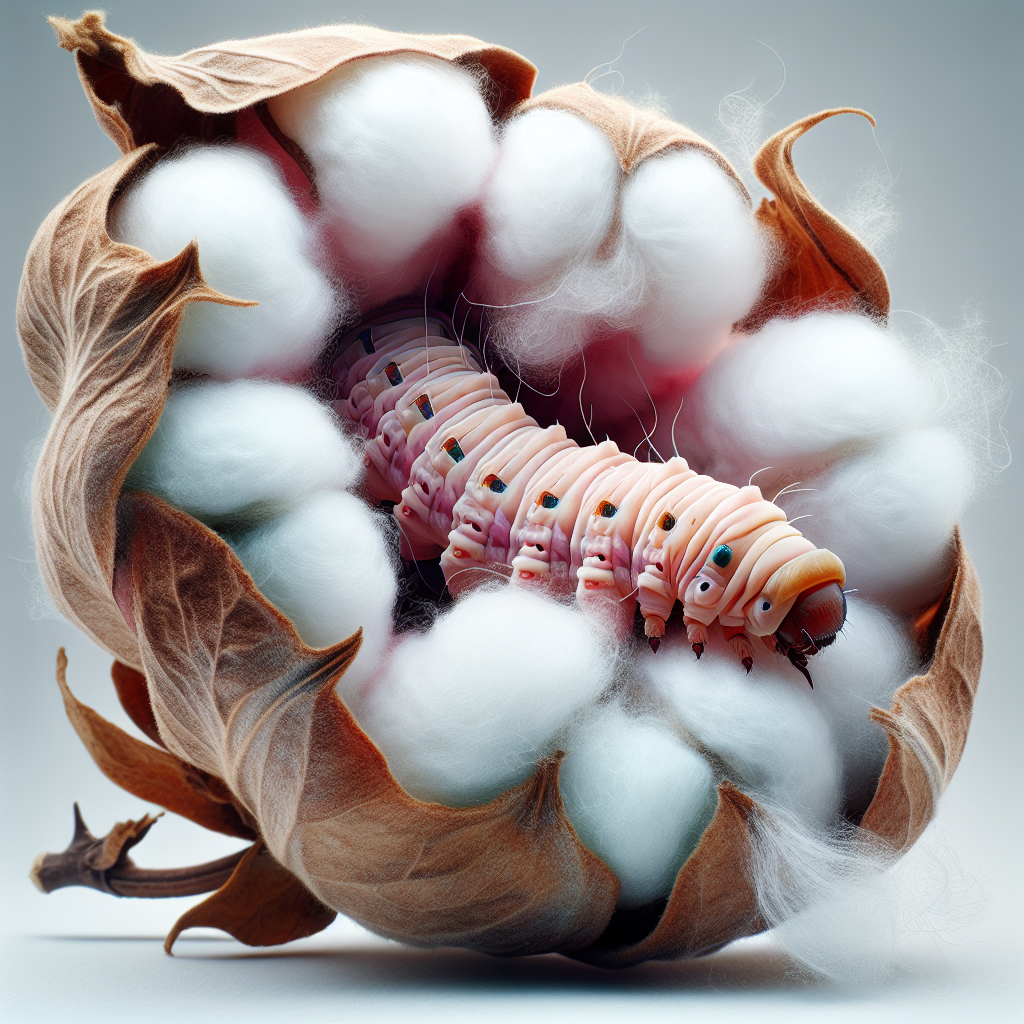
Introduction to Pink Bollworm
The pink bollworm (Pectinophora gossypiella) stands as one of the most notorious pests in global agriculture, particularly infamous for its relentless assault on Cotton (crop) production. Originating from India, this moth has spread across cotton-growing regions in Asia, Africa, the Americas, and beyond, inflicting billions in economic losses annually. Larvae tunnel into developing cotton bolls, feeding on seeds and fibers, which compromises lint quality and reduces yields by up to 50% in severe infestations. Early detection and proactive management are essential, as this pest develops resistance to many chemical insecticides, pushing growers toward integrated pest management (IPM) approaches. Understanding its biology empowers farmers to implement timely interventions, safeguarding crops and sustaining profitability. For small-scale and commercial operations alike, mastering pink bollworm control is key to resilient farming in warm climates.
Identifying Symptoms & Damage
Recognizing pink bollworm damage begins with scouting fields during boll development stages. Key symptoms include small entry holes (about 1-2 mm) on bolls, often marked by reddish frass (insect waste) resembling cocoa powder. Affected bolls appear distorted, swollen, or rosetted, with internal larvae creating tunnels that fill with frass and damaged fibers. Open bolls reveal pinkish-white larvae (up to 13 mm long) inside locks, preventing lint expansion and causing locks to rot. Severe infestations lead to premature boll drop, reduced seed germination, and lint stained pink-brown from larval feeding.
Differentiate from similar pests like Helicoverpa species or capsule borers, which cause larger exit holes and less internal webbing. Use a boll-splitting knife to inspect 25-40 bolls per acre; if 5-10% show live larvae, action is needed. Damage peaks in late-season bolls, impacting harvest quality. For precise diagnosis, check for the characteristic 'pick mass'—matted fibers from larval silk. Early symptoms on squares (floral buds) include shriveling and shedding, mimicking leaf-feeding caterpillars. Regular monitoring with pheromone traps enhances accuracy, preventing escalation.
Lifecycle and Progression of Pink Bollworm
The pink bollworm completes 10-15 generations per year in tropical regions, thriving in temperatures of 20-30°C (68-86°F). Adults are small, beige moths (10-15 mm wingspan) with wing fringes, active at dusk. Females lay 100-200 tiny, cream-colored eggs singly on bolls, squares, or leaves, hatching in 3-5 days into larvae. Neonate larvae (0.2 mm) bore into plant tissue, molting through five instars over 10-20 days, turning from brown to pink. Mature larvae (pink with brown head) exit to pupate in soil, bolls, or trash, forming a reddish-brown pupa (7 mm) that emerges as adults in 5-10 days.
Overwintering occurs as diapausing larvae in pre-harvest bolls or hibernacula in crop residue. In spring, warmer soil (above 15°C) triggers pupation. Lifecycle duration shortens with heat, accelerating outbreaks. Track progression using degree-day models: eggs hatch at 120 DD, pupation at 300 DD (base 13°C). This knowledge guides timed interventions, like destroying volunteer corn or sorghum hosts that bridge generations.
Environmental Triggers & Risk Factors
Pink bollworm flourishes in arid to semi-arid zones with cotton monocultures, mild winters, and irrigation. High night temperatures (>21°C) boost reproduction, while drought-stressed plants emit volatiles attracting moths. Risk spikes near overwintering sites like harvested fields with gin trash or volunteer cotton. Poor sanitation—leaving bolls on plants or improper tillage—harbors diapausing larvae. Dense plantings (>10 plants/m²) and late-maturing varieties extend exposure windows.
Global trade spreads it via infested lint; quarantine is vital. Climate change extends ranges northward, threatening new areas. Companion crops like wheat or peanuts can dilute risks if rotated properly. Monitor Spring Pest Patrol: Organic AI Strategies to Shield Your Crops from Common Invaders for predictive tools. Soil moisture >20% post-harvest aids larval survival, emphasizing fall plowing.
Organic Control & Treatment Plans
Organic management hinges on IPM, integrating cultural, biological, and minimal mechanical tactics. Cultural Controls: Destroy crop residue by deep fall plowing (20-30 cm) to expose pupae to predators and desiccation. Time planting to avoid peak moth flights; use short-season varieties. Hand-pick and burn infested bolls weekly. Flood irrigation disrupts pupation.
Biological Controls: Encourage natural enemies like Trichogramma wasps (egg parasitoids), lacewings, and ladybugs. Release Trichogramma pretiosum at 50,000-100,000/ha every 7-10 days during bloom. Bacillus thuringiensis (Bt) kurstaki sprays (2-5 g/L) target larvae within 24 hours of egg hatch, safe for organics.
Pheromone and Mechanical: Deploy delta traps with (Z,Z)- and (Z,E)-7,9-dodecadienyl acetate lures for monitoring (3-5 traps/ha). Mass-trapping or mating disruption with dispensers (200-500/ha) confuses males, reducing oviposition by 70-90%. Aspirate larvae from bolls using vacuums.
Treatment Plans: Scout weekly; treat at 8% infested bolls or 10 moths/trap/night. Rotate tactics to prevent resistance. For outbreaks, combine Bt with neem oil (5 ml/L) or spinosad (organic-approved, 0.5 ml/L). Check Soil Health Mastery: 5 Proven Strategies for Small Farms to Build Fertile Ground Without Breaking the Bank for enhancing beneficials via compost.
Preventing Pink Bollworm in the Future
Prevention starts with certified, pest-free seeds and strict sanitation. Implement mandatory crop-free periods (30-60 days) post-harvest, followed by tillage. Rotate with non-hosts like soybeans, chickpeas, or Upland Cotton varieties with bollworm tolerance. Erect 2m bird perches and maintain weedy borders for predators. Use reflective mulches early season to deter oviposition.
Farm-wide IPM includes threshold-based actions and record-keeping. Quarantine new fields; inspect machinery. Community efforts like area-wide pheromone traps amplify success. Long-term, breed resistant varieties and monitor climate shifts. Educate laborers on rogueing volunteers. Sustainable practices ensure pink bollworm remains manageable, boosting yields 20-30%.
Crops Most Affected by Pink Bollworm
Primarily Cotton, especially Pima Cotton and Upland Cotton, suffers 20-100% losses untreated. Okra is a secondary host, with similar boll boring. Rare attacks on hibiscus or [hollyhock], but negligible impact. No significant damage to grains like rice or vegetables like tomato. Focus protection on cotton; okra fields near cotton risk spillover.