Introduction to Citrus psyllids
Citrus psyllids represent one of the most significant threats to global citrus industries, primarily due to their role as vectors for huanglongbing (HLB), also known as citrus greening, a bacterial disease caused by Candidatus Liberibacter spp. The primary species include the Asian citrus psyllid (Diaphorina citri), prevalent in the Americas, Asia, and Australia, and the African citrus psyllid (Trioza erytreae), dominant in Africa and parts of Europe. These tiny, winged insects (2-3 mm long) feed on new flushes and leaves, injecting toxins that cause cupping and distortion, while transmitting HLB, which leads to mottled leaves, bitter fruit, premature drop, and eventual tree death.
First identified in China in the early 1900s, citrus psyllids have spread rapidly through international trade, devastating production in Florida (over 75% tree loss since 2005), Brazil, and other regions. Economic impacts exceed billions annually, with infected trees yielding unsellable, misshapen fruit. Early detection is vital, as symptoms mimic nutrient deficiencies or citrus leafminer damage. Growers must integrate monitoring, cultural practices, and targeted controls to safeguard orange, lemon, lime, and grapefruit varieties. This guide equips farmers with diagnostic tools, lifecycle knowledge, and organic strategies for effective management. For small farms battling multiple pests, check out Spring Pest Patrol: Organic AI Strategies to Shield Your Crops from Common Invaders.
Identifying Symptoms & Damage
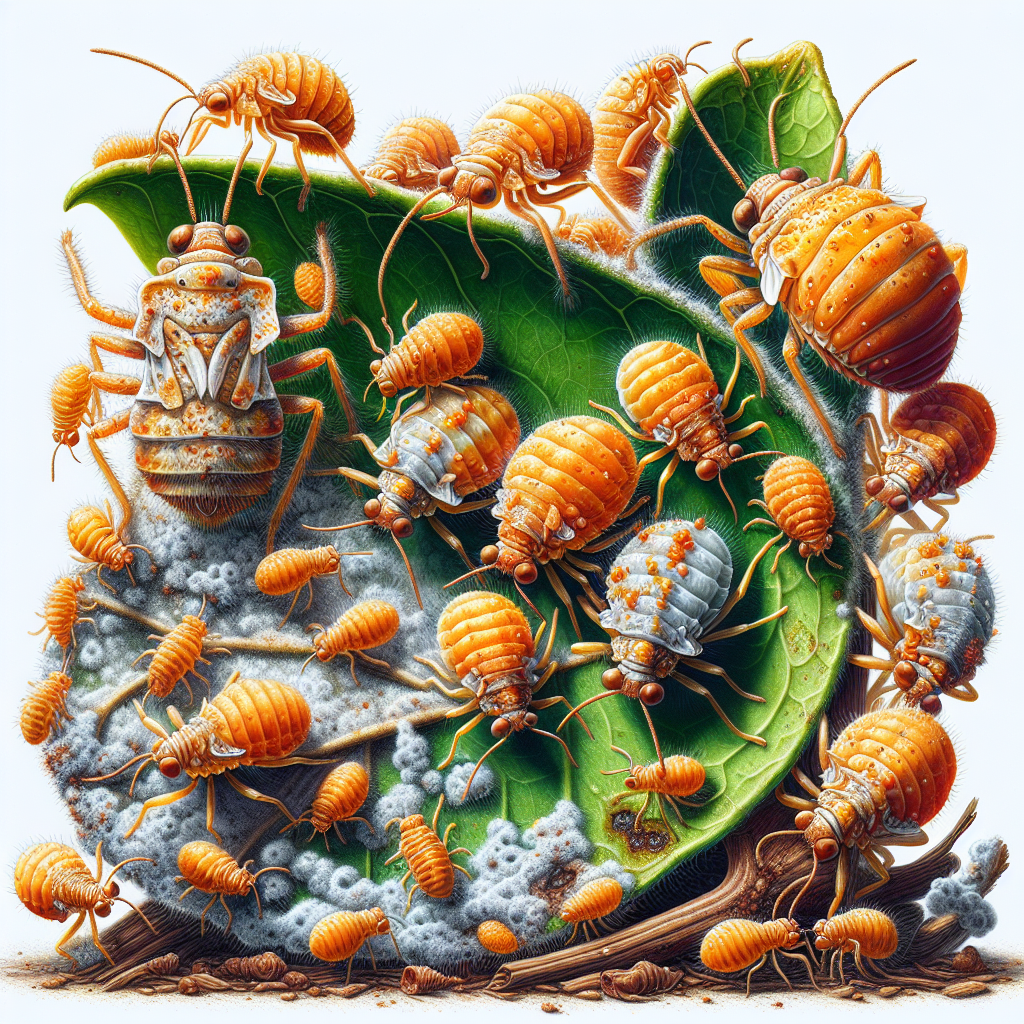
Accurate diagnosis begins with scouting new growth on terminals, where psyllids congregate. Adults are slender, mottled brown insects with transparent wings held roof-like at rest; nymphs are orange-yellow, flat, and covered in waxy filaments resembling 'lemon drops.' Use a hand lens to spot honeydew, sooty mold, and nymphal cast skins.
Direct Feeding Damage: Nymphs and adults pierce phloem, causing 'psyllid yellows'—chlorotic, upright leaves with cupped, twisted tips and shoot dieback. Severe infestations stunt trees, reducing flush production by 50-70%.
Indirect Damage via HLB: The hallmark is asymmetric mottling (blotchy yellowing), vein corking, starch depletion (bitter fruit), and canopy thinning. Fruit symptoms include lopsided, small, green-rinded oranges with aborted seeds. Confirm HLB via PCR testing, as symptoms overlap with mites or scale insects.
Differentiate from whiteflies (powdery wings) or aphids (clustered, no wax). Tap branches over white paper to dislodge psyllids for inspection. Thresholds: 0.2 adults/terminal for low-risk; >1 nymph/terminal triggers action. Regular scouting (weekly in flush periods) prevents outbreaks.
Lifecycle and Progression of Citrus psyllids
Understanding the lifecycle is key to timing interventions. Psyllids complete 5-12 generations yearly, depending on climate (optimal 24-28°C). Eggs (yellow, kidney-shaped) hatch in 2-4 days on tender leaves.
Nymphal Stages (5 Instars, 10-18 days): Immobile, feed gregariously, producing honeydew and white flocculent wax. 2nd-3rd instars are most dispersive. They molt 4 times, leaving exuviae.
Adults (Lifespan 20-50 days): Highly mobile, females lay 500-800 eggs. Peak populations coincide with spring/summer flushes. Dispersal up to 2 km via wind.
Overwinter as adults in mild climates. Progression: Egg hatch → Nymph → Teneral adult → Reproductive adult. HLB acquisition peaks in 3rd-5th nymphal stages, with 80% transmission efficiency. Monitor with stem-tap counts or sticky traps baited with lemon oil.
Environmental Triggers & Risk Factors
Psyllids thrive in warm, humid conditions (20-30°C, 60-80% RH), exploding during flush cycles induced by irrigation/fertilization. New plantings from infested nurseries introduce them; wind currents spread adults. Poor sanitation (volunteer seedlings) and alternate hosts like murraya (orange jessamine) serve as reservoirs.
Risk factors: Dense canopies trap humidity; excessive nitrogen promotes flush; drought stress weakens trees. Regions like Florida (year-round activity) vs. cooler areas (seasonal). Climate change extends ranges, as seen in California's 2023 outbreaks. Overlaps with thrips or leafminers compound damage.
Organic Control & Treatment Plans
Prioritize IPM: Monitor, cultural, biological, then organic sprays.
Cultural: Prune for open canopies (reduce humidity); remove suckers/volunteers; reflective mulches deter adults. Plant HLB-tolerant rootstocks like US-942.
Biological: Encourage predators—ladybugs, lacewings, syrphid flies (release 1,000/acre). Tamarixia radiata parasitoid (80% nymph mortality); release 2,000/acre monthly.
Organic Treatments:
- Oils/Soaps: Neem oil (0.5-2%) or insecticidal soap (1-2%) smother all stages; apply evenings, 7-10 day intervals, 3x.
- Spinosad: OMRI-listed, targets nymphs (0.2-0.4 oz/gal); rotate to avoid resistance.
- Kaolin Clay: Surround WP coats leaves, repels adults.
Plan: Scout weekly; treat at 0.5 nymphs/10 terminals. Combine with huanglongbing management—remove infected trees promptly. Efficacy: 70-90% reduction with integrated approaches.
Preventing Citrus psyllids in the Future
Prevention beats cure. Use certified, psyllid-free nursery stock; inspect shipments. Install 30-mesh screens on young trees; copper screens for windbreaks. Eradicate alternate hosts within 100m. Calendar sprays during peak flush (March-June, Sept-Oct). Reflective ground covers (aluminum) reduce landings by 50%. Rotate organics; avoid broad-spectrum. Area-wide management—coordinate with neighbors for trap crops. Resistant varieties like 'Sugar Belle' mandarin show promise. Annual audits ensure compliance.
Crops Most Affected by Citrus psyllids
Primarily Rutaceae family: Navel Orange, Valencia Orange, Eureka Lemon, Persian Lime. Grapefruit, mandarins, tangerines highly susceptible. HLB-tolerant: Some trifoliate hybrids. Minor hosts: Mock orange. Commercial impact greatest on orange (80% losses in epidemics). Home gardens with Meyer Lemon vulnerable without monitoring.