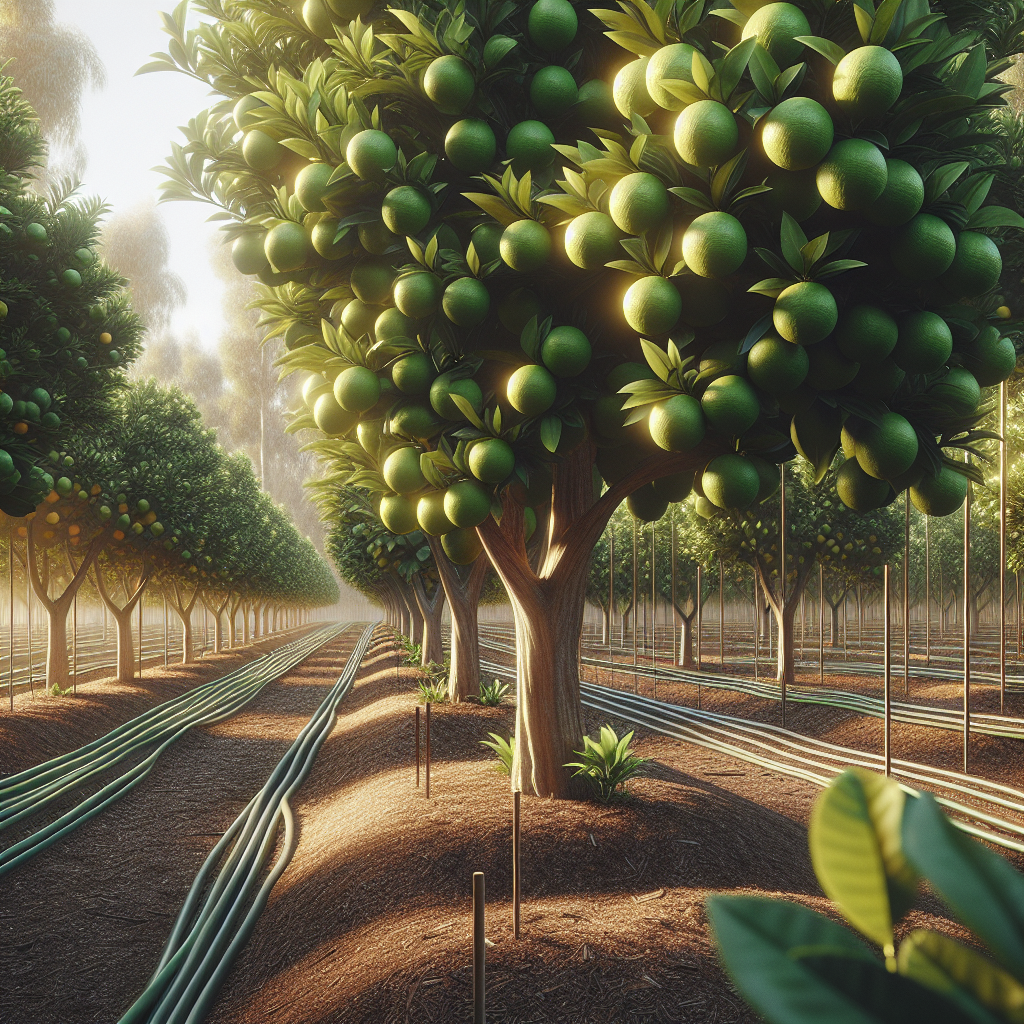
Introduction to Persian Lime
Known in trade as Tahiti lime or Bearss lime in some regions, this crop is a thornless to nearly thornless acid citrus grown primarily for fresh market and culinary use. It differs from the smaller, seedier Key lime by producing larger fruit with a smoother rind, fewer seeds, and a milder but still distinctly sharp acidity. In warm climates, it can flower and fruit in multiple flushes across the year, though one or two main harvest windows usually dominate depending on local temperature, irrigation, and pruning patterns.
From a production standpoint, it is one of the most practical citrus crops for growers who want strong consumer demand and relatively consistent fruit set under warm conditions. The fruit is typically harvested green at commercial maturity rather than tree-ripened to yellow. That matters because external color is not the best indicator of quality in this crop; juice content, size, rind texture, and internal maturity are more reliable. Growers also favor it because the tree is more vigorous and generally easier to manage than true Key lime in many orchard systems.
Historically, this lime is believed to be a hybrid citrus, likely involving citron and papeda ancestry through complex citrus lineage. It became important in global production because of its adaptability, shipping quality, and consumer preference for larger, seedless limes. If you already grow other citrus, compare general citrus canopy and fertility management principles with a broader lime guide, but Persian lime has several distinct production details that deserve crop-specific attention.
Botanical Profile of Persian Lime
This tree belongs to the Rutaceae family and is classified botanically as Citrus × latifolia, indicating hybrid origin rather than a fully wild species. It is evergreen, broadleaf, and moderately vigorous, often reaching 12-20 feet tall in unmanaged conditions, though most orchard trees are maintained smaller for spraying, pruning, and harvest efficiency. On dwarfing or semi-dwarfing rootstocks and in containers, it may remain much more compact.
Leaves are glossy, medium to dark green, elliptic, and aromatic when crushed, with winged petioles that are less pronounced than in some other citrus. New flush growth is tender, light green, and highly attractive to sap-sucking pests such as aphids, leafminers, and psyllids. Flowers are white, fragrant, and produced singly or in small clusters. Bloom timing is often tied to a cycle of stress and recovery: a dry or cool period followed by irrigation or warmer weather can trigger flowering flushes.
Fruit is oval to slightly oblong, typically 5-7 cm across, with a firm, smooth rind that is green when commercially harvested and can turn pale yellow if left on the tree. The flesh is pale green to yellow-green, juicy, acidic, and usually nearly seedless under normal pollination conditions. The tree is generally self-fertile, so a single planting can bear fruit without a separate pollinizer. However, strong bee activity can still improve overall bloom utilization and orchard ecology.
One practical nuance is that Persian lime can show irregular bearing when heavily stressed. Extended drought, cold injury, root damage, or excessive nitrogen pushing vegetative growth at the wrong time can all shift the balance between leaf flush and fruiting. Understanding flush cycles is central to managing this crop well.
Soil, pH, and Climate Requirements for Persian Lime
This crop performs best in deep, well-drained sandy loam to loam soils with high oxygen availability in the root zone. The ideal soil pH is 6.0-7.0, though trees can tolerate roughly 5.5-7.5 if nutrient imbalances are corrected. Above pH 7.5, iron, zinc, and manganese deficiencies become more likely, especially in calcareous soils. At low pH below 5.5, aluminum toxicity risk rises and calcium and magnesium availability may become limiting.
Drainage is not optional. Persian lime roots are highly sensitive to waterlogging and low soil oxygen. If the planting site remains saturated for more than 24-48 hours after irrigation or rain, feeder roots begin to suffer. Chronic wet feet often show up as dull leaf color, leaf drop, sparse canopy, reduced flush vigor, and greater susceptibility to Phytophthora root rot. In contrast, a healthy root environment supports steady flushes, strong flowering, and uniform fruit size.
A practical target is to keep moisture in the active root zone consistently moist but never swampy. In the top 12-18 inches of soil, conditions should feel cool and slightly damp, not sticky, anaerobic, or sour-smelling. In sandy soils, irrigation may be needed more frequently with smaller volumes. In heavier soils, the interval should be longer, with careful monitoring to avoid perched water. If using tensiometers, many citrus growers aim to irrigate before tension becomes severe, often around 20-30 centibars in lighter soils and 30-40 in heavier soils, though exact thresholds depend on rootstock, weather, and orchard floor management.
Climatically, Persian lime prefers frost-free subtropical to tropical conditions. Optimal growth occurs where daytime temperatures commonly range from 77-95°F (25-35°C). Flowering and fruit set are best when trees avoid strong heat stress during bloom and severe chill during winter. This crop is less cold tolerant than many sweet oranges. Light frost can damage tender flush; temperatures near 30°F (-1°C) may injure leaves and young twigs, while harder freezes can severely damage scaffold limbs or kill young trees.
Wind protection is also important. Persistent wind scars fruit, tears leaves, dries blossoms, and increases water demand. In exposed sites, windbreaks and strategic shelterbelts improve fruit finish and reduce branch breakage. For broader site planning and soil-building ideas, see soil health tips.
Step-by-Step Planting & Propagation
Commercially, this crop is almost always propagated by budding or grafting onto selected citrus rootstocks rather than grown from seed. Seed propagation is unsuitable if you want predictable orchard performance because hybrid citrus seedlings vary in vigor, fruit quality, disease tolerance, and bearing habit. Grafted trees also come into bearing earlier and offer rootstock-based adaptation to soil and disease conditions.
Choose certified disease-free nursery stock. This is especially important for citrus because systemic diseases such as huanglongbing, tristeza, and viroid issues can enter an orchard through infected propagation material. A quality young tree should have a straight trunk, a healthy graft union, no bark cracking, no root circling severe enough to strangle establishment, and a balanced canopy with several strong shoots.
Site preparation should begin weeks to months before planting. Remove perennial weeds, correct drainage problems, and incorporate organic matter only if it will not create a perched, overly wet planting pocket. In orchards, avoid digging a small rich hole in otherwise poor soil; roots often stay confined there. Instead, improve the broader site and plant into native soil that drains well.
Planting steps:
- Mark spacing based on rootstock vigor and management style. Typical orchard spacing ranges from about 12-18 feet within rows and 18-24 feet between rows. High-density systems are possible with disciplined pruning.
- Dig a hole only as deep as the root ball and about 2-3 times as wide.
- Tease out any circling roots gently if container-bound.
- Set the tree so the top of the root ball sits slightly above finished soil grade, especially in heavier soils.
- Keep the graft union several inches above the soil line to prevent scion rooting and collar issues.
- Backfill with native soil, firm lightly, and water thoroughly to settle air pockets.
- Form a broad irrigation basin, but do not pile mulch against the trunk.
- Apply 2-4 inches of mulch over the root zone, leaving a 6-inch mulch-free ring around the trunk.
The best planting season is early spring after frost danger has passed and before peak summer heat. In truly tropical climates with reliable irrigation, planting at the start of the rainy season also works well. Avoid planting during cold snaps, waterlogged periods, or the hottest, driest weeks unless irrigation and shade protection are excellent.
For home growers in containers, use a fast-draining citrus mix with coarse bark, mineral aggregate, and enough fine material to retain moderate moisture. Containers must have exceptional drainage. Repot when roots densely fill the pot, but avoid oversized containers that stay wet too long.
Care & Maintenance regimes for Persian Lime
Irrigation management changes with tree age. Newly planted trees need frequent, light-to-moderate irrigation because their roots occupy only a small soil volume. In warm weather, that may mean watering 2-3 times per week in sandy soils and less often in loam, always checking moisture before repeating. Mature trees need deeper irrigation that wets the majority of the feeder root zone, usually extending near or beyond the canopy dripline.
Underwatering signs include curled or folded young leaves, dull canopy color, fruit drop, reduced flush size, and fruit that remain undersized with thick rind. Severe moisture stress around bloom and early fruit set can sharply reduce yield. Overwatering signs include yellowing leaves without crisp edges, soft lush but weak growth, algae or fungal growth at the soil surface, sour-smelling soil, and persistent leaf drop despite adequate fertility. If you dig 6-8 inches down two days after irrigation and the soil is still muddy or oxygen-poor, you are likely watering too much or too often.
Nutrition should be based on leaf analysis and soil testing, but general citrus principles apply. Persian lime is a relatively hungry evergreen crop with repeated flush cycles, so nitrogen is especially important. Young trees benefit from small, frequent applications during active growth. Mature trees usually receive split applications across the season, often 3-5 times annually depending on climate and irrigation system. Excess nitrogen, however, can push too much vegetative growth, soften tissues, increase pest pressure, and delay balanced fruiting.
Key nutrients and common deficiency symptoms:
- Nitrogen: general pale leaves, weak growth, low canopy density.
- Iron: interveinal chlorosis on youngest leaves, common in alkaline soils.
- Zinc: small leaves, rosetting, irregular chlorosis, weak shoots.
- Manganese: chlorosis similar to iron but with different vein patterns.
- Magnesium: yellowing on older leaves, often leaving a green inverted V near the leaf base.
- Potassium: poor fruit size, lower juice content, marginal leaf issues under deficiency.
Pruning is usually light to moderate. Remove dead wood, crossing branches, water sprouts from below the graft, and interior congestion that blocks light and air. Avoid heavy pruning unless rejuvenation is needed, because severe cuts stimulate excessive vegetative regrowth at the expense of near-term production. Keep lower skirts high enough to improve air movement and reduce soil-borne disease splash, but do not over-limb trees to the point of exposing scaffold bark to sunburn.
In hot inland climates, whitewashing exposed trunks and major limbs can prevent sunscald after pruning. Training young trees to 3-5 well-spaced scaffold limbs helps maintain structure. Fruit thinning is rarely done commercially, but if a young tree sets an excessively heavy crop, removing some fruit can improve canopy establishment.
Weed control is important because citrus has many shallow feeder roots. Avoid aggressive cultivation near the trunk. Use mulch, shallow hand weeding, or carefully managed herbicide strips in commercial settings. Living groundcovers can work if they do not compete aggressively for moisture. Low-growing clover is often used as a beneficial understory in some orchard systems because it supports pollinators, moderates erosion, and contributes some nitrogen cycling when managed properly.
Pests, Diseases & Organic Management
This crop attracts a typical citrus pest complex, but severity depends heavily on region. The most common issues include citrus leafminer, aphids, scale insects, mealybugs, spider mites, thrips, and whiteflies. In some areas, Asian citrus psyllid is the most serious vector concern because it transmits huanglongbing (citrus greening), one of the most destructive citrus diseases worldwide.
Leafminer larvae tunnel through tender new leaves, causing silvery serpentine trails and distorted flush. Mature trees usually tolerate some damage, but repeated attacks on young trees can slow establishment. Since leafminer targets soft new growth, avoid unnecessary nitrogen surges that trigger excessive flushing. Organic suppression can include horticultural oil timed to vulnerable stages, support of natural enemies, and strategic pruning of badly affected tender flush on very young trees.
Scale and mealybugs cluster on stems, leaf undersides, and fruit, sucking sap and producing honeydew that leads to sooty mold. Ant control is crucial because ants protect these pests from predators. Sticky trunk barriers, baiting, and orchard sanitation improve biological control effectiveness. Horticultural oils are often highly effective when coverage is thorough and temperatures are not excessively high.
Mites become problematic under hot, dusty, dry conditions. Damage appears as stippling, bronzing, or reduced leaf vitality. Improving irrigation consistency, reducing dust, and preserving predatory mites are central organic strategies.
Major diseases include Phytophthora root and collar rot, greasy spot, melanose, anthracnose, and region-specific bacterial or viral problems. Phytophthora is strongly linked to poor drainage, excessive irrigation frequency, and mulch or soil piled against the trunk. Symptoms include gum exudation near the crown, bark deterioration, reduced vigor, yellowing, leaf drop, and dieback. The best organic management is prevention: well-drained sites, correct planting depth, clean irrigation practices, and avoiding trunk injury.
citrus canker risk depends on geography and regulatory status. It causes raised corky lesions on leaves, stems, and fruit and spreads more readily under wind-driven rain. Sanitation, wind protection, certified nursery stock, and compliance with local regulations are essential.
For organic orchard resilience, focus on five pillars: certified clean planting material, drainage management, balanced nutrition, canopy airflow, and biological conservation. Remove fallen diseased fruit, prune out dead twigs, disinfect tools between suspect trees, and monitor flushes closely because many pests concentrate on young tissue.
Harvesting, Curing & Optimal Storage
Fruit is usually harvested when fully sized, firm, and glossy to slightly dull depending on maturity stage, with good juice content and a dark to medium green rind. Commercial maturity standards often rely more on size, juice percentage, and internal quality than on full color break. If left too long on the tree, fruit may yellow, become puffier, lose market-preferred appearance, and in some conditions become less desirable for shipping.
Harvest by clipping or carefully twisting without tearing the rind. Rind injury shortens shelf life and increases postharvest decay. Pick during the coolest part of the day when possible, and do not harvest wet fruit if disease pressure is high. Use clean, padded bins and avoid overfilling containers because compression scars lower-grade fruit quickly.
Unlike curing crops such as onions or garlic, Persian lime does not undergo a true curing phase. Instead, postharvest handling focuses on field heat removal, grading, cleaning, and maintaining proper humidity and temperature. Fruit should be shaded immediately after harvest. Ideal storage generally falls around 46-54°F (8-12°C) with high relative humidity around 85-95%. Temperatures that are too low can induce chilling injury, especially over extended storage, leading to rind pitting, discoloration, and poor shelf life.
At room temperature, fruit may keep for 1-2 weeks depending on harvest maturity and handling. Under good cold-chain conditions, storage may extend several weeks, though flavor and appearance gradually decline. Keep fruit away from ethylene-heavy storage environments when possible, because ethylene can accelerate yellowing. For fresh market sales, sort out fruit with cuts, soft spots, canker-like lesions, or sunburn because these deteriorate rapidly and can affect adjacent fruit.
A subtle harvest insight with this crop is that repeated light harvests often maintain better packout than infrequent stripping. Regular picking reduces overmature fruit, improves consistency, and may support a steadier production rhythm in climates where bloom and fruiting overlap.
Companion Planting for Persian Lime
Good companions for this tree support pollinators, improve orchard-floor ecology, reduce erosion, or provide pest-management benefits without competing aggressively for water right at the trunk. The best companions are usually low-growing, shallowly managed species placed outside the immediate crown zone rather than dense plantings pressed against the stem.
Thai Basil is useful near but not directly under the canopy in warm gardens because its flowers attract pollinators and beneficial insects, and its aromatic foliage may help diversify the insect environment. Garlic can be planted in rings farther from the trunk where irrigation allows, contributing a low, manageable companion that does not create heavy shade. Clover works as a living mulch between rows or in wide basins if moisture competition is monitored carefully; mow or suppress it during dry periods so the tree remains the irrigation priority.
Companion planting should never replace proper fertility and irrigation management. In young orchards, keep a vegetation-free circle around each trunk at least 2-3 feet wide, expanding management with tree age and root spread. In humid climates, avoid companions that create dense, wet airflow at the trunk base because that encourages fungal disease. In dry climates, companions can be more useful as soil armor so long as irrigation is adjusted to account for their water use.
The most successful companion strategy is zoned layering: a clean trunk area, a mulched feeder-root zone, and a managed beneficial strip farther out. That pattern protects the crown, moderates soil temperature, supports beneficial insects, and still lets you inspect irrigation emitters, surface roots, and disease symptoms easily.