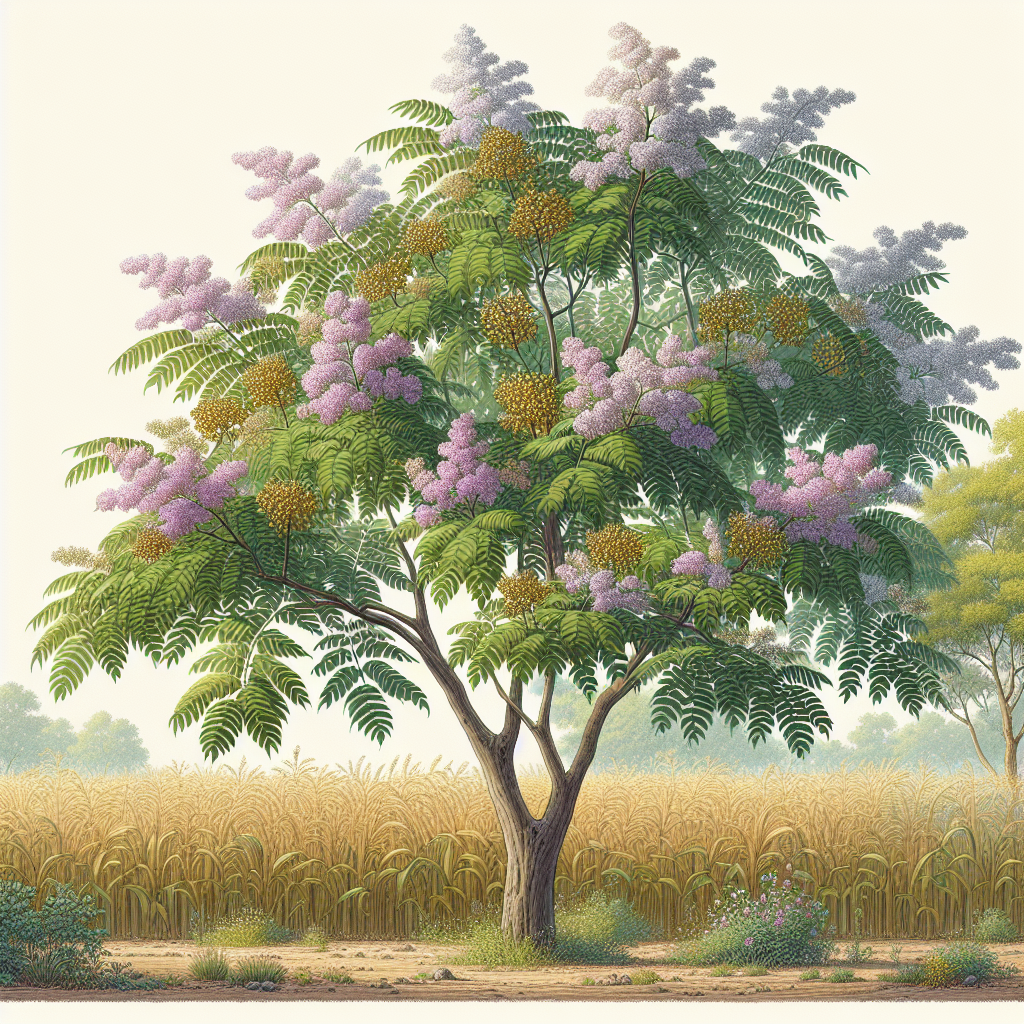
Introduction to chinaberry
Chinaberry, scientifically known as Melia azedarach, is a fast-growing invasive tree species that poses significant challenges to agricultural systems worldwide. Native to India and southeastern Asia, it was introduced to the United States in the late 1700s as an ornamental plant and for its purported medicinal properties. Today, it thrives in USDA hardiness zones 7-11, particularly in the southern U.S., Central America, Australia, and parts of Africa, where it invades pastures, woodlands, roadsides, and crop fields. Standing 20-50 feet tall with a broad canopy, chinaberry forms dense thickets that suppress native plants and reduce biodiversity.
As an agricultural pest, chinaberry competes aggressively for sunlight, water, and nutrients, often overwhelming young crops and orchards. Its allelopathic compounds—chemicals released from roots, leaves, and bark—inhibit the growth of nearby plants, including staples like corn, soybeans, and cotton. Mature trees produce clusters of yellow berries that birds and mammals disperse widely, ensuring rapid colonization. While not directly toxic to humans in small amounts, the berries are poisonous to livestock, causing gastrointestinal distress, diarrhea, and potentially fatal cardiac issues if ingested. Early detection and proactive management are crucial, as mature trees develop deep taproots and thick bark, making removal labor-intensive. This comprehensive guide equips farmers with professional-grade strategies for diagnosis, lifecycle understanding, organic control, prevention, and insights into affected crops. For more on invasive plant management, see our Spring Pest Patrol: Organic AI Strategies to Shield Your Crops from Common Invaders.
Identifying Symptoms & Damage
Diagnosing chinaberry infestations requires keen observation of both the tree itself and indirect signs of its impact on crops. Adult trees are unmistakable: they feature pinnately compound leaves resembling those of tomato or mango plants but larger (12-18 inches long), with 7-13 leaflets per leaf. Fragrant lilac-colored flowers bloom in spring (March-May), followed by smooth gray bark on trunks up to 2 feet in diameter. The golden-yellow berries (0.5 inches) persist through winter, staining soil and machinery.
Damage manifests in several ways. In crop fields, chinaberry seedlings and saplings (under 10 feet) emerge densely under mature trees or along fence lines, shading out understory crops and reducing yields by 30-50% in severe cases. Allelopathy is a stealthy killer: triterpenoids like meliatoxins leach into soil, stunting root growth in sensitive species like wheat and sorghum. Look for yellowing leaves, wilting, and sparse stands near chinaberry clusters—symptoms mimicking root-knot nematodes or fusarium wilt.
Livestock areas show poisoned animals with vomiting, weakness, and berry-littered pastures. In orchards, chinaberry drop interferes with harvest, and roots compete with trees like avocado or citrus. Scout edges of fields, ditches, and windbreaks weekly during spring germination. Use a hand lens to confirm serrated leaflet edges and trifoliate seed pods. Differentiate from native ash (Fraxinus spp.) by chinaberry's opposite leaves and berry clusters versus ash's winged samaras. Early ID prevents establishment; mature trees yield up to 1 million viable seeds annually.
Lifecycle and Progression of chinaberry
Understanding the chinaberry lifecycle is key to timed interventions. This perennial tree follows an annual cycle tied to temperate-subtropical climates. Seeds, encased in leathery drupes, overwinter on the ground or pass through bird guts for scarification, germinating in spring (soil temps 65-75°F) with near 100% viability if not dried out. Seedlings grow 2-4 feet in year one, developing compound leaves and taproots up to 10 feet deep by maturity.
Vegetative growth peaks summer, with rapid canopy expansion (3-6 feet/year). Flowering occurs April-June, self-pollinating via wind and insects, producing 100-200 berries per cluster by fall. Trees reach reproductive maturity in 3-5 years, living 20-40 years but resprouting vigorously from roots if cut. Dormancy hits winter, with leaf drop and berry persistence aiding seed dispersal by birds, mammals, and floods.
Progression stages: Seedling (0-2 years: vulnerable to pulling), sapling (2-10 years: branching, herbicide-sensitive), mature (10+ years: thick bark, stump-sprouting). Multiple flushes from root crown enable persistence; drought or fire stimulates suckering. Monitor for progression via annual ring counts on cut stumps—wide rings indicate rapid growth in disturbed soils. Disrupting reproduction at berry stage halts spread.
Environmental Triggers & Risk Factors
Chinaberry exploits disturbed sites, thriving in full sun, well-drained loamy soils (pH 5.5-7.5), and temps above 20°F. Key triggers include soil disturbance from tillage, overgrazing, or construction, exposing mineral soil for seed germination. High rainfall (30+ inches/year) and mild winters favor establishment; it tolerates drought once rooted but seedlings need moisture.
Risk factors: Proximity to ornamentals or wild areas with bird perches increases seed rain. Poor pasture management allows invasion into alfalfa or forage fields. Climate change extends range northward. Compromised crop vigor from nutrient deficiencies or aphids heightens susceptibility to shading. Floodplains and riverbanks see 10x infestation rates due to seed flotation. Assess risk with soil tests and aerial scouting; buffer zones around high-risk areas like fence rows mitigate entry.
Organic Control & Treatment Plans
Organic management emphasizes integrated approaches: prevention, mechanical, cultural, and biological. Seedling/Sapling Stage (most effective): Hand-pull or dig out (taproot <12 inches), ensuring complete root removal. Use a mattock for leverage; moist soil eases extraction. For dense patches, mow repeatedly (every 2 weeks) through summer to exhaust roots—success rates 80-90% over 2 years.
Mature Trees: Cut-and-cover: Fells trees at base, immediately covers stump with heavy tarp or solarization plastic (6+ months) to block light and induce rot. Girdling (remove 2-inch bark ring) starves the tree over 1-2 years. Goats or intensive grazing devour foliage, preventing resprout. Mulch heavily around bases with cardboard/woodchips to smother seedlings.
Biological: Encourage natural enemies like chinaberry fruit fly (Pseudococcophagus sp.) or fungal pathogens via diverse understory. Neem oil sprays deter feeding but target insects primarily. Treatment Plans: Phase 1 (Spring): Scout/pull seedlings. Phase 2 (Summer): Mow/graze. Phase 3 (Fall): Cut mature trees, cover stumps. Monitor 2 years post-treatment. Rotate with cover crops like hairy vetch to outcompete. Avoid burning—stimulates germination. Track efficacy with photo grids.
Preventing chinaberry in the Future
Prevention beats control. Maintain vigorous crops via crop rotation, cover cropping (rye), and soil health (Soil Health Mastery: 5 Proven Strategies for Small Farms to Build Fertile Ground Without Breaking the Bank). Fence off high-risk edges; plant dense hedgerows of natives like elderberry to block seed. Clean equipment/seeds of berries. Promote biodiversity with pollinator strips to attract seed predators. Scout monthly; remove isolated plants promptly. Community efforts: Coordinate with neighbors for area-wide removal. Long-term: Soil solarization pre-planting kills seed banks. Certified weed-free mulch prevents introduction.
Crops Most Affected by chinaberry
Chinaberry invades open fields and orchards, hitting row crops hardest. Corn suffers shading and allelopathy, dropping yields 40%. Soybeans show stunted growth near infestations. Pastures with clover lose forage value. Orchards like peach, apple, and pecan face root competition and litter. Cotton fields in the South see thicket formation along rows. Forage grasses, wheat, and sorghum are suppressed. Native prairies and riparian zones amplify spread to adjacent farms.