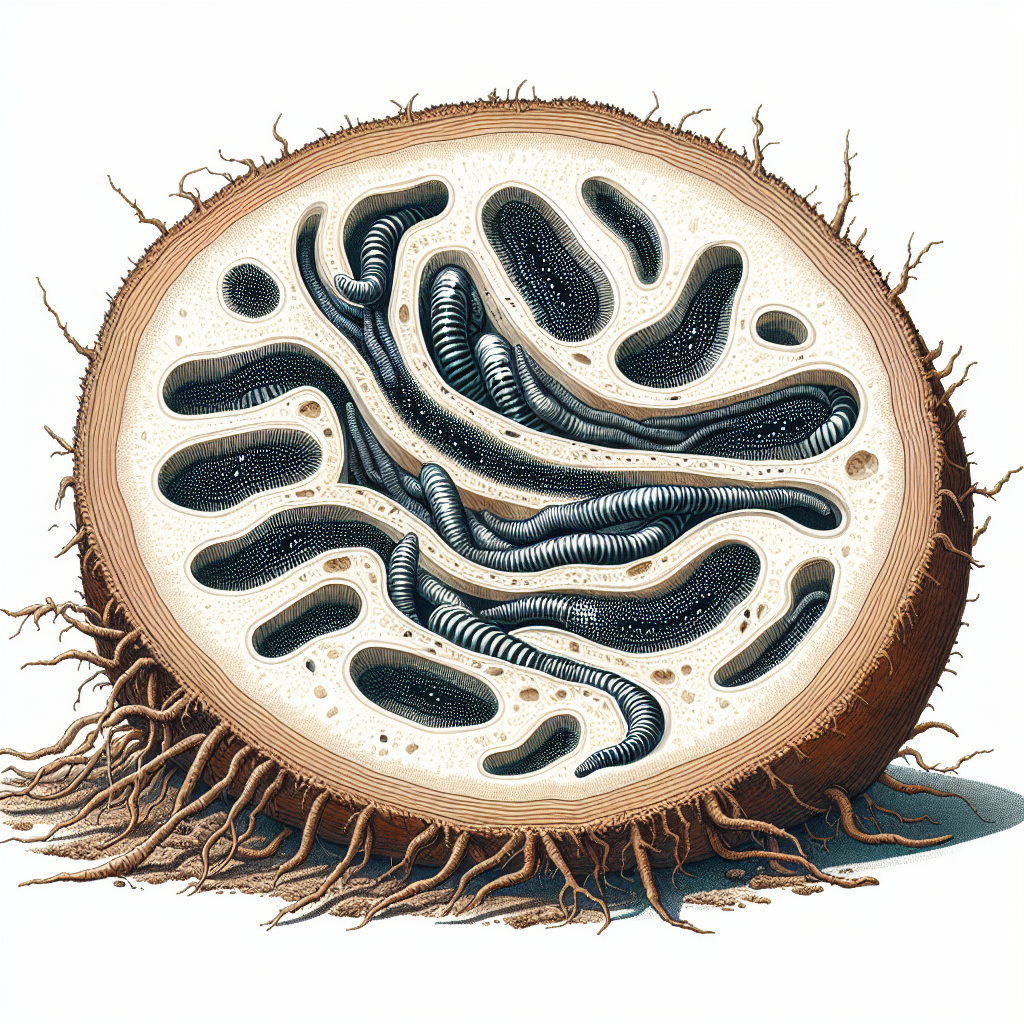
Introduction to Radopholus similis
Radopholus similis, commonly called the burrowing nematode or lesion nematode, is one of the most destructive plant-parasitic nematodes worldwide. This microscopic roundworm (0.5-0.8 mm long) invades roots, creating cavities and lesions that disrupt water and nutrient uptake, leading to stunted growth and plant death. Native to Southeast Asia, it has spread to over 80 countries, thriving in tropical and subtropical regions with warm, moist soils. Farmers growing banana, citrus, and other perennials face annual losses exceeding $1 billion globally due to R. similis infestations.
Unlike sedentary nematodes like root-knot nematodes, R. similis is migratory endoparasitic, meaning adults and juveniles actively move within roots, feeding and reproducing continuously. It prefers sandy loam soils with pH 5-7 and temperatures of 24-30°C (75-86°F). Early detection is critical, as symptoms mimic drought or nutrient deficiencies. This guide equips growers with diagnostic tools, lifecycle insights, organic controls, and prevention strategies to safeguard yields. For small farms, integrating these practices with tools like Spring Pest Patrol: Organic AI Strategies to Shield Your Crops from Common Invaders can enhance monitoring efficiency.
Identifying Symptoms & Damage
Diagnosing R. similis requires careful inspection, as above-ground signs are nonspecific. Look for yellowing leaves, stunted growth, wilting during dry periods, and premature leaf drop. Plants may show top-heavy foliage with sparse lower leaves, progressing to collapse in severe cases. Root symptoms are diagnostic: dark brown to black lesions and cavities along roots, especially feeder roots. Affected roots appear granular or corky, with sloughing cortex tissue exposing white stele.
Cut roots lengthwise to reveal migrating nematodes as tiny, wriggling worms inside lesions. Use a 10x hand lens or stereomicroscope for confirmation. Yield impacts vary: bananas lose 20-50% bunch weight; citrus shows dieback and reduced fruit size. Differentiate from Phytophthora root rot (oozing lesions, no nematodes) or root rot (rotting without lesions). Soil sampling at 15-30 cm depth from 10-20 plants per acre, processed via extraction (Baermann funnel or centrifugal flotation), quantifies population (damage threshold: >1,000 nematodes/100 cm³ soil or >100/g root). Symptoms worsen in plant-parasitic nematodes complexes with other pathogens like Fusarium.
Lifecycle and Progression of Radopholus similis
R. similis completes its lifecycle in 20-25 days under optimal conditions (27°C, moist soil). Females (0.6-0.8 mm) and males (0.4-0.5 mm) are vermiform; juveniles resemble adults. Eggs hatch in 4-6 days inside roots. All stages penetrate roots near tips, migrating longitudinally and radially, feeding on cortex cells using a spear-like stylet. This kills cells, forming necrotic lesions where nematodes aggregate (up to 10,000/root).
Females lay 4-12 eggs daily, producing 50-100 offspring. Reproduction is amphimictic (sexual), but parthenogenesis occurs. Dispersal happens via soil movement, floodwater, tools, or infected planting material. Populations peak in wet seasons, declining below 20°C or in dry soils. Progression: initial invasion (week 1: minor lesions), proliferation (weeks 2-4: extensive damage), secondary infections (fungi/bacteria enter lesions). In Dwarf Cavendish Banana, nematodes reduce pseudostem girth by 30% within 6 months. Understanding this cycle informs timing of controls.
Environmental Triggers & Risk Factors
R. similis thrives in warm (24-30°C), humid tropics with >1,000 mm annual rainfall. Sandy soils (60-80% sand) facilitate movement; heavy clays limit spread. High organic matter and neutral pH favor survival. Triggers include continuous monocropping, poor drainage, and flooding, which splash nematodes onto stems. Infected nursery stock introduces populations; farm tools spread them 10-20 m/day.
Risk factors: susceptible varieties like Cavendish Banana, young plantations (<3 years), and drought stress (plants close stomata, aiding nematode entry). Mixed infections with burrowing nematodes or lesion nematodes amplify damage. Climate change extends ranges northward. Monitor via soil tests; populations explode post-rainy season. Avoid over-irrigation and ensure 30-50% soil moisture to suppress without waterlogging.
Organic Control & Treatment Plans
Organic management integrates cultural, biological, and physical methods, avoiding nematicides. Cultural: Rotate with non-hosts like cabbage or corn for 2-3 years; fallow reduces populations 90%. Use clean planting material from tissue-cultured sources. Solarization (clear plastic over moist soil, 4-6 weeks summer) heats soil to 45-50°C, killing 80-95% nematodes.
Biological: Apply Paecilomyces lilacinus or Purpureocillium lilacinum (10^9 CFU/g, 50-100 kg/ha pre-planting); these fungi parasitize eggs/adults. Native Pasteuria penetrans suppresses 50-70% in 2-3 seasons. Neem cake (1-2 t/ha) and marigold marigold mulches release biofumigants. Physical: Hot water dip propagules (51°C, 20 min for banana suckers). chisel plow to expose nematodes to desiccation.
Integrated Plan: 1) Sample/confirm infestation. 2) Remove/destroy infected roots. 3) Solarize/amend soil (mustard seed meal 2-4 t/ha). 4) Plant resistant varieties/intercrops (e.g., Thai Basil). 5) Apply biopesticides monthly first year. 6) Monitor quarterly. Expect 70-90% control in 1-2 years. Combine with Soil Health Mastery: 5 Proven Strategies for Small Farms to Build Fertile Ground Without Breaking the Bank for resilient soils.
Preventing Radopholus similis in the Future
Prevention outperforms cure. Quarantine new stock; inspect roots before planting. Use certified, hot-water-treated material. Implement 3-year rotations with grasses or brassicas. Maintain drainage with raised beds (20-30 cm) and cover crops like clover to suppress weeds/nematodes. Bootstrap sanitation: disinfect tools (1% bleach), clean equipment, restrict foot traffic in wet fields.
Build soil health: add compost (20 t/ha/year) for suppressive microbes; avoid excess N-fertilizers promoting nematodes. Scout monthly: extract from root cores. Threshold-based action prevents buildup. For exports, comply with protocols (e.g., 50°C soil treatment). Long-term: breed/deploy resistant rootstocks (e.g., FHIA hybrids for banana). Educate workers; use boot dips. These steps keep populations below economic thresholds indefinitely.
Crops Most Affected by Radopholus similis
R. similis attacks >300 species, worst in tropics. Top Victims:
- Banana (banana): 30-50% losses; lesions girdle corm, topple plants.
- Citrus (avocado relatives): Root decay in Hass Avocado; decline syndrome.
- Ginger/Turmeric (ginger): Stunted rhizomes, 40% yield drop.
- Others: Sweet Potato, cassava, coffee, ornamentals.
Susceptible: perennial monocrops in warm climates. Resistant: grasses, onions. Global hotspots: Caribbean, Central America, Southeast Asia. Diversify to mitigate.