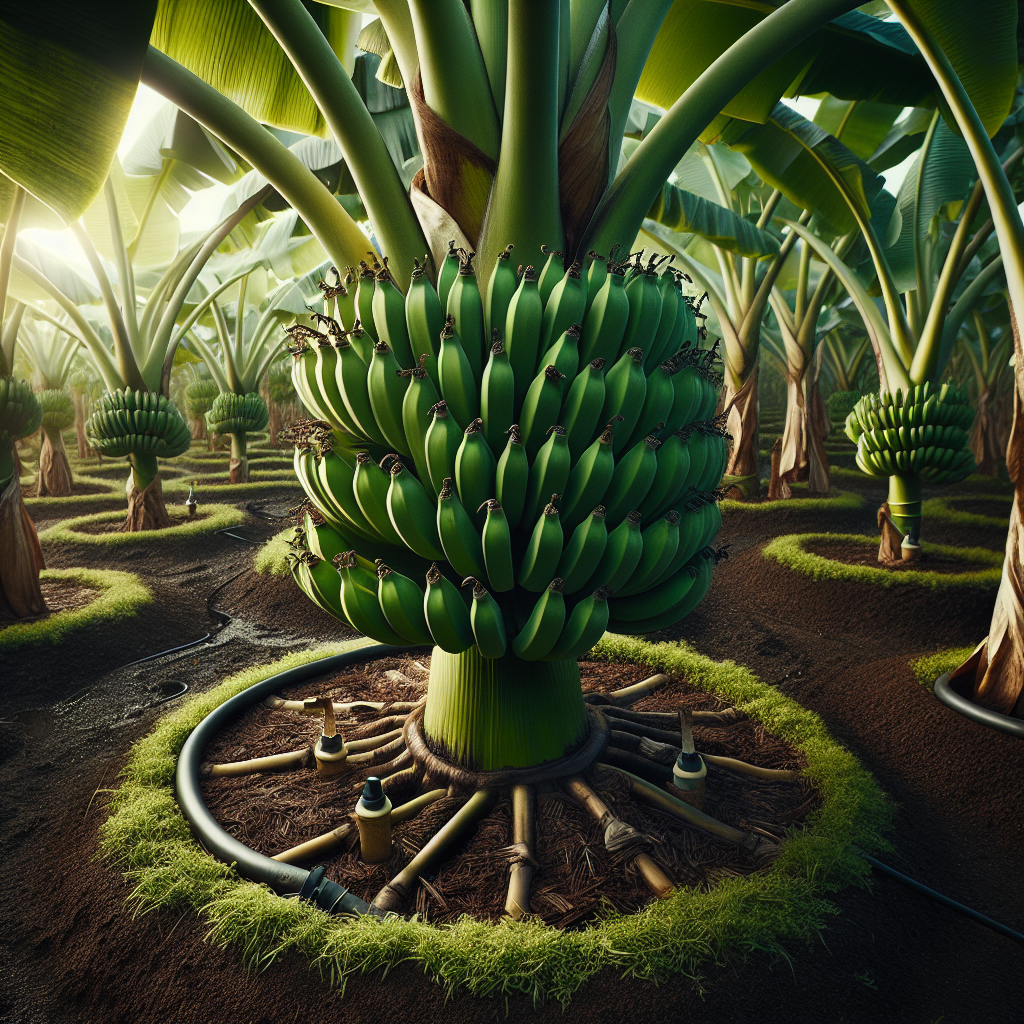
Introduction to Cavendish Banana
The Cavendish group is the backbone of the modern global banana trade and includes several closely related clones such as Grand Nain, Williams, and Dwarf Cavendish. Although many growers casually refer to “Cavendish” as a single cultivar, it is more accurate to think of it as a subgroup within edible dessert bananas. These plants are grown for their seedless, sweet fruit, but from a botanical and agronomic perspective they are giant perennial herbs rather than trees. The visible “trunk” is actually a pseudostem formed by tightly wrapped leaf sheaths.
Cavendish became globally dominant after Gros Michel plantations were devastated by an earlier wave of Fusarium wilt. Its popularity comes from its ability to produce attractive, transport-tolerant bunches under intensive management. However, this commercial success also exposed a major weakness: genetic uniformity. Because Cavendish bananas are propagated vegetatively, plantations can be highly vulnerable to diseases if sanitation, drainage, and planting material quality are neglected.
For growers, Cavendish is rewarding but nutrient-hungry and management-intensive. It can produce high yields in home gardens, small farms, and export systems, provided the site is frost-free, well-drained, and rich in organic matter. If you are comparing growth habit within bananas, a compact reference point is the Dwarf Cavendish Banana, which is often preferred for smaller spaces and container culture.
Botanical Profile of Cavendish Banana
Cavendish bananas belong to the family Musaceae. Most commercial Cavendish clones are triploid, usually classified within the AAA genome group derived primarily from Musa acuminata. Their triploid nature explains several important production traits: they are functionally sterile, produce seedless fruit through parthenocarpy, and must be propagated from suckers or tissue-cultured plantlets.
A mature plant typically reaches 1.8 to 4.5 meters tall depending on clone, fertility, spacing, wind exposure, and water availability. Grand Nain is often medium-tall and favored in commercial production, while Dwarf Cavendish remains shorter but still produces substantial bunches. Leaves are large, thin, and easily shredded by wind, which is not merely cosmetic. Severe leaf tearing reduces photosynthetic area and can significantly lower bunch weight and fruit fill.
The root system is fibrous, shallow to moderately deep, with most active roots concentrated in the top 30 to 60 cm of soil, though some roots can penetrate deeper in loose profiles. This is why Cavendish responds strongly to mulching, frequent irrigation, and top-dressed nutrition. The inflorescence emerges from the center of the pseudostem after the plant reaches physiological maturity. Female flowers form the hands of bananas first, followed by neutral and male flowers further down the rachis.
Each pseudostem fruits once and then dies back, but the underground corm survives and sends up replacement shoots called followers or suckers. Productive management depends on selecting the right succession of followers so that harvests remain continuous without overcrowding. In well-run mats, growers usually maintain one bearing plant, one vigorous follower, and one young peeper, removing excess suckers before they compete for nutrients.
Fruit development is strongly influenced by temperature, light, water, and potassium availability. Cavendish bunches are typically harvested green for transport, then ripened off-plant. Finger length, curvature, peel thickness, and hand uniformity are important quality traits in commercial systems.
Soil, pH, and Climate Requirements for Cavendish Banana
Cavendish performs best in deep, fertile, well-aerated loam or sandy loam soils with high organic matter and excellent drainage. Ideal soil depth is at least 1 meter because compaction, hardpans, or shallow subsoil restrict root exploration and destabilize plants under bunch load. Heavy clay can work only if drainage is engineered carefully; persistent saturation rapidly increases root disease and corm rot risk.
The optimum pH range is about 5.5 to 7.0, with best nutrient availability usually around 6.0 to 6.5. Below pH 5.2, aluminum and manganese toxicity may impair root growth, while phosphorus availability often drops. Above pH 7.5, iron, zinc, and manganese deficiencies become more common, especially in calcareous soils. A pre-plant soil test is essential. If pH is too low, agricultural lime should be incorporated several months before planting. If pH is too high, elemental sulfur and organic matter additions may help, though correction in alkaline soils is slower and less predictable.
Cavendish demands consistently moist soil but not waterlogged conditions. As a practical target, the root zone should remain near field capacity with only mild drying between irrigations. In coarse soils, this often means irrigating 2 to 4 times per week in warm weather; in heavier soils, less frequent but carefully measured irrigation may suffice. Signs of underwatering include dull, folded leaves, marginal scorching, slowed unfurling, narrow fruit, and reduced bunch weight. Signs of overwatering include persistently yellow lower leaves, sour-smelling soil, poor vigor, root darkening, and increased toppling after wind because roots fail to anchor well.
Rainfall of 1,500 to 2,500 mm annually is excellent if distributed evenly, but irrigation is almost always required where dry months exceed 4 to 6 weeks. Standing water for more than 48 hours can be disastrous, particularly in warm soils where anaerobic stress and pathogen pressure rise quickly.
Temperature is one of the most important yield determinants. Ideal growth occurs roughly between 26 and 30°C. Growth slows noticeably below 20°C, becomes poor below 14°C, and foliage can be damaged near 0°C. Frost is usually lethal to leaves and can destroy the pseudostem. Extremely high temperatures above 38°C, especially with low humidity and hot wind, can cause leaf scorch, sunburned fruit, and poor bunch filling.
Wind protection is essential. Sustained winds above 30 to 40 km/h shred leaves and can snap pseudostems, especially after bunch emergence. Windbreaks, topographic shelter, and correct plant spacing improve survival and fruit quality. Relative humidity around 50 to 90% supports vigorous growth, but excessively humid, stagnant conditions can intensify leaf disease pressure.
Cavendish thrives in full sun. Partial shade is tolerated, but yields and fruit sweetness generally decline if light is reduced too much. In mixed tropical systems, careful intercropping with low-growing species is preferred over dense overhead shade. Broader soil-building principles from soil health strategies are especially valuable because this crop removes large amounts of potassium and nitrogen.
Step-by-Step Planting & Propagation
Start with clean planting material. This is non-negotiable. Use disease-free sword suckers from healthy mother mats or certified tissue-cultured plantlets. Sword suckers are preferred over water suckers because they have a narrow, spear-like leaf profile early on and a stronger connection to the corm, which generally produces more vigorous plants. Water suckers are softer, leafier, and often less productive.
- Select the site. Choose a frost-free area with deep soil, no standing water, and access to irrigation. Avoid fields with any history of Fusarium wilt if possible.
- Test and prepare the soil. Incorporate 10 to 25 kg of well-rotted compost or manure per planting hole if available. Correct pH and drainage problems before planting.
- Lay out spacing. Typical spacing is 2.4 x 2.4 m to 3 x 3 m depending on clone vigor, rainfall, fertility, and whether the goal is home production or commercial bunch size. Tighter spacing increases early yield per hectare but can reduce airflow and increase disease pressure.
- Dig planting holes. Holes around 45 x 45 x 45 cm are common for suckers; larger holes are useful in poor soils. Backfill with topsoil mixed with organic matter, but do not create a nutrient-rich sump in poorly drained clay.
- Prepare suckers. Trim roots and pare away damaged or diseased tissue from the corm. Some growers hot-water treat or disinfect pared corms before planting to reduce pest and pathogen load.
- Plant at correct depth. Set the corm so the growing point is above the final soil line, not buried deeply. Planting too deep encourages rot; too shallow increases lodging risk.
- Irrigate immediately. Wet the entire root zone thoroughly after planting. Then maintain even moisture during establishment for 6 to 10 weeks.
- Mulch heavily. Apply 8 to 15 cm of mulch around, but not directly against, the pseudostem. Keep a small gap of 10 to 15 cm around the base to reduce collar rot.
- Establish follower management. Once the mother plant is growing strongly, select the best-positioned follower and remove excess suckers regularly.
Tissue-cultured plants offer uniformity and cleaner starts, but they require hardening off. Acclimatize them in filtered light and high humidity before full field exposure. Their root systems can be initially delicate, so avoid planting into hot, dry, crusted soil.
Care & Maintenance regimes for Cavendish Banana
Nutrition must be managed aggressively because Cavendish is a heavy feeder. Potassium is especially critical for bunch size, fruit fill, peel strength, and stress tolerance. Nitrogen drives leaf production and canopy development, while magnesium, calcium, sulfur, and micronutrients support photosynthesis and fruit quality.
A practical fertility program should be built on soil and leaf analysis, but general principles are clear. Apply nitrogen and potassium in split doses throughout the growth cycle rather than all at once. Young plants benefit from frequent light applications. Mature mats often receive monthly or biweekly fertigations in commercial systems. Organic growers can combine compost, composted manure, banana-trash mulches, fish hydrolysate, and sulfate of potash where permitted. Watch for potassium deficiency, which shows as yellowing and scorching on older leaf margins, weak pseudostems, and poorly filled fingers. Magnesium deficiency often appears as interveinal chlorosis on older leaves.
Irrigation should keep the active root zone evenly moist to roughly 60 to 80% of available water capacity. Drip or micro-sprinkler systems are ideal because they reduce foliar wetness and allow precise fertigation. During hot, dry periods, mature fruiting plants may require the equivalent of 25 to 50 liters of water per day depending on soil type, canopy size, and evapotranspiration. In sandy soils, apply smaller amounts more frequently. In loam, irrigate deeply enough to wet 45 to 60 cm of soil, then re-water before the topsoil becomes powder-dry.
Desuckering is essential. Keep one mother plant, one follower about half to two-thirds grown, and one small peeper for continuity. Remove extra suckers by cutting them at soil level and destroying the growing point so they do not regrow. Overcrowded mats produce smaller bunches, more disease, and weaker stems.
Deleafing should be conservative. Remove only dead, broken, or heavily diseased leaves. Healthy green leaf area directly powers fruit filling. Excessive pruning reduces yield. After flowering, some growers remove the male bud if it is not needed, especially where it helps reduce insect activity or disease splash, though the benefit varies by region.
Bunch support is often necessary. Use bamboo poles, polypropylene twine, or other supports once bunches begin to gain weight. This reduces snapping and toppling, especially after rain or wind. In export-oriented systems, bunch covers may be used to protect fruit from sunburn, abrasion, and insect damage while improving peel finish.
Mulching is one of the best management tools for Cavendish. Chopped leaves, pseudostem residues, and clean organic matter help regulate soil temperature, reduce evaporation, and recycle nutrients. Do not pile fresh residues tightly against the base where rot can start.
Pests, Diseases & Organic Management
The most serious disease threat is Fusarium wilt, also known as Panama disease, caused by Fusarium oxysporum f. sp. cubense. Tropical Race 4 is especially feared because it infects Cavendish. Symptoms include yellowing of older leaves, one-sided wilting, pseudostem splitting, vascular discoloration, and eventual plant collapse. There is no reliable curative treatment in the field. Prevention is everything: clean planting material, strict sanitation, controlled movement of soil and tools, drainage management, and exclusion of contaminated water or equipment.
Black Sigatoka and Yellow Sigatoka are major foliar diseases. They reduce green leaf area, accelerate leaf death, and lower bunch weight and fruit quality. Organic management relies on wider spacing, better airflow, careful deleafing of badly infected tissue, resistant or tolerant clone selection where available, and copper- or biologically based programs allowed under local standards. Overhead irrigation late in the day should be avoided because prolonged leaf wetness favors spread.
Banana weevil (Cosmopolites sordidus) damages corms and weakens anchorage. Tunnels in the corm predispose plants to toppling and poor vigor. Use clean planting material, destroy crop residues that harbor adults, trap adults with split pseudostem sections, and maintain field sanitation. Entomopathogenic fungi and nematodes may help in integrated organic programs.
Plant-parasitic nematodes, particularly Radopholus similis and others, prune roots and reduce water uptake. Symptoms include weak growth, toppling, and poor bunch fill. Start with clean material, rotate out of infested land where possible, add abundant organic matter, and use mulch to support antagonistic soil biology. Solarization in nursery phases may help reduce load.
Aphids are important mainly because they can transmit Banana bunchy top virus in regions where that disease occurs. Control volunteer hosts, monitor regularly, and use soft organic measures such as insecticidal soaps or neem-based products when populations are building. Ant control can improve aphid suppression because ants protect colonies.
Thrips and Scarring beetles may blemish fruit. Bunch bagging, sanitation, and timely harvest reduce damage. Rodents and Birds may also attack ripening fruit in local-market systems.
Organic disease management depends on prevention more than rescue. Avoid mechanical injury, disinfect tools between mats, remove severely infected plants when required, and keep drainage excellent. Dense, neglected mats are far more likely to suffer chronic pest and disease pressure than well-spaced, mulched, vigorously growing plantings.
Harvesting, Curing & Optimal Storage
Cavendish bananas are usually harvested mature-green rather than tree-ripe. Maturity is judged by age from flowering, fullness of fingers, angularity loss, pulp-to-peel ratio, and market destination. In warm tropical systems, harvest often occurs 11 to 14 weeks after flowering, though this varies with climate and clone. Fruit intended for long transport is cut slightly earlier than fruit for local sale.
A mature bunch shows rounded fingers rather than sharply angular ones, especially in the central hands. The floral ends may dry and the fruit shoulders become fuller. Harvesting too early results in thin fruit, poor ripening, and lower sugar development. Harvesting too late reduces shelf life and increases bruising risk.
Harvest carefully to prevent latex staining and impact injury. Two people are ideal: one supports the bunch while the other cuts the pseudostem partially to lean it down safely, then severs the bunch stalk. Keep bunches shaded immediately after cutting. Field heat and sun exposure accelerate quality loss.
Postharvest handling should include trimming damaged fingers, washing or de-latexing if appropriate, and grading by size and hand quality. Unlike true curing crops such as onions or garlic, bananas are not cured in the dry-storage sense. Instead, they are conditioned, cleaned, and held under controlled temperatures. Store mature-green fruit at about 13 to 14°C with high relative humidity around 90 to 95%. Temperatures below about 12°C can cause chilling injury, seen as dull peel color, poor ripening, and flesh defects.
For ripening, ethylene treatment is commonly used at controlled temperatures around 14 to 18°C depending on the system. Once ripening starts, fruit should be marketed promptly. Fully ripe bananas store best around 14°C; refrigeration at standard household temperatures can darken the peel even if the pulp remains edible.
Companion Planting for Cavendish Banana
Companion planting around Cavendish should serve practical functions: weed suppression, soil coverage, nutrient cycling, beneficial insect support, and humidity moderation without creating severe competition. Low-growing legumes are especially useful because they protect the shallow root zone and improve soil structure. Clover can function as a living mulch in suitable climates, though it is more useful in subtropical or mild systems than in hot, lowland tropics where it may struggle.
Peanuts are among the best companions in warm regions because they form a low canopy, suppress weeds, and can contribute biologically fixed nitrogen when well nodulated. Ginger is another strong companion in diversified tropical gardens because it occupies a lower layer and benefits from the moderated microclimate beneath banana canopies, though irrigation and nutrient supply must be sufficient for both crops. Turmeric plays a similar role and is often paired successfully in agroecological systems.
Avoid aggressive climbers, tall grain crops close to the mat, or thirsty species that directly compete within the root zone. Keep at least a modest buffer around the pseudostem so fertilizers and irrigation can be targeted efficiently. In commercial plantations, companion planting is usually limited to cover crops in alleys or the early establishment phase rather than permanent dense intercrops.
The best companions are those that stabilize soil, reduce weed pressure, and do not interfere with airflow or harvest access. In wet climates, do not allow companion crops to create a persistently crowded, humid base around the mat, as this can worsen pest harborage and disease spread.