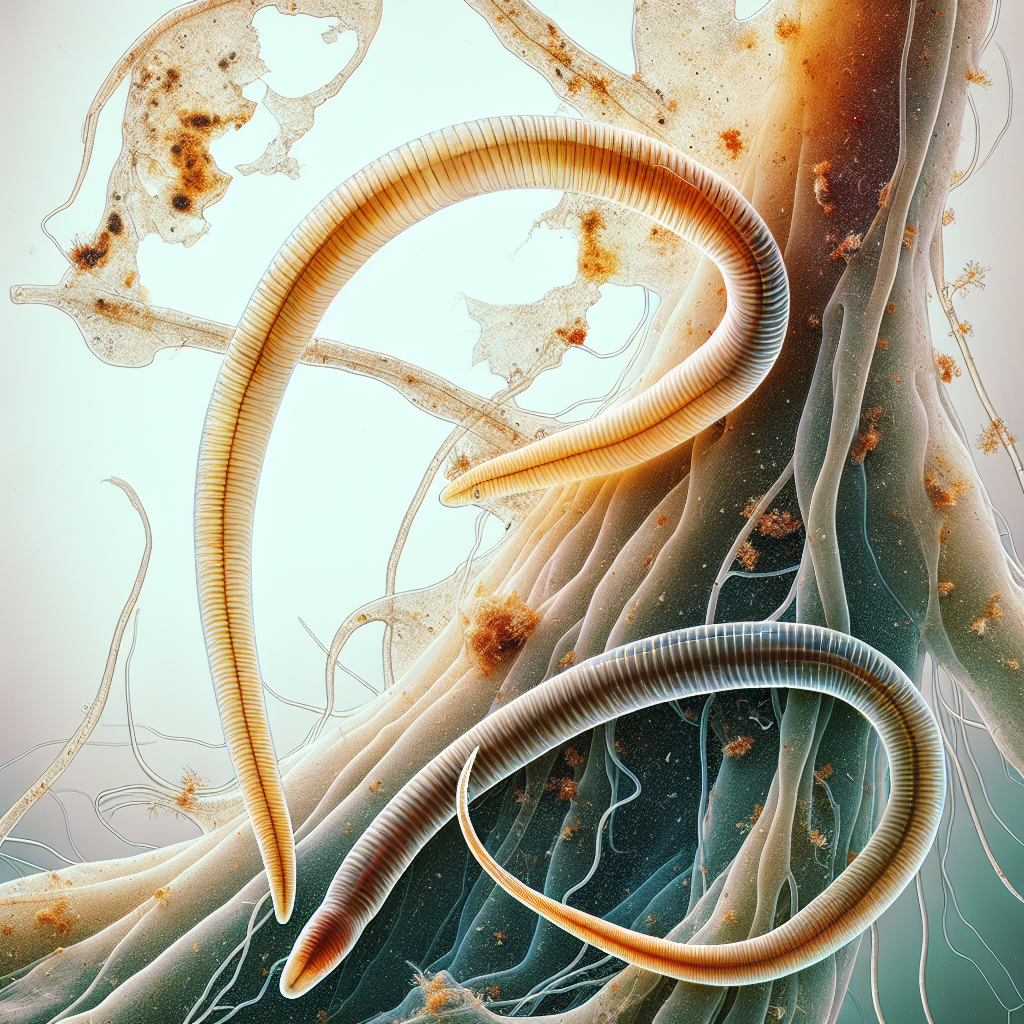
Introduction to Burrowing nematodes
Burrowing nematodes, scientifically known as Radopholus similis, represent one of the most destructive soilborne pests in tropical and subtropical agriculture. These microscopic roundworms (nematodes) are obligate parasites that invade and destroy plant roots by burrowing through cortical tissues, creating cavities and lesions that impair water and nutrient absorption. Native to Southeast Asia, they have spread globally through infected planting material, posing a major threat to high-value crops like bananas, citrus, and ornamentals.
Unlike sedentary nematodes such as root-knot nematodes, burrowing nematodes are migratory, moving actively within roots and soil to feed and reproduce. A single female can produce hundreds of offspring, leading to rapid population explosions under favorable conditions. In severe infestations, yields can drop by 50-80%, with plants exhibiting stunting, yellowing, and eventual death. Early detection is crucial, as symptoms often appear only after significant root damage. This guide provides farmers with diagnostic tools, lifecycle insights, and proven organic management strategies to combat this insidious pest. For small farms, integrating crop rotation and soil health practices can prevent economic losses. Learn more about Spring Pest Patrol: Organic AI Strategies to Shield Your Crops from Common Invaders for broader pest defense.
Identifying Symptoms & Damage
Burrowing nematode damage is often insidious, starting below ground and manifesting aboveground only after roots are extensively compromised. Key symptoms include:
- Root Lesions and Cavitation: Brownish-black necrotic lesions on roots, particularly the cortex, with cavities where nematodes have tunneled. Unlike root-knot nematodes, no galls form; instead, roots appear barky, cracked, or sloughing off outer layers.
- Stunted Growth and Wilting: Plants show uneven growth, chlorosis (yellowing of younger leaves), and wilting during dry periods, mimicking drought stress or root rot.
- Above-Ground Indicators: Sparse foliage, premature leaf drop, reduced fruit size, and toppling in wind (lodging) due to weakened root anchorage. In bananas, 'toppling disease' is classic, where pseudostems collapse.
To diagnose, excavate roots carefully. Healthy roots are white and fibrous; infested ones are dark, brittle, and sparse. Extract soil samples and use a microscope (40x magnification) to spot the slender, colorless nematodes (females 0.5-0.8mm long, males smaller). Bioassays on susceptible hosts like carrot disks can confirm presence. Differentiate from fungal pathogens like Phytophthora by the absence of oozing lesions or mycelium. Yield losses average 20-40% in moderate infestations, escalating in sandy soils.
Lifecycle and Progression of Burrowing nematodes
Radopholus similis has a rapid, vermiform lifecycle adapted to warm, moist environments:
- Egg Stage (5-10 days): Females lay 4-6 eggs daily inside root cortex. Eggs hatch into first-stage juveniles (J1).
- Juvenile Stages (J1-J4, 10-15 days): All stages are migratory, actively penetrating roots via stylet. They feed on cortical cells, causing cell death and migration tunnels.
- Adult Stage: Males and females (ratio ~1:10) mate inside roots. Females produce 20-50 progeny over 30-60 days. Lifespan: 30-90 days, with 6-12 generations per year.
Nematodes survive in soil up to 6 months, longer in roots or debris. Peak populations occur during wet seasons when soil moisture >20%. Dispersal via soil movement, floodwater, or tools. Unlike cyst nematodes, no dormant stage; continuous reproduction amplifies infestations. Understanding this cycle underscores the need for sanitation to break propagation.
Environmental Triggers & Risk Factors
Burrowing nematodes thrive in specific conditions:
- Soil Type: Sandy, loamy soils with low clay (<15%) facilitate movement; heavy clays restrict them.
- Temperature: Optimal 25-30°C (77-86°F); inactive below 15°C or above 35°C.
- Moisture: High humidity (>60% soil moisture) and poor drainage promote survival and invasion.
- pH: Neutral to slightly acidic (5.5-7.0).
Risk factors include continuous monocropping (e.g., bananas), infested planting material, flooding, and shallow tillage that spreads nematodes. Warm climates like Florida, Queensland, and Central America report highest incidences. Compaction and low organic matter exacerbate damage by stressing roots, making them susceptible. Root rots often co-occur, compounding injury.
Organic Control & Treatment Plans
Organic management emphasizes integrated approaches:
Cultural Controls:
- Rotate with non-hosts like cabbage, onions, or grasses for 2-3 years.
- Use clean planting material; hot-water treat banana corms (50°C for 20 min).
- Solarize soil: Cover with clear plastic for 4-6 weeks in summer (raises temp to 45-50°C, killing 90% nematodes).
Biological Controls:
- Apply beneficial nematodes (Heterorhabditis bacteriophora) or fungi (Pochonia chlamydosporia, Purpureocillium lilacinum) at 10^6 propagules/ha.
- Encourage predators like tardigrades and mites via organic mulching.
Organic Amendments:
- Incorporate neem cake (2-4 t/ha), mustard seed meal, or chicken manure to suppress populations via biofumigation.
- Cover crops like marigold (Tagetes spp.) release alpha-terthienyl, toxic to nematodes.
Monitoring & Thresholds: Sample soil quarterly; treat if >100 nematodes/100g soil.
Integrated plans reduce populations 70-90% over 2 seasons. Avoid synthetic nematicides for organic certification. Pair with Soil Health Mastery: 5 Proven Strategies for Small Farms to Build Fertile Ground Without Breaking the Bank.
Preventing Burrowing nematodes in the Future
Prevention is more cost-effective than cure:
- Site Selection: Avoid infested fields; test soil pre-planting.
- Resistant Varieties: Plant tolerant cultivars like 'Goldfinger banana' or citrus rootstocks 'Swingle'/'Carrizo'.
- Sanitation: Disinfect tools, quarantine new plants, destroy debris.
- Crop Management: Maintain deep tillage (20-30cm), improve drainage, add 5-10t/ha compost annually to boost antagonists.
- Quarantine: Inspect imports; follow regional regulations.
Long-term, diversify crops and monitor via bait plants. These steps can keep infestations below economic thresholds indefinitely.
Crops Most Affected by Burrowing nematodes
Burrowing nematodes devastate:
- Bananas (banana, Dwarf Cavendish Banana): Top host; causes 'toppling disease'.
- Citrus (orange, Hass Avocado): Root decline leads to 'spread decline'.
- Others: ginger, turmeric, ornamentals like anthurium, coffee. Over 300 species affected, mainly tropics.