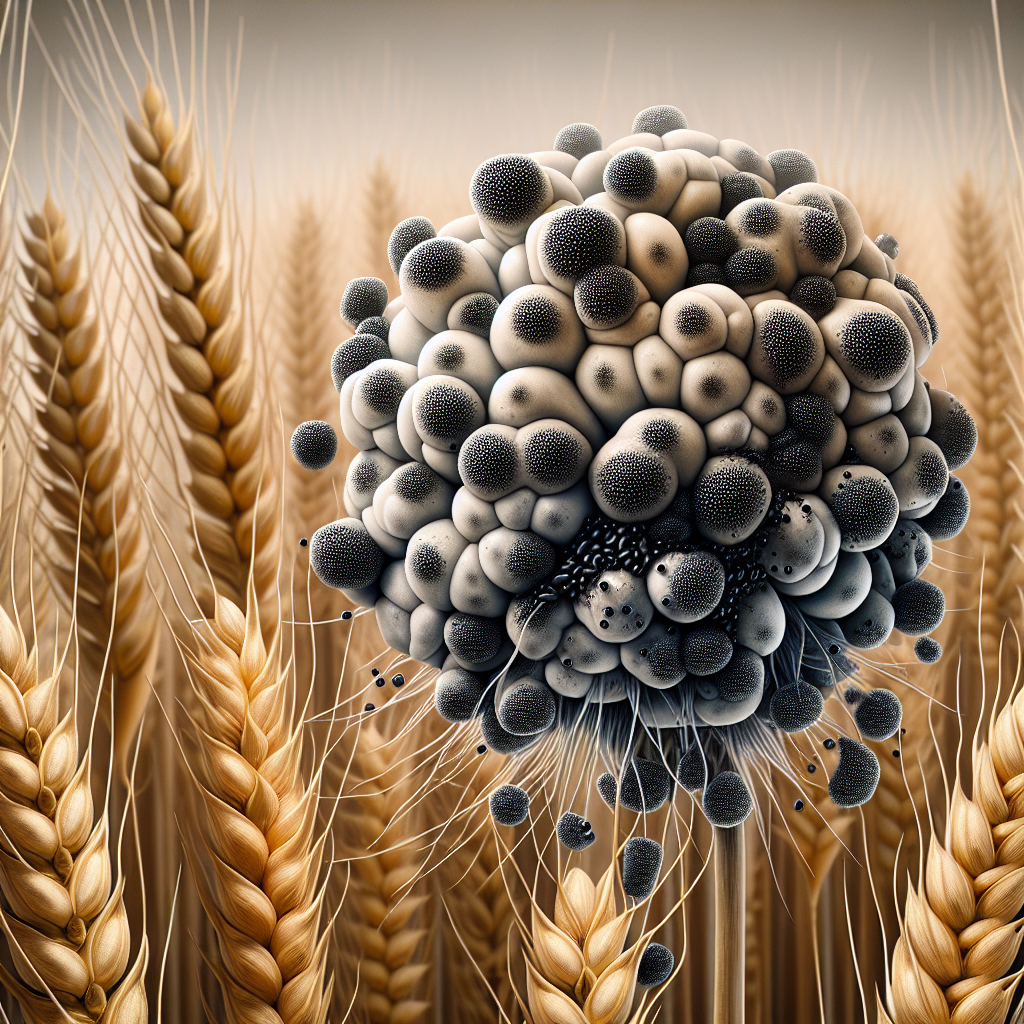
Introduction to Bunt diseases
Bunt diseases, also known as covered kernel smut or stinking smut, represent one of the oldest recorded fungal pathogens in agriculture, with mentions dating back to ancient Mesopotamia. Primarily caused by fungi in the genus Tilletia—such as Tilletia tritici (common bunt of wheat) and Tilletia controversa (dwarf bunt)—these diseases target cereal grains during seed germination and kernel development. The pathogen infiltrates the developing embryo, transforming healthy grain into a mass of foul-smelling, sooty black teliospores that burst at harvest, contaminating fields and equipment.
Unlike loose smuts (loose-smut) which destroy the entire head early, bunts keep the spore-filled kernels intact within the chaff until threshing, making detection challenging until processing. Yield losses can exceed 80% in severe epidemics, with contaminated grain unfit for milling, planting, or animal feed due to its fishy odor and toxicity risks. Globally, bunt diseases cost wheat producers millions annually, particularly in temperate regions with cool, moist springs. For detailed pathology, see common bunt and bunts.
Early recognition and seed treatment are critical, as systemic fungicides like carboxin have revolutionized control since the 1970s. Organic growers face greater challenges, relying on hot water treatments and resistant cultivars. This guide provides definitive diagnostics, organic management, and prevention strategies for sustainable cereal production.
Identifying Symptoms & Damage
Bunt diseases exhibit subtle field symptoms until harvest, making scouting essential. Infected plants often appear stunted with bluish-green tillers, especially in T. controversa infections, which reduce plant height by up to 40%. Leaves may show faint chlorosis or twisting, but definitive signs emerge at heading: affected heads produce grain kernels swollen 1.5-2 times normal size, covered by a thin, silvery-white pericarp that ruptures to reveal dark brown to black powdery spore masses.
Cut open mature kernels to confirm: healthy endosperm contrasts with bunted grains filled entirely with teliospores (10-20 μm diameter, thick-walled). The diagnostic "fishy" or "rotten herring" odor from trimethylamine arises post-threshing as spores mix with chaff. Damage assessment involves threshing samples: infection rates above 0.5% trigger quarantine in many regions.
Microscopic confirmation reveals teliospores with hyaline appendages in T. tritici versus smooth spores in T. controversa. Differentiate from common rust (orange pustules) or fusarium head blight (pinkish mycelium). Seedlings from infected kernels fail to emerge or produce weak plants. Economic impact: 1% infection halves flour quality; 5%+ renders lots unmarketable. Regular boot-stage scouting in high-risk fields prevents surprises.
Lifecycle and Progression of Bunt diseases
Bunt fungi follow a complex basidiomycete lifecycle synchronized with host phenology. Primary inoculum consists of teliospores persisting in soil (5-20+ years) or on seed coats. Cool, moist conditions (5-15°C, water saturation) trigger spring germination, producing hyphae that form basidiospores (sporidia) infecting germinating seeds or young seedlings via root hairs or coleoptiles.
Mycelium grows systemically through the plant, remaining dormant until meiosis in the ovary. At anthesis (flowering), dikaryotic hyphae colonize developing kernels, digesting starch reserves and replacing endosperm with diploid teliospores by soft dough stage. Mature spores overwinter, completing the cycle. Dwarf bunt (T. controversa) infects deeper roots in colder soils, progressing slower but more persistently.
Secondary spread occurs via wind-blown basidiospores (rare) or contaminated machinery moving teliospores. Optimal infection window: 48-72 hours post-seed imbibition at 10°C. Disease progression maps to Zadoks growth stages 10-39, with 90% kernel replacement by stage 87. Understanding this enables precise timing for seed treatments and rotations.
Environmental Triggers & Risk Factors
Bunt thrives in cool (4-18°C), moist soils during early spring, with free water essential for teliospore germination (12-24 hours at 10°C). Neutral to alkaline soils (pH 6.5-8.0) favor persistence, as acidic conditions inhibit sporidia. High soil moisture from poor drainage or over-irrigation spikes incidence; compacted fields retain inoculum longer.
Risk factors include planting untreated volunteer wheat, short rotations (<3 years), and susceptible varieties like older spring wheats. Continuous cereal monoculture multiplies spores 10-fold yearly. Cold winters preserve deep-buried teliospores, while mild falls promote fall infections in winter wheat. Regions like the U.S. Pacific Northwest, Central Asia, and European steppes report chronic outbreaks.
Climate change may expand ranges northward with wetter springs. Compounding factors: root-knot nematodes wound roots, aiding entry; take-all stresses plants. Assess risk via bioassays: bait seeds in suspect soil yield infection rates within 21 days.
Organic Control & Treatment Plans
Organic management integrates cultural, biological, and physical controls, as synthetic systemic fungicides are prohibited. Seed Treatment: Hot water (52°C for 11 minutes) kills 95% surface spores without chemicals; follow with 1% baking soda rinse. Dry heat (65°C/5 days) or solarization works for small lots. Source certified organic seed (<0.1% infection).
Crop Rotation: 3-4 years with non-hosts like peas or clover dilutes soil inoculum by 90%. Deep plowing (20+ cm) buries spores beyond germination zone. Resistant Varieties: Plant 'Eltan' or 'Jagger' wheats (MR rating); check regional trials.
Biologicals: Pseudomonas fluorescens seed dips reduce infection 60%; compost teas with Trichoderma suppress soil fungi. Flooding fields 4-6 weeks pre-planting drowns spores. Field Sanitation: Rogue infected tillers at boot stage; burn residues. Monitor with soil sampling: >10 spores/g triggers action.
Integrated plan: Year 1 rotation + treated seed (80% control); Year 2 resistant variety + biofungicide (95% cumulative). For more on organic strategies, check Soil Health Mastery: 5 Proven Strategies for Small Farms to Build Fertile Ground Without Breaking the Bank. Success rates exceed 98% with compliance.
Preventing Bunt diseases in the Future
Prevention hinges on breaking the seed-soil cycle through IPM. Mandate certified seed (zero tolerance in many standards); test farm-saved grain via blotter method. Implement 4-year rotations: wheat-soybeans-fallow-corn. Use resistant cultivars: 'Hank' (HR to T. tritici), 'Madsen' (MR to dwarf bunt).
Soil management: Maintain pH <6.5 with lime adjustments; improve drainage via tiling. Pre-plant soil fumigation (non-organic) or biofumigation with mustard cover crops releases isothiocyanates killing 85% spores. Scout volunteers aggressively; clean combines with compressed air.
Long-term: Breed for polygenic resistance; monitor via PCR soil tests (detects 1 spore/100g). Quarantine protocols: Destroy infected lots. Climate adaptation: Shift planting dates to evade moist windows. Combining measures sustains zero-infection fields indefinitely.
Crops Most Affected by Bunt diseases
Bunt diseases predominantly afflict cool-season cereals. Wheat (wheat, including durum-wheat, hard-red-winter-wheat) suffers most, with T. tritici universal and T. controversa in winter types. Barley (barley, two-row-barley) hosts Tilletia horrida (false loose kernel smut). Rye (rye) and triticale (triticale) face similar Tilletia species.
Minor hosts include oats (T. bromi) and grasses, but economic impact centers on wheat (80% global cases). Durum and emmer (emmer) show high susceptibility. Prevent spread to rice via equipment. Focus protection on staple grains for food security.