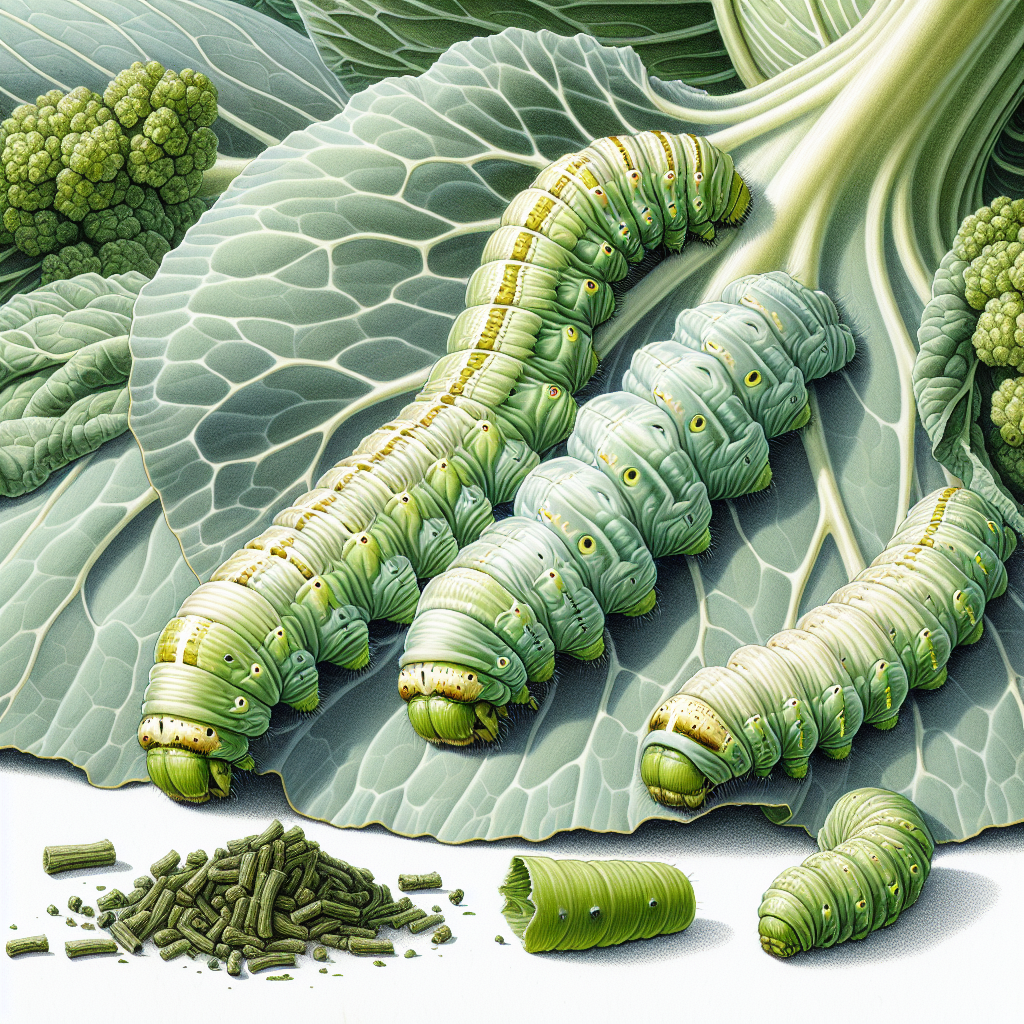
Introduction to imported cabbageworm larvae
Imported cabbageworm larvae, the immature stage of the small white butterfly (Pieris rapae), represent one of the most pervasive pests in brassica crops worldwide. Native to Europe, this invasive species was introduced to North America in the 1860s and has since become a staple threat to home gardens and commercial farms alike. The larvae, often called cabbage worms, are pale green with a faint yellow stripe dorsally and faint lines laterally, growing up to 1.2 inches long. They move in a characteristic looping motion and excrete frass (dark green droppings) that is a telltale sign of infestation.
These pests thrive in temperate climates, completing multiple generations per season—up to four in warmer regions. Females lay clusters of 20-100 yellow eggs on the undersides of leaves, hatching in 4-9 days depending on temperature. The resulting damage can devastate yields, with larvae consuming up to 50% of leaf tissue in severe cases. Early detection and integrated pest management (IPM) are crucial, as unchecked populations can defoliate entire fields. This guide provides professional-grade diagnostics, lifecycle insights, and actionable organic strategies to safeguard your cabbage, broccoli, and related crops. For more on brassica pest challenges, check our Spring Pest Patrol insights.
Understanding imported cabbageworm larvae is essential for sustainable agriculture. Their voracious appetite targets glucosinolates in brassicas, making crops like kale, cauliflower, and collards prime targets. Scouting weekly and acting swiftly prevents economic losses, especially for small-scale growers aiming for organic certification.
Identifying Symptoms & Damage
Spotting imported cabbageworm larvae early prevents catastrophic losses. Primary symptoms include large, irregular holes in leaves, often starting from the outer edges and moving inward. Unlike caterpillars that bore into heads, these larvae feed openly on foliage, leaving a lace-like skeleton of veins. Look for their signature dark green, granular frass pellets scattered on leaves or ground beneath plants—often resembling bird droppings from afar.
Affected plants show stunted growth, yellowing lower leaves, and reduced head formation in cabbage or florets in broccoli. In heavy infestations, plants may bolt prematurely or fail to form marketable heads. Larvae themselves are camouflage masters: smooth, green, with a narrow white stripe along the back and thinner yellow stripes on sides, plus tiny black hairs and yellow spots. They rest openly on leaf undersides or midribs during the day, active at night.
Differentiate from similar pests like cabbage loopers (which have no middle legs, creating a looping crawl) or diamondback moth larvae (smaller, pointed tails). Use a hand lens to confirm: imported cabbageworm larvae have three pairs of prolegs and a mild mustard odor when crushed. Damage thresholds: 1-2 larvae per plant warrants action in seedlings; 5+ in mature plants signals outbreak. Regular inspections, especially undersides, are key—pair with sticky traps for adults.
Secondary signs include sooty mold on honeydew (less common here) or presence of parasitoid cocoons (white, rice-like on backs). Yield impacts: 20-30% loss per generation untreated. Document with photos for IPM records.
Lifecycle and Progression of imported cabbageworm larvae
The imported cabbageworm lifecycle spans 20-30 days per generation, with 2-4 cycles from spring to fall. Adults are white butterflies (1-1.5 inches wingspan) with black spots, active in sunny weather, laying 300-400 eggs over 2-3 weeks. Eggs are yellow, barrel-shaped clusters on leaf veins, hatching in 4-9 days at 70°F.
Larvae progress through five instars over 15-20 days: first instars (tiny, pale) mine leaves; later ones (up to 1.2 inches) defoliate aggressively. They pupate into gray-green chrysalids on leaves or debris, emerging as adults in 10-14 days. Overwinter as pupae in plant debris or fences. Peak activity aligns with brassica growth: first generation in early spring, last in late summer.
Temperature drives progression: optimal 60-80°F; slows below 50°F. Monitor with pheromone traps for adults (10-20/week signals risk). Understanding this cycle enables timed interventions, like BT sprays during early larval stages when most vulnerable.
Environmental Triggers & Risk Factors
Warm springs (above 60°F) trigger early flights, while mild winters allow pupal survival. High humidity favors egg hatch; drought stresses plants, increasing susceptibility. Monoculture brassica fields amplify outbreaks—nearby weedy brassicas like wild mustard serve as reservoirs.
Risk factors: Late-planted crops overlap peak generations; no-till fields harbor pupae. Proximity to flowering weeds boosts adult populations. Companion plants like Nasturtium can trap adults, reducing pressure. Scout after adult flights; avoid overhead irrigation to deter moths.
Organic Control & Treatment Plans
Organic management emphasizes IPM: prevention first, then biologicals. Handpicking works for small gardens—drop larvae into soapy water. BT (Bacillus thuringiensis) kurstaki is gold standard: apply evenings to young larvae (1st-3rd instar), reapply every 7 days (OMRI-listed products like Dipel). Spinosad offers broad-spectrum control, safe for bees if dry before foraging.
Row covers (Agribon AG-19) exclude adults pre-bloom. Introduce predators: trichogramma wasps parasitize eggs; green lacewings devour larvae. Neem oil disrupts feeding/molting—mix 1 tsp/gallon, apply weekly. Companion planting with thyme, dill, or onions repels via volatiles.
Treatment plan: Week 1 scout/ handpick; Week 2 BT + spinosad rotate; Week 3 release predators + row covers. Threshold: 10% plants infested. Rotate modes to prevent resistance. For severe cases, pyrethrins as last resort. Always buffer near pollinators.
Preventing imported cabbageworm larvae in the Future
Crop rotation (2-3 years off brassicas) disrupts pupae. Destroy debris post-harvest; till lightly to expose pupae to predators. Plant early-maturing varieties resistant to defoliation. Use yellow sticky traps for adults (1/100 sq ft). Mulch with straw to hinder pupation.
Encourage biodiversity: Plant yarrow, alyssum for parasitoids. Time planting to miss peak generations—seed before May in north. Solarize soil pre-planting kills pupae. Monitor with apps for degree-day models predicting flights. Long-term: Select varieties like 'Copenhagen' with waxy leaves deterring feeding.
Crops Most Affected by imported cabbageworm larvae
Primary hosts: All brassicas. Cabbage (especially Savoy), broccoli, cauliflower, kale, collards, Brussels sprouts, kohlrabi. Secondary: Mustard greens, radish tops, horseradish. Rare on non-crucifers. Economic hits hardest on organic cole crops—yields drop 40-60% untreated. Protect heads with collars; focus on high-value like headed varieties.