Definitive Diagnostic and Management Guide for Wirestem
Introduction to wirestem
Wirestem, caused by the fungal pathogen Rhizoctonia solani, represents one of the most destructive seedling diseases in vegetable production, particularly targeting brassica family crops. This soilborne fungus attacks young seedlings at the soil line, causing a characteristic constriction that gives the stem a thin, wiry appearance—hence the name. First identified in the early 20th century, wirestem has become a persistent challenge for growers worldwide, leading to stand reductions of up to 50-70% in severe outbreaks.
The disease thrives in cool, moist conditions typical of early spring plantings, making it a primary concern for transplants and direct-seeded crops. Unlike many foliar diseases, wirestem operates belowground initially, making early detection difficult. Losses are especially devastating in high-value nursery operations where seedlings are densely packed. Understanding wirestem's biology is crucial for prevention, as chemical controls are limited and often ineffective once symptoms appear.
This guide provides professional-grade diagnostic criteria, lifecycle details, and proven organic management strategies to protect your crops. By integrating crop rotation, sanitation, and biological controls, growers can minimize wirestem incidence and safeguard yields. For related soilborne issues, see Rhizoctonia for broader insights into this pathogen's impact across crops.
Identifying Symptoms & Damage
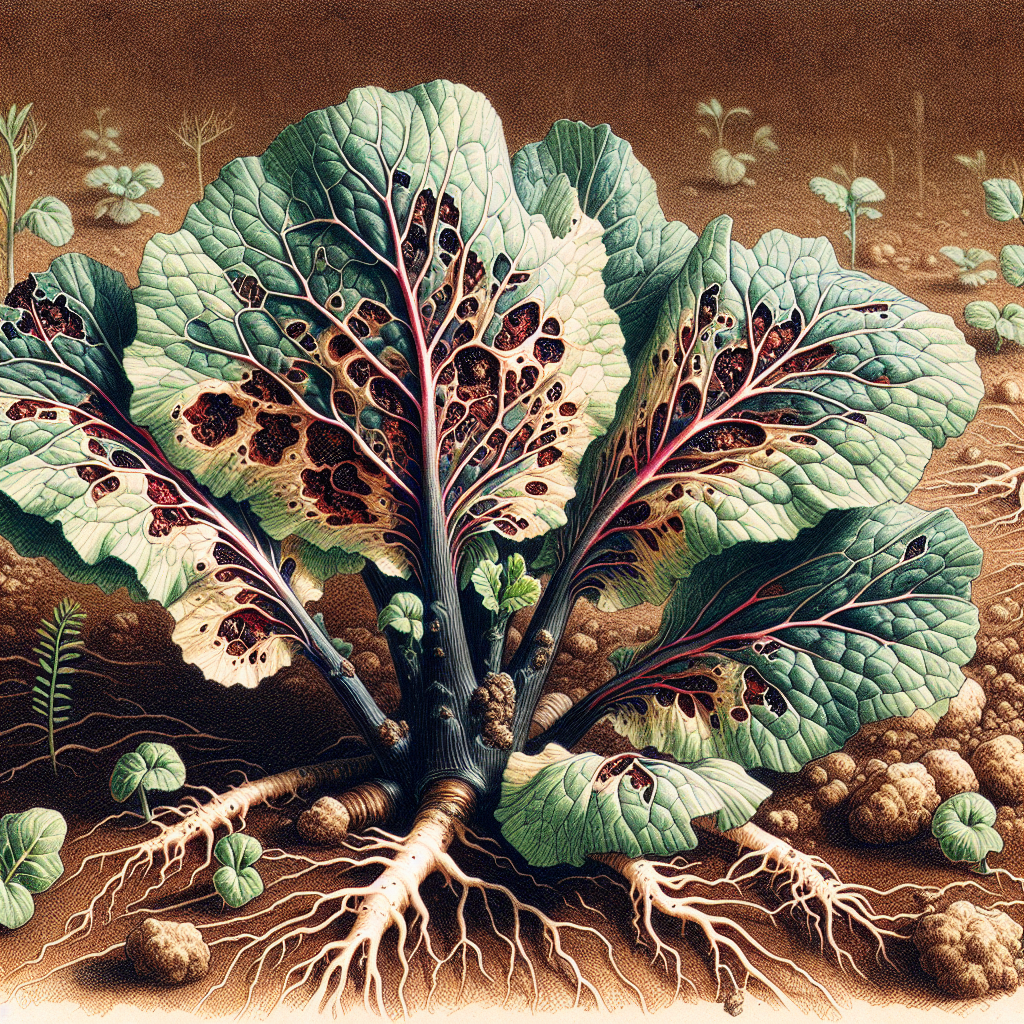
Wirestem symptoms emerge 7-14 days after planting, primarily on seedlings at the cotyledon to first true leaf stage. The hallmark sign is a dark brown to black lesion at the soil line, where the hypocotyl (stem below the cotyledons) constricts to a thin, thread-like "wirestem" appearance—often less than 1mm in diameter. Affected stems become brittle, easily snapping when gently pulled, leading to rapid wilting and collapse.
Lesions start as small, water-soaked spots that expand into sunken, reddish-brown cankers with fine, white mycelial growth under humid conditions. Unlike Pythium damping-off, which causes complete rotting at the soil line, wirestem spares the root system initially, allowing partial survival before toppling. Older seedlings may show stunted growth, yellowing lower leaves, and multiple tillers from lateral buds, but productivity is severely compromised.
Damage assessment reveals 20-100% stand loss in patches, with surviving plants producing smaller heads or irregular growth. In transplants, symptoms appear shortly after field setting. Confirm diagnosis by slicing the stem longitudinally to reveal reddish-brown discoloration and sparse, brick-red sclerotia (fungal resting structures). Differentiate from cutworms, which leave clean cuts above soil, or root-knot nematodes, which cause galls rather than stem lesions.
Economic impact is profound: a single outbreak can wipe out nursery beds, forcing costly replanting. In commercial fields, wirestem reduces uniformity, lowering market grade. Early scouting with a hand lens reveals mycelium, confirming R. solani over other rots like Fusarium.
Lifecycle and Progression of wirestem
Rhizoctonia solani persists in soil as sclerotia, mycelium, or infected plant debris for years, with viability exceeding 5-10 years under dry conditions. Infection initiates via hyphae contacting seedling hypocotyls at the soil-air interface, favored by abrasion from soil particles. Optimal infection occurs at 18-24°C (65-75°F), slower than Phytophthora but persistent across seasons.
The pathogen colonizes wounded or succulent tissues, producing enzymes that degrade cell walls. Progression: Day 1-3 post-germination, hyphae penetrate; Days 4-7, lesion formation and girdling; Days 8-14, plant collapse. Sclerotia form on dead tissues, maturing in 2-4 weeks to release basidiospores (though asexual spread dominates). Unlike obligate parasites, R. solani has a broad host range, surviving on weeds and residues.
Infection cycles repeat with each planting if debris remains. Cool nights (10-15°C) followed by warm days trigger sporulation. In greenhouses, contaminated trays amplify spread via splashing water. Lifecycle completion takes 3-6 weeks, but survival structures ensure perennial recurrence. For timing prevention, monitor soil temps; outbreaks peak when seedlings emerge into 20°C soils with high moisture.
Environmental Triggers & Risk Factors
Wirestem flourishes in heavy, poorly drained soils with pH 5.5-6.5, where anaerobic pockets foster sclerotia. Excessive moisture from overwatering, rain, or high humidity (>80%) post-emergence creates ideal microclimates. Cool soils (below 18°C) slow seedling growth, prolonging susceptibility window to 3 weeks.
Key risks: Direct seeding into infested fields; shallow planting exposing hypocotyls; high residue from prior brassicas; over-fertilization causing lush, succulent stems. Compaction reduces aeration, trapping moisture. No-till systems without cover crops exacerbate buildup. Acidic soils limit beneficial microbes antagonizing R. solani.
Regional hotspots include Pacific Northwest and Southeast U.S., where spring rains coincide with planting. Greenhouses with recycled trays see 2x infection rates. Crop sequences with potatoes or tomatoes heighten risk due to shared pathogens. For small farms, read Why 80% of Small Farms Battle Weather Disasters - And How Hyper-Local AI Forecasts Can Save Your Harvest to predict outbreak windows.
Organic Control & Treatment Plans
No curative organic treatments exist post-infection; focus on suppression. Cultural: Remove debris post-harvest; solarize soil (clear plastic, 60°C for 4-6 weeks summer) kills 80-90% sclerotia. Rotate 3-4 years away from brassicas, incorporating clover or grains.
Biological: Apply Trichoderma harzianum or Bacillus subtilis drenches (1-2L/ha rates) at planting; efficacy 40-60%. Binab or RootShield products colonize roots, outcompeting Rhizoctonia. Mustard biofumigants release isothiocyanates suppressing fungi.
Seed/Transplant: Hot water treat seed (50°C, 25 min); use certified disease-free transplants grown in pasteurized media. Plant deeper (1-2cm) into raised beds for faster emergence.
Treatment Protocol: Scout weekly; rogue infected seedlings immediately. Apply compost teas with actinomycetes weekly. Foliar glucans boost defenses. In nurseries, steam soil to 70°C. Integrated plans reduce incidence 70%. Avoid overhead irrigation; use drip.
Preventing wirestem in the Future
Prevention hinges on sanitation and IPM. Site Prep: Test soil for R. solani via bioassays; amend with lime to pH 6.8-7.2 favoring antagonists. Cover crop with sudangrass (biofumigant) 6-8 weeks pre-plant.
Planting Strategies: Use resistant varieties like 'Market Prize' broccoli; space 30cm for airflow. Mulch with straw (5cm) to moderate soil moisture. Time plantings for soil >20°C.
Monitoring: Use bait plants (radish) to detect pathogen pre-season. Threshold: 5% infection triggers action. Long-term: Diversify rotations with corn, potato, non-hosts.
Greenhouse Protocols: Disinfest tools (10% bleach); sterilize media (microwave). Quarantine new stock. Annual soil fumigation with organic allies like mustard meal.
Success stories show 90% control via rotation + bio-controls. Track via farm logs for patterns.
Crops Most Affected by wirestem
Brassicas dominate: cabbage (60% losses), broccoli (50%), cauliflower (40%), kale (curly kale), Brussels sprouts. Seedlings most vulnerable; mature plants resist.
Secondary: Lettuce (romaine lettuce), beets (detroit-dark-red-beet), radish (cherry-belle-radish), spinach (bloomsdale-spinach). Tomatoes (roma-tomato), peppers (california-wonder-bell-pepper) occasionally. Wide host range includes weeds like lamb's quarters.
Nurseries suffer most; fields with history see chronic issues. Focus prevention on high-risk brassicas.