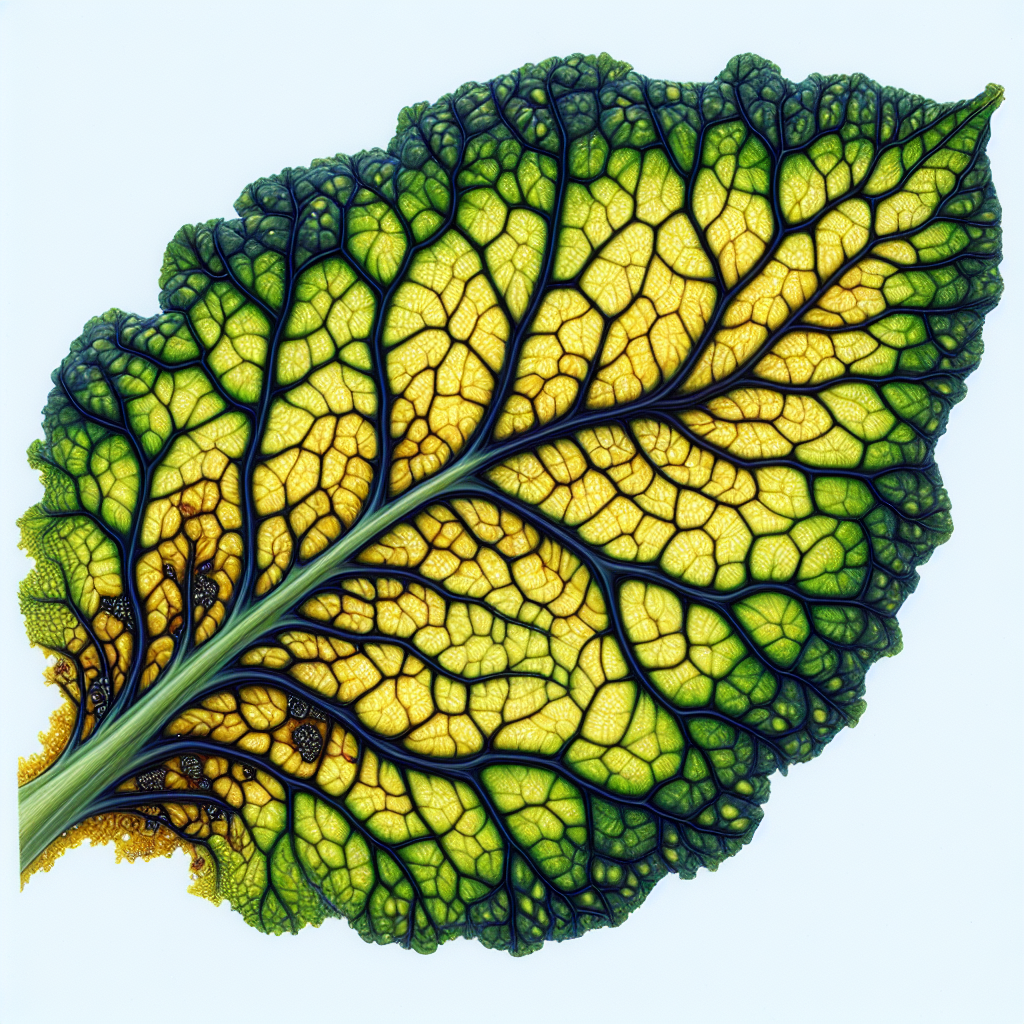
Introduction to Black rot
Black rot stands as one of the most destructive bacterial diseases in cruciferous vegetable production worldwide, capable of wiping out entire fields if left unchecked. Caused by the pathogen Xanthomonas campestris pv. campestris (Xcc), this disease targets the vascular system of plants, blocking nutrient and water transport, which results in rapid wilting and death. First identified in the late 19th century, black rot has become a persistent threat in warm, humid climates, costing growers millions in losses annually.
Understanding black rot is crucial for brassica growers, as it thrives in conditions common to commercial and small-scale farms alike. The disease enters through natural openings or wounds, multiplying quickly in high moisture environments. Early detection and integrated management are key to minimizing damage. This guide provides professional-grade diagnostic tools, lifecycle insights, organic treatments, and prevention strategies tailored for sustainable agriculture. For more on affected crops like cabbage, see our detailed crop profiles.
Identifying Symptoms & Damage
Accurate diagnosis begins with recognizing black rot's distinctive symptoms, which evolve predictably across plant stages. Initial signs appear on older leaves as small, water-soaked spots along veins, often chlorine-yellow in color with a translucent halo. These lesions expand into V-shaped yellow areas pointing toward the leaf center, a hallmark feature differentiating black rot from fungal issues like Alternaria leaf spot.
As infection progresses, affected tissues turn brown to black, with blackened veins extending into the petiole and stem—hence the name "black rot." Cross-sections reveal dark streaking in the vascular bundles. Leaves become brittle, drop prematurely, and plants exhibit stunted growth, wilting during the day, and seedling collapse in young plants. Heads of cabbage or broccoli may show internal blackening, rendering produce unmarketable.
Damage severity varies: mild infections cause 10-20% yield loss, while epidemics exceed 80%. Differentiate from look-alikes—downy mildew produces gray sporulation, while black rot lacks it. Use a hand lens to check for bacterial ooze under wet conditions. Field scouting every 3-5 days during warm weather is essential. Economic thresholds: remove plants showing >5% leaf area affected to curb spread.
Lifecycle and Progression of Black rot
Xanthomonas campestris pv. campestris is a rod-shaped, gram-negative bacterium that survives as a saprophyte on crop debris for up to 2 years. Primary infection sources include contaminated seeds (up to 1% carrying Xcc), volunteer plants, and weeds. The bacterium enters via hydathodes (natural water pores at leaf margins), stomata, or wounds from tools, hail, or insects like cabbage worms.
Once inside, Xcc multiplies in the xylem, producing enzymes that degrade plant cell walls. Optimal growth occurs at 25-30°C (77-86°F) with free water on leaves for 6+ hours. A single lesion can produce billions of bacteria, splashing to new plants via rain, irrigation, or wind-driven rain up to 1 km. Secondary cycles repeat every 5-7 days under ideal conditions, accelerating epidemics.
Progression phases: latent (1-5 days), symptom expression (yellowing), necrosis (blackening, 7-14 days), and systemic spread (wilting, 2-4 weeks). In storage, infected heads rot rapidly at high humidity. Overwintering in soil is minimal without host debris. Lifecycle disruption through sanitation breaks the cycle effectively.
Environmental Triggers & Risk Factors
Black rot epidemics correlate strongly with environmental cues. High temperatures (24-29°C) combined with prolonged leaf wetness (>6 hours from dew, rain, or overhead irrigation) are primary triggers. Humid regions like the southeastern U.S., Southeast Asia, and coastal Europe report highest incidences. Soil pH above 7.0 and high nitrogen fertility promote succulent growth, increasing susceptibility.
Risk factors include monoculture of brassicas, narrow crop rotations (<2 years), and planting infected seeds. Poor air circulation in dense plantings traps moisture, while overhead watering directly disseminates bacteria. Contaminated equipment, shared among fields, amplifies spread. Weed hosts like shepherd's purse harbor Xcc asymptomatically. Climate change exacerbates risks with intensified storms. For hyper-local forecasts to mitigate weather risks, check Why 80% of Small Farms Battle Weather Disasters - And How Hyper-Local AI Forecasts Can Save Your Harvest.
Organic Control & Treatment Plans
Organic management emphasizes cultural, biological, and approved bactericides—no curative treatments exist post-infection. Start with certified pathogen-free seeds treated with hot water (50°C for 25 min) or calcium hypochlorite soaks. Apply copper-based products like fixed copper hydroxide (e.g., Cueva, Badge X2) at 0.5-1 gal/A pre-symptom or at first sign, repeating every 7 days in wet weather (up to 8 apps/season, PHI 0 days).
Biologicals like Bacillus subtilis (Serenade) or streptomycin alternatives (e.g., AgriPharm) suppress populations when alternated with copper. Remove and destroy infected plants immediately, burying >1m deep or hot-composting (>131°F). Use row covers to block rain splash and insect vectors. Actigard (acibenzolar-S-methyl) induces systemic acquired resistance, applied at 2/3 flag leaf stage.
Integrated plan: Scout weekly; apply copper + biofungicide at 10-day intervals during risk periods; ensure 12-18" plant spacing. For broccoli, harvest early to avoid head infection. Trials show 50-70% control combining these. Avoid antibiotics in organic systems unless permitted regionally.
Preventing Black rot in the Future
Prevention hinges on breaking the lifecycle through cultural practices. Implement 3-4 year rotations excluding brassicas—alliums like onion suppress Xcc via biofumigation. Use resistant varieties: 'Rio Verde' cabbage, 'Packman' broccoli, 'Snow Crown' cauliflower. Hot water seed treatment + indexing ensures clean starts.
Site selection: Choose well-drained fields with good airflow; avoid low spots. Drip irrigation minimizes leaf wetness; time applications for midday drying. Sanitize tools with 10% bleach or 70% alcohol between plants. Rogue volunteers and control weeds. Mulch suppresses splash dispersal. Soil solarization in off-season kills surface bacteria. Long-term: diverse rotations with tomato or grains build resilience. Monitor via traps for early warning. Resistant cultivars + sanitation yield 90%+ prevention.
Crops Most Affected by Black rot
Black rot predominantly strikes Brassicaceae family members. Top targets: cabbage (up to 100% loss), broccoli, cauliflower, kale (curly kale), Brussels sprouts, collards, kohlrabi, radish (cherry belle radish), turnip (purple top white globe turnip), mustard, arugula, and watercress. Commercial losses peak in cabbage and cauliflower due to head quality demands.
Secondary hosts include nasturtium (nasturtium) and some wild mustards, acting as reservoirs. Non-hosts like lettuce or beans provide rotation buffers. Symptoms vary: leaf crops show V-lesions; root crops develop black roots. Global impact: devastating in Asia's cabbage belts, U.S. Southeast broccoli fields. Select resistant hybrids for high-risk areas to sustain yields.