Introduction to black nightshade
Black nightshade, scientifically known as Solanum nigrum, is a widespread annual or short-lived perennial weed belonging to the Solanaceae family, the same as tomatoes, potatoes, and eggplants. Native to Eurasia, it has become a global agricultural pest, thriving in disturbed soils, fields, orchards, and gardens across temperate and tropical regions. Farmers often mistake it for young tomato or potato plants due to similar leaf shapes, leading to delayed control efforts.
This weed poses multiple threats: direct competition for resources stunts crop growth, its dense canopy shades out seedlings, and it serves as an alternate host for pests like aphids and diseases such as early blight. Moreover, black nightshade produces thousands of seeds per plant, with up to 90% viability persisting in soil for years, creating long-term infestation risks. Its ripe black berries are toxic to humans and livestock, contaminating harvests and posing food safety issues. In row crops like soybeans and corn, it can reduce yields by 20-50% if unchecked.
Organic management is crucial as chemical herbicides often fail due to resistance and residue concerns. Early identification and integrated strategies are key to minimizing economic losses, which can exceed $100 per acre in severe infestations. This definitive guide equips farmers with diagnostic tools, lifecycle insights, and proven organic controls to reclaim fields from black nightshade. For more on AI-assisted plant identification, check this blog post.
Identifying Symptoms & Damage
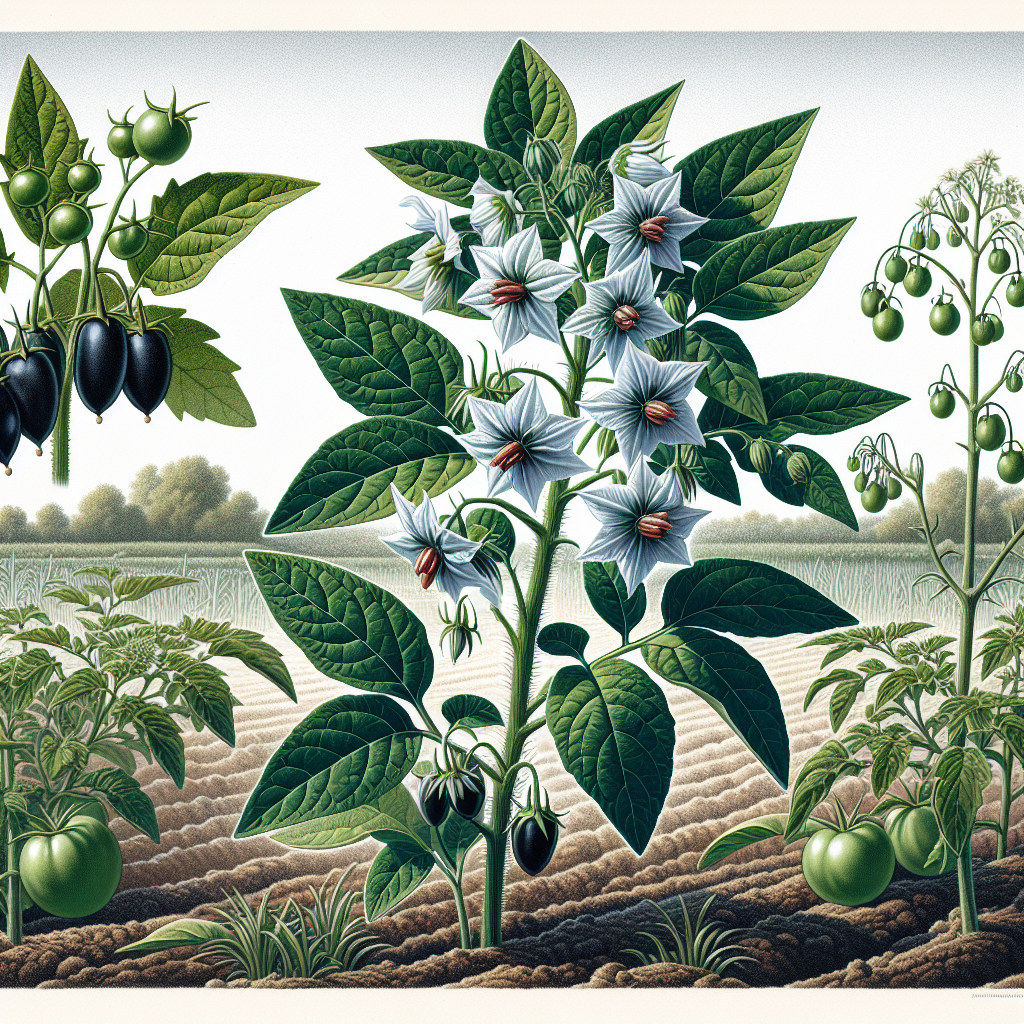
Accurate diagnosis begins with recognizing black nightshade's distinctive features. Seedlings emerge with cotyledons that are oval, hairless, and purple-tinged underneath. True leaves are alternate, ovate to lanceolate, 1-3 inches long, with wavy margins and a dull green color, often hairless or sparsely pubescent. Stems are erect, branching, reaching 1-3 feet tall, with a faint purple hue.
Mature plants produce clusters of small white flowers (1/4 inch) with five petals and yellow anthers, resembling tiny tomato blossoms. Fruits develop into green berries turning yellow, then glossy black at maturity, each containing 20-100 seeds. Unlike edible nightshades, these berries are poisonous, containing solanine alkaloids.
Damage symptoms include stunted crop growth from resource competition. In potato fields, black nightshade mimics crop plants, complicating mechanical harvesting and causing tuber contamination. Shade from its canopy yellows lower crop leaves, while roots deplete soil nitrogen and moisture. In tomato patches, it harbors tomato spotted wilt virus, spreading to crops via vectors.
Inspect fields weekly: look for rosettes in fall, seedlings in spring. Use a hand lens to check for star-shaped hairs on leaf undersides, distinguishing it from horsenettle (Solanum carolinense). Yield impacts are severe—studies show 10 plants per square meter reduce soybean yields by 30%. Contaminated produce fetches lower market prices due to toxicity risks.
Lifecycle and Progression of black nightshade
Black nightshade completes its lifecycle in 6-8 weeks under optimal conditions, producing multiple generations per season. It germinates from spring to fall when soil temperatures exceed 50°F (10°C), favoring moist, disturbed soils with pH 5.5-7.5. Seeds require light for germination, explaining surface persistence.
Vegetative growth lasts 4-6 weeks: seedlings form rosettes, then bolt into upright stems with branching. Flowering begins 4-6 weeks post-emergence, continuing until frost. Pollination by insects yields berries in 2-3 weeks, each plant producing 1,000-10,000 seeds. Seeds enter dormancy, viable for 5-10 years, germinating when exposed by tillage.
Perennial forms root from stem fragments, spreading vegetatively. In mild climates, it overwinters as a green rosette. Progression stages: germination (spring), vegetative (early summer), reproductive (mid-summer), senescence (fall). Interrupt at vegetative stage for best control. Crop rotation disrupts this cycle, as black nightshade thrives in solanaceous rotations.
Environmental Triggers & Risk Factors
Black nightshade flourishes in nitrogen-rich, moist soils with partial shade, common in over-fertilized fields post-manure application. Tillage brings buried seeds to surface, triggering mass germination. Risk factors include reduced tillage, which preserves seedbank; contaminated manure or compost; and proximity to fencerows or waste areas.
Warm, wet springs (60-75°F, >20 inches rain) accelerate growth, while drought stresses crops more than this resilient weed. High humidity promotes berry set. Fields following potato or tomato harbor seedbanks due to similar niches. Poor weed management in adjacent corn fields seeds future infestations.
Soil compaction from machinery creates ideal microsites. Learn more about zoning fields for better control in this blog post. Climate change extends growing seasons, boosting seed production.
Organic Control & Treatment Plans
Organic control integrates prevention, mechanical, cultural, and biological methods. Immediate Actions: Hand-pull small infestations before seed set, ensuring root removal. Flame weeding at vegetative stage kills 80-90% without chemicals. Mow repeatedly to prevent flowering.
Cultural Controls: Crop rotation with non-hosts like wheat or clover depletes seedbank over 3-4 years. Cover crops such as rye suppress germination via allelopathy. Mulch with 4-6 inches of straw blocks light. Solarization—clear plastic over moist soil for 4-6 weeks in summer—kills seeds.
Biological: Encourage predators like ladybugs that feed on associated aphids. Grazing chickens or goats devour plants pre-seed.
Treatment Plans:
- Scout Weekly: Map infestations.
- Pre-Emergence: False seedbed—till, wait for germination, then kill.
- Post-Emergence: Hoe or cultivate shallowly at 2-4 leaf stage.
- Season-Long: Integrate mulching and rotation.
Monitor progress; expect 70-90% reduction in year one with diligence. Avoid vinegar-based herbicides due to soil residue.
Preventing black nightshade in the Future
Long-term prevention focuses on seedbank depletion and hygiene. Clean equipment to prevent seed transport. Use certified weed-free seed and manure. Establish buffer zones around fields with competitive grasses.
Soil testing guides balanced fertility, avoiding excess nitrogen. Implement integrated weed management (IWM): rotate crops, use smother crops, and timed tillage. Perennial cover like alfalfa outcompetes seedlings. Scout edges first, as infestations spread inward.
For small farms, AI tools optimize timing—see Spring Pest Patrol. Threshold: <1 plant/100 sq ft. Annual monitoring prevents resurgence.
Crops Most Affected by black nightshade
Black nightshade plagues solanaceous crops: tomato, potato, eggplant, bell pepper. It mimics seedlings, evading early detection. In row crops, soybeans, corn, and sugar beet suffer competition. Vegetable gardens with cucumber and squash see shading damage.
Orchards like apple and peach host it under trees. Yield losses: 25% in potato, 40% in soybeans. It vectors mosaic viruses to pepper. Fields near roadsides face constant reinfestation.