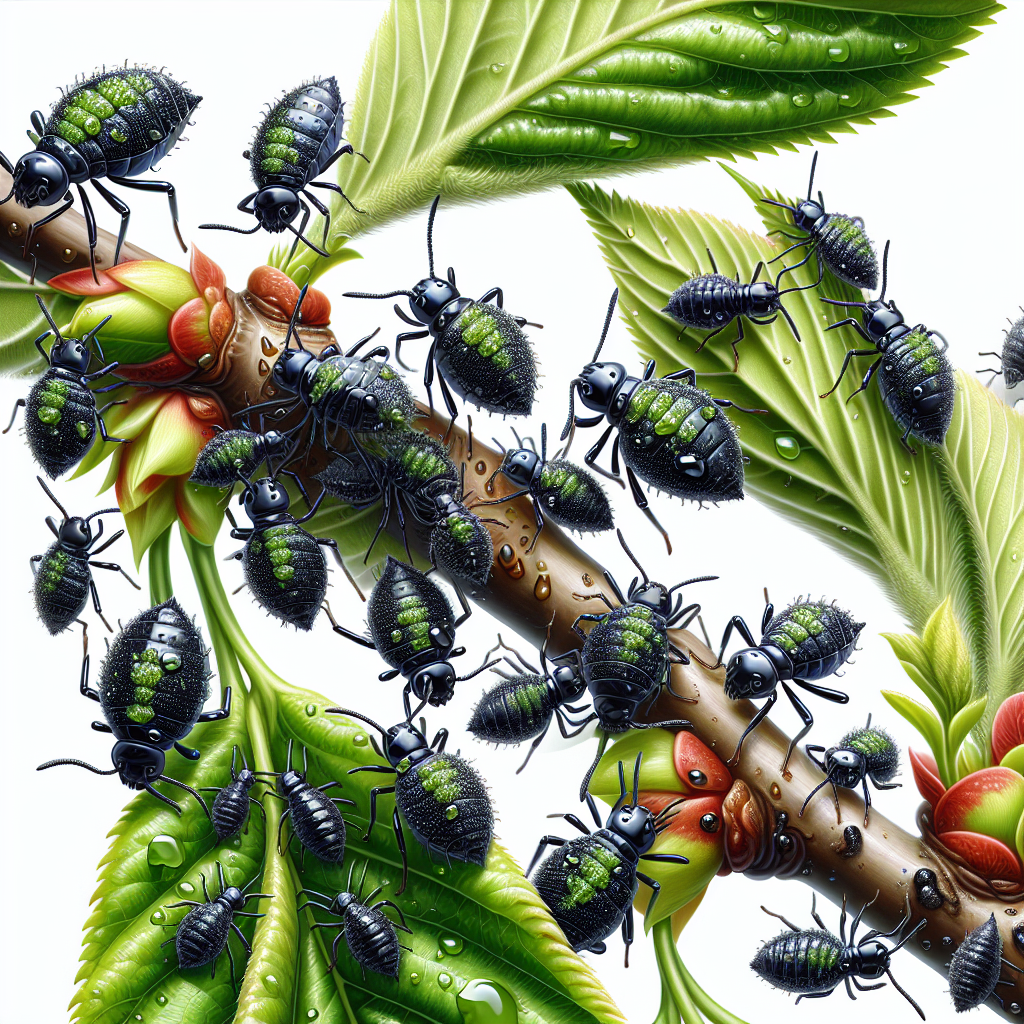
Introduction to Black cherry aphid
The black cherry aphid, scientifically known as Myzus cerasi, is one of the most notorious pests affecting stone fruit orchards, particularly Cherry trees. These tiny, shiny black insects (1.5-2.5 mm long) colonize new growth, sucking sap and excreting honeydew that fosters sooty mold fungus. Native to Europe but now widespread in North America, Asia, and beyond, they can cause significant economic losses by distorting foliage, reducing photosynthesis, and weakening trees. Early spring infestations are common, with populations exploding under favorable conditions. This definitive guide equips commercial growers, orchardists, and home gardeners with professional-grade diagnostic tools, lifecycle insights, organic treatments, and prevention strategies. Understanding M. cerasi biology is key to integrated pest management (IPM), minimizing chemical use while safeguarding Bing Cherry and Rainier Cherry harvests. For broader context on aphid pests, see our Aphids wiki page.
Outbreaks often coincide with bud break, when wingless females give birth to live nymphs parthenogenetically. Honeydew attracts ants, complicating control, while viruses like cherry leaf roll can transmit. Yields may drop 20-50% in severe cases, underscoring the need for vigilant scouting. This resource draws from entomological research and field trials, offering actionable advice for sustainable cherry production.
Identifying Symptoms & Damage
Accurate diagnosis starts with visual scouting. Black cherry aphids cluster on tender shoots, leaf undersides, and buds, appearing as shiny black beads. Nymphs are smaller and darker green-black. Key symptoms include:
- Leaf curling and distortion: Aphids inject saliva while feeding, causing upward cupping of young leaves. Severe cases lead to crinkled, stunted foliage.
- Honeydew and sooty mold: Sticky exudate coats leaves, stems, and fruit, promoting black sooty mold fungus that blocks sunlight.
- Stunted shoots: Terminal growth aborts, resulting in bushy, rosetted appearance.
- Yellowing and premature leaf drop: Heavy infestations stress trees, mimicking nutrient deficiencies.
- Fruit impact: Reduced vigor leads to smaller, cracked cherries; indirect damage via virus transmission.
Differentiate from green apple aphid (smaller, green) or woolly apple aphid (waxy filaments). Use a 10x hand lens to confirm pear-shaped bodies with cornicles. Tap infested shoots over white paper—aphids dislodge and crawl actively. Economic thresholds: 10-20 aphids per shoot in spring. For misidentification pitfalls, check Why Misidentifying Plants Costs Small Farms Thousands.
Secondary signs include ant trails and ladybug presence (natural predators). Monitor Peach and Plum trees nearby, as M. cerasi can alternate hosts. Damage peaks in May-June, with winged forms dispersing.
Lifecycle and Progression of Black cherry aphid
M. cerasi completes 8-12 generations annually, with complex host alternation. Overwinter as black eggs on cherry bark (Prunus spp.). In spring (bud swell, ~10°C), eggs hatch into fundatrices (stem mothers) that reproduce parthenogenetically, birthing 20-50 nymphs each over 2-3 weeks. Wingless females (viviparae) dominate summer colonies.
Nymphs mature in 7-10 days at 20°C, feeding on phloem sap. Populations peak at bloom and shoot elongation. Mid-summer, winged alates (males/females) migrate to herbaceous secondaries like cabbage, beet, or potato, producing sexual forms. Fall returnees lay overwintering eggs on cherry.
Lifecycle varies by climate: 25 days/generation at 18°C, diapause below 5°C. Monitor with sticky traps for alates. Understanding progression enables targeted sprays at nymphal peaks.
Environmental Triggers & Risk Factors
Infestations surge with mild winters (> -10°C), early springs, and nitrogen-rich soils promoting succulent growth. High humidity (60-80%) and temperatures 15-25°C favor reproduction; drought stresses hosts, increasing susceptibility. Poor air circulation in dense orchards traps aphids.
Risk factors:
- Susceptible varieties: Sweet cherries like Bing Cherry.
- Weedy understories: Alternate hosts harbor migrants.
- Ants: Protect aphids from predators.
- Previous damage: Weakened trees from powdery mildew or root rot attract colonizers.
Climate change extends generations; scout after 200 degree-days post-bud break.
Organic Control & Treatment Plans
IPM prioritizes organics. Cultural: Prune for airflow, remove wild Prunus. Biological: Release lacewings, ladybugs (1,000/acre); plant yarrow, thyme for predators. Physical: High-pressure water blasts dislodge colonies.
Organic sprays:
- Insecticidal soaps/neem oil: 2% solution weekly at green tip; smother eggs/nymphs.
- Oils (dormant/superior): 2-3% at egg hatch.
- Pyrethrins + Beauveria bassiana: For outbreaks.
Treatment plan:
- Scout weekly spring.
- Blast <50 aphids/shoot.
- Spray at 10% infested shoots.
- Reapply 7-10 days, rotate modes. Avoid bloom sprays for pollinators. For more, see Spring Pest Patrol. Combine with marigold borders.
Preventing Black cherry aphid in the Future
Prevention beats cure:
- Resistant varieties: Select Mazzard rootstocks.
- Sanitation: Destroy wild cherries, mulch to exclude ants.
- Fertilization: Balanced N, avoid excess.
- Trap crops: Plant mustard nearby.
- Reflective mulches: Deter alates.
- Winter cleanup: Egg scrubbing with hort oil.
Monitor with apps; integrate with Soil Health Mastery for resilient trees.
Crops Most Affected by Black cherry aphid
Primarily Cherry (sweet/sour), but impacts Peach, Plum, Pear, Apple. Secondary: Brassicas (Cabbage), Potato, Beet. Orchards with mixed stone fruits amplify risk.