Introduction to Rainier Cherry
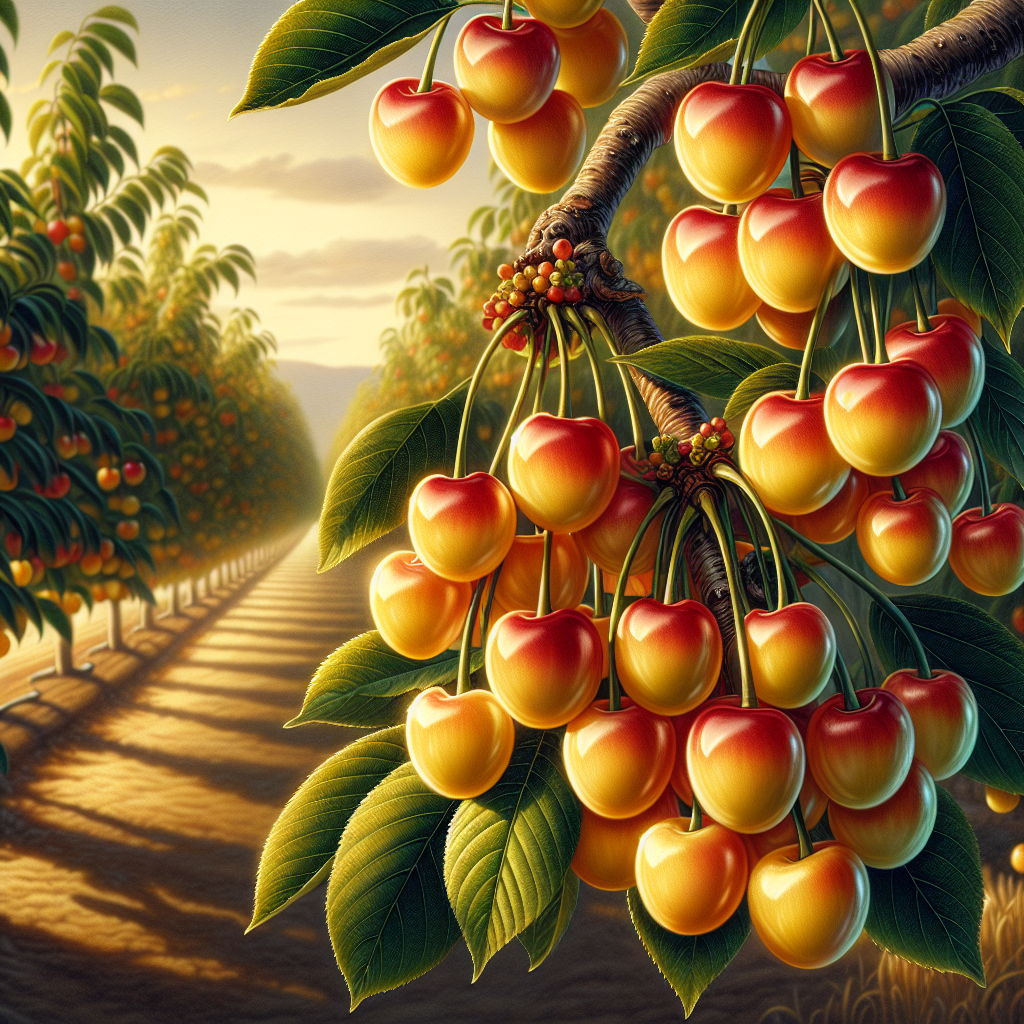
Developed in Washington State in 1952 and released in 1960, this iconic sweet cherry cultivar was bred from a cross between 'Bing' and 'Van' by Harold Fogle at Washington State University. It was named after Mount Rainier and became famous for its striking golden-yellow fruit with a red blush, high soluble solids, and dessert-quality sweetness. Compared with dark sweet cherries, it bruises more easily, shows sunburn and rain cracking more readily, and is more visible to birds, which makes production management more exacting.
For orchardists and serious home growers, it is a high-value but somewhat demanding tree. Success depends on matching the cultivar to a site with adequate winter chill, good air drainage, well-drained soil, and compatible pollinizers. If the basics are right, the reward is one of the finest fresh-eating cherries available. For broader species context, see our Cherry guide.
Botanical Profile of Rainier Cherry
This cultivar belongs to Prunus avium, the sweet cherry species. Trees are deciduous, moderately vigorous, and typically grafted onto rootstocks that strongly influence ultimate size, precocity, anchorage, and soil adaptation. On standard rootstocks, mature trees may reach 20-30 feet tall and wide; on semi-dwarf or dwarf rootstocks they may remain in the 8-18 foot range, depending on training system and pruning intensity.
Key identifying features include:
- Oval to lance-shaped serrated leaves with a glossy green upper surface.
- White five-petaled blossoms borne in clusters in early to mid-spring.
- Heart-shaped to rounded fruit with creamy yellow skin, often heavily blushed red on the sun-exposed side.
- Pale yellow to clear flesh that is very sweet, aromatic, and tender.
Rainier is not self-fertile. It requires a compatible sweet cherry pollinizer blooming at a similar time. Common compatible pollinizers include Bing, Van, Lapins, Black Tartarian, Stella, and certain other mid-season bloomers, though local compatibility charts should always be checked because bloom overlap varies with region. Pollination depends heavily on bee activity, and cool, wet weather during bloom can sharply reduce fruit set.
The cultivar is considered mid-season in many cherry-growing regions, often ripening shortly before or around Bing. Fruit quality is strongly tied to crop load. Overcropped trees may produce smaller cherries with lower sugar concentration, while balanced cropping improves size, color, and firmness.
Soil, pH, and Climate Requirements for Rainier Cherry
This cultivar performs best in temperate climates with cold winters and relatively dry conditions during fruit ripening. It generally needs about 700-900 chill hours below 45°F (7°C), though exact performance varies by rootstock and location. Insufficient winter chill can cause delayed leaf-out, weak bloom, erratic flowering, and poor fruit set. Excessively warm winters are one of the main reasons sweet cherries fail in marginal climates.
The ideal site has:
- Full sun, at least 8 hours daily.
- Elevated ground or gentle slopes for air drainage.
- Protection from strong desiccating winds.
- Low risk of spring frost pockets.
- Dry weather or low rainfall during the final 2-3 weeks before harvest.
Soil texture matters enormously. The best soils are deep, fertile, well-drained sandy loams or loams with moderate water-holding capacity and excellent internal drainage. Heavy clay can be used only if drainage is improved significantly with berms, tile drainage, or raised rows. Waterlogged soil is especially dangerous because sweet cherry roots are sensitive to oxygen deprivation; even 24-48 hours of saturated root-zone conditions during active growth can stress trees, reduce root respiration, and predispose them to root rots and Bacterial canker.
Target soil parameters:
- pH: 6.2-7.0 is ideal.
- Organic matter: 2.5-5% is generally favorable.
- Rooting depth: at least 3-4 feet of penetrable soil preferred.
- Electrical conductivity: low to moderate; cherries are not highly salt tolerant.
If pH is below 6.0, apply agricultural lime based on soil test recommendations several months before planting. If pH exceeds about 7.5, iron chlorosis may develop, especially on certain rootstocks, showing as yellow leaves with green veins. In alkaline soils, selecting tolerant rootstocks and using chelated micronutrients may be necessary.
Moisture management is a balancing act. The root zone should stay evenly moist but never saturated. A useful target is to maintain soil moisture in the active root zone at roughly 60-80% of field capacity during bloom through early fruit sizing, then avoid extremes before harvest. Drought stress during pit hardening and fruit enlargement reduces fruit size and can induce premature leaf drop. Overwatering near harvest increases fruit cracking risk, softens texture, and reduces sweetness.
Annual rainfall of 25-40 inches can support trees if drainage is excellent, but supplemental irrigation is usually needed for consistent commercial-quality fruit. Humid climates are more difficult due to disease pressure and cracking.
Step-by-Step Planting & Propagation
Planting begins with rootstock and pollination planning, not just hole digging. Purchase certified disease-free grafted trees from a reputable nursery. Rainier is almost never propagated true-to-type from seed, since seedlings will be genetically variable and inferior for uniform fruit production. Commercial and serious orchard propagation relies on budding or grafting onto selected rootstocks.
Common rootstock considerations:
- Mazzard: vigorous, adaptable, long-lived, suited to standard trees, but slower to bear.
- Mahaleb: more drought tolerant in some soils, but less tolerant of poorly drained or heavy soils.
- Gisela series: more dwarfing and precocious, excellent for high-density systems, but requires careful crop-load management and nutrition.
- Krymsk series: useful in some modern orchards for size control and soil adaptation.
Plant in late winter to early spring while trees are dormant, as soon as the soil is workable and before bud break. In mild climates, fall planting can work if winter waterlogging is not an issue.
Step-by-step planting process:
- Test the soil first. Check pH, organic matter, phosphorus, potassium, calcium, magnesium, and drainage. Correct major issues before planting because perennial fruit trees are difficult to fix after establishment.
- Choose spacing by rootstock and training system. Standard trees may need 18-25 feet between trees. Semi-dwarf systems often use 12-18 feet. Dwarfing rootstocks in pedestrian orchards may be planted 6-12 feet apart with 12-16 feet between rows.
- Include a pollinizer. Plant a compatible cherry nearby, ideally within 50-100 feet for strong bee-mediated pollination. In larger orchards, a ratio of roughly 1 pollinizer for every 8-10 trees is common, though layout matters.
- Prepare the planting area. Remove perennial weeds in a 3-4 foot circle or strip. Avoid adding large amounts of fresh compost or fertilizer into the planting hole; this can create texture discontinuities and root circling.
- Dig a wide hole, not an overly deep one. Make it 2-3 times wider than the root system and only as deep as needed so the graft union remains 2-4 inches above final soil level.
- Inspect roots. Trim broken or girdling roots. Soak bare-root trees for 2-4 hours before planting, but do not leave them submerged for extended periods.
- Set the tree at the proper height. Planting too deep is a common cause of poor establishment. The original nursery soil line is a good reference.
- Backfill with native soil. Firm gently to eliminate large air pockets.
- Water thoroughly after planting. Apply enough water to settle soil around roots, usually 3-5 gallons for a young tree, more in sandy soil.
- Stake if needed. Dwarf rootstocks especially often require permanent support.
- Mulch carefully. Apply 2-4 inches of wood chips or similar mulch over the root zone, keeping it 4-6 inches away from the trunk to prevent crown rot and rodent damage.
- Head the tree at planting if appropriate. Whip trees are often headed at 30-36 inches to initiate scaffold development; feathered trees are pruned according to the intended training system.
Propagation by grafting is best done with dormant scionwood collected in winter and whip-and-tongue or cleft grafted onto suitable rootstocks in late winter or spring. Budding in summer is also common in nursery production.
Care & Maintenance regimes for Rainier Cherry
The first three years determine the tree's long-term productivity. During establishment, prioritize root development, scaffold training, moderate vegetative growth, and weed suppression.
Water management: Young trees generally need frequent but measured irrigation. In the first year, supply enough water to wet the top 12-18 inches of soil around the root zone, then allow slight drying before the next irrigation. In warm weather, this may mean watering 1-3 times weekly depending on soil texture. Sandy soils need smaller, more frequent irrigations; loams need deeper, less frequent watering.
For mature trees, the highest demand occurs from bloom through harvest and again during postharvest leaf function when buds for the next year are forming. As a practical benchmark, many mature cherry trees use the equivalent of 1.5-2 inches of water per week under hot, dry conditions, adjusted for canopy size, soil type, and evapotranspiration.
Signs of under-watering include:
- Dull, slightly folded leaves in afternoon heat that do not recover by morning.
- Reduced shoot growth.
- Small fruit and lower sugar levels.
- Premature yellowing or drop of older leaves.
Signs of overwatering include:
- Persistently wet soil 3-6 inches down several days after irrigation.
- Pale foliage despite adequate fertility.
- Weak, soft shoot growth.
- Leaf yellowing starting without heat stress symptoms.
- Sour-smelling soil or poor vigor due to root stress.
Fertilization: Cherries need balanced nutrition, not aggressive feeding. Excess nitrogen drives vegetative growth, delays fruit maturity, reduces color, and can increase susceptibility to bacterial diseases and fruit softness. In non-bearing young trees, a modest spring nitrogen application can support framework development. In bearing trees, fertilize according to leaf analysis and soil tests.
Typical nutrient strategy:
- Nitrogen: apply lightly in early spring if needed; avoid late summer nitrogen that stimulates tender growth before winter.
- Potassium: important for fruit size, sugar accumulation, and stress tolerance.
- Calcium: supports firmness and reduces physiological stress, though foliar calcium has variable effect depending on conditions.
- Boron and zinc: deficiencies can impair flowering and leaf function.
A common commercial practice is annual leaf tissue sampling in midsummer to fine-tune nutrition. For small-scale growers, slow-release balanced fertilizer or composted organic matter can be used cautiously, but avoid piling rich material against the trunk.
Pruning and training: Rainier benefits from strong light distribution because fruit color and sugar accumulation improve with good canopy exposure. Open center, modified central leader, UFO, and KGB systems are all used depending on scale and rootstock. For home orchards, an open vase or low open center is often practical.
Pruning objectives:
- Build 3-5 well-spaced scaffold limbs in young trees.
- Remove narrow crotch angles prone to breakage.
- Thin crowded interior wood to improve light and air movement.
- Renew fruiting wood gradually.
- Keep tree height manageable for harvest and bird netting.
Sweet cherries are more susceptible to Bacterial canker than many fruit trees, so heavy pruning is often safer in dry summer conditions rather than during wet winter periods, especially in high-risk climates. Remove dead, diseased, rubbing, and vertical water-sprout growth promptly.
Weed control: Maintain a vegetation-free strip under the canopy, especially during establishment. Grass competition can dramatically reduce young tree growth by stealing water and nitrogen. Mulch, shallow cultivation, or targeted organic weed suppression are all preferable to allowing dense turf against the trunk.
Fruit thinning and crop balance: Unlike peaches, cherries are not commonly hand-thinned on a broad scale, but crop load still matters. On dwarfing rootstocks, over-setting can lead to small fruit, branch bending, and biennial tendencies in stressed trees. Judicious dormant pruning and balanced fertilization help regulate cropping.
For additional orchard floor and fertility ideas, see soil health strategies.
Pests, Diseases & Organic Management
This cultivar is highly attractive to birds and vulnerable to several diseases and insect pests common to sweet cherries. Because the fruit is light-colored and sweet, any blemish is conspicuous and market quality drops quickly.
Birds: The single biggest direct pest in many plantings. Robins, Starlings, Cedar waxwings, and other fruit-eating species can strip a tree in days as fruit colors.
- Best control: full exclusion netting installed before fruit begins to blush.
- Supplementary tactics: reflective tape, predator decoys, sound deterrents, and synchronized neighborhood control, though these rarely work alone for long.
Cherry fruit fly and Spotted wing drosophila: These can infest ripening fruit, especially in regions with known pressure.
- Sanitation: pick all ripe fruit promptly and remove drops.
- Monitoring: yellow sticky traps and regional pest alerts.
- Organic options: spinosad products used according to label, with careful preharvest interval management.
- Netting with fine mesh can also reduce pest access in small plantings.
Aphids: Black cherry aphid can curl leaves and reduce vigor.
- Encourage beneficial insects.
- Use horticultural oil during dormant season for overwintering stages where appropriate.
- In-season insecticidal soap may help on low populations if thorough coverage is possible.
Spider mites: More common in hot, dusty sites.
- Reduce dust on orchard roads.
- Avoid broad-spectrum insecticides that kill predators.
- Monitor leaf stippling and mite counts on undersides.
Bacterial canker: A serious issue in sweet cherries, causing gumming, sunken bark lesions, spur death, and branch dieback.
- Avoid excessive nitrogen.
- Prevent trunk injury.
- Prune during dry weather.
- Paint southwest-facing trunks with diluted white interior latex paint to reduce sunscald in young trees.
- Use copper sprays where locally recommended, especially at leaf fall and delayed dormant, while respecting phytotoxicity risk.
Brown rot: Blossoms and fruit may rot in humid or wet conditions.
- Improve airflow through pruning.
- Remove mummified fruit.
- Avoid overhead irrigation near bloom and harvest.
- Apply approved organic fungicides such as sulfur or biologicals preventively where disease pressure is high.
Powdery mildew: Can affect leaves and young shoots, especially in dry climates with humid canopies.
- Keep canopies open.
- Manage vigor.
- Sulfur can be effective if timed correctly.
Rain cracking: Not a pathogen, but one of the most economically damaging problems. Fruit absorbs water through the skin during rainfall or prolonged surface wetness, causing splitting around the stem cavity, stylar end, or cheek.
- Favor dry-ripening climates.
- Maintain even irrigation to avoid sudden uptake surges.
- Use rain covers in intensive systems where feasible.
- Harvest promptly at maturity.
Integrated organic management depends on prevention: clean orchard sanitation, pruning for airflow, careful nitrogen control, weed suppression, good pollination, and physical exclusion methods.
Harvesting, Curing & Optimal Storage
Harvest timing is critical because this cultivar does not continue to improve significantly after picking. Fruit should be picked when background color has turned from pale yellow-green to rich creamy yellow and the blush is well developed for the site and season. Taste is an important indicator: high-quality fruit should be sweet, aromatic, and low in tartness. Commercial growers often target soluble solids in the mid to upper teens or higher, depending on market standards.
Pick in the cool morning once surface moisture has dried. Always harvest with stems attached when possible; stemless fruit loses moisture faster and has shorter shelf life. Handle gently because Rainier bruises and pressure-marks more easily than darker-fleshed cherries.
Harvest method:
- Use shallow picking containers.
- Do not overfill buckets.
- Keep fruit shaded immediately.
- Remove damaged, cracked, bird-pecked, or diseased fruit during harvest.
Unlike onions, garlic, or winter squash, cherries are not truly cured. What matters is rapid pre-cooling. Ideally, fruit should be cooled to near 32°F (0°C) as soon as possible after harvest, with 90-95% relative humidity. Fast cooling preserves firmness, slows stem browning, and limits decay.
Storage expectations:
- At room temperature: usually only 1-2 days before quality drops sharply.
- Refrigerated near 32°F with high humidity: commonly 1-2 weeks of good quality, sometimes a bit longer under excellent handling.
- Avoid storing wet fruit in closed containers; surface moisture encourages decay.
Do not wash fruit until just before use unless you can dry it thoroughly before refrigeration. For market sales, prioritize appearance: sort out fruit with pitting, stem browning, cracking, sunburn, or softness.
Companion Planting for Rainier Cherry
The best companions for this tree are species that support pollinators, improve orchard biodiversity, suppress weeds, and avoid intense root competition near the trunk. Shallow-rooted flowering herbs and managed insectary plants are usually more useful than heavy-feeding vegetables directly beneath the canopy.
Excellent companions include Thyme, Yarrow, and Clover. Thyme forms a low aromatic groundcover that attracts beneficial insects when flowering and does not usually create dense, tall competition. Yarrow is valued for attracting predatory wasps, hoverflies, and other beneficials while tolerating orchard-edge conditions. Clover can function as a living mulch in row middles or managed strips, contributing nitrogen fixation and pollinator forage, though it should be kept from competing heavily with newly planted trees.
Companion planting guidelines:
- Keep a 12-18 inch vegetation-free zone around young trunks.
- Do not plant tall, water-demanding annuals directly in the root zone.
- Mow or trim flowering companions so they do not harbor rodents against the trunk.
- Focus companion species in alleyways, dripline margins, or orchard borders rather than right at the crown.
- Time mowing so some flowers are always available during pollinator activity periods.
Avoid aggressive grasses and invasive perennials around young trees, since they compete strongly for water and nutrients. Also avoid dense plantings that reduce airflow under the canopy, because cherries benefit from rapid drying after rain and dew.
When well designed, companion plantings create a more biologically resilient orchard floor, support pollination during bloom, and encourage predators that help suppress aphids and other secondary pests.