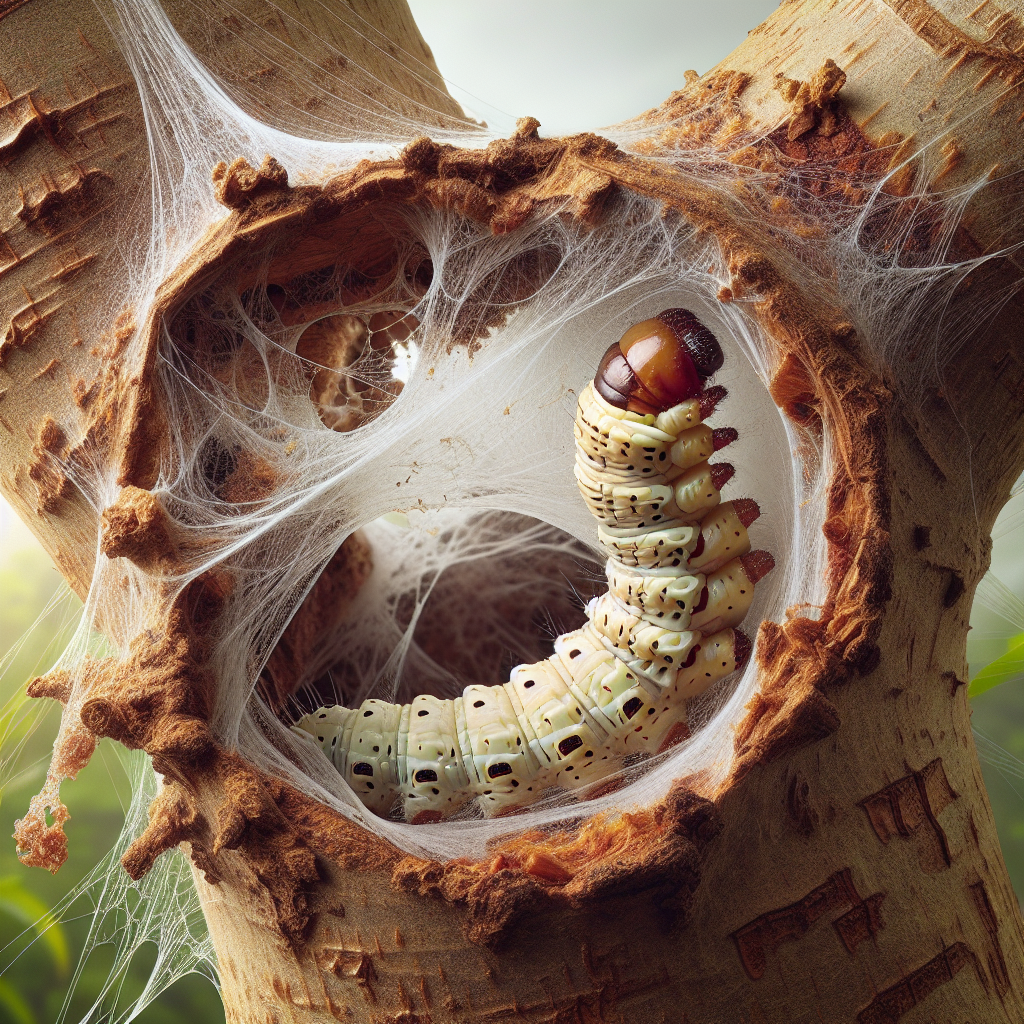
Introduction to Bark-eating caterpillars
Bark-eating caterpillars, often referring to the larvae of clearwing and carpenter moths (family Cossidae, notably Indarbela quadrinotata in tropical regions and similar species like Zeuzera pyrina elsewhere), represent a significant threat to woody crops worldwide. These voracious feeders tunnel extensively into the bark and cambium layers of trees, creating galleries that girdle trunks and branches. This disrupts the phloem and xylem transport systems, leading to wilting foliage, canopy dieback, and eventual tree mortality. In agricultural settings, outbreaks can devastate orchards, reducing yields by 50-80% in severe cases. Farmers often mistake early symptoms for drought stress or root rot, delaying intervention. Understanding their biology is crucial for timely management, especially in humid subtropical climates where they thrive. This guide provides professional-grade diagnostics, organic treatments, and prevention tactics optimized for small to medium-scale farms growing susceptible crops.
Identifying Symptoms & Damage
Early detection hinges on recognizing subtle signs before extensive tunneling occurs. Initial symptoms include small entry holes (3-8 mm diameter) in the bark, often plugged with silk and frass (caterpillar excrement resembling sawdust). Affected bark may ooze sap or gum, particularly on mango or avocado trees. As larvae mature (up to 10 cm long, creamy white with brown heads), galleries expand longitudinally, causing longitudinal cracks and peeling bark. Foliage above damaged areas yellows and wilts, mimicking vascular wilt diseases like Fusarium wilt. Severe girdling exposes wood, inviting secondary pathogens such as Phytophthora or Botrytis.
Inspect trunks at eye level and lower branches during dusk or dawn when adult moths are active. Frass piles at hole bases confirm active infestation. Differentiate from borers by the silken webbing and lack of wood chips. Use a knife to probe suspected areas; healthy cambium is green and moist, while infested tissue is brown and watery. In apple orchards, larval tunnels often spiral, leading to 'flag' branches snapping in wind. Document damage with photos for tracking progression, and scout 20% of trees weekly during peak seasons (spring-fall).
Lifecycle and Progression of Bark-eating caterpillars
Bark-eating caterpillars undergo complete metamorphosis with distinct stages: egg, larva, pupa, and adult moth. Females lay 200-500 eggs in bark crevices from late spring to summer, hatching in 7-14 days. Larvae bore inward immediately, feeding on cambium for 6-18 months (overwintering twice in cooler climates). They expand tunnels up to 1 meter long, molting 5-7 times. Pupation occurs in spring within galleries, lasting 2-4 weeks, emerging as grayish moths (5-7 cm wingspan) with clear wings mimicking wasps.
Multiple generations (1-3 per year) occur in tropics, syncing with host flushing. Progression accelerates in stressed trees; larvae penetrate 2-5 cm deep initially, girdling 20-50% circumference by mid-infestation. Adults don't feed but mate immediately, restarting the cycle. Monitor with pheromone traps for moth flights, peaking post-rain. Lifecycle aligns with caterpillars, but bark specialists persist longer due to protected feeding sites.
Environmental Triggers & Risk Factors
Warm, humid conditions (25-35°C, >70% RH) trigger egg-laying and larval activity, favoring tropical/subtropical zones. Over-fertilization with nitrogen promotes succulent bark, ideal for neonate larvae. Drought-stressed trees (Hass Avocado) are prime targets as weakened defenses allow easier penetration. Poor pruning leaves stubs as egg sites, while monoculture orchards amplify outbreaks. Proximity to native forests harbors alternate hosts like acacia or eucalyptus.
Soil compaction and mechanical wounds from equipment invite infestation, as do high pest pressure from nearby unmanaged trees. Climate shifts, including erratic monsoons, extend active periods. Risk spikes in young transplants (<5 years) lacking bark thickness. Integrate with aphids management, as honeydew attracts egg-laying moths. For more on predictive tools, see Spring Pest Patrol: Organic AI Strategies to Shield Your Crops from Common Invaders.
Organic Control & Treatment Plans
Prioritize cultural and biological tactics for sustainable control. Pruning and Sanitation: Remove and destroy infested branches (burn or solarize), targeting >80% girdle. Seal entry holes with organic clay paste post-larva removal using wire hooks. Biological Agents: Introduce Trichogramma wasps (egg parasitoids, release 50,000/ha weekly for 4 weeks) and Bacillus thuringiensis (Bt) kurstaki sprays (10 g/L, evenings, 3x at 7-day intervals) targeting young larvae. Organic Sprays: Neem oil (5 ml/L + 1 ml dish soap) or spinosad (0.5 ml/L) drench trunks pre-monsoon; reapply after rain. Kaolin clay barriers deter egg-laying.
Trapping: Pheromone or light traps (4-6/ha) capture 30-50% adults. Soil Drench: Beneficial nematodes (Steinernema carpocapsae, 10^9/ha) target pupae. Integrated plans reduce populations 70-90%: Scout → Prune → Bt/neem → Parasitize → Monitor. Avoid broad-spectrum sprays to preserve predators like birds. For caterpillar-pests, combine with row covers on young trees.
Preventing Bark-eating caterpillars in the Future
Build resilience through IPM. Select resistant rootstocks (e.g., dwarf varieties for peach). Maintain tree vigor with balanced nutrition (low N, high K) and deep irrigation. Prune annually to remove stubs, applying lime-sulfur dormant sprays. Wrap trunks with burlap or spiral guards (1-2 m high) on saplings. Encourage biodiversity with marigold understories repelling moths. Monitor with sticky traps from bud break.
Rotate companion plants like thyme for natural deterrence. Mulch to suppress soil pupation. Annual audits prevent reinfestation; quarantine new stock. Long-term, grafting over wounds restores flow. Combine with soil health practices from Soil Health Mastery: 5 Proven Strategies for Small Farms to Build Fertile Ground Without Breaking the Bank. Expect 90% reduction in outbreaks.
Crops Most Affected by Bark-eating caterpillars
Orchard trees suffer most due to economic value and bark accessibility. Top targets: Mango (girdles saplings, 40% loss), Avocado (cambium feeders), Apple (branch dieback), Citrus (trunk tunneling), Guava, [Litchi](/wiki/lychee – note: interlink if listed), and shade trees like neem. Tropical fruits like papaya and banana face secondary attacks post-wounding. In forests, teak and eucalypts host reservoirs. Young grafts in nurseries perish fastest; mature trees decline over 2-3 years, slashing yields.