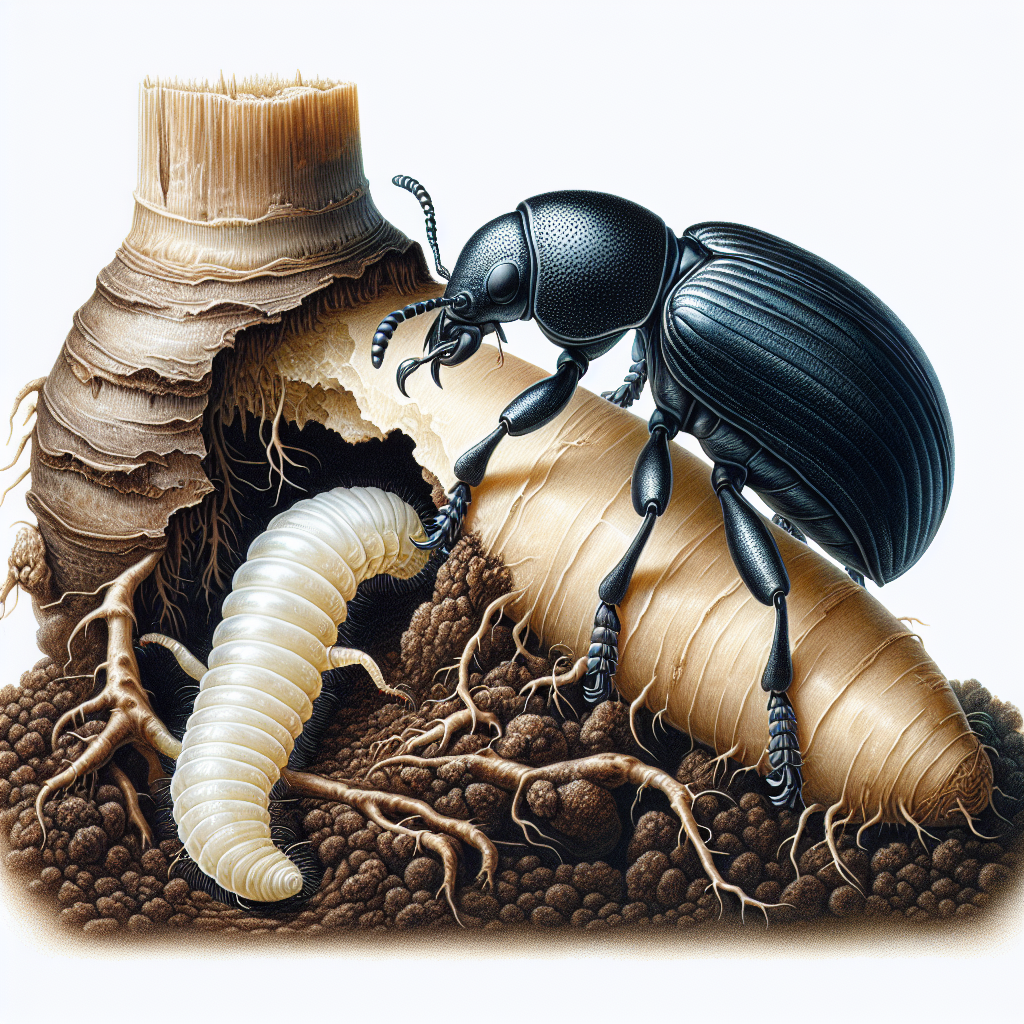
Introduction to Cosmopolites sordidus
Cosmopolites sordidus, widely recognized as the banana root weevil or black weevil, stands as one of the most notorious pests in tropical agriculture. Native to Southeast Asia, this beetle has spread globally through infested planting material, wreaking havoc on banana plantations and similar crops. Adult weevils are nocturnal, shiny black beetles measuring 10-15 mm long with a characteristic curved snout, while their larvae are creamy-white, legless grubs that bore into roots and corms.
This pest's insidious nature lies in its subterranean lifecycle, making early detection challenging. Damage manifests as wilting, yellowing leaves, reduced bunch size, and eventual plant collapse, costing growers millions annually. In regions like Central America, Africa, and the Pacific Islands, C. sordidus can reduce yields by up to 50% if unmanaged. Understanding its biology is crucial for integrated pest management (IPM), emphasizing prevention over reactive chemical use. This guide equips farmers with diagnostic tools, lifecycle knowledge, organic controls, and proactive strategies to safeguard crops like Dwarf Cavendish Banana and Cavendish Banana.
Identifying Symptoms & Damage
Spotting Cosmopolites sordidus requires keen observation of above- and below-ground signs. Adult weevils hide in leaf sheaths or soil during the day, emerging at night to feed on leaf bases, leaving irregular notches. However, larvae cause the primary damage by tunneling into corms and roots, creating galleries filled with frass.
Key Symptoms:
- Foliar Indicators: Plants show stunted growth, chlorotic (yellowing) leaves starting from the margins, and pseudostem buckling at the base. In severe infestations, entire plants topple due to root loss.
- Root and Corm Damage: Excavate around the base to reveal severed fibrous roots, longitudinal tunnels in the corm (up to 50% girdled), and clusters of legless larvae or pupae in soil.
- Secondary Signs: Increased susceptibility to root rot diseases like those caused by Phytophthora, exacerbated wilting, and ant activity around damaged roots.
Differentiate from other pests like corm weevils or burrowing nematodes by the presence of live larvae and adult beetles. Use a hand lens to confirm the curved snout and lack of wings in adults. For small farms, regular night scouting with flashlights reveals feeding adults. Early diagnosis prevents spread, as one infested plant can infect neighboring ones via soil movement. Read our Spring Pest Patrol blog for tech-assisted identification tips.
Lifecycle and Progression of Cosmopolites sordidus
Cosmopolites sordidus completes its lifecycle in 180-300 days, depending on temperature and humidity, thriving in 25-30°C soils. Adults are long-lived (up to 2 years), flightless, and females lay 2-6 eggs daily for months, totaling over 100 eggs per female, singly in soil cracks near roots.
Lifecycle Stages:
- Eggs (5-8 days): Tiny, white, laid in clusters near host roots.
- Larvae (1-6 months): Three instars; young larvae feed externally on roots, mature ones bore into corms, reaching 20-30 mm.
- Pupo (15-30 days): C-shaped in earthen cells 20-30 cm deep.
- Adults: Emerge to feed and reproduce, peaking during rainy seasons.
Progression accelerates in moist, organic-rich soils. Multiple generations per year (2-4) occur in tropics, with peak larval activity 2-3 months post-planting. Monitor using pseudostem traps baited with cut corm pieces to gauge population density (>5 adults/trap signals action). Lifecycle knowledge enables timed interventions, like hot water treatment of suckers during dormancy.
Environmental Triggers & Risk Factors
C. sordidus flourishes in warm (24-32°C), humid tropics with poorly drained soils. Key triggers include excessive rainfall (>2000 mm/year), high organic matter, and minimum tillage, creating ideal larval habitats. Risk spikes with infested planting material—up to 90% of new infections stem from untreated suckers.
Major Risk Factors:
- Soil Conditions: Compacted, waterlogged fields favor larval survival.
- Crop Management: Monoculture banana fields without rotation; ratooning without corm cleaning.
- Climate: Wet seasons boost oviposition; drought stresses plants, increasing susceptibility.
- Proximity: Weevils spread via machinery, tools, or floodwaters up to 100m.
Vulnerable varieties include susceptible Cavendish types; intercropping with ginger or turmeric can dilute populations. Assess risk via soil sampling: >10 larvae/plant warrants control. Climate-resilient practices like raised beds mitigate triggers.
Organic Control & Treatment Plans
Organic management of Cosmopolites sordidus relies on IPM: cultural, biological, and mechanical tactics. Avoid broad-spectrum chemicals to preserve predators like ants and ground beetles.
Treatment Plans:
- Cultural Controls (Foundation): Hot water dip suckers at 50°C for 20 min pre-planting (95% mortality). Destroy infested plants by chopping and solarizing debris. Rotate with non-hosts like cassava or legumes for 6-12 months.
- Biological Agents: Apply entomopathogenic nematodes (EPN) like Heterorhabditis bacteriophora (10^6 IJ/m²) during rains—targets larvae effectively. Introduce predatory ants or Beauveria bassiana fungi sprays on adults.
- Mechanical Traps: Use split pseudostem traps (change weekly) or bucket pheromone traps (commercial lures available). Hand-collect adults at night.
- Organic Repellents: Mulch with neem cake or crushed marigold leaves; drench with neem oil emulsions (5 ml/L).
Integrated Plan: Scout weekly; apply EPN if larvae >5/plant; trap adults; follow with mulching. Expect 70-90% control in 3 months. Combine with soil amendments to deter root-knot nematodes.
Preventing Cosmopolites sordidus in the Future
Prevention trumps cure for this soil-dwelling pest. Start with certified, hot-water-treated planting material. Implement strict sanitation: clean tools with bleach, quarantine new plants.
Proactive Strategies:
- Field Practices: Plant in raised beds (30 cm high) for drainage; mulch with inorganic materials to block egg-laying.
- Crop Rotation & Diversity: Alternate with sweet potato, taro, or cover crops like clover.
- Monitoring Tech: Use soil probes or AI apps for early detection.
- Barrier Methods: Surround fields with neem hedges or entomopathogenic fungi borders.
Long-term, breed resistant varieties and foster beneficial microbes. Annual clean-up reduces populations by 80%. For zoning tips, see Why Zoning Your Small Farm Chaos into Profit Zones Feels Impossible.
Crops Most Affected by Cosmopolites sordidus
Primarily attacks Musa spp., including dessert and cooking bananas. Extends to:
Bananas suffer most, with larvae reducing root mass by 70%, yielding smaller bunches. Diversify to avocado or mango to buffer losses.