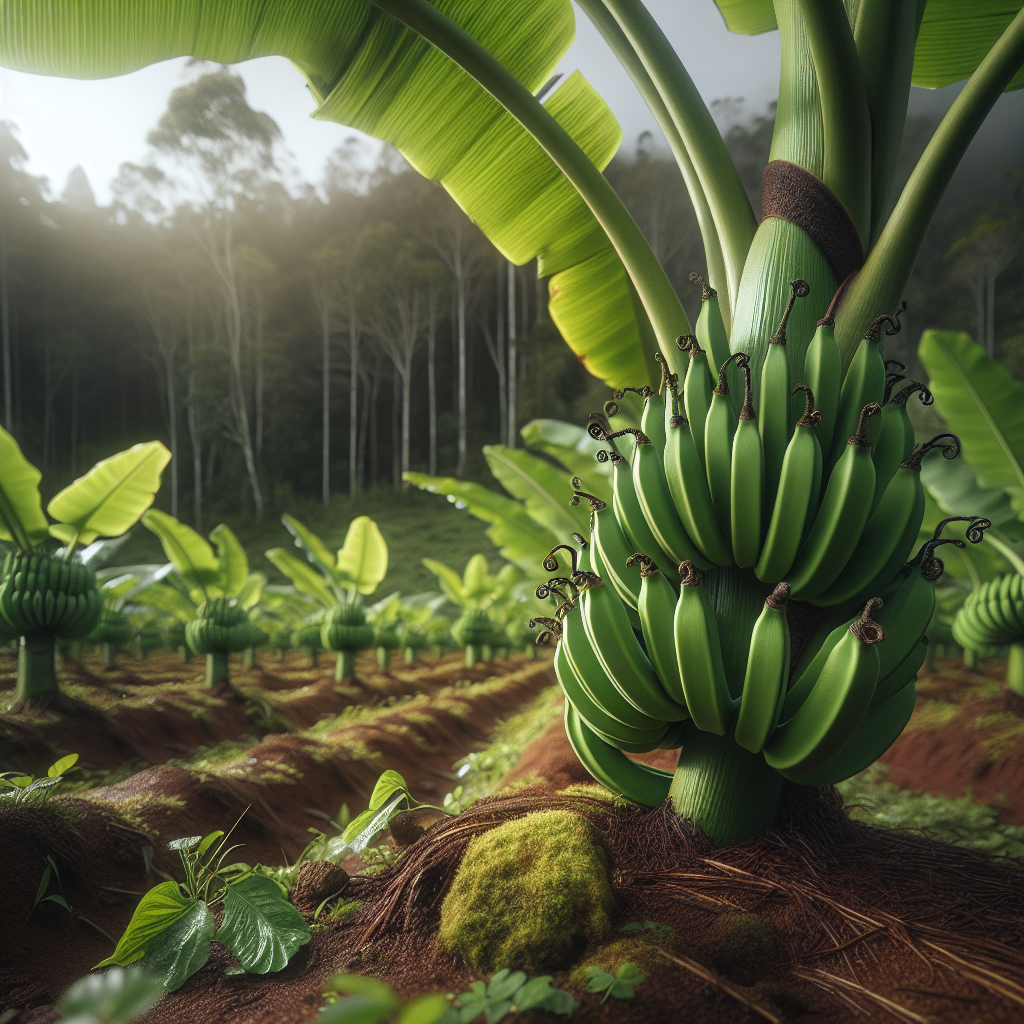
Introduction to Plantain (Horn)
Horn plantain is one of the classic cooking plantain types grown throughout West and Central Africa, the Caribbean, Latin America, and humid tropical Asia. The name “Horn” refers to the distinctly long, curved fruits that resemble an animal horn more than the shorter, thicker fruits seen in French or False Horn types. Unlike dessert bananas, horn plantains are typically harvested mature-green for cooking, when the pulp is firm, high in starch, and able to hold shape during frying, steaming, roasting, pounding, or flour processing.
In practical farm terms, this is a crop with high biomass, high potassium demand, and a strong response to consistent moisture and fertile soil. It is also botanically interesting: plantains are giant perennial herbs, not trees, and what appears to be a trunk is actually a pseudostem formed by tightly wrapped leaf sheaths. Because horn plantains often produce fewer but much larger fruits per bunch than some other Musa types, each plant must be managed to support heavy sink demand during bunch filling. Growers who understand sucker selection, drainage, wind protection, and nutrient timing usually achieve far better bunch size and ratoon continuity than those who treat it as a low-input backyard crop.
If you are familiar with Banana, many principles overlap, but horn plantain generally benefits from even stricter emphasis on fertility, support, and harvest timing because fruit size and culinary quality depend heavily on uninterrupted growth.
Botanical Profile of Plantain (Horn)
Horn plantain belongs to the genus Musa and is commonly placed within Musa × paradisiaca, though modern Musa classification can vary by subgroup and genomic background. Most cooking plantains are derived from interspecific hybridization involving Musa acuminata and Musa balbisiana, with plantains generally carrying an AAB genomic constitution. Horn plantains fall within a plantain subgroup distinguished by very large fingers, reduced hand number, and strong culinary value.
Key structural features include a corm or rhizome-like underground stem, a pseudostem that may reach 3 to 6 meters depending on environment and selection, and broad leaves that are easily shredded by wind. The crop produces a single inflorescence per pseudostem; after fruiting, that pseudostem dies back and is replaced by daughter suckers. This growth habit makes mat management central to productivity. A neglected mat can become overcrowded, nutrient-starved, disease-prone, and unstable in storms.
Horn types are often recognized by:
- Very long, thick, angular fruits
- Relatively few hands per bunch compared with French plantains
- Lower fruit count but heavier individual fingers
- High dry matter and strong cooking quality
- Tall, robust plants that can be vulnerable to lodging under wind or saturated soil conditions
The crop is usually propagated vegetatively, so field performance depends greatly on the health and identity of planting material. Sword suckers with narrow leaves and a strong connection to the mother corm are preferred over weak water suckers, which tend to establish slowly and yield poorly. Because clonal propagation preserves desirable culinary traits, it also preserves systemic pathogens when sanitation is poor. That is why clean seed material is one of the most important professional decisions in plantain farming.
Soil, pH, and Climate Requirements for Plantain (Horn)
Horn plantain performs best in deep, well-drained, fertile loams or sandy loams with high organic matter and steady moisture-holding capacity. Ideal root exploration occurs when the top 45 to 60 cm of soil is friable, aerated, and free from hardpan. Although the root system can spread widely, most active feeder roots occupy the upper soil profile, which makes the crop highly responsive to mulching, shallow compost incorporation, and surface-applied nutrients.
A practical pH target is 5.5 to 7.0, with optimal nutrient availability usually around 5.8 to 6.5. Plantain can survive somewhat more acidic soils, but strongly acid conditions below pH 5.2 often reduce phosphorus availability and increase the risk of aluminum or manganese stress in susceptible sites. In alkaline soils above pH 7.5, micronutrient deficiencies, especially iron and zinc, may appear as interveinal chlorosis on younger leaves.
Climate needs are firmly tropical. Best growth occurs where temperatures remain between 26 and 30°C during the day and rarely drop below 18°C at night. Growth slows sharply under cool conditions, and chilling injury may occur below about 12 to 14°C. Frost is lethal. Rainfall or irrigation equivalent of roughly 1,500 to 2,500 mm annually, evenly distributed, supports strong growth. However, horn plantain dislikes waterlogging. Even a few days of standing water can suffocate roots, encourage corm rot, and destabilize plants before bunch filling.
For soil moisture, aim to keep the root zone consistently moist but never saturated. In field terms, the soil at 15 to 20 cm depth should feel cool and slightly damp, forming a weak ball in the hand that breaks apart with gentle pressure. If it feels sticky, smells sour, or leaves a sheen of free water, it is too wet. If it is powdery, hot, and unable to hold shape, the crop is already under moisture stress. Typical drought stress signs include rolled younger leaves, reduced leaf emergence rate, narrow fruit filling, premature yellowing of older leaves, and lighter bunch weights. Overwatering or poor drainage shows up as stunted growth, yellowing despite fertilization, soft corm tissues, root blackening, and toppling after wind or rain.
Wind protection is often underrated. Because leaves tear readily, high wind reduces effective photosynthetic area. Severe gusts can snap pseudostems or uproot heavy fruiting plants. Windbreaks, contour hedges, strategic siting, and propping are critical in exposed farms.
For broader fertility planning, principles in this soil health article align well with plantain systems that rely on mulch, organic matter cycling, and minimized erosion.
Step-by-Step Planting & Propagation
Start with disease-free planting material. The best options are tissue-culture plants from reputable nurseries or carefully selected sword suckers from vigorous, high-yielding mats with no history of wilt, severe Nematodes, or corm borer damage. Sword suckers are usually 1 to 1.5 meters tall, with a swollen base and lance-like juvenile leaves. Avoid broad-leaved water suckers unless nothing else is available.
Before planting conventional suckers:
- Uproot with as much corm intact as possible.
- Trim roots and pare away dead, dark, or damaged outer corm tissue until healthy cream-colored tissue is visible.
- Cut the pseudostem back to about 20 to 30 cm if transporting or establishing in dry periods.
- Hot-water treatment or ash/biological dips may help reduce pest load where local practice supports it.
- Air-dry briefly in shade before planting if tissues are very wet from cleaning.
Land preparation should prioritize drainage and rooting depth. On flat, heavy soils, construct raised beds or mounds 30 to 50 cm high. In sloping ground, use contour planting with organic barriers to slow runoff. Incorporate 10 to 20 kg of well-rotted manure or compost per planting hole where available. A typical hole size is 45 x 45 x 45 cm, though larger holes improve establishment on poor soils.
Spacing depends on rainfall, fertility, and management intensity. Common field spacing is 3 x 3 meters for moderate-density systems, giving roughly 1,100 plants per hectare. Under high rainfall or tall, vigorous growth, wider spacing such as 3.5 x 3 meters improves airflow and reduces disease pressure. In backyard or intercrop systems, spacing may be irregular, but avoid crowding that prevents full leaf expansion.
Plant at the onset of reliable rains or when irrigation is available. Set the corm firmly so the planting point sits just below soil level, then press soil tightly around it to remove air pockets. Do not bury too deep; deep planting in heavy soil can increase rot risk. Immediately mulch with 8 to 15 cm of dry organic material, keeping mulch 10 to 15 cm away from the pseudostem base to discourage rot and pests.
During the first 8 to 12 weeks:
- Keep weeds suppressed completely.
- Irrigate lightly but regularly until new roots anchor the plant.
- Replace dead or weak plants early to maintain uniformity.
- Protect from grazing animals and mechanical injury.
A professional ratoon system usually maintains a “mother-daughter-granddaughter” sequence: one bearing pseudostem, one follower sucker, and one young replacement. Remove excess suckers early with a clean cut or gouging method so nutrients are not wasted on overcrowded shoots.
Care & Maintenance regimes for Plantain (Horn)
Horn plantain is a heavy feeder. To produce large, dense fruits, it needs abundant nitrogen early for canopy development, followed by strong potassium support during bunch initiation and fruit filling. Phosphorus is important at establishment, while magnesium, calcium, sulfur, boron, and zinc contribute to leaf function, root health, and bunch quality.
Where detailed soil testing is available, follow local recommendations. In general field practice, organic systems often apply 10 to 20 kg compost or well-rotted manure per plant 2 to 3 times yearly, combined with ash, green manures, or approved mineral amendments to bolster potassium. Conventional systems may split nutrient applications every 6 to 8 weeks during active growth rather than giving one large dose. Split feeding reduces leaching and better matches uptake.
Visual nutrient clues are useful:
- Nitrogen deficiency: general pale green color, reduced leaf size, slow growth
- Potassium deficiency: yellowing and scorching along older leaf margins, weak bunch fill, poor wind tolerance
- Magnesium deficiency: interveinal chlorosis on older leaves while midrib zones stay greener
- Boron or calcium problems: distorted new growth, poor root vigor, irregular fruit development
Irrigation should be adjusted by growth stage and soil type. Young plants need frequent light-to-moderate watering to establish roots; mature pre-flowering plants need deep replenishment; bunching plants need the most stable moisture. In sandy soils, irrigation may be needed 2 to 4 times weekly in dry weather. In loams, one or two deep irrigations per week may suffice. A mature fruiting plant often uses the equivalent of 20 to 40 liters of water per day under hot, dry tropical conditions, though actual needs vary widely with mulch, wind, and canopy size.
Mulching is almost mandatory for high-quality plantain production. Use chopped leaves, grass, straw, composted prunings, or other clean residues. A thick mulch layer moderates soil temperature, suppresses weeds, conserves water, and gradually feeds soil biology. Keep the immediate collar area open to prevent persistent dampness against the pseudostem.
Desuckering should be done routinely. Too many suckers reduce bunch size and complicate harvest. Keep only the best-positioned follower and one younger reserve. Remove weak, crowded, diseased, or poorly placed shoots. Also remove dead leaves, but do not over-prune green leaves; plantain needs active leaf area to fill fruit. At flowering, a healthy plant should still carry a strong functional canopy.
Propping or staking is often needed once bunches begin to fill. Use forked wooden props or tied supports to prevent lodging. This is especially important after heavy rain, in windy sites, or where soils are loose. If the bunch is excessively heavy and the plant is leaning, support it before the root plate begins to shift.
Weed control is most critical in the first 4 to 6 months after planting and after ratoon emergence. Shallow hand weeding, mulch, cover crops, and spot hoeing are safer than deep cultivation, which damages feeder roots.
In commercial settings, bunch care may include removing the floral remnants, trimming malformed fingers, and bagging bunches where pest pressure justifies it. Bagging must not trap excessive moisture in humid disease-prone sites unless breathable material is used.
Pests, Diseases & Organic Management
Major pest and disease pressure varies by region, but the most important recurring threats to horn plantain are Nematodes, Banana weevil, Leaf spot diseases, and Wilt or rot complexes.
Banana weevil (Cosmopolites sordidus) larvae bore into the corm, weakening anchorage and reducing nutrient flow. Symptoms include poor vigor, delayed flowering, small bunches, and plants toppling despite apparently adequate care. Organic management includes strict sanitation, destruction of infested residues, use of clean planting material, pseudostem trapping, and maintaining vigorous soils that help plants tolerate some injury.
Plant-parasitic Nematodes damage roots, causing reduced uptake, stunting, and instability. Affected plants may lean or uproot easily because the root system is sparse and necrotic. Clean seed, organic matter enrichment, crop sanitation, and rotation of adjacent plots before replanting can reduce pressure. In severely infested sites, replanting into the same exhausted mat area without a sanitation break often leads to chronic decline.
Black Sigatoka and related Leaf spot diseases reduce green leaf area and directly depress bunch filling. Early symptoms are narrow streaks on young leaves that expand into necrotic lesions. Severe infection causes rapid leaf death before harvest, resulting in underfilled fruit and poor starch accumulation. Management includes wider spacing, improved airflow, removing heavily diseased leaves without stripping too much canopy, avoiding overhead irrigation late in the day, and using tolerant local selections where available.
Fusarium wilt and Bacterial wilts are serious biosecurity concerns. Typical warning signs include unilateral yellowing, collapse of leaves, discoloration in vascular tissues, and progressive mat death. If wilt is suspected, do not move suckers, tools, or soil from infected areas. Rogue infected mats according to local phytosanitary guidance, disinfect cutting tools between plants, and never share planting material from suspect fields.
Soft rots and Corm rots are encouraged by waterlogging and planting wounds. The best organic control is prevention: good drainage, clean trimming, careful planting depth, and avoiding fresh manure in direct contact with the corm.
Common foliar or bunch pests can include Aphids, Thrips, and Scarring insects. Aphids are important not only for feeding damage but because they may vector viral problems in Musa systems. Encourage natural enemies, maintain field hygiene, and avoid allowing unmanaged volunteer mats to serve as pest reservoirs.
A practical organic prevention program includes:
- Clean, traceable planting material
- Mulch and compost to support resilient roots
- Strict drainage management
- Regular desuckering and sanitation pruning
- Tool disinfection between mats
- Removal and destruction of severely infested residues
- Balanced nutrition, especially potassium, to improve stress tolerance
Harvesting, Curing & Optimal Storage
Horn plantain for cooking is usually harvested at mature-green stage rather than fully yellow ripe stage. The exact harvest window depends on market preference, transport distance, and intended use. Fruits are generally ready 80 to 120 days after shooting under warm conditions, though total crop time from planting to first harvest often ranges from 9 to 15 months depending on climate and management.
Maturity indicators include angular fruits becoming fuller and less sharply ridged, a duller peel sheen, fingers reaching expected length for the cultivar, and the floral ends drying. For local fresh cooking markets, bunches can be cut slightly later. For transport, harvest a bit earlier while still fully mature to reduce bruising and premature ripening.
Harvesting should be a two-person operation for safety. One worker supports the bunch while the other nicks and bends the pseudostem, then cuts the bunch cleanly. Horn plantain bunches can be very heavy, and dropping them causes latex staining, bruising, split peel, and shortened shelf life.
After harvest:
- Keep bunches shaded immediately
- Avoid dragging or piling fruit roughly
- Trim the stalk cleanly
- Wash latex and field debris gently if required by market
- Sort out cracked, insect-damaged, or diseased fingers
Plantains are not typically “cured” in the same way as onions or sweet potatoes, but postharvest conditioning matters. Hold fruit in a clean, shaded, well-ventilated area to allow surface moisture to dry. Do not expose harvested bunches to direct sun, which accelerates peel injury and uneven ripening.
For mature-green storage, ideal conditions are around 12 to 14°C with 85 to 95% relative humidity. Below about 11 to 12°C, chilling injury can occur, showing as peel browning, poor ripening, and dull pulp quality. At typical ambient tropical temperatures, green life may be only several days to two weeks depending on maturity. Higher temperatures accelerate ripening rapidly.
For processing or household use, ripe horn plantains can be allowed to yellow and then blacken partially, depending on desired sweetness. However, commercial cooking markets generally prefer green to turning fruit with firm pulp and strong starch content.
After bunch harvest, cut down the spent pseudostem and chop it for mulch unless disease is suspected. Leave the selected follower sucker to become the next bearing plant. This quick transition is one of the main advantages of well-managed ratoon production.
Companion Planting for Plantain (Horn)
Companion planting around horn plantain works best when the companion either protects soil, improves nutrient cycling, or provides an additional harvest without competing aggressively for light and water. Because horn plantain creates partial shade as it matures, the ideal companions are those that tolerate filtered light or occupy a different rooting niche.
Cassava is a common tropical field companion where spacing is generous and rainfall is adequate. It offers a carbohydrate staple from a different root zone, but it must be placed far enough from young plantains to avoid severe early competition.
Ginger performs well in the humid, partially shaded understory of plantain systems, especially where mulch is abundant and drainage is good. It benefits from moderated soil temperature and can help diversify income from the same plot.
Turmeric is another strong understory option in high-organic-matter systems. It appreciates similar moisture conditions but should not be packed densely against the mat where airflow is poor.
Clover can be useful in subtropical or highland systems as a low-growing living cover where climate permits, helping reduce erosion and suppress weeds, though it is less suited to very hot, lowland tropical conditions.
General companion planting rules for horn plantain are straightforward:
- Keep a weed-free circle close to the pseudostem
- Avoid tall climbers that tangle plants or restrict airflow
- Do not allow heavy-feeding companions to crowd the corm zone
- Use companions mainly in alleys, between rows, or on the sunny side of young mats
- Prioritize species that support mulch production, soil cover, or market diversification
When managed correctly, companions improve land-use efficiency, reduce bare-soil evaporation, and add resilience to plantain-dominant farms. When managed poorly, they simply become competition. The difference lies in spacing, pruning, and timing.