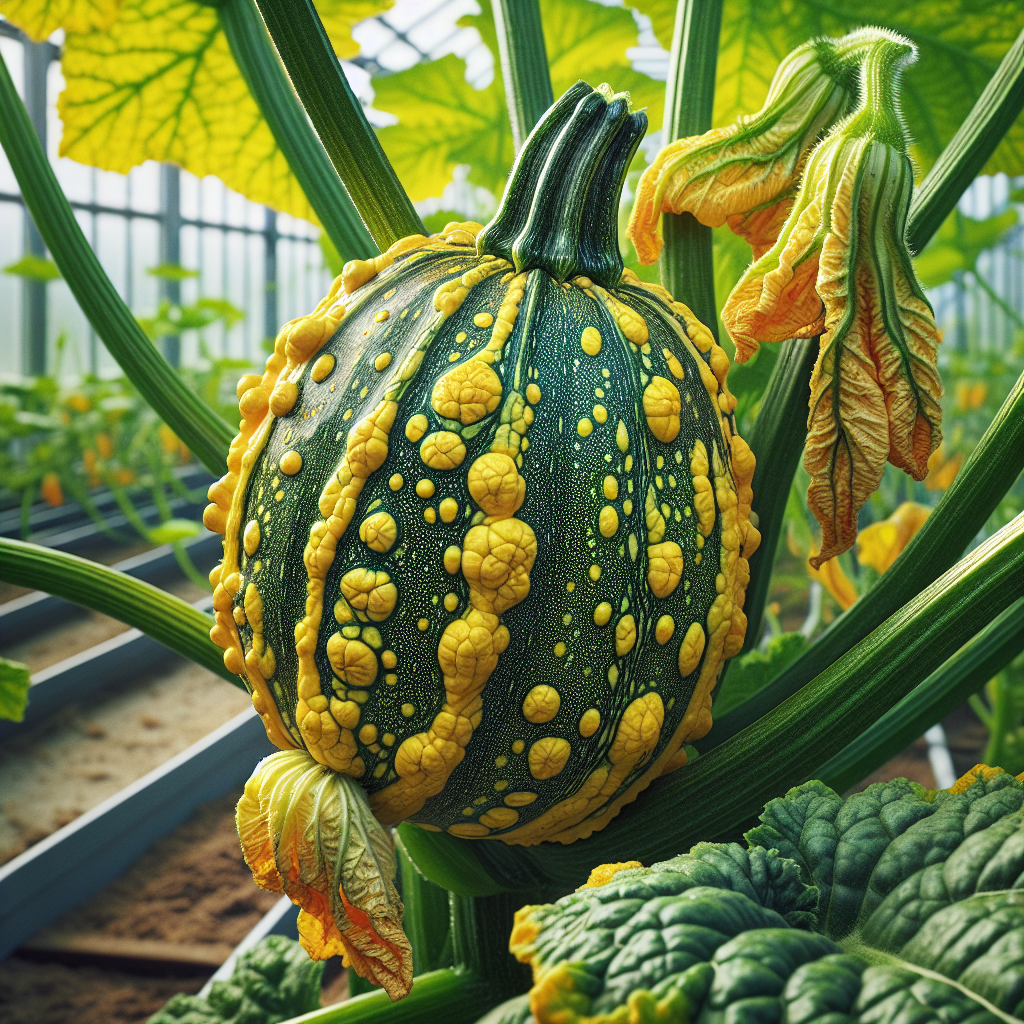
Introduction to Zucchini Yellow Mosaic Virus
Zucchini Yellow Mosaic Virus (ZYMV) stands as one of the most devastating viral pathogens affecting cucurbit crops worldwide, particularly zucchini, cucumbers, and melons. First identified in Italy in 1981, ZYMV belongs to the Potyvirus genus within the Potyviridae family, characterized by its single-stranded RNA genome encapsulated in flexuous rod-shaped particles approximately 700-850 nm long. This virus poses a significant threat to commercial and home growers alike, capable of reducing yields by up to 100% in severe outbreaks.
The virus infects over 30 species in the Cucurbitaceae family, with zucchini (Zucchini (crop)) being particularly susceptible. Symptoms emerge as distinctive yellow mosaic patterns on leaves, progressing to severe distortion and necrosis. Transmission occurs mainly through aphid vectors like the green peach aphid (Myzus persicae) and melon aphid (Aphis gossypii), which acquire and spread the virus during brief feeding probes. Mechanical transmission via contaminated tools or hands during pruning or harvesting exacerbates spread in dense plantings.
Global distribution spans temperate and tropical regions, thriving in warm climates where aphid populations explode. Economic losses exceed millions annually, prompting extensive breeding programs for resistant cultivars. Early detection through visual scouting and confirmatory ELISA or PCR testing is crucial. For comprehensive insights into aphid management, see our guide on Aphids (pest). This definitive guide equips growers with diagnostic tools, lifecycle knowledge, organic controls, and prevention strategies to safeguard harvests. Learn more about integrated pest management in Spring Pest Patrol: Organic AI Strategies to Shield Your Crops from Common Invaders.
Identifying Symptoms & Damage
Accurate identification of ZYMV hinges on recognizing a spectrum of symptoms that evolve with plant age and viral strain. On young zucchini plants, the first signs appear 5-10 days post-infection as mild mottling on emerging leaves, progressing to pronounced yellow-green mosaic patterns with blistering and puckering. Older leaves exhibit severe necrosis, shoestringing (elongated, narrowed leaflets), and upward cupping, rendering photosynthesis inefficient.
Fruit symptoms are hallmark diagnostics: zucchini develops knobby, shortened, and variegated fruits with pale yellow blotches, drastically reducing marketability. In advanced stages, plants show stunted internodes, bushy appearance, and blossom drop, yielding misshapen or aborted fruits. Yield losses correlate with infection timing—plants infected pre-flowering suffer 80-100% reduction, while later infections cause 20-50% losses.
Differential diagnosis is essential to distinguish ZYMV from similar pathogens like Cucumber Mosaic Virus (CMV), which lacks fruit deformation, or Watermelon Mosaic Virus (WMV), featuring milder mosaics without necrosis. Aphid presence, confirmed by sticky traps, supports ZYMV suspicion. Lab confirmation via double antibody sandwich ELISA (DAS-ELISA) detects viral coat protein with 95% accuracy. Tissue sampling from symptomatic mid-leaves yields best results. Damage extends beyond yield: deformed fruits fetch 70% lower prices, and virus reservoirs perpetuate annual threats.
Scout weekly, focusing on field edges where aphids colonize first. Photoperiod and temperature influence symptom severity—short days exacerbate mosaics. In cucurbit polycultures, ZYMV spreads from wild hosts like Cucumber (crop) to cash crops.
Lifecycle and Progression of Zucchini Yellow Mosaic Virus
ZYMV lacks a true lifecycle as a non-enveloped virus but persists systemically in host plants year-round in mild climates. Primary infection sources include volunteer cucurbits, weed hosts (e.g., squash vines), and infected seed (up to 20% transmission rate). Aphids acquire ZYMV during 5-30 second probes on infected phloem, retaining infectivity for 2-4 hours before losing it.
Transmission efficiency peaks at 80% for green peach aphids, with secondary spread accelerating in wind-aided flights. Within the plant, ZYMV moves cell-to-cell via plasmodesmata and long-distance through phloem sieve tubes, reaching meristems for systemic invasion. Incubation spans 4-7 days at 25-30°C (77-86°F), optimal for replication.
Progression phases: latent (days 1-5, no symptoms); acute (days 6-14, mosaic onset); chronic (week 3+, deformation and decline). Viral titers peak mid-season, correlating with peak aphid activity. Overwintering occurs in perennial weeds or mild-winter crops like Squash (crop). Strain variability—severe (ZYMV-S) causes necrosis, mild (ZYMV-M) milder mosaics—affects management. Population dynamics model exponential spread: one infected plant infests 50-100 neighbors in 2 weeks under high aphid pressure.
Environmental Triggers & Risk Factors
ZYMV epidemics ignite under specific conditions favoring aphid proliferation and virus retention. Temperatures of 20-30°C (68-86°F) with high humidity (>70%) optimize aphid reproduction (10-15 nymphs/female/week). Drought stress weakens plant defenses, enhancing susceptibility—irrigated fields show 40% lower incidence.
High nitrogen fertilizers boost lush growth attractive to aphids, while dense planting (<1m spacing) facilitates transmission. Polycultures with susceptible crops like Pumpkin (crop), Cantaloupe (crop), or Watermelon (crop) create reservoirs. Weedy borders harboring Whiteflies (pest) or Aphids (pest) serve as inoculum sources.
Regional risks: Mediterranean summers, U.S. Midwest humidity pockets, and tropical zones see annual outbreaks. Windy conditions (>10 km/h) disperse alates 1-2 km. Seed transmission risk elevates with poor certification. Climate change extends aphid seasons, projecting 20% incidence rise by 2030.
Organic Control & Treatment Plans
No curative treatments exist for ZYMV; management targets vectors and symptom mitigation. Core strategy: deploy resistant zucchini varieties like 'Raven' or 'Declaration,' offering 70-90% protection against common strains. Intercrop with trap crops such as nasturtiums to lure aphids away.
Organic aphid control integrates multiple tactics. Aluminum reflective mulches repel alates by 50-75%, disrupting landing. Plant mineral oils or insecticidal soaps (2% solution, weekly sprays) smother nymphs without residues. Neem oil (0.5% azadirachtin) deters feeding, reducing transmission by 60%.
Biological agents: release ladybugs (Hippodamia convergens, 1,500/acre) and lacewings (Chrysoperla carnea) that prey on aphids. Companion planting with Nasturtium (crop) or marigolds repels vectors. Rogue infected plants immediately, burying debris to break reservoirs.
Nutrient boosting: foliar calcium (1%) and silicon (0.1%) sprays fortify cell walls, delaying symptom expression by 10-14 days. UV-reflective nets (50% shade) cut aphid ingress by 80%. Monitor with yellow sticky traps (10/acre), treating at 5 aphids/trap/day. Rotate with non-hosts like Lettuce (crop) for 2 years. Integrated plans yield 85% control efficacy.
Preventing Zucchini Yellow Mosaic Virus in the Future
Prevention outperforms reaction through cultural vigilance. Source certified virus-free seeds and transplants, testing lots via grow-out assays. Practice 3-year cucurbit rotations with brassicas or grains. Eradicate volunteers and weeds pre-planting.
Establish 100m barriers of non-hosts like grains. Time planting to evade peak aphid flights (avoid mid-summer). Use row covers until flowering, removing to permit pollination. Sanitize tools with 10% bleach between plants.
Perimeter sprays of kaolin clay create physical barriers. Scout biweekly, removing scouts at 1% incidence. Cross-pollinate resistance via grafting onto tolerant rootstocks. Long-term: breed stacked resistances against ZYMV, CMV, WMV. Farm-wide IPM reduces recurrence by 95%.
Crops Most Affected by Zucchini Yellow Mosaic Virus
ZYMV devastates Cucurbitaceae, with zucchini suffering most acute losses. Top susceptibles: zucchini (90% yield drop), cucumber (Marketmore 76 Cucumber (crop)), melon (Honeydew (crop)), watermelon (Crimson Sweet Watermelon (crop)), pumpkin (Sugar Pie Pumpkin (crop)), squash (Butternut Squash (crop)). Moderate: gourds, loofah. Tolerant: wild cucurbits. Global production losses: $200M+ yearly.