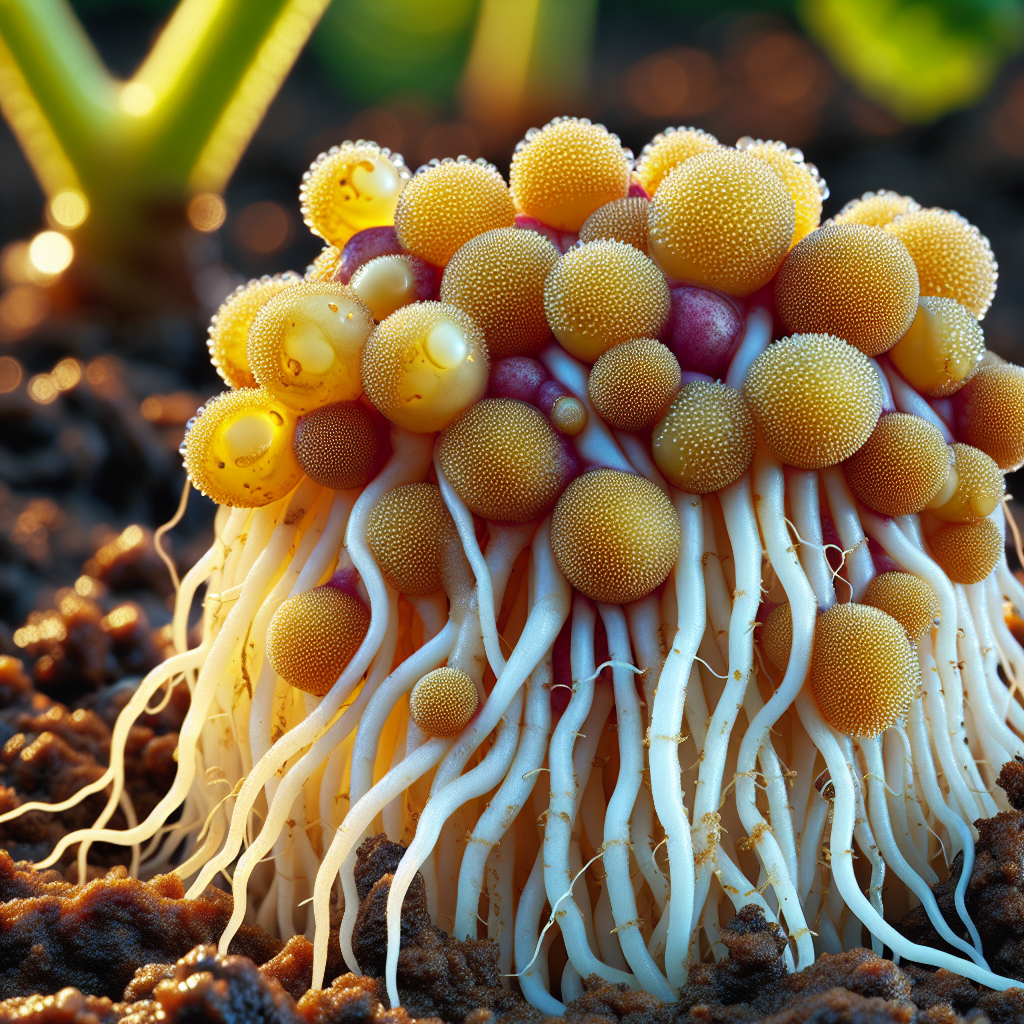
Introduction to Potato cyst nematodes
Potato cyst nematodes (PCN), scientifically known as Globodera rostochiensis (golden PCN) and Globodera pallida (white PCN), represent one of the most devastating soilborne pests affecting potato production worldwide. These microscopic roundworms, often invisible to the naked eye, form protective cysts that can survive in soil for 20-30 years without a host, making them exceptionally challenging to eradicate. First identified in Europe in the late 19th century, PCN has spread globally through infested soil, tubers, and equipment, causing billions in annual losses to the potato industry.
PCN attacks the roots of potato plants and some related crops, penetrating and feeding on root cells to extract nutrients, which disrupts water and nutrient uptake. This leads to characteristic symptoms like yellowing foliage, stunted growth, and poor tuber development. In heavily infested fields, yields can drop by 20-80%, depending on population density and environmental conditions. Both species are quarantine pests in many countries, with strict regulations on movement of soil and planting material to prevent spread.
Understanding PCN is crucial for potato growers, as conventional control methods like fumigation are costly and environmentally harmful. Instead, sustainable integrated pest management (IPM) combining resistant cultivars, rotation, and biofumigation offers the best long-term control. Early detection through soil sampling is key, as cysts are hardy and resistant to most pesticides. This guide provides comprehensive diagnostics, lifecycle insights, and practical management strategies for organic and conventional systems. For detailed potato cultivation advice, see our Potato (crop) page.
Identifying Symptoms & Damage
Diagnosing PCN requires careful observation of above-ground and below-ground symptoms, often confirmed by lab testing. Early signs appear 6-8 weeks after planting, coinciding with root-feeding stages. Foliage turns yellow, starting from lower leaves, mimicking nutrient deficiencies or drought stress. Plants appear stunted, with reduced vigor and sparse canopy compared to healthy neighbors. In severe cases, entire patches wilt and die prematurely.
Root systems show the most diagnostic damage: small, white to brown females swell to 0.5-1mm cysts visible on roots under magnification. Roots may be stubby, branched excessively, or necrotic with galls similar to root-knot nematodes, but PCN cysts are distinct lemon-shaped structures. Tuber yield is drastically reduced, with smaller, more numerous tubers; marketable yield losses exceed 50% at 10-20 eggs/g soil.
Damage is exacerbated in sandy soils with low organic matter, where nematodes thrive. Secondary issues like increased susceptibility to early blight or late blight occur due to weakened plants. For accurate identification, collect soil and root samples from 20-30cm depth in a zigzag pattern across the field. Submit to certified labs for cyst extraction, species ID via PCR, and viable egg counts. Thresholds vary: >5 cysts/100g soil warrants action. Visual scouting alone misses low-level infestations, so integrate with soil tests.
Lifecycle and Progression of Potato cyst nematodes
PCN lifecycle spans 4-6 weeks under optimal conditions (15-25°C soil), with cysts enabling long-term survival. Hatching is triggered by potato root exudates, releasing second-stage juveniles (J2) that migrate to roots. J2 penetrate near root tips, establish feeding sites inducing syncytia—specialized cells for nutrient extraction. Males and females develop; females become lemon-shaped cysts filled with 200-500 eggs, protruding from roots.
After crop death, cysts detach, enter dormancy with a gelatinous matrix protecting eggs from desiccation and predators. Viability persists 20+ years; hatching rates decline slowly without hosts. Golden PCN has stronger diapause, hatching mainly in spring, while white PCN hatches over summer, allowing multiple cycles in warm climates. Both species reproduce parthenogenetically, amplifying populations rapidly: one cyst can yield 1000+ new cysts per season.
Progression peaks mid-season; monitor roots at flowering. Overwintering cysts hatch next season, repeating infestation. Learn more about plant-parasitic nematodes for broader context. Crop rotation disrupts this cycle, as non-hosts prevent hatching and reproduction.
Environmental Triggers & Risk Factors
PCN thrives in cool, moist soils (10-27°C, pH 5-7), with sandy loams most susceptible due to easy movement. Optimal hatching at 16-20°C; extremes (>30°C or <5°C) suppress activity. High moisture aids juvenile migration; drought limits spread but preserves cysts.
Risk factors include continuous potato monoculture, infested seed tubers, contaminated equipment/soil, and flooding. Imported varieties from infested regions introduce pathotypes overcoming resistance. Poor drainage and low organic matter exacerbate damage by stressing plants. Climate change may expand ranges northward. Fields near rivers or with volunteer potatoes face higher risks from cyst persistence. Soil testing every 3-5 years identifies hotspots; avoid planting in high-risk zones without mitigation. Companion crops like clover can suppress via allelopathy.
Organic Control & Treatment Plans
Organic management emphasizes cultural, biological, and resistant variety tactics, avoiding synthetic nematicides. Step 1: Soil Testing & Mapping – Test pre-planting; rotate out infested fields 8-20 years based on species (longer for G. pallida).
Step 2: Resistant Cultivars – Plant certified resistant potatoes like 'Piccolo' or 'Sante' (check pathotype). Partial resistance reduces multiplication 90%.
Step 3: Crop Rotation – Minimum 4-6 years with non-solanaceous crops (wheat, corn, brassicas). Mustard biofumigants release isothiocyanates killing nematodes.
Step 4: Biofumigation & Cover Crops – Grow Brassica juncea or Sinapis alba; incorporate at flowering. Tagetes (marigold) species suppress hatching.
Step 5: Biological Controls – Apply Paecilomyces lilacinus or Heterorhabditis bacteriophora nematodes; predatory fungi like Purpureocillium lilacinum target cysts.
Step 6: Soil Health – Boost organics (compost, green manures) to 4-6%; encourage antagonists. Avoid compaction.
Step 7: Sanitation – Clean equipment, use certified seed, rogue volunteers. Trap crops (susceptible potatoes) detect/map infestations.
Integrated plans reduce populations 70-90% over 3 cycles. For AI-enhanced pest strategies, check Spring Pest Patrol: Organic AI Strategies to Shield Your Crops from Common Invaders.
Preventing Potato cyst nematodes in the Future
Prevention hinges on exclusion and monitoring. Source certified, PCN-free seed tubers; inspect for cysts. Quarantine new fields; test soil before planting. Implement 6+ year rotations with non-hosts like cereals or onion. Use GPS soil sampling for precision mapping.
Enhance soil biodiversity with cover crops (hairy vetch), reducing cyst viability. Deep plowing buries cysts >30cm, beyond hatching range. Solarization (clear plastic, summer) kills 50-80% in topsoil. Monitor with bait tests: plant susceptible tubers, count hatched cysts after 8 weeks.
Regulatory compliance: declare infestations; follow area-wide management. Educate workers on hygiene. Long-term, breed pathotype-resistant varieties. Vigilance prevents introduction, saving costly remediation.
Crops Most Affected by Potato cyst nematodes
Primarily solanaceous crops: potato (all varieties), tomato (tomato), eggplant (eggplant), pepper (bell pepper). Wild hosts include black nightshade. Minor: sweet potato (limited). Non-hosts for rotation: grains (rice, barley), legumes (peas, soybeans), brassicas (cabbage). PCN specificity limits host range, aiding control.