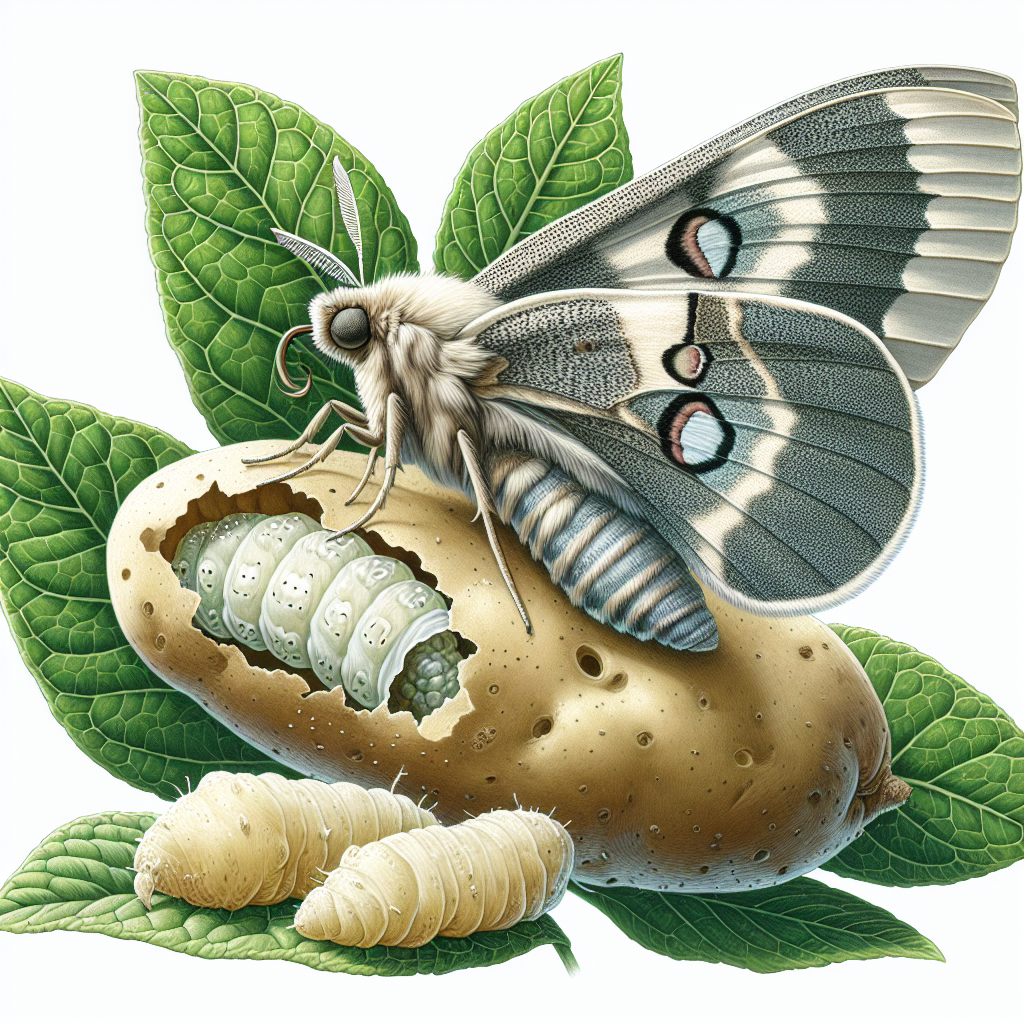
Introduction to Tuber moths
Tuber moths (Phthorimaea operculella), commonly referred to as potato tuberworms, represent one of the most notorious pests in global agriculture, particularly devastating to potato crops and other tuberous plants. Native to South America, these small moths have spread worldwide, thriving in warm climates and causing billions in annual losses through larval feeding damage. Adult moths are grayish-brown with a wingspan of about 12-15 mm, fringed wings, and distinctive white spots on the rear wings. The real threat lies in their larvae: creamy-white caterpillars up to 13 mm long that mine leaves, stems, and crucially, tubers both in the field and storage. This guide provides professional-grade diagnostic tools, lifecycle insights, and proven organic management strategies to safeguard your harvests. Early detection is key, as unchecked infestations can reduce marketable yields by up to 70% in severe cases. For growers of Potato (crop), understanding tuber moth biology is essential to prevent economic devastation. Learn more about integrated pest management in our Spring Pest Patrol: Organic AI Strategies to Shield Your Crops from Common Invaders.
Identifying Symptoms & Damage
Diagnosing tuber moth infestations requires keen observation of both foliar and subterranean signs. Initial symptoms appear on leaves as small, serpentine mines—irregular, twisting tunnels filled with greenish-black frass (insect waste). These mines start as pale spots and expand as larvae feed internally, often causing leaf blistering or necrosis. Heavily infested foliage turns brown and dies, resembling damage from leafminers (pest). Stems may show similar mining, leading to wilting and plant stunting.
The most damaging phase occurs underground. Larvae bore into tubers, creating clean, silk-lined tunnels that render potatoes unmarketable. Entry holes are tiny (1-2 mm), often topped with frass plugs, and internal galleries fill with reddish-brown rot. Affected tubers become soft, shriveled, and secondary bacterial infections exacerbate decay, producing foul odors. In storage, infestations spread rapidly; look for adult moths fluttering at night or webbed clusters of pupae on sacks.
Differentiate from similar pests: Unlike Colorado potato beetle (pest), which chews external leaf notches, tuber moth damage is internal mining. Early blight (disease) causes concentric leaf spots without mines. Use a hand lens to confirm larvae presence—tuber moth caterpillars have dark heads and prolegs. Scout weekly during warm months, checking 20-25 plants per acre, focusing on field edges near storage areas. Threshold: 5% mined leaves or 1 larva per 10 tubers signals action.
Lifecycle and Progression of Tuber moths
Tuber moths complete 4-12 generations annually, depending on temperature (optimum 27-32°C; development halts below 10°C). Eggs are tiny (0.4 mm), white, laid singly or in clusters (up to 200 per female) on leaves, stems, or tubers. Hatching occurs in 2-6 days into first-instar larvae that immediately mine into plant tissue.
Larval stage lasts 13-40 days across five instars. Early instars mine leaves; later ones bore stems or drop to tubers via silken threads. Mature larvae (greenish with brown head) pupate in silken cocoons on foliage, debris, or tubers, forming reddish-brown pupae (6-8 mm). Adult emergence follows in 9-15 days; moths are nocturnal, attracted to lights, and females oviposit within hours.
Full cycle: 20-30 days in summer, longer in cooler conditions. Overwinter as diapausing pupae or larvae in soil or tubers. Population peaks coincide with new growth flushes. Disrupt lifecycle by targeting vulnerable egg/larval stages with timely interventions. In sweet potato (crop) fields, monitor for overlapping generations.
Environmental Triggers & Risk Factors
Tuber moths flourish in warm, dry conditions (20-35°C, low humidity <60%), with peaks during summer droughts. High night temperatures (>20°C) boost oviposition. Poor airflow in dense canopies or storage traps heat, accelerating generations. Volunteer potatoes or cull piles serve as reservoirs, harboring pupae.
Soil type influences: Sandy soils ease larval penetration into tubers versus clay. Over-fertilization with nitrogen promotes lush foliage, prime for egg-laying. Proximity to infested fields or packing sheds spikes risk—moths disperse up to 2 km. Irrigation timing matters; overhead watering washes eggs off but fosters early blight (disease). Climate change extends seasons in temperate zones. Risk hotspots: Tropical highlands, Mediterranean basins, and subtropical storage facilities. Mitigate by destroying volunteers and rotating away from solanaceae for 2-3 years.
Organic Control & Treatment Plans
Organic management emphasizes integrated pest management (IPM): prevention, monitoring, and layered controls. Cultural: Destroy volunteers and crop residues post-harvest. Deep plow (20-30 cm) buries pupae. Use clean, certified seed tubers. Mulch with straw to deter oviposition. Rotate with non-hosts like wheat (crop) or legumes.
Biological: Deploy natural enemies—egg parasitoid Trichogramma spp. (release 100,000/ha weekly), larval parasitoids Copidosoma spp., and predators like ladybugs. Bacillus thuringiensis (Bt) var. kurstaki targets larvae; apply evenings (1-2 g/L water) when eggs hatch, repeating 7-10 days. Neem oil (azadirachtin 0.03%) disrupts feeding/oviposition; 2-3 sprays at 7-day intervals.
Physical: Yellow sticky traps (20-40/ha) capture adults; monitor flight peaks. Exclude with fine mesh (0.25 mm) on storage vents. Handpick/mined leaves early infestations (<1 acre).
Treatment Plan: Scout weekly. At 5% mined leaves, apply Bt + neem. Follow with spinosad (organic-approved, 0.1-0.2 L/ha) if >10%. Post-harvest, hot water dip tubers (48°C, 20 min) or cold storage (4°C). Combine with releases of Trichogramma for 80-90% control.
Preventing Tuber moths in the Future
Long-term prevention builds resilient systems. Plant resistant varieties like 'Superior' or 'Defender' potatoes. Time planting to avoid peak moth flights (e.g., late season in tropics). Use row covers until flowering. Maintain sanitation: Zero tolerance for cull piles; incinerate or solarize infested debris.
Soil solarization (6 weeks summer, clear plastic) kills pupae to 90%. Intercrop with trap crops like eggplant (crop) to divert moths. Enhance biodiversity: Plant marigold (crop) borders for predator attraction. Monitor with pheromone traps (1-2/ha) for early warning. Certify storage: Fumigate-free options include diatomaceous earth dust on tubers. Annual rotation reduces soil pupae by 70%. Track via apps for hyper-local forecasts.
Crops Most Affected by Tuber moths
Tuber moths primarily target Solanaceae family: Potatoes (Solanum tuberosum) suffer most, with larvae devastating tubers in field/storage. Tomato (crop) shows foliar mining, fruit boring. Eggplant experiences stem/fruit tunneling. Lesser hosts: Tobacco, pepper, and nightshades. In cassava (crop), sporadic damage occurs. Global hotspots: Andes, Africa, Asia potato belts. Yields drop 30-100% untreated.