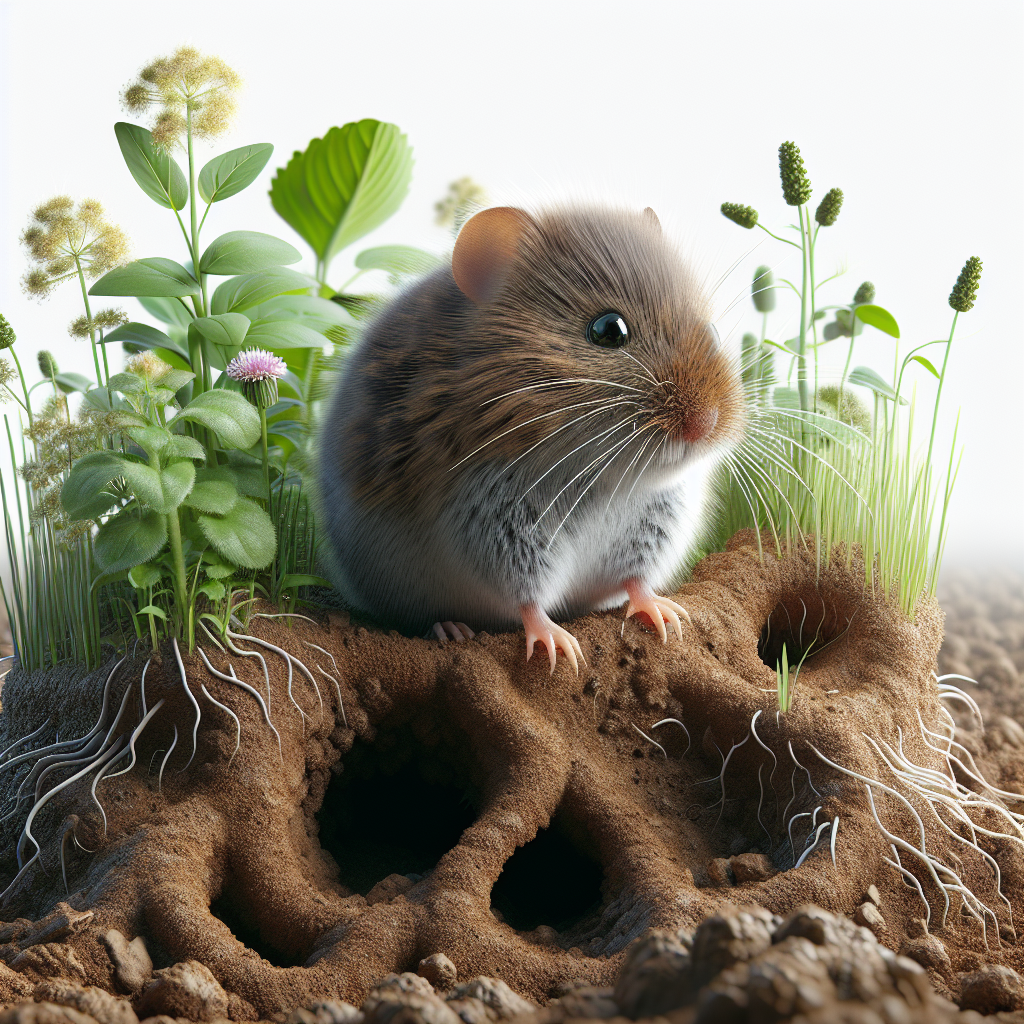
Introduction to Vole
Voles, often mistaken for mice due to their small size and similar appearance, are actually rodents from the genus Microtus that pose significant threats to agricultural production worldwide. Unlike mice, voles have stockier bodies, shorter tails, and a voracious appetite for plant material, making them particularly destructive in gardens, orchards, and crop fields. These pests thrive in temperate regions, burrowing extensive tunnel networks just beneath the soil surface, which can girdle roots and stems, leading to widespread plant death.
Farmers and gardeners encounter voles most commonly in areas with abundant ground cover, moist soils, and plentiful food sources like grasses, roots, and bark. Species such as the meadow vole (Microtus pennsylvanicus) and prairie vole (Microtus ochrogaster) are prevalent in North America, while similar species infest European and Asian farmlands. Annual population explosions can result in losses exceeding 20-50% of certain crops if unmanaged, underscoring the need for proactive diagnostics and control. Understanding vole behavior—primarily herbivorous with opportunistic omnivory—allows for targeted interventions that minimize chemical use and preserve ecosystem balance. This guide equips agricultural professionals with science-backed strategies to diagnose infestations early, disrupt lifecycles, and implement sustainable management, ensuring robust crop protection year-round.
Identifying Symptoms & Damage
Vole damage manifests distinctly from other pests like rabbits or gophers, primarily through surface runways and subterranean feeding. Look for shallow, bean-shaped burrow entrances (1-2 inches wide) clustered along fence lines, pathways, or field edges, often plugged with loose soil. These runways, 1-3 inches wide and visible after mowing or snowmelt, form zigzag patterns up to 600 feet long, crisscrossing lawns and fields.
Characteristic gnaw marks appear on plant bases: clean, V-shaped cuts 1/4 to 1/2 inch wide at ground level on perennials, shrubs, and trees, unlike the rougher chewing of rabbits. Bulbs, tubers, and roots show extensive hollowing, with plants wilting suddenly despite adequate water. In orchards, girdling on trunks—circumferential stripping of bark—leads to tree decline or death. Seedlings vanish entirely, roots devoured overnight, mimicking cutworms but with telltale tunnels.
Secondary signs include pellet droppings (1/8-1/4 inch, green rice-like) abundant in runways, and clipped grass stems in piles near burrows. In severe infestations, entire rows of strawberry or potato plants collapse. Differentiate from moles by vole herbivory (no earth mounds) and from mice by runway visibility and stockier tracks. Early scouting via night walks with flashlights reveals active voles; clipboards for mapping tunnels aid in assessing infestation scale. Quantitative damage assessment: count runways per acre (>20 indicates high risk) and excavate sample roots for consumption rates, guiding control urgency.
Lifecycle and Progression of Vole
Voles exhibit a rapid, boom-bust lifecycle adapted to exploit seasonal food abundance. Breeding begins in late winter (February) under snow cover, peaking March-May and again August-October, with females producing 3-12 litters annually (average 4-6). Gestation lasts 21 days, yielding 3-6 young per litter; newborns are precocial, weaning in 12-14 days and reaching maturity in 35-40 days. Populations can double monthly under ideal conditions, surging to 500-1000 per acre before predators or scarcity crash them.
Eggs aren't laid; live birth occurs in grass-lined nests 4-18 inches underground. Juveniles disperse 50-100 feet, establishing new territories. Adults live 2-16 months, with overwintering survivors driving spring booms. Progression phases: neonate (0-12 days, nest-bound), juvenile (12-35 days, exploratory tunneling), subadult (35-60 days, breeding onset), adult (reproductive peak). Winter nests under snow insulate against cold, allowing subnivean feeding on bark.
Seasonal progression: spring expansion via root/seed predation; summer surface runways; fall bark girdling; winter sub-surface survival. Monitoring trap success rates tracks population phases—high juvenile catches signal breeding peaks. Lifecycle knowledge informs timing: trap/flush during juvenile dispersal (late spring/summer) disrupts growth before winter buildup.
Environmental Triggers & Risk Factors
Vole irruptions correlate strongly with environmental cues favoring survival and reproduction. Mild winters with deep snow provide subnivean protection, insulating nests and food caches; populations explode post-thaw. Heavy mulch layers (>4 inches) or unkempt grass (>6 inches) offer ideal cover, mimicking natural meadows. Overly moist soils from poor drainage or irrigation retain burrows intact, unlike dry compaction that collapses tunnels.
Monocultures like alfalfa or new lawns supply unlimited food without predator perches. Reduced tillage leaves residue shelters; fallowing amplifies risk. Proximity to field edges with weeds or brushwood serves as invasion corridors. Climate shifts—warmer springs advance breeding—exacerbate outbreaks. Risk assessment: score sites (mulch depth + cover height + soil moisture + edge proximity); scores >10/20 warrant preemptive action.
Predator scarcity from habitat loss or rodenticides triggers booms. Soil types: loamy, friable soils ease digging versus clay. Companion risks: voles vector pathogens, worsening root rots. Spring Pest Patrol: Organic AI Strategies to Shield Your Crops from Common Invaders details predictive modeling for these triggers.
Organic Control & Treatment Plans
Organic vole management integrates cultural, mechanical, biological, and monitoring tactics for 80-95% efficacy without synthetics. Cultural: Mow cover crops short; till runways to expose voles; plant vole-resistant species like garlic or castor beans. Disk fields pre-planting to destroy tunnels.
Mechanical: Install 1/4-inch hardware cloth barriers (18-24 inches deep) around high-value crops like apple orchards. Flood burrows with water (temporary flush). Snap traps baited with peanut butter/oats, placed perpendicular in runways (check daily; >70% success). Live traps for relocation where legal.
Biological: Encourage predators—owls via perches/nest boxes, hawks with stubble fields, snakes with rock piles, barn owls via boxes (1 per 10 acres). Introduce vole-specific predators like foxes or weasels indirectly. Castor oil repellents (2% solution, monthly sprays) deter feeding.
Treatment Plans: Mild (<10 runways/acre): barriers + mowing. Moderate (10-50): traps (20/acre) + predators. Severe (>50): combine all + fumigation with organic approved smoke bombs. Rotate tactics yearly to prevent adaptation. Monitor weekly; reduce when runways absent 2 weeks. For potato fields, see Rodents (pest) for integrated approaches. Success metrics: 90% population reduction in 4-6 weeks.
Preventing Vole in the Future
Long-term prevention fortifies farms against reinvasion via habitat denial and resilience building. Maintain <4-inch vegetation year-round; mow/disk edges monthly. Use gravel borders (6-inch deep) around perimeters. Promote biodiversity with clover interplants repelling voles. Install permanent fencing: 24-gauge galvanized mesh, 12 inches above/below ground.
Encourage predators continuously: 4-6 owl boxes/40 acres, kestrel poles. Crop rotation disrupts food cycles; avoid mulching small grains near woods. Soil solarization pre-season kills overwinterers. Early detection grids: peanut butter stations checked biweekly. Learn more on resilient designs in Why Zoning Your Small Farm Chaos into Profit Zones Feels Impossible - And How AI Changes Everything. Annual audits prevent 95% of outbreaks.
Crops Most Affected by Vole
Voles target root/stem crops and orchards, causing up to 100% losses in unmanaged fields. Root Crops: Potato, carrot, beet, sweet potato—bulbs/tubers tunneled, yields halved. Grains/Forages: Wheat, corn, soybeans—seedlings clipped, runways compact soil. Orchards/Vines: Apple, strawberry, grapes—girdling kills 30-50% trees/plants. Vegetables: Lettuce, cabbage—bases severed. Lawns/Turf: Extensive runways ruin sod. Protect high-risk strawberry with barriers; monitor corn seedlings vigilantly.