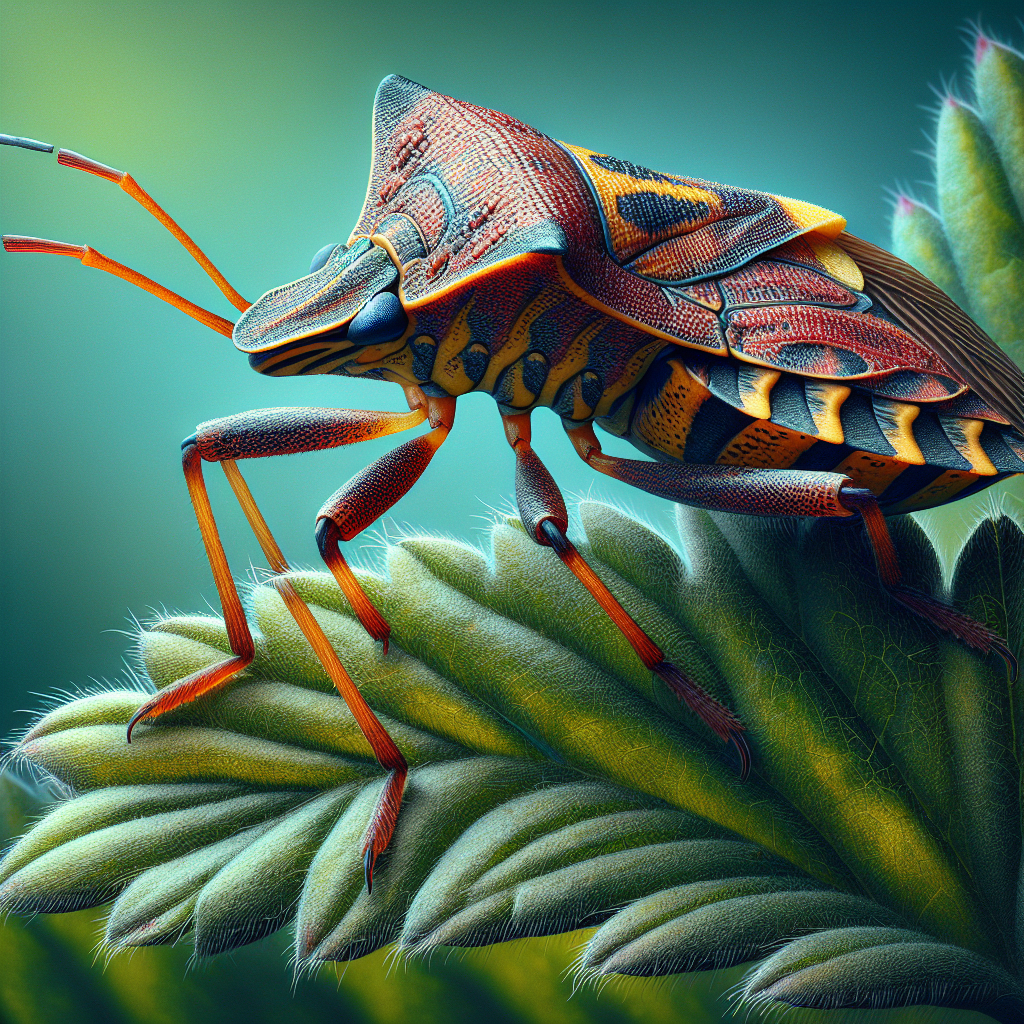
Introduction to Tarnished plant bugs
Tarnished plant bugs, scientifically known as Lygus hesperus and Lygus lineolaris, represent one of the most notorious pest groups in North American agriculture. These small, elusive insects belong to the Miridae family and are notorious for their polyphagous feeding habits, attacking over 300 plant species including major crops like strawberries, tomatoes, and cotton. Adults measure 4-6 mm long with a distinctive 'tarnished' bronze or brownish appearance, featuring yellow Y-shaped markings on the back and long antennae that exceed body length.
As piercing-sucking pests, tarnished plant bugs insert needle-like mouthparts into plant tissues, injecting saliva that disrupts growth hormones and causes cell death. This results in characteristic damage like 'cat-facing' on fruits, blasted buds, and stunted terminals. Their economic impact is staggering, with annual losses exceeding $100 million in U.S. cotton alone, and similar devastation in vegetable and fruit sectors. Unlike many pests, lygus bugs thrive in weedy field margins, migrating into crops when preferred weeds senesce, making perimeter management crucial.
Farmers often confuse them with stink bugs due to similar body shapes, but lygus lack the shield-like structure and odor glands. Early detection through sweep netting and timely intervention are key to preventing outbreaks. This guide equips growers with diagnostic tools, lifecycle insights, and proven organic strategies to safeguard yields. For more on integrated pest management, check our Spring Pest Patrol: Organic AI Strategies to Shield Your Crops from Common Invaders.
Identifying Symptoms & Damage
Diagnosing tarnished plant bug damage requires keen observation, as symptoms mimic nutrient deficiencies, herbicide injury, or viral infections. Primary signs appear on new growth: terminals wilt and blacken, buds blast (turn black and shrivel), and blossoms abort. On fruits, feeding punctures cause sunken, deformed scars known as 'cat-facing'—irregularly shaped lesions with corky centers, especially evident on strawberry and tomato fruits.
Nymphs (immature stages) cause the most severe damage due to rapid feeding on succulent tissues. Look for tiny black fecal spots (varnish-like drops) around injury sites and yellowing leaves with necrotic margins. In severe infestations, entire terminals collapse, mimicking root-knot nematodes but distinguished by aerial symptoms. Use a 15x hand lens to spot nymphs: pale green, pear-shaped with four black spots on the abdomen.
To confirm, deploy sweep nets (15-20 sweeps per 10 row feet) during early morning when bugs are sluggish. Thresholds vary: 1-2 adults per sweep in strawberries, 5-10 in cotton. Differentiate from lygus bugs (synonymous) and leaf-footed bugs by the lack of expanded hind legs. Scouting every 3-5 days during bloom prevents undetected buildup.
Lifecycle and Progression of Tarnished plant bugs
Tarnished plant bugs complete 4-7 generations annually, depending on climate, with overlapping cohorts complicating control. Eggs, tiny (1mm), banana-shaped, are inserted into tender stems or leaf petioles, hatching in 5-10 days at 25°C. Nymphs pass through 5 instars over 2-3 weeks: 1st-2nd instars are crawler-like and wingless; later stages develop wing pads.
Adults emerge highly mobile, dispersing via flight to new hosts. Females lay 200-300 eggs over 2-4 weeks, peaking in warm, humid conditions. Overwinter as adults in leaf litter, weeds, or under bark, resuming activity at 10-15°C. Peak populations coincide with bloom stages, when protein-rich pollen sustains reproduction.
Lifecycle duration shortens with temperature: 30 days at 30°C, 60+ days below 20°C. Monitor with sticky traps baited with hexanol or pheromone lures for early detection. Understanding progression enables timed interventions, targeting nymphs when vulnerable and before adults migrate.
Environmental Triggers & Risk Factors
Warm temperatures (20-30°C) and moderate humidity accelerate lygus proliferation, with populations exploding post-weed senescence in spring/fall. Drought-stressed crops exude more sugars, attracting females for oviposition. Nearby alfalfa fields, cut for hay, drive mass migrations into adjacent crops—up to 90% influx within 48 hours.
Weeds like mustard, chickweed, and horseweed serve as reservoirs; fields bordering uncultivated areas face 3x higher risk. Over-fertilization with nitrogen promotes lush growth, ideal for nymph development. Monocultures amplify damage; intercropping reduces incidence by 40%. Climate change extends active seasons, with earlier springs boosting overwintering survival. Risk mapping via historical data and weather forecasts predicts outbreaks.
Organic Control & Treatment Plans
Integrated organic management emphasizes cultural, biological, and minimal mechanical tactics. Cultural: Destroy weeds within 100m of fields; time alfalfa harvests to avoid peak lygus flight (dusk). Plant trap crops like alfalfa or mustard borders to intercept migrants.
Biological: Conserve predators—big-eyed bugs, damsel bugs, and spiders suppress 50-70% populations. Release purchased Peristenus wasps (lygus parasitoids) at 1000/acre. Neem oil (azadirachtin) disrupts nymph molting; apply at 7-day intervals targeting small nymphs, avoiding bloom to protect pollinators.
Mechanical: Vacuuming with modified leaf blowers removes 80% adults from low crops like strawberries. Reflective mulches deter landing; kaolin clay (Surround WP) creates physical barriers, reducing damage 60%. Insecticidal soaps smother nymphs but require thorough coverage.
Treatment Plan: Scout weekly; treat at economic thresholds. Week 1: Vacuum + weed removal. Week 2: Neem if nymphs > threshold. Rotate modes; monitor 7 days post-treatment. Combine with marigold borders for nematode suppression synergy.
Preventing Tarnished plant bugs in the Future
Prevention hinges on habitat disruption and monitoring. Maintain weed-free borders with cover crops like Thai basil, which repels lygus via volatiles. Use row covers during bloom on high-value crops like cherry tomato. Rotate crops annually, avoiding susceptible sequences.
Plant resistant varieties where available (e.g., some strawberry cultivars). Deploy pheromone traps for mass trapping and monitoring. Enhance biodiversity with flowering hedgerows supporting predators. Soil health via compost reduces plant stress, lowering attractiveness. Long-term: Push-pull systems with trap/preferred crops cut populations 70%. Annual audits ensure sustained low densities.
Crops Most Affected by Tarnished plant bugs
Tarnished plant bugs devastate fruits, vegetables, and fields. Top targets: strawberries (blossom drop >50% yield loss), tomato (cat-facing), cotton (boll damage), and alfalfa. Vegetables like cucumber, okra, and celery suffer terminal dieback. Tree fruits including apple, peach, and cherry show scarred fruits. Field crops: soybeans, potato. Even ornamentals affected. Prioritize scouting in these.