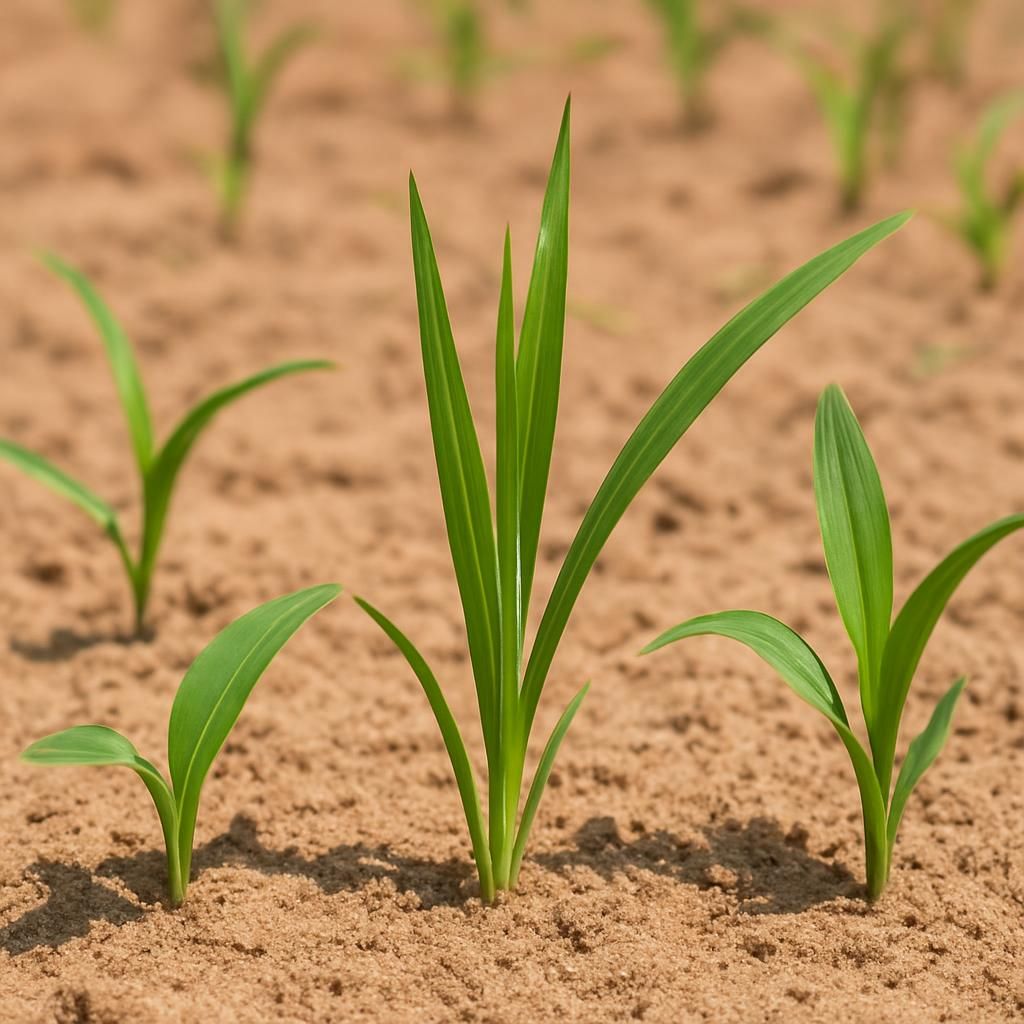
Introduction to striga
Striga, also called witchweed, is a genus of obligate root-parasitic flowering plants that belong to the Orobanchaceae family. These hemiparasites attach to the roots of host plants, primarily grasses and legumes, and derive water, minerals, and organic compounds through specialized structures called haustoria. The most economically damaging species include Striga hermonthica, Striga asiatica, and Striga gesnerioides. Infestations can reduce cereal yields by 30–100% in heavily affected fields, threatening food security in sub-Saharan Africa and parts of South Asia. Because striga seeds remain viable in soil for up to 20 years, once established, the parasite is extremely difficult to eradicate without integrated, multi-year strategies.
Identifying Symptoms & Damage
Early symptoms of striga infestation often appear before the parasite emerges above ground. Infected host plants exhibit stunted growth, wilting during midday heat, and a characteristic yellowing or purpling of leaves due to nutrient and water deprivation. As the parasite matures, small, bright green or reddish shoots 15–40 cm tall appear, bearing narrow leaves and tubular flowers that produce thousands of tiny seeds. Below ground, roots show swollen attachment points and reduced lateral root development. Yield losses manifest as fewer tillers, smaller panicles, and shriveled grains. In severe cases, entire stands may fail to produce harvestable crops.
Lifecycle and Progression of striga
Striga has a complex lifecycle tightly synchronized with host root exudates. Seeds require a period of after-ripening followed by conditioning under warm, moist soil conditions before they become responsive to germination stimulants. Once triggered, the radicle grows toward the host root, forms a haustorium, and penetrates vascular tissue. The parasite then spends several weeks underground before emerging to flower and set seed. A single plant can produce 50,000–200,000 seeds that disperse via wind, water, and farm equipment.
| Lifecycle Stage | Duration | Key Characteristics | Management Opportunity |
|---|---|---|---|
| Seed Dormancy & Conditioning | 6–18 months | Requires warm, moist soil; remains viable up to 20 years | Deep burial, solarization, suicidal germination |
| Germination Trigger | 1–7 days after stimulant exposure | Stimulated by host root exudates (strigolactones) | Trap crops, suicidal germination with ethylene or strigolactone analogs |
| Haustorium Formation & Attachment | 3–10 days | Penetrates host xylem and phloem | Resistant varieties, early weeding before attachment |
| Underground Growth | 3–6 weeks | Parasite develops below soil surface | Pre-emergence herbicides, soil solarization |
| Emergence & Vegetative Growth | 2–4 weeks | Photosynthetic shoots appear | Hand pulling, post-emergence herbicides |
| Flowering & Seed Production | 4–8 weeks | Produces thousands of tiny seeds | Prevent seed set by cutting or herbicide before flowering |
| Seed Dispersal & Soil Seed Bank Replenishment | Ongoing | Seeds spread by wind, water, animals, machinery | Sanitation, clean equipment, quarantine |
Environmental Triggers & Risk Factors
Striga thrives in warm climates with temperatures between 25–35 °C and annual rainfall of 400–1200 mm. Light, sandy or loamy soils with low organic matter and poor fertility favor establishment because hosts are already stressed. Continuous monoculture of susceptible cereals such as Sorghum, Corn, Millet, and Rice builds large seed banks. Low soil nitrogen and phosphorus levels increase strigolactone exudation from host roots, stimulating more parasite germination. Drought stress and erratic rainfall further weaken host plants, making them more vulnerable to parasitism. Poor sanitation—using contaminated seed or moving infested soil on equipment—accelerates spread to new fields.
Organic Control & Treatment Plans
An integrated organic approach emphasizes breaking the parasite lifecycle while improving soil health. Hand weeding before flowering, trap cropping with cotton or soybeans, and intercropping with Desmodium or other legumes that induce suicidal germination are foundational practices. Soil solarization during hot, dry periods kills surface seeds, while repeated deep plowing buries seeds below germination depth. Adding well-rotted compost and balanced organic amendments strengthens host vigor and reduces strigolactone production. Biological control agents such as Fusarium oxysporum strains and certain insects are under development but require further validation at scale.
| Treatment Option | Frequency & Timing | Application Method | Expected Efficacy | Notes |
|---|---|---|---|---|
| Hand Pulling | Weekly from emergence until flowering | Uproot entire plant including haustoria; destroy off-site | 60–80% seed reduction if consistent | Labor intensive; best on small plots |
| Trap Cropping (Cotton/Soybean) | One full season rotation every 2–3 years | Plant trap crop in infested field; destroy before seed set | 70–90% seed bank depletion | Must prevent trap crop from setting seed |
| Desmodium Intercropping | Every season in cereal rows | Push-pull system: plant Desmodium between cereal rows | 80–95% reduction in striga emergence | Also suppresses stemborers and improves soil N |
| Soil Solarization | 4–6 weeks during hottest period | Cover moist soil with clear plastic; remove after treatment | 50–70% seed kill in top 10 cm | Combine with organic amendments for better results |
| Deep Burial (Plowing 30+ cm) | Once per season before planting | Invert soil to bury seeds below germination zone | 40–60% reduction in viable seeds near surface | Repeat every 3–4 years |
| Organic Amendments (Compost/Manure) | Annually at planting | Incorporate 5–10 t/ha well-rotted material | Indirect: improves host resistance | Reduces strigolactone exudation |
| Suicidal Germination (Ethylene gas or strigolactone analogs) | Pre-planting, once per season | Apply stimulant without host present | 60–85% seed bank reduction | Requires precise timing and equipment |
Preventing striga in the Future
Long-term prevention centers on reducing the soil seed bank and preventing re-introduction. Implement a 3–5 year crop rotation that includes non-hosts such as Groundnut, Cassava, or Cowpea to starve the parasite. Use certified, striga-free seed and thoroughly clean all equipment, footwear, and livestock before moving between fields. Establish buffer strips of non-host crops or natural vegetation around infested areas. Maintain optimal soil fertility through legume rotations, green manures, and balanced organic inputs to strengthen host plants. Monitor fields regularly during the growing season and remove any escaped plants before they flower. Community-level coordination—shared equipment cleaning stations and joint seed certification—greatly reduces regional spread.
Crops Most Affected by striga
Striga primarily parasitizes members of the Poaceae and Fabaceae families. The most severely impacted crops include Sorghum, Corn, Millet, Rice, Wheat, Barley, Pearl Millet, Finger Millet, Teff, and various Sorghum landraces. Among legumes, Cowpea, Common Bean, and Soybean can also host Striga gesnerioides. Yield losses are highest in subsistence systems where farmers lack access to resistant varieties or herbicides. In contrast, Cassava, Sweet Potato, Yam, and most vegetable crops are non-hosts and can be safely grown in rotation to break the parasite cycle.