Introduction to Stemphylium species
Stemphylium species represent a group of dematiaceous fungi notorious in agricultural settings for inducing leaf spot diseases, blights, and significant crop defoliation. These pathogens, belonging to the Ascomycota phylum, are ubiquitous soil inhabitants and plant colonizers, capable of infecting over 70 host species including major field crops, vegetables, and ornamentals. Unlike more aggressive pathogens like Alternaria, Stemphylium often acts as a secondary invader, exploiting stressed or wounded plant tissues, but can become primary under conducive environments.
The economic impact is profound, with yield reductions of 20-50% reported in susceptible crops during epidemic years. For instance, Stemphylium leaf blight on onion can devastate bulb production, while on soybeans, it exacerbates defoliation leading to poor pod fill. This guide provides definitive diagnostic criteria, lifecycle insights, and proven organic management strategies tailored for small-scale and commercial growers. Understanding Stemphylium's biology is key to disrupting its infection cycle and safeguarding harvests. Recent studies highlight its increasing prevalence due to climate shifts favoring prolonged leaf wetness. For small farms struggling with disease identification, tools like AI-powered diagnostics can pinpoint issues rapidly, as explored in Why Misidentifying Plants Costs Small Farms Thousands - And How AI Camera Diagnosis Fixes It Fast.
Identifying Symptoms & Damage
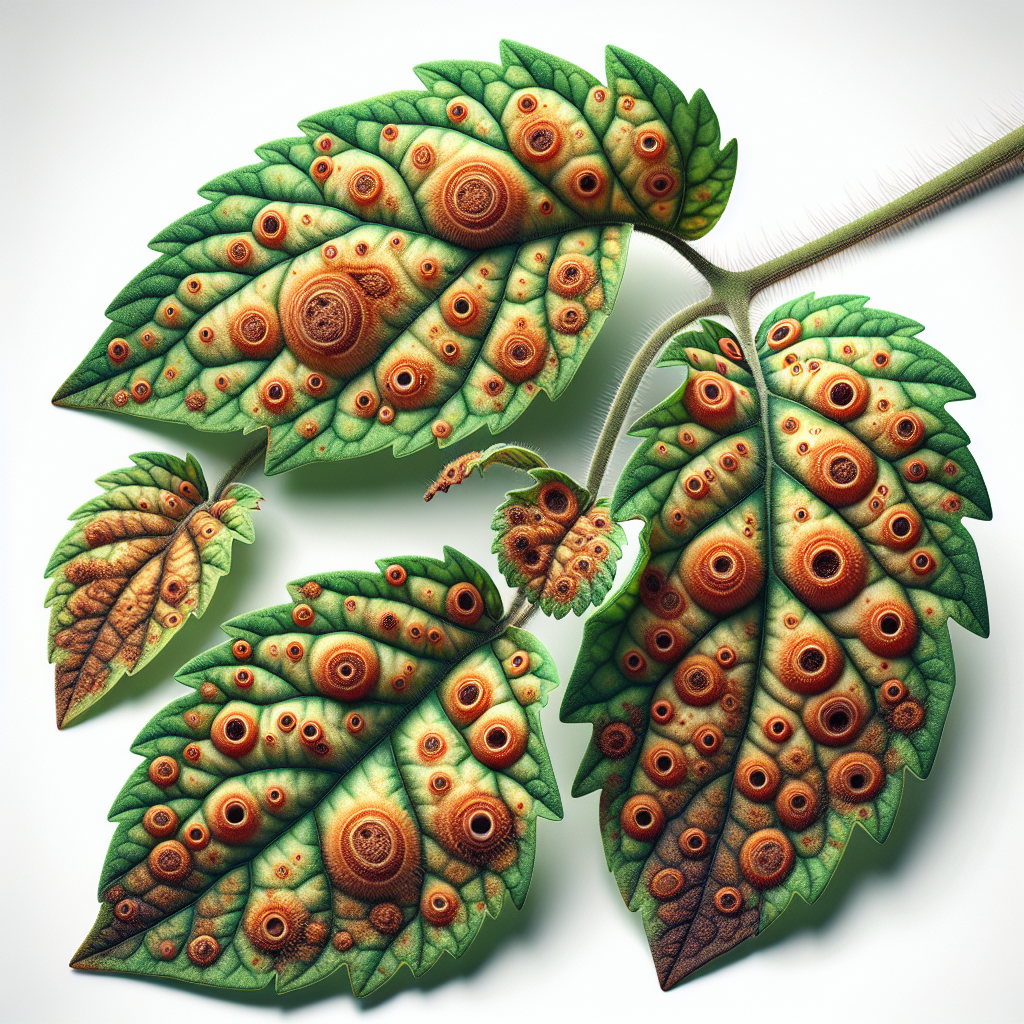
Accurate diagnosis begins with recognizing Stemphylium's hallmark symptoms, which manifest distinctly across plant parts. Initial signs appear as small, circular to irregular spots on leaves, typically 2-10 mm in diameter, with tan to dark brown centers surrounded by chlorotic halos. These lesions often feature concentric rings, earning the moniker 'target spot,' differentiating them from uniform Cercospora leaf spot.
On upper leaf surfaces, mature spots develop a velvety black fungal growth under high humidity, producing abundant conidia. Lower leaves are affected first, progressing upward in a typical acropetal pattern. Severe infections lead to coalescing lesions, causing blighting where entire leaves turn necrotic, yellow, then drop prematurely. Defoliation exposes fruits or pods to sunburn, compounding losses.
Stem involvement shows elongated, sunken lesions with grayish centers, sometimes girdling and causing wilting. On fruits like tomatoes or peppers, small sunken spots with dark margins appear, reducing marketability. Differentiate from similar diseases: Stemphylium lacks the yellow halos of Septoria and the zonate patterns of some leaf spot diseases. Microscopic confirmation reveals muriform conidia (multi-celled, transversely and longitudinally septate) with a beak-like apex, 20-60 μm long.
Damage quantification: In wheat, 10-20% leaf area affected correlates to 5-15% yield loss; in onions, severe blight halves bulb size. Scout weekly during humid periods, using a 10x hand lens for sporulation. Early detection prevents epidemic spread, critical for organic systems without broad-spectrum fungicides.
Lifecycle and Progression of Stemphylium species
Stemphylium's lifecycle is polycyclic, enabling multiple infection cycles per season. Primary inoculum overwinters as mycelium in crop debris, infected seeds, or alternate hosts. Spring rains splash conidia onto lower leaves, germinating in 6-12 hours at 20-30°C with free water.
Conidia, dispersed by wind and rain, penetrate via stomata or wounds. Incubation averages 3-7 days, faster under optimal conditions. Each lesion produces 10,000-100,000 conidia, fueling secondary spread. Sexual stage (ascomata) is rare in nature but confirmed in labs, producing ascospores for long-distance dispersal.
Progression follows a sigmoidal curve: latent period (infection to symptom), lesion expansion (days 1-5), sporulation (days 3-7), and senescence. Epidemics peak mid-season with prolonged leaf wetness (>12 hours daily). In tomato, progression from 1% to 50% diseased leaves occurs in 20-30 days under 90% RH. Crop rotation disrupts residue-based inoculum, while residue management accelerates decomposition via tillage or mulching.
Understanding this cycle informs timing of interventions: preemptive cultural measures before primary infection, curative during early secondary cycles.
Environmental Triggers & Risk Factors
Stemphylium thrives in warm (25-32°C), humid (80-95% RH) conditions with extended leaf wetness from dew, rain, or irrigation. Night temperatures >18°C prolong wetness, favoring germination. Poor air circulation in dense canopies exacerbates microclimates.
Risk factors include susceptible varieties, excessive nitrogen promoting lush foliage, and overhead irrigation wetting leaves. Crop debris (>20% ground cover) harbors 70% inoculum. Monoculture and narrow rotations amplify buildup. Soil pH >7 reduces antagonism by beneficial microbes.
Climate change extends favorable windows, with models predicting 15-30% incidence rise in subtropical zones. Drought-stressed plants are vulnerable as defenses wane. Integrated assessment: Use weather stations tracking leaf wetness hours; thresholds >48 hours/week signal high risk.
Organic Control & Treatment Plans
Organic management integrates cultural, biological, and physical tactics, avoiding synthetic fungicides. Start with sanitation: Remove and destroy infected debris post-harvest, reducing inoculum by 80%. Till residues to promote rapid decay.
Crop rotation (2-3 years) with non-hosts like corn or potato breaks cycles. Select resistant varieties where available, e.g., onion hybrids with partial tolerance.
Biological controls: Apply Trichoderma harzianum or Bacillus subtilis (OMRI-listed) at 7-10 day intervals from first symptoms, achieving 50-70% suppression. Neem oil (azadirachtin 0.03%) disrupts sporulation; spray at 14-day intervals.
Physical: Prune for airflow, space plants 30-50% wider. Drip irrigation minimizes wetting. Potassium silicate foliar sprays bolster cell walls, reducing penetration by 40%.
Treatment plan: Scout weekly; at 5% incidence, apply biocontrol + silicate. Repeat every 7-10 days, up to 4 applications. Efficacy monitoring: Lesion counts pre/post-treatment. Combine with powdery mildew preventives for broad-spectrum protection.
Preventing Stemphylium species in the Future
Long-term prevention emphasizes IPM foundations. Plant certified disease-free seeds; hot water treat at 50°C for 25 min kills surface conidia. Enhance soil health with compost, boosting microbiome antagonism—studies show 30% lower incidence.
Monitor via sticky traps for sporulation peaks. Use reflective mulches to deter spore settling. Fallow periods with cover crops like clover suppress soil inoculum.
Resistant cultivars: Prioritize for high-risk crops. Forecast models integrating temperature/humidity predict outbreaks 7-10 days ahead. Farm planning tools, like those in Why Timing Kills Small Farm Profits - And How AI Task Scheduling Saves Your Harvests, optimize rotations and scouting schedules. Annual audits refine strategies, targeting <5% incidence.
Crops Most Affected by Stemphylium species
Stemphylium species afflict diverse crops, with staples bearing heaviest burdens. Onions and garlic suffer leaf blight, slashing yields 40%; garlic shows stem lesions. Legumes like soybeans and chickpeas face purple seed stain and defoliation. Cereals including wheat, barley, and oats exhibit tan spot-like symptoms.
Vegetables: Tomato, eggplant, bell pepper. Tropicals like mango, banana, avocado. Others: Asparagus, cotton, peanuts. Regional hotspots: Stemphylium vesicarium on onion in arid zones; S. botryosum on legumes in humid tropics. Tailor prevention to local pressures for sustained productivity.