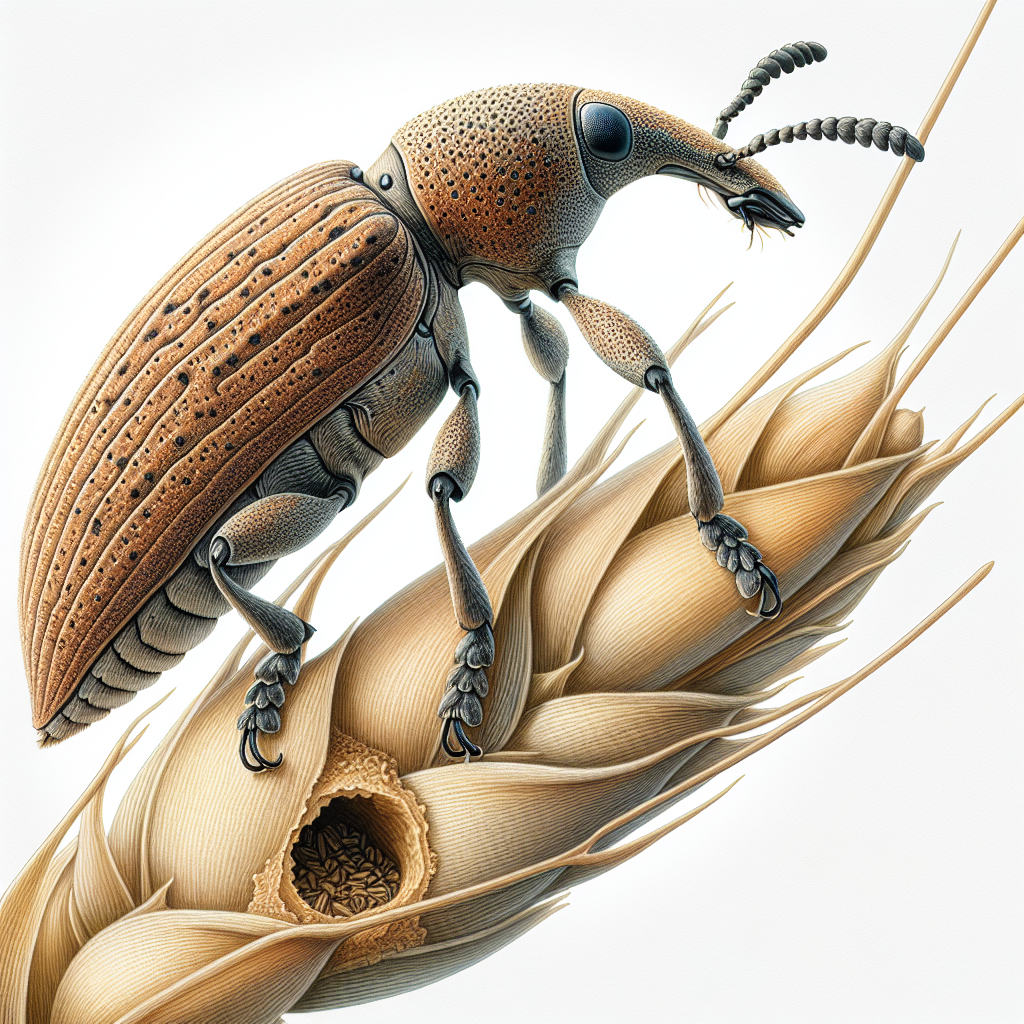
Introduction to stem weevils
Stem weevils represent a significant threat to agricultural production worldwide, particularly in cereal grains, forage crops, and certain vegetables. These beetles, belonging primarily to the family Curculionidae, target the structural integrity of plant stems by boring tunnels that weaken plants, leading to lodging (plants falling over) and substantial yield losses. Common species include the wheat stem sawfly (Cephus cinctus), rice stem borer weevils (Chilo suppressalis relatives), and various Lixus species affecting legumes and beets.
Farmers often first notice stem weevils during tillering or stem elongation stages when adult beetles lay eggs inside stems. Larvae feed internally, creating galleries that disrupt nutrient and water transport. In severe infestations, losses can exceed 30-50% in wheat, barley, and rice crops. Early detection and integrated management are crucial, as these pests overwinter in plant debris and pupate within stems. This guide equips growers with diagnostic tools, lifecycle knowledge, and organic strategies to minimize damage. For small farms, check out this Spring Pest Patrol: Organic AI Strategies to Shield Your Crops from Common Invaders for tech-enhanced monitoring tips.
Understanding stem weevils' biology allows for precise interventions. Adults are typically 3-10 mm long, with elongated snouts characteristic of weevils, and larvae are legless, white grubs. Damage manifests as hollowed stems, frass (insect waste) at entry holes, and premature plant death. Global distribution spans temperate and tropical regions, with peak activity in spring and summer.
Identifying Symptoms & Damage
Accurate identification of stem weevil damage is the first step in effective management. Look for these hallmark symptoms during crop scouting:
- Stem Girdling and Tunneling: Larvae chew semi-circular notches at the base of stems or bore lengthwise tunnels. Affected stems appear pinched or weakened, often lodging in wind or rain.
- Entry/Exit Holes: Small, round holes (1-2 mm) plugged with frass, typically near the soil line or internodes.
- Frass and Sawdust: Fine, sawdust-like excrement extruded from feeding galleries.
- Yellowing and Wilting: Above-ground symptoms include stunted growth, yellowing leaves, and sudden plant collapse due to vascular disruption.
- White Larvae Inside Stems: Split open suspect stems to reveal creamy-white, C-shaped larvae up to 15 mm long.
Differentiate from similar pests like cutworms (surface chewers) or stalk-boring caterpillars (larger tunnels, silk webbing). In corn, stem weevil damage mimics European Corn Borer but lacks moth frass. Use a hand lens for adults: elongated bodies, curved snouts, and elbowed antennae.
Scout weekly from seedling to heading stages, checking 25-50 stems per field quadrant. Thresholds vary: 5-10% infested stems warrant action in grains. Photographs and records aid in tracking progression. Secondary signs include increased fungal blights entry via wounds, compounding losses.
Lifecycle and Progression of stem weevils
Stem weevils undergo complete metamorphosis: egg, larva, pupa, adult. Lifecycle spans 4-12 months, with 1-2 generations per year depending on climate.
- Adults Emerge (Spring): Overwintered beetles exit stems or soil in early spring. Females chew oviposition slits in young stems, laying 50-200 eggs each.
- Eggs Hatch (1-2 weeks): Tiny larvae tunnel upward, feeding on pith.
- Larval Stage (4-8 weeks): Most destructive phase; grubs enlarge galleries, girdle stems. Full-grown larvae (10-20 mm) overwinter.
- Pupa (2-3 weeks): Inside stem remnants; new adults chew exit holes.
- Overwintering: Larvae or pupae in stubble.
Peak damage occurs mid-season; adults feed on foliage, exacerbating injury. In warmer regions, multiple broods overlap. Monitor with pheromone traps or stem dissections. Learn more about weevils for broader context.
Environmental Triggers & Risk Factors
Stem weevils thrive under specific conditions:
- Warm Temperatures: Adults active above 15°C (59°F); optimal larval development at 25-30°C (77-86°F).
- High Humidity: Favors egg survival and fungal secondary infections.
- Crop Residue: No-till fields harbor overwintering stages; minimum tillage increases risk.
- Monoculture: Continuous wheat or barley planting builds populations.
- Late Planting: Extended susceptible growth stages overlap peak egg-laying.
- Weed Hosts: Grasses and wild relatives serve as reservoirs.
Risk is highest in fields adjacent to last year's stubble or with poor drainage. Drought stress weakens plants, making them prime targets. Climate change extends active periods, per recent studies.
Organic Control & Treatment Plans
Organic management emphasizes IPM (Integrated Pest Management):
Cultural Controls:
Biological Controls:
- Encourage parasitoids (Microplitis spp.) and predators (ground beetles).
- Release nematodes (Steinernema feltiae) for soil-dwelling larvae.
- Neem oil or spinosad sprays target adults (OMRI-approved).
Mechanical/Physical:
- Trap crops (early-maturing grains).
- Row covers during vulnerable stages.
- Vacuum or shake adults from plants.
Treatment Timeline:
Stage Action Pre-plant Tillage, rotation Tillering Scout, neem foliar Stem Elongation Spinosad if >10% infested Post-Harvest Stubble destruction
Monitor efficacy; combine methods for 70-90% control. Avoid broad-spectrum sprays to preserve beneficials like ladybugs.
Preventing stem weevils in the Future
Long-term prevention builds resilient systems:
- Varietal Selection: Choose stem-solid cultivars (e.g., 'Sawfly' wheat).
- Crop Rotation: Break cycles with soybeans or potato.
- Sanitation: Burn or ensile residue; delay no-till.
- Trap Strips: Border rows of susceptible varieties.
- Soil Health: Healthy plants resist better; incorporate marigold for nematode suppression.
- Monitoring Tools: Pheromone traps, degree-day models.
Annual scouting and records predict outbreaks. For zoning strategies, see Why Zoning Your Small Farm Chaos into Profit Zones Feels Impossible - And How AI Changes Everything.
Crops Most Affected by stem weevils
Stem weevils target monocots and select dicots:
- Cereals: Wheat, barley, oats, rye, triticale – up to 40% losses.
- Grasses/Forages: Timothy, alfalfa.
- Rice: Rice, especially Basmati varieties.
- Legumes: Alfalfa stem weevil.
- Others: Corn, sorghum, beets.
Susceptibility peaks in temperate grains; tropical species hit rice hardest.