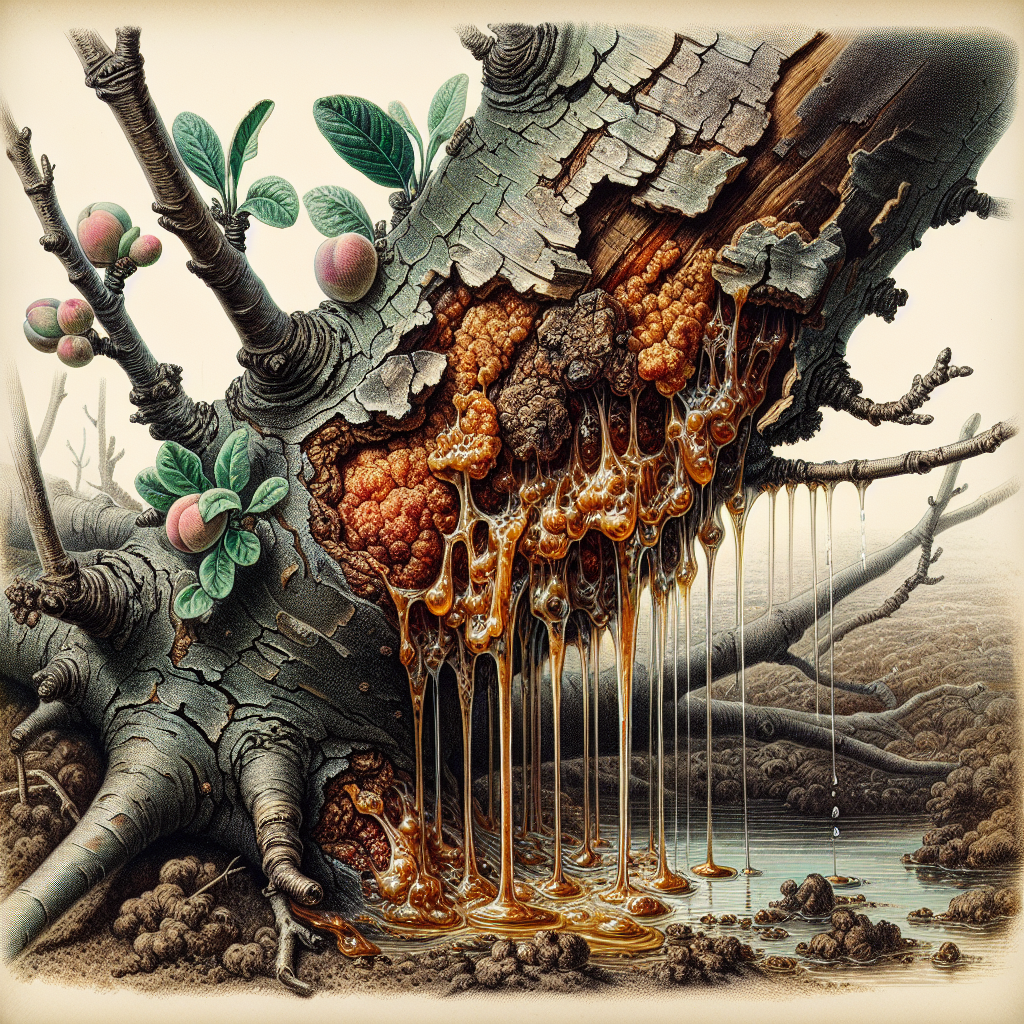
Introduction to Stem bleeding
Stem bleeding, commonly referred to as gummosis or gum flow, represents one of the most pervasive and damaging diseases in perennial crops worldwide. This condition manifests as the exudation of a viscous, amber-colored gum or sap from cracks, lesions, or wounds on the trunks, branches, and lower stems of affected plants. Primarily driven by fungal pathogens like Phytophthora species, stem bleeding compromises vascular tissues, leading to reduced water and nutrient transport, wilting, defoliation, and eventual tree mortality.
In agricultural settings, stem bleeding poses a significant economic threat, particularly in orchards and plantations where high-value crops are grown intensively. Losses can exceed 30-50% in severe outbreaks, exacerbated by poor drainage and monsoon flooding. Understanding its etiology—root rot pathogens ascending to the stem under saturated conditions—is crucial for timely intervention. This definitive guide equips farmers, agronomists, and growers with professional-grade diagnostic tools, organic management protocols, and prevention tactics optimized for small to medium-scale operations. By integrating cultural practices, biological controls, and vigilant monitoring, stem bleeding can be effectively managed, safeguarding yields and orchard longevity.
Identifying Symptoms & Damage
Early detection of stem bleeding is paramount for limiting spread and preserving crop viability. Initial symptoms often appear at the soil line or on the lower trunk, where small water-soaked lesions emerge, darkening to brown or black necrotic areas. Within days, copious amounts of gum ooze from these sites, hardening into crusty amber lesions upon exposure to air. Affected bark sloughs off, exposing cambium layers that exhibit a reddish-brown discoloration.
Progressing upward, lesions girdle stems, causing canopy symptoms like yellowing leaves, sparse foliage, and branch dieback starting from the top. In advanced stages, entire scaffolds collapse, with profuse gumming extending to major limbs. Differentiate from mechanical injury or borers by the absence of frass and presence of fungal mycelium in scraped lesions. Diagnostic tip: Scrape back gum-covered bark; healthy tissue is firm and white, while infected areas are soft, water-soaked, and emit a fermented odor.
Damage quantification reveals yield reductions of 20-70% depending on infection severity. In young trees, survival rates drop below 40% without intervention. Cross-sectioning stems shows vascular browning, confirming systemic invasion. For precise identification, lab culturing on selective media isolates Phytophthora, distinguishing it from bacterial cankers or root rot.
Lifecycle and Progression of Stem bleeding
Stem bleeding follows a polycyclic lifecycle synchronized with soil moisture regimes. Phytophthora zoospores, motile propagules, germinate in saturated soils, infecting roots via wounds or natural openings. Once established, mycelium colonizes xylem vessels, ascending to the stem collar during prolonged wetness. Optimal temperatures (20-30°C) accelerate sporangia production, releasing 10,000-100,000 zoospores per lesion.
Primary infections occur in spring via rain splash or irrigation runoff, with secondary cycles every 7-14 days under humid conditions. Gum exudation serves as a plant defense but also disseminates chlamydospores, surviving in soil for 2-5 years. Progression phases: (1) Root infection (subterranean, asymptomatic); (2) Collar lesion formation (gumming begins); (3) Girdling and systemic wilt; (4) Chronic cankers with recurrent bleeding. Full tree decline spans 1-3 years, faster in susceptible varieties.
Epidemiologically, polycyclic spread amplifies via contaminated tools, runoff, and vectors like splash-dispersed soil. Overwintering structures ensure perennial recurrence, demanding integrated lifecycle disruption.
Environmental Triggers & Risk Factors
Stem bleeding epidemics hinge on environmental confluence: excessive soil moisture (>30% volumetric water) and temperatures above 18°C. Poor drainage, heavy clay soils, and over-irrigation create anaerobic conditions favoring Phytophthora. Risk escalates in low-lying fields or during El Niño events with prolonged rains.
Cultural factors amplify vulnerability: shallow planting exposes collars, while excessive nitrogen promotes succulent growth prone to infection. Susceptible rootstocks (e.g., peach seedlings) and dense planting reduce airflow, sustaining humidity. Compaction from machinery compacts soils, impeding drainage.
Associated risks include prior root rots weakening defenses and wounds from cultivation inviting entry. Climate change intensifies threats via erratic monsoons. Mitigation targets drainage improvement and site selection on well-aerated slopes.
Organic Control & Treatment Plans
Organic management emphasizes sanitation, cultural amendments, and biocontrols. Step 1: Sanitation—Remove and destroy infected tissue with sterilized tools; apply 10% bleach dips between cuts. Excavate soil around collars to aerate and remove rotted roots.
Step 2: Biological Drenches—Apply Trichoderma harzianum or Bacillus subtilis drenches (5-10 L/ha, 10^9 CFU/ml) post-rainfall. These antagonists outcompete Phytophthora, reducing lesion expansion by 60-80%. Integrate compost teas rich in Pseudomonas fluorescens for root colonization.
Step 3: Organic Amendments—Incorporate gypsum (2-5 t/ha) to flocculate clays and enhance drainage. Mulch with biochar-amended compost (5 cm layer) to suppress soil pathogens. Phosphite sprays (potassium phosphite, 2-3 L/ha, 3x/year) boost plant defenses via SAR induction, limiting mycelial growth.
Step 4: Monitoring Protocol—Scout weekly during wet seasons; use baiting traps (almond leaves floated in soil extracts) for early detection. Threshold: Treat at 5% symptomatic trees.
Read our comprehensive guide on Soil Health Mastery: 5 Proven Strategies for Small Farms to Build Fertile Ground Without Breaking the Bank for enhanced resilience.
Integrated plans yield 70-90% control; rotate tactics to prevent resistance.
Preventing Stem bleeding in the Future
Prevention fortifies against incursions via resilient systems. Select tolerant rootstocks (e.g., Nemaguard for peaches) and certified disease-free scions. Optimize planting: Elevate grafts 15-20 cm above soil, space 5-7 m apart for airflow.
Install subsurface drainage tiles (60 cm depth, 10 m spacing) and contour fields to shed water. Avoid fall planting in high-rainfall zones; delay until dry periods. Annual cultural audit: Test soil drainage (dig 60 cm hole, fill with water; >2 hr retention signals risk).
Boost immunity with balanced nutrition (K:Ca 3:1 ratio) and cover crops like mustard biofumigants. Quarantine new stock 6 months. Long-term: Solarization (clear plastic, 6 weeks summer) pasteurizes soil, reducing inoculum 90%.
Crops Most Affected by Stem bleeding
Stem bleeding devastates stone fruits and tropical perennials. Peach and Nectarine lead susceptibility, with 40-60% orchard losses in wet tropics. Mango suffers chronic gummosis, reducing fruit set 50%. Citrus (orange, lemon) exhibit collar rots, while avocado (Hass varieties) faces Phytophthora epidemics.
Other victims: Plum, cherry, papaya, guava, and coconut. In India and Southeast Asia, sugarcane and banana report rising incidences. Grasses like sorghum show minor stem rots. Global hotspots: California's Central Valley peaches, Australia's avocado groves, India's mango belts.