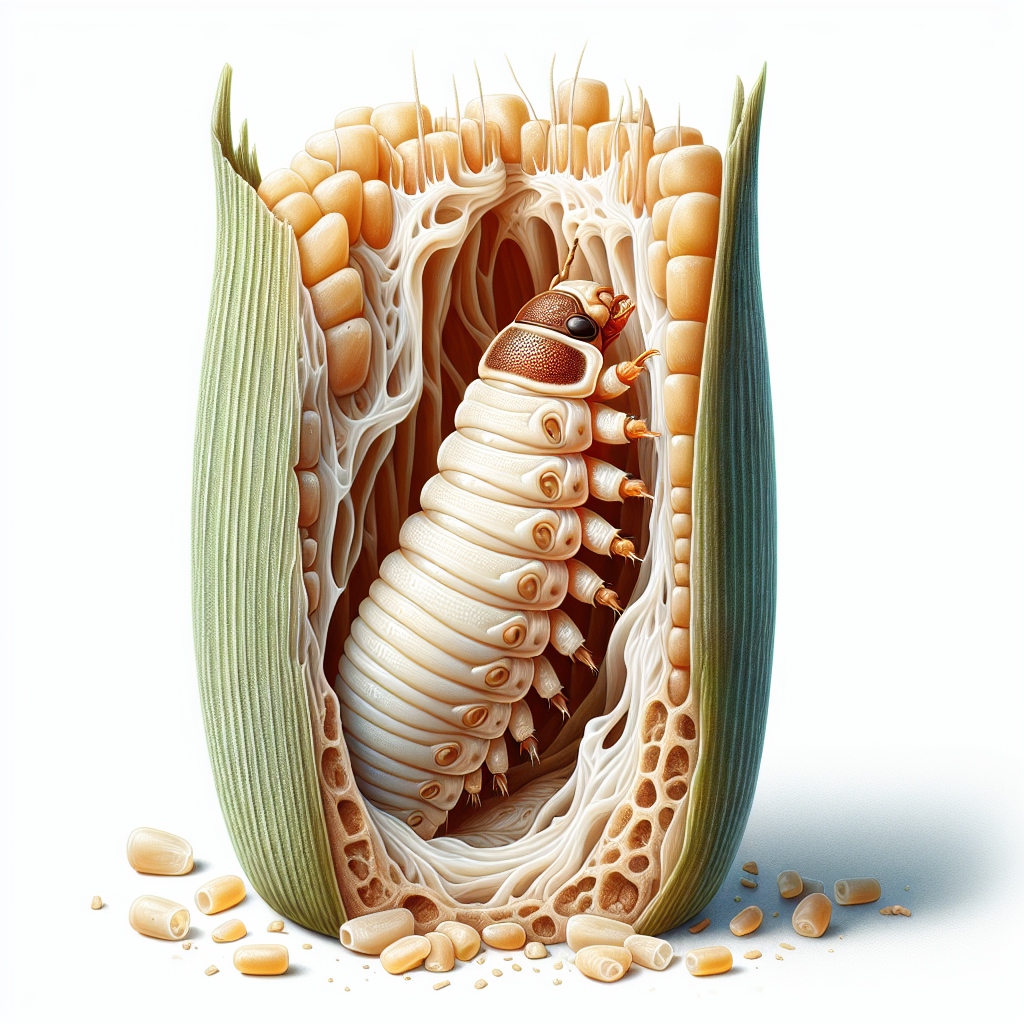
Introduction to Stem and Root Borers
Stem and root borers represent one of the most insidious threats to global agriculture, particularly in tropical and subtropical regions where staple crops form the backbone of food security. These pests, primarily from the order Lepidoptera (moths) and Coleoptera (beetles), include notorious species like the European Corn Borer (Ostrinia nubilalis), maize stem borer (Busseola fusca), and sugarcane root borer (Eldana saccharina). Larvae bore into the stems and roots of plants, creating internal galleries that girdle vascular tissues, interrupt nutrient and water flow, and weaken plant structure, often leading to lodging, reduced photosynthesis, and up to 80% yield losses in severe infestations.
Unlike surface-feeding pests, stem and root borers are cryptic, hidden within plant tissues, making early detection challenging. They thrive in warm, humid environments and can complete multiple generations per season, amplifying damage exponentially. Farmers worldwide lose billions annually to these borers, with smallholder operations in developing countries hit hardest due to limited access to resistant varieties or chemical controls. This guide provides professional-grade diagnostics, lifecycle insights, organic management strategies, and prevention tactics to empower growers to safeguard their harvests. Understanding these pests' biology is key to disrupting their lifecycle and minimizing economic impact. For real-world applications, check out this insightful Spring Pest Patrol blog post on seasonal defenses.
Identifying Symptoms & Damage
Accurate identification of stem and root borer damage is crucial for timely intervention, as symptoms often mimic nutrient deficiencies, drought stress, or diseases like fusarium wilt. Early signs include small 'pin-sized' entry holes on stems or at the soil line, often surrounded by frass (insect excrement resembling sawdust). Stems may show wilting of the upper plant parts, yellowing leaves, or 'dead heart' in young plants where the growing point collapses, a hallmark of central borer activity.
As infestation progresses, stems develop longitudinal cracks, swelling at node internodes, or buckling under their own weight, leading to lodging where plants fall over. Cross-sectioning affected stems reveals tunnels packed with frass and larvae, sometimes accompanied by secondary invaders like root-knot nematodes or bacterial ooze. Root damage manifests as stunted growth, poor tillering, and roots with galleries or hollowed sections, causing plants to topple easily in wind. In crops like corn, ears may be poorly filled or dropped prematurely.
Diagnostic tips: Split stems at the base during scouting; presence of live larvae or pupae confirms borers. Use a knife to probe roots in moist soil. Differentiate from similar pests like cutworms (surface chewers) or stalk rots (fungal discoloration without frass). Regular field walks, focusing on field edges and weedy borders, enable 10-20% early detection rates, preventing widespread outbreaks. Yield impacts vary: 20-30% in mild cases, catastrophic in monocultures.
Lifecycle and Progression of Stem and Root Borers
Stem and root borers exhibit complete metamorphosis: egg, larva, pupa, adult. Females lay 200-500 eggs in clusters on leaf undersides or near the soil, hatching in 3-7 days into tiny larvae that mine leaves before boring into stems or roots. The larval stage, lasting 3-6 weeks, is destructive, with 4-7 instars tunneling upward or downward, feeding on pith and vascular bundles. Full-grown larvae (2-4 cm) pupate within the plant or soil, emerging as moths or beetles after 7-14 days.
Generations number 2-6 per year, synchronized with crop phenology: first in seedlings, peak during tillering/flowering. Diapause in some species allows overwintering as larvae in stubble. Progression accelerates in temperatures above 25°C (77°F), with humidity favoring egg survival. Adults are nocturnal, short-lived (3-10 days), drawn to lights or pheromones. Understanding this enables timed interventions, like whorl-stage scouting for corn borers. Lifecycle diagrams aid prediction: eggs (1 wk), destructive larvae (1 mo), pupae (1 wk), adults (1 wk). Disrupting any stage curtails populations.
Environmental Triggers & Risk Factors
Borers exploit specific conditions: high nitrogen soils promote lush growth ideal for larval feeding; dense plantings hinder parasitoid access; and continuous monocropping builds pest reservoirs. Warm nights (>20°C) and rainfall trigger moth flights and egg-laying. Risk spikes in fields adjacent to previous-season stubble or volunteer plants harboring diapausing larvae. Poor drainage fosters root borer havens, while drought-stressed plants are more susceptible due to weakened defenses.
Climate change extends generations northward, with models predicting 20-50% range expansion. Weed hosts like johnsongrass shelter borers, bridging seasons. Overuse of broad-spectrum insecticides kills natural enemies like Trichogramma wasps, causing rebounds. Assess risk via pheromone traps (10-20 moths/trap/week signals action) and historical data. Integrated risk mapping combines weather forecasts, soil tests, and scouting for proactive management.
Organic Control & Treatment Plans
Organic strategies target all lifecycle stages without synthetics. Cultural: Destroy stubble post-harvest by deep plowing (20-30 cm) to expose larvae to predators/sun. Intercrop with repellents like marigold or trap crops (e.g., sudangrass). Rotate with non-hosts like legumes for 2-3 years. Biological: Release Trichogramma chilonis (egg parasitoids) at 1-2 lakh/ha weekly during egg-lay peaks; conserve Cotesia flavipes (larval parasitoids) via nectar plants. Apply Bacillus thuringiensis (Bt) kurstaki sprays to whorls at 1-2 g/L, targeting young larvae (80-90% efficacy).
Mechanical: Rogue 'dead heart' plants weekly; use light traps for adults. Botanicals: Neem oil (azadirachtin 0.03%) or spinosad (organic-approved) at 5 ml/L, 3 applications 7-10 days apart. Soil drenches with entomopathogenic nematodes (Steinernema feltiae) for root borers. Monitor with stem splitting (5-10% threshold). Integrated plans yield 60-80% control; combine for synergy. Avoid resistance by rotating modes.
Preventing Stem and Root Borers in the Future
Prevention hinges on resilience-building: Plant resistant varieties like hybrid corn with Bt traits or borer-tolerant sugarcane. Time sowing to evade peak moth flights (e.g., early rice avoids young larvae). Maintain field sanitation: weed-free borders, prompt residue management. Enhance biodiversity with hedgerows of thyme and yarrow to attract predators. Use row covers on seedlings and reflective mulches to deter adults.
Forecasting via degree-day models (base 10°C) predicts flights; apps integrate traps/weather. Scout weekly, acting at economic thresholds (10% dead hearts). Long-term: Soil health via cover crops suppresses soil-stage borers. Education and farmer field schools sustain adoption, reducing incidence 50-70%.
Crops Most Affected by Stem and Root Borers
Stem and root borers devastate cereals and perennials: Rice (yellow stem borer, Scirpophaga incertulas); wheat (Hessian fly, Mayetiola destructor); corn (European/southwestern borers); sorghum (Chilo partellus); sugarcane (top borer). Root borers plague potato, cassava, and sweet potato. Tropicals like banana and mango suffer shoot borers. Grains face 20-100% losses; diversify to mitigate.