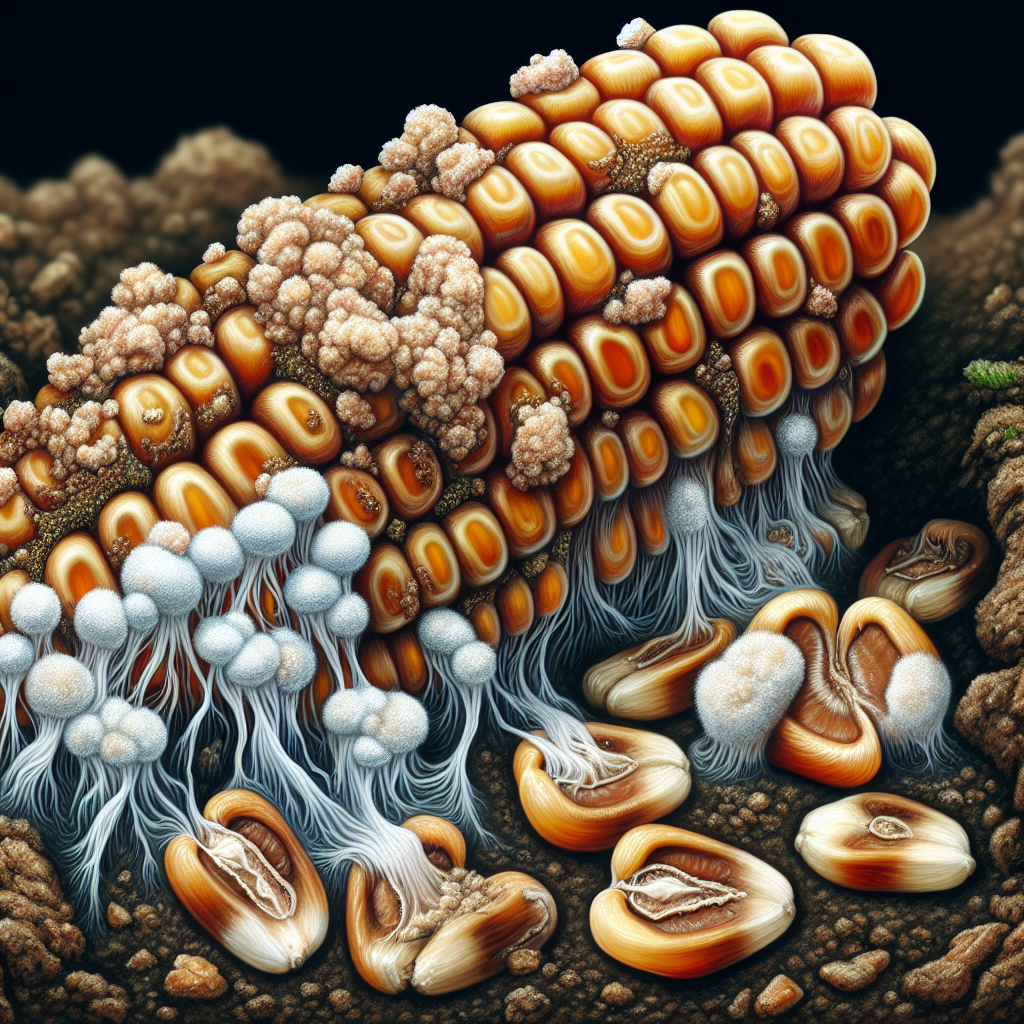
Introduction to Seed rot
Seed rot represents one of the most critical challenges in early-season crop production, striking before seedlings can even emerge from the soil. This fungal disease complex, often caused by pathogens such as Pythium, Fusarium, and Rhizoctonia, leads to the rapid decomposition of planted seeds, resulting in sparse stands, reduced yields, and significant economic losses for farmers. Unlike visible foliar diseases, seed rot operates invisibly underground, making prevention and early detection paramount.
Understanding seed rot is essential for growers of vegetables, grains, and legumes, as it can destroy up to 90% of a planting in susceptible crops under favorable conditions. The disease is exacerbated by poor seed quality, excessive soil moisture, cold temperatures, and compacted soils. This guide provides professional-grade diagnostic criteria, lifecycle insights, organic management strategies, and prevention tactics to safeguard your fields. By integrating these practices, farmers can achieve robust germination rates and healthier crops. For small farms optimizing operations, check out this blog on why timing kills small farm profits to align planting with ideal windows.
Identifying Symptoms & Damage
Diagnosing seed rot requires keen observation during the critical pre-emergence phase, typically 7-14 days after planting. The primary symptom is the absence of seedlings in patches or entire rows, where healthy fields should show uniform emergence. Excavate affected areas to reveal hallmark signs: seeds appear swollen, discolored (brown to black), and mushy, often with a foul odor indicating secondary bacterial invasion.
Affected seeds may show sparse, white mycelial growth under humid conditions, particularly with Rhizoctonia, which produces reddish-brown lesions. Pythium-induced rot often results in a watery, translucent decay, while Fusarium causes dry, shriveled seeds with pinkish spore masses. Seedlings that do emerge may exhibit twisted, necrotic roots or basal stem rot, linking to related issues like damping-off.
Damage extends beyond immediate loss: uneven stands lead to weed competition, increased irrigation needs, and lower yields. In severe cases, yield reductions of 50-100% occur, especially in direct-seeded crops. Differentiate from seedcorn maggots or wireworms by the absence of insect damage and presence of fungal structures. Laboratory confirmation via plating on selective media (e.g., PARP for Pythium) is recommended for precise pathogen ID.
Lifecycle and Progression of Seed rot
Seed rot pathogens are soil saprophytes with complex lifecycles adapted to persist in diverse environments. Pythium spp., oomycetes favored in water-saturated soils, produce zoospores that swim to seeds, initiating infection within hours. Fusarium and Rhizoctonia survive as dormant sclerotia or mycelium in soil debris for years, germinating when stimulated by germinating seeds' exudates.
Progression unfolds rapidly: upon planting, seed imbibition releases sugars attracting pathogens. Infection penetrates the seed coat, colonizing endosperm and embryo within 48-72 hours. Under optimal conditions (15-25°C for Pythium, 20-30°C for Fusarium), rot completes in 3-5 days, releasing secondary inoculum. Warm, dry spells halt spread, but repeated wet cycles perpetuate epidemics.
Over seasons, pathogen populations build in residue-heavy fields, amplifying risk. Crop rotation disrupts this cycle, as monocultures like continuous corn heighten inoculum loads. Understanding this progression underscores the need for timely interventions, preventing escalation to seedling rots.
Environmental Triggers & Risk Factors
Seed rot epidemics hinge on the interaction of pathogen, host, and environment, with moisture as the linchpin. Cool soils (10-20°C) combined with waterlogging—often from heavy rains, poor drainage, or over-irrigation—create ideal conditions for Pythium dominance. Compacted soils reduce aeration, exacerbating oxygen deprivation that favors anaerobes.
Risk factors include low-quality seed with mechanical damage or shallow planting depths (<2 cm), exposing seeds to temperature swings. High residue cover conserves moisture but harbors inoculum. Acidic soils (pH <6.0) favor Fusarium, while over-fertilization with nitrogen promotes lush but susceptible seedlings. Climate change intensifies risks through erratic rains; for hyper-local forecasts, see resources on weather challenges.
Susceptibility varies: injured seeds from poor handling rot 5x faster. No-till systems, while beneficial for soil health, demand vigilant management to mitigate residue-borne pathogens.
Organic Control & Treatment Plans
Organic management emphasizes cultural, biological, and physical tactics over chemical crutches. Start with certified, disease-free seed treated with organic biofungicides like Trichoderma viride or Bacillus subtilis, applied as slurries (10g/kg seed). These antagonists colonize seeds, outcompeting pathogens.
Optimize planting: use raised beds or ridges for drainage, plant at 3-5 cm depth in warm soils (>18°C), and avoid working wet fields. Aerobic compost teas (rich in Streptomyces) drench furrows pre-planting to suppress soil pathogens. Introduce beneficial microbes via vermicompost mulches.
For active outbreaks, remove and destroy rotted seeds, solarize soil (clear plastic, 4-6 weeks summer) to kill inoculum, and apply chitosan-based elicitors to boost seed defenses. Crop rotation with non-hosts like grasses for 2-3 years is crucial. Integrate mustard biofumigants, which release isothiocyanates toxic to fungi. Monitor with baiting assays; threshold: >20% pre-emergence loss triggers replanting.
Integrated plans: 1) Seed treatment + rotation (70% control), 2) Bio-drench + drainage (85%), 3) Full IPM (95%). Avoid copper-based products pre-emergence due to phytotoxicity.
Preventing Seed rot in the Future
Prevention is the cornerstone, targeting the disease triangle's weakest link. Select resistant varieties where available, e.g., Pythium-tolerant corn hybrids. Use pelleted seed for uniform depth and protection. Implement tile drainage in high-rainfall areas and laser-level fields for even water shedding.
Soil testing guides amendments: lime to pH 6.5-7.0, add gypsum for sodic soils. Cover crops like sudangrass suppress inoculum via allelopathy. Time planting post-frost with soil thermometers, ensuring 5-day warming trend. Sanitize equipment to prevent machinery-borne spread.
Long-term: diversify rotations (soybeans to corn), minimize tillage to preserve mycorrhizae, and foster soil biodiversity with organic matter (>3%). Scout weekly post-planting; early detection via emergence maps prevents total loss. Annual IPM audits refine strategies, yielding 20-30% stand improvements.
Crops Most Affected by Seed rot
Seed rot plagues a wide array of crops, particularly those direct-seeded in cool, moist springs. Vegetables like tomato, pepper, cucumber, and beans suffer high losses, with >50% stand failure common. Legumes (peas, chickpeas) are highly susceptible due to thin coats.
Grains including corn, wheat, and sorghum face epidemics in no-till systems. Root crops like carrot and radish show girdled hypocotyls. Tropicals such as ginger and cassava rot in poorly drained nurseries. Perennials like asparagus lose crowns over years.
Global impact: corn loses $1B annually in the US; small farms amplify risks via limited acreage. Tailor strategies per crop for optimal control.