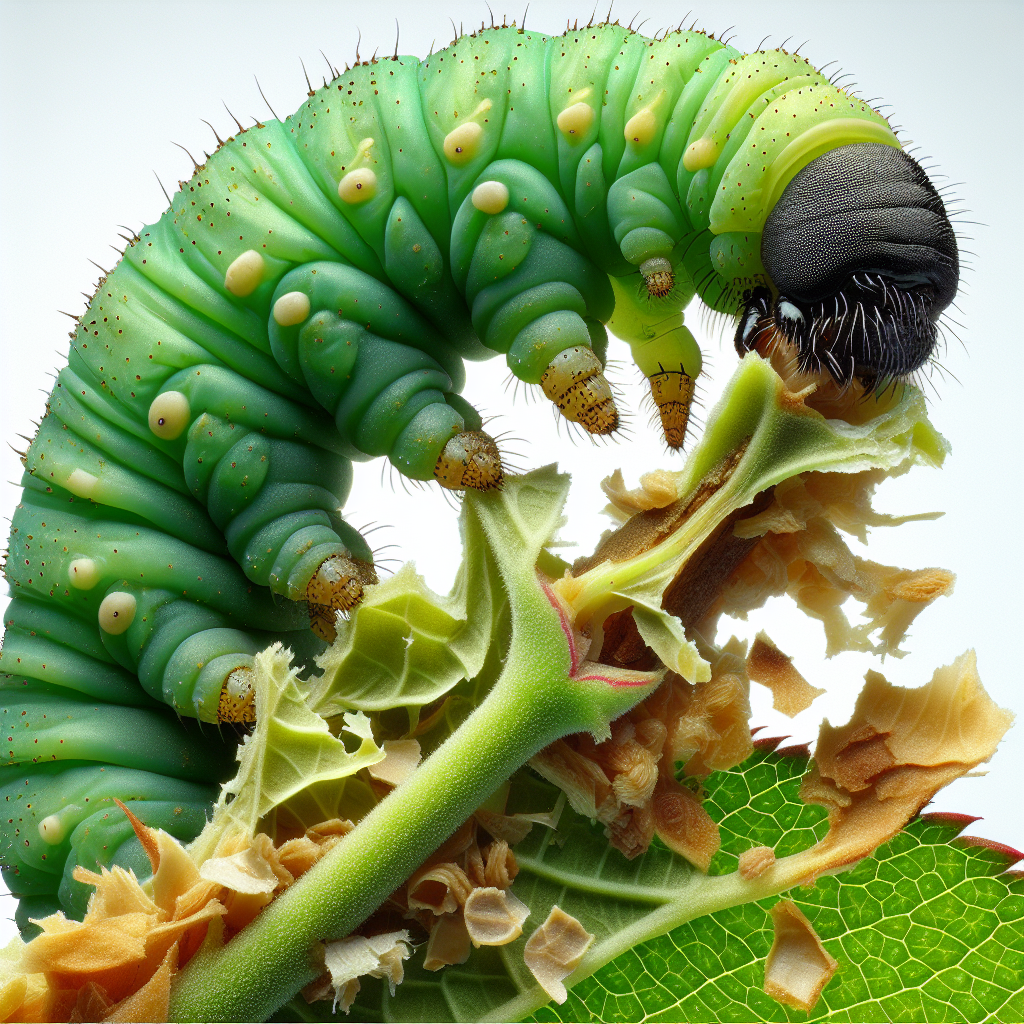
Introduction to sawfly
Sawflies are common agricultural pests belonging to the Symphyta suborder of Hymenoptera, often mistaken for caterpillars due to their slug-like larvae. Unlike true flies, adult sawflies resemble sturdy wasps with broad waists and elbowed antennae, measuring 1/4 to 1 inch in length. Their name derives from the female's saw-like ovipositor, used to slice slits into plant tissues for egg-laying. Over 1,000 species exist worldwide, with many targeting specific crops like roses, pines, and berries.
These pests thrive in temperate regions, emerging in spring to lay eggs on tender foliage. Larvae feed voraciously, skeletonizing leaves and causing up to 100% defoliation in severe infestations. Economic losses occur in orchards, nurseries, and home gardens, reducing photosynthesis and yield. Early detection is crucial, as sawfly populations explode rapidly. This definitive guide equips farmers with diagnostic tools, lifecycle knowledge, and organic management plans to safeguard harvests. For more on related pests, see sawflies.
Sawfly damage mimics other defoliators like caterpillars or armyworms, but specific traits distinguish them. Adults do not sting humans, posing no direct threat, but their feeding larvae demand vigilant monitoring. Integrated pest management (IPM) combining cultural, biological, and targeted organic controls yields sustainable results, minimizing chemical use while preserving beneficial insects.
Identifying Symptoms & Damage
Sawfly damage is unmistakable once established, starting with small pinholes in young leaves progressing to skeletonization. Larvae chew tissue between veins, leaving a lacy appearance on foliage. Heavily infested plants appear bare, with only leaf veins remaining. On conifers like pines, needle tips turn brown and drop, creating sparse crowns.
Key diagnostic signs include:
- Larval presence: Green, yellow, or black slug-like caterpillars, often with blotchy patterns, lacking prolegs (abdominal legs). They rear up in a 'C' shape when disturbed.
- Frass and silk: Small green pellets or webbing on undersides.
- Egg scars: Linear slits on leaf edges or midribs.
- Adult sightings: Winged wasps crawling on plants in early morning.
Damage severity varies by species. The rose sawfly (Endelomyia aethiops) targets roses (note: link to general if specific unavailable), defoliating canes. Pear slugs (Caliroa cerasi) excrete slimy trails, coating leaves in black, tar-like excrement. On wheat and barley, wheat sawfly (Cephus cinctus) girdles stems at base, causing lodging.
Differentiate from similar pests: Sawfly larvae drop inert when disturbed, unlike active caterpillars. Check for multiple 'false legs' absent in true caterpillars. Scout undersides weekly during flush growth; thresholds are 1-2 larvae per leaf for action. Yield losses reach 20-50% in untreated orchards. For small farms, early ID via visual inspections prevents outbreaks. Read our Spring Pest Patrol blog for proactive scouting tips.
Lifecycle and Progression of sawfly
Sawflies complete 1-3 generations annually, synced with host phenology. Adults overwinter as pupae in soil cocoons 2-8 inches deep. Emergence coincides with bud break, typically April-June in temperate zones.
Egg stage (5-10 days): Females insert 5-40 eggs per slit along leaf veins. Eggs hatch in 4-7 days.
Larval stage (2-6 weeks): 5-7 instars; early feeders mine leaves, later ones skeletonize externally. Mature larvae (1/2-1 inch) drop to soil, spin cocoons.
Pupal stage (2-4 weeks): Non-feeding; adults eclose.
Adult stage (2-4 weeks): Mate, feed on pollen/nectar, oviposit.
Progression accelerates in warm, humid conditions (70-85°F optimal). Second generation peaks mid-summer. In tropics, continuous broods occur. Monitor with sticky traps or branch beating into trays. Lifecycle knowledge enables precise timing for interventions, reducing populations by 80-90%.
Environmental Triggers & Risk Factors
Sawfly outbreaks correlate with mild winters, high spring humidity (60-80%), and temperatures above 70°F. Over-fertilization with nitrogen promotes tender growth, prime larval food. Monocultures like young apple orchards amplify risks.
Key triggers:
- Weather: Late frosts kill predators, sparing sawflies.
- Soil conditions: Loose, undisturbed soil favors pupation.
- Plant stress: Drought-weakened trees attract egg-laying.
- Proximity: Infested weeds or nearby fields seed invasions.
Risky sites include new plantings, shaded understories, and irrigated fields. Companion plants like garlic deter via repellents. Climate change extends generations northward. Assess farm microclimates; high-risk zones warrant preemptive sprays.
Organic Control & Treatment Plans
Organic management emphasizes IPM: monitor, disrupt lifecycle, introduce predators.
Cultural controls:
- Handpick larvae into soapy water (effective <10 plants).
- Prune/destroy egg-bearing leaves.
- Tillage buries pupae.
Biological controls:
- Parasitic wasps (Braconidae, Ichneumonidae) attack 50-70% larvae.
- Predators: birds, lacewings, spiders.
- Bacillus thuringiensis (Bt) var. kurstaki targets larvae selectively.
Organic sprays (apply evenings, 7-10 day intervals):
- Neem oil (0.5-1%): disrupts feeding/hormones.
- Insecticidal soap: suffocates soft-bodied larvae.
- Spinosad: fermented bacteria, 80% efficacy.
- Horticultural oil: smothers eggs/adults.
Treatment plan:
- Scout weekly.
- <5 larvae/10 leaves: cultural.
- Threshold exceed: Bt + neem.
- Severe: spinosad + release parasitoids.
Avoid broad-spectrum; preserve ladybugs (linked via aphids page). Success rates: 90% with timely application.
Preventing sawfly in the Future
Prevention builds resilient systems:
- Crop rotation: Break soil pupae cycles.
- Resistant varieties: Choose sawfly-tolerant pear, roses.
- Mulch barriers: 4-inch layer disrupts larval drop.
- Trap crops: Plant mustard nearby.
- Encourage biodiversity: Interplant thyme, yarrow.
- Sanitation: Remove debris, weeds.
Fall clean-up reduces overwintering by 70%. Reflective mulches confuse adults. Monitor forecasts for emergence. Long-term: predatory nematodes (Steinernema feltiae) soil drench. Annual IPM audits sustain low populations.
Crops Most Affected by sawfly
Sawflies target woody ornamentals, fruits, grains:
- Rosaceous: Roses, apple, pear, cherry, plum, blackberry.
- Conifers: Pine, spruce, fir (European pine sawfly).
- Grains: Wheat, barley, oats (wheat stem sawfly).
- Berries: Gooseberry, strawberry, raspberry.
- Vegetables: Cabbage, mustard.
Global impacts: 10-30% yield loss in untreated wheat. Ornamentals suffer aesthetic damage. Prioritize monitoring in high-value crops like peach orchards.