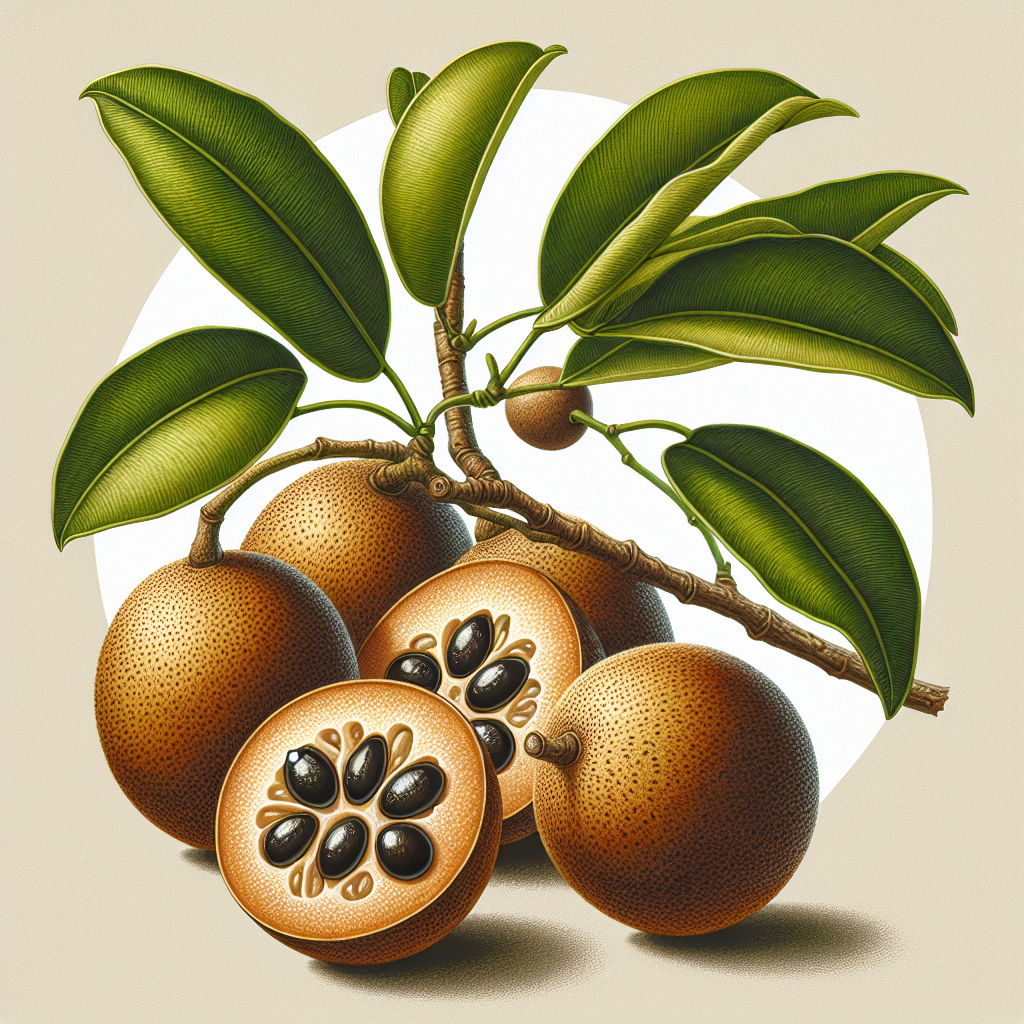
Introduction to Sapodilla (Molix)
Sapodilla (Molix), scientifically Manilkara zapota, stands as one of the most rewarding tropical fruit trees for home gardeners and commercial growers alike. Renowned for its rich, custard-like flesh that tastes like a blend of pear, brown sugar, and cinnamon, the fruit—often called chikoo, naseberry, or sapote—delivers exceptional sweetness with a unique grainy texture reminiscent of wet sand. Originating from Mexico and Central America, this evergreen tree has spread across tropical regions worldwide, including Southeast Asia, the Caribbean, and parts of Florida and Hawaii.
What makes Sapodilla (Molix) particularly appealing is its longevity and low-maintenance nature once established. Mature trees can bear fruit for over 100 years, yielding 200-500 fruits annually under optimal conditions. The tree's latex, known as chicle, was historically chewed as the first commercial gum base. Today, growers value it for fresh eating, desserts, smoothies, and even medicinal uses like treating diarrhea due to its high tannin content. With rising demand in health food markets, Sapodilla (Molix) offers strong commercial potential. This comprehensive guide draws from botanical expertise to equip you with professional-grade strategies for successful cultivation, from seed to harvest. Whether you're in South Florida, India, or a suitable microclimate, master these techniques to unlock bountiful, flavorful yields.
Botanical Profile of Sapodilla (Molix)
Sapodilla (Molix) belongs to the Sapotaceae family, characterized by its slow-growing, upright to spreading canopy reaching 18-30 meters (60-100 feet) in height and 6-12 meters wide at maturity. The trunk is straight, often buttressed, with rough, gray-brown bark. Leaves are glossy, elliptical, 5-10 cm long, spirally arranged, and leathery, persisting year-round for a lush, tropical aesthetic.
Flowers are small (1 cm), bell-shaped, white to greenish, borne singly or in clusters on short peduncles. Pollination is primarily by insects like bees and flies, though wind plays a minor role. Fruit development takes 3-10 months, depending on cultivar and climate. Fruits are round to oval, 5-10 cm diameter, with rough, brown skin that remains green until fully ripe. The flesh is sweet (Brix 15-25°), beige to reddish-brown, surrounding 0-12 hard, black seeds with a hook that can snag throats—always remove seeds before eating.
Key cultivars include 'Molix' (a premium Philippine selection known for large, sweet fruits), 'Tasty Molix', 'PI-50', and 'Bulk of the Philippines'. 'Molix' excels in uniformity and flavor, making it ideal for export. Trees are dioecious or hermaphroditic, but most cultivated varieties are parthenocarpic or self-fertile. Growth is slow initially (1-2 years to fruit from seed), accelerating with age. Root systems are deep taproots with lateral spread, conferring drought tolerance but sensitivity to waterlogging.
Soil, pH, and Climate Requirements for Sapodilla (Molix)
Sapodilla (Molix) demands well-drained, fertile soils like sandy loam or loamy sand, thriving in deep, alluvial deposits. Avoid heavy clays prone to water retention, which invite root rot. Incorporate 20-30% organic matter (compost, aged manure) during planting to enhance aeration and nutrient retention. Soil depth should exceed 1 meter for robust root development.
Optimal pH is 6.0-7.5, slightly acidic to neutral; test and amend with lime if below 5.5 or sulfur if above 8.0. Conduct annual soil tests to maintain micronutrients like zinc and iron, deficiencies of which cause chlorosis. Climate-wise, Sapodilla (Molix) is a USDA Zone 10-11 tropical, requiring average temperatures of 20-32°C (68-90°F). It tolerates brief dips to 0°C (-32°F) but suffers damage below -1°C (30°F). Full sun (8+ hours daily) is essential; partial shade reduces yields.
Annual rainfall of 1000-2000 mm is ideal, evenly distributed, but trees endure dry spells up to 6 months thanks to deep roots. High humidity (60-85%) promotes growth, while windbreaks protect young trees from salt-laden gales in coastal areas. For subtropical growers, site selection near mango or avocado orchards mimics natural habitats. Mulch heavily (10-15 cm) with organic materials to regulate soil temperature and moisture. Read our Soil Health Mastery blog for advanced amendments.
Step-by-Step Planting & Propagation
Propagation Methods
Seed propagation is simplest for home growers: extract fresh seeds from ripe fruits, wash off pulp to prevent fungal issues, and plant immediately (viability drops after 1 week). Sow 2-3 seeds per 15 cm pot in sterile mix, 2 cm deep, at 25-30°C. Germination takes 2-6 weeks; thin to strongest seedling.
For uniform 'Molix' trees, use budding or grafting onto seedling rootstock. Patch budding in the rainy season yields 80-90% success: select 10 cm scion from pencil-thick branches, match cambium layers, wrap with polythene. Air-layering works for mature branches: girdle, apply rooting hormone (IBA 5000 ppm), wrap in moist sphagnum, roots form in 6-8 weeks.
Planting Guide
Plant during rainy season (May-August in tropics). Dig 60x60x60 cm holes, enrich with 10 kg compost, 500g superphosphate, 200g muriate of potash. Space trees 10-12 m apart (100-150 trees/ha for commercial). Position graft union 15 cm above soil. Water deeply post-planting; stake if windy. Apply 20-30 cm mulch, avoiding trunk.
Young trees need weekly irrigation for first 2 years, tapering to biweekly. Fertilize at planting with 200g NPK 10-20-20, then quarterly. Expect first fruits in 3-5 years from grafts, 5-8 from seeds.
Care & Maintenance regimes for Sapodilla (Molix)
Prune lightly post-harvest to shape canopy, remove deadwood, and open center for light penetration. Annual tip pruning encourages bushier growth and higher yields. Irrigate deeply (50-100 liters/tree/week) during dry spells, using drip systems for efficiency.
Fertilize mature trees with 1-2 kg NPK 10-10-10 per tree annually, split into 3-4 applications, plus micronutrients (Cu, Zn, Fe via foliar sprays). Cover with 20 cm mulch annually, replenishing to suppress weeds and retain moisture. Thin heavy fruit sets to 10-15 fruits/cluster for larger sizes.
Protect from frost with covers or smoke in marginal areas. Annual ring-weeding around base prevents competition. For small farms, integrate into polycultures with banana for shade and wind protection during establishment.
Pests, Diseases & Organic Management
Common pests include mealybugs, scale insects, and fruit flies. Monitor undersides; blast with water or apply neem oil (2-3 ml/L) weekly. Introduce ladybugs or parasitic wasps for biological control. Aphids and thrips succumb to insecticidal soap.
Diseases like anthracnose cause fruit rot; ensure airflow via pruning and apply copper fungicide pre-monsoon. Phytophthora root rot strikes wet soils—improve drainage and drench with fosetyl-Al. Powdery mildew responds to potassium bicarbonate sprays.
Organic IPM: Companion plant with marigold to deter nematodes; use yellow sticky traps for flies. Check our Spring Pest Patrol blog for more tactics. Scout weekly; intervene early for 90% control without chemicals.
Harvesting, Curing & Optimal Storage
Harvest when fruits reach full size, skin browns, and a light scratch reveals tan flesh (135-150 days from bloom). Twist or clip with shears, avoiding latex sap. Yields peak at 10-15 years; pick every 7-10 days during season (November-March in tropics).
Cure green-picked fruits at 21-24°C, 85-90% humidity for 7-14 days until soft and sweet. Store ripe fruits at 13-15°C (55-59°F), 85-90% RH for 2-3 weeks; avoid below 10°C to prevent chilling injury (pitting, browning).
For market, pack in ventilated crates; ethylene absorbers extend shelf life. Process into paste, leather, or juice for value-add.
Companion Planting for Sapodilla (Molix)
Pair with guava, papaya, or pineapple for ground cover and nitrogen fixation via legumes like pigeon pea. Avoid water-hungry crops near base. Thyme or yarrow repel pests; nasturtium traps aphids. Interplant young trees under taller coconut for shade. See Fall Companion Planting Guide for synergies boosting yields 20-30%.