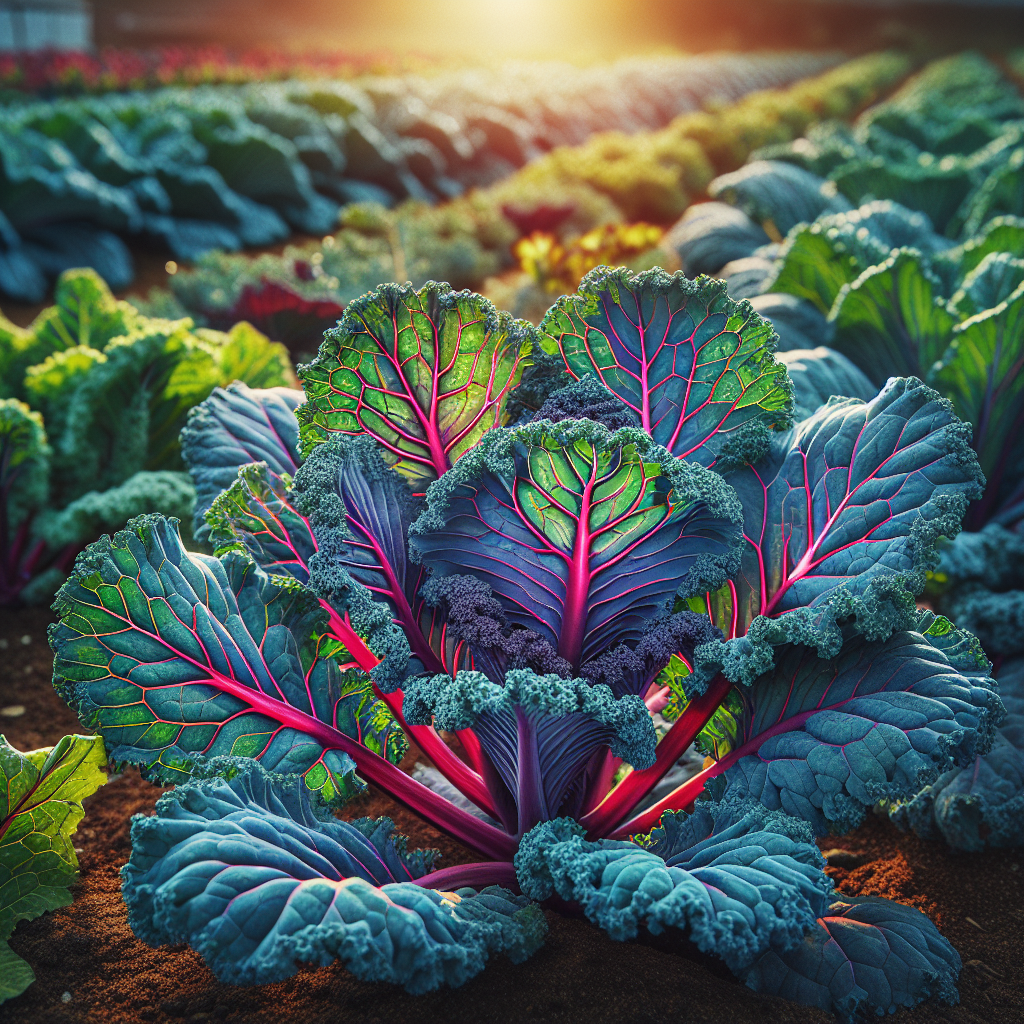
Introduction to Red Russian Kale
Among the many kales grown worldwide, this heirloom type stands out for its flat, deeply lobed leaves and striking reddish-purple veining. It is often grouped with Siberian kales rather than true Scotch kales, and that distinction matters in the field: it is generally more tender, faster to mature, and more delicate in texture than heavily curled types. Growers value it for baby leaf production, bunching, and mixed salad use because the leaves remain palatable at a younger stage and develop a pleasant sweetness after frost.
Historically, Red Russian Kale traces back through Eastern European and Russian seed lines, with many sources noting introduction to North America by the late 19th century. Botanically, it belongs to Brassica napus, the same broad species that includes rutabaga and rapeseed forms, which helps explain its somewhat different leaf architecture compared with Brassica oleracea kales. In practice, that means it often grows with a more open habit, flatter leaves, and excellent tenderness, but it may also be somewhat less heat-tolerant than robust winter kales.
For growers seeking a reliable cool-season leafy green with strong visual appeal, high nutritional value, and broad culinary use, this cultivar is a top-tier choice. It performs well in raised beds, field rows, and containers large enough to support consistent moisture. For a broader species overview, see Kale.
Botanical Profile of Red Russian Kale
This cultivar is typically classified as Brassica napus var. pabularia. Plants form loose rosettes rather than dense heads, with leaves that are gray-green to blue-green, often with red to purple petioles and veins. The margins are frilled to toothed, and the leaf blade is commonly described as oak-leaf shaped or arugula-like in silhouette, though much larger and fleshier.
Mature plants usually reach 18 to 36 inches tall depending on soil fertility, spacing, and whether they are cut repeatedly. Spread is often 12 to 24 inches. In high-fertility beds with regular irrigation, leaves can become large, broad, and highly marketable, though overfertilization with nitrogen can make the tissues overly succulent and more attractive to Aphids.
Its growth habit is upright but airy. That openness improves airflow relative to some dense brassicas, which can slightly reduce humidity-related disease pressure when spacing is adequate. Red Russian Kale is a biennial in life cycle, meaning it typically produces vegetative growth in the first season and flowers after vernalization in the second. If overwintered successfully, it sends up tall flowering stalks with yellow crucifer blooms that are also attractive to pollinators and beneficial insects.
Flavor is one of its defining traits. Young leaves are mild and sweet, especially when harvested at 3 to 6 inches long. Mature leaves remain more tender than many curly kales, though older foliage can become stronger and slightly fibrous in warm weather. Frost increases sugar concentration in the leaves as starches convert to soluble sugars, improving taste and reducing bitterness.
Because it is a Brassica napus type, it should be rotated carefully with related crops to reduce disease carryover and pest buildup. Avoid planting after brassicas in short rotations, especially where Clubroot, Black rot, or Downy mildew has been present.
Soil, pH, and Climate Requirements for Red Russian Kale
This crop performs best in fertile, well-drained soil with high organic matter and a pH of 6.0 to 7.5, with an ideal target around 6.5 to 6.8. It tolerates slightly acidic conditions better than many growers expect, but strongly acidic soil below pH 5.8 increases the risk of nutrient imbalances and can exacerbate Clubroot. If soil tests show pH below 6.2, incorporate agricultural lime well ahead of planting, ideally several months before sowing.
Texture matters. The best results come from loam or sandy loam that holds moisture evenly but does not remain waterlogged. Heavy clay can grow excellent kale if improved with compost and broadforking or deep cultivation, but persistent saturation reduces root respiration and invites stunting, yellowing, and root disease. In poorly drained ground, raised beds 6 to 10 inches high are strongly recommended.
Nutrient demand is moderate to high, especially for nitrogen during leafy growth. A professional target for productive beds is soil rich in stable organic matter with moderate available nitrogen, adequate calcium, and good sulfur supply. Excessive nitrogen without balanced potassium and calcium can cause lush but weak growth, thin cell walls, and higher pest susceptibility. Pre-plant incorporation of finished compost at roughly 1 to 2 inches over the bed surface, plus a balanced organic fertilizer, usually provides an excellent base.
Climate preference is cool temperate weather. Optimal daytime temperatures are about 55 to 75°F (13 to 24°C), with best leaf quality often occurring around 60 to 68°F (16 to 20°C). It tolerates light freezes and often survives temperatures well below 20°F (-6°C) when established and hardened off, especially under row cover. Heat above 80°F (27°C) slows quality, increases bitterness, and can trigger premature bolting under stress, particularly if the crop experiences alternating drought and heat.
Moisture should remain consistently even, not cyclical. Aim for soil that feels cool and lightly moist 2 to 3 inches below the surface, never powder-dry and never sticky-saturated for prolonged periods. In practical irrigation terms, most garden and market-garden plantings need about 1 to 1.5 inches of water per week, with more in sandy soils or windy weather. Signs of underwatering include dull leaf color, slowed growth, wilting in the morning rather than only afternoon, and tough leaves. Signs of overwatering include persistent lower leaf yellowing, a sour soil smell, edema-like blistering, and plants that look wilted despite wet ground.
For season extension, Red Russian Kale is an excellent candidate for low tunnels, floating row cover, and fall succession planting. It is far more productive in cool weather than in midsummer. Growers refining their bed fertility can also review broader soil-building principles in soil health strategies.
Step-by-Step Planting & Propagation
Propagation is almost always by seed. Direct sowing and transplanting both work well, but the best method depends on season and pest pressure.
For spring crops, start seeds indoors 4 to 6 weeks before the last expected frost, or direct sow 2 to 4 weeks before last frost once the soil can be worked. For fall crops, direct sow 8 to 10 weeks before the first expected frost, or transplant 6 to 8 weeks before frost. Fall plantings usually produce the sweetest leaves and encounter fewer flea beetle issues than spring sowings in some regions.
To start indoors, sow seeds 1/4 to 1/2 inch deep in a fine seed-starting mix. Germination is best at 60 to 75°F (16 to 24°C) and usually occurs in 4 to 10 days. Provide strong light immediately after emergence; weak light causes stretching and floppy stems. Keep seedlings evenly moist but not saturated. If using cell trays, transplant when seedlings have 2 to 4 true leaves and sturdy stems.
Before transplanting, harden seedlings off for 5 to 7 days by gradually exposing them to outdoor temperatures, sun, and wind. Transplant shock is usually minor with kale, but a sudden move from protected conditions to bright sun and drying wind can stall growth for a week.
For direct sowing, prepare a weed-free seedbed with a fine crumb structure. Sow shallowly, cover lightly, and keep the top inch of soil consistently moist until emergence. In warm or dry conditions, this may require very light daily irrigation. Once seedlings establish, thin promptly to prevent legginess and competition.
Spacing depends on intended use:
- Baby leaf: 2 to 4 inches apart in bands or dense rows.
- Bunching leaf: 8 to 12 inches apart.
- Full-size individual plants: 12 to 18 inches apart in rows 18 to 30 inches apart.
Wider spacing improves airflow and leaf size. Closer spacing increases total yield per square foot but produces smaller leaves and can raise disease risk under humid conditions.
At transplanting, set plants at the same depth they grew in trays. Firm the soil around roots and water thoroughly to eliminate air pockets. A dilute seaweed or fish emulsion drench can help establishment, though not strictly necessary in fertile soil.
Succession sow every 2 to 3 weeks during favorable temperatures for a continuous harvest. In hot climates, pause midsummer sowing unless shade cloth and meticulous irrigation are available.
Saving seed is possible but requires overwintering selected plants and isolating them from compatible Brassica napus relatives to prevent crossing. Because many growers prioritize leaf quality and uniformity, fresh seed from reputable sources is generally preferred.
Care & Maintenance regimes for Red Russian Kale
Once established, the crop benefits from steady, moderate growth without interruption. The goal is uninterrupted leaf production, which depends on balanced nutrition, consistent water, and timely harvesting.
Irrigate deeply enough to moisten the root zone to roughly 6 to 8 inches, then allow the upper surface to dry slightly before the next watering. In loamy soils, this often means one or two deep irrigations per week rather than frequent shallow watering. Drip irrigation is ideal because it reduces leaf wetness and disease pressure. Mulching with clean straw, shredded leaves, or compost helps stabilize temperature, suppress weeds, and preserve moisture.
Fertility management should emphasize nitrogen in moderation. If growth slows or leaves become pale green, side-dress with compost, blood meal, feather meal, fish-based fertilizer, or another nitrogen source once plants are 6 to 8 inches tall, then again after repeated harvests if needed. Dark green leaves with rapid regrowth indicate adequate nitrogen. Very soft, floppy growth and heightened aphid pressure may indicate overfeeding.
Weed control is most important during the first month after emergence or transplanting. Kale competes moderately well once established, but early weed pressure reduces size and delays first harvest. Use shallow hoeing to avoid damaging feeder roots near the soil surface.
Temperature management can make the difference between premium and mediocre leaves. In spring, row cover accelerates establishment, excludes insects, and buffers light frost. In late spring heat, a 30% shade cloth can reduce stress and prolong leaf tenderness. In autumn, cool nights intensify coloration in the stems and veins and improve flavor.
Harvest management is also part of routine care. Remove older lower leaves first and leave the central growing point intact for continued production. Regular picking encourages fresh, tender regrowth. If leaves become oversized and neglected, the plant invests in maintenance of mature tissue rather than vigorous new leaf flushes.
For container production, use a pot at least 12 inches deep and wide for a single full-size plant, with high-quality potting media and frequent fertility checks. Container-grown plants dry out faster and usually need more frequent watering, sometimes daily in sunny weather. However, avoid leaving containers standing in saucers of water, which quickly creates oxygen-poor root conditions.
In overwintering systems, remove damaged leaves, maintain airflow, and protect from severe wind desiccation. Plants exposed to freeze-thaw cycles in wet soils are more likely to heave or rot than those under modest protection.
Pests, Diseases & Organic Management
As a brassica, this crop attracts a predictable set of pests. The most common are Cabbage worms, Imported cabbageworm, Cabbage loopers, Flea beetles, Aphids, Harlequin bugs in warm regions, and Slugs in damp settings.
Cabbage worms and loopers chew irregular holes and leave dark frass on leaves. Monitor the undersides of foliage weekly. Hand-picking works at small scale, but Bacillus thuringiensis var. kurstaki (Bt) is highly effective when applied while larvae are small. Spray in the evening and reapply after heavy rain.
Flea beetles are especially damaging to young seedlings, creating many tiny shot holes. Floating row covers placed immediately after sowing or transplanting are among the best defenses. Healthy, fast-growing plants usually outgrow moderate damage, but heavy infestations can ruin baby leaf quality.
Aphids cluster on undersides of leaves and in the crown, sucking sap and distorting new growth. They often flare under high nitrogen conditions or during mild, sheltered weather. A strong water spray can dislodge light populations. Insecticidal soap or neem-based products can help, but coverage must reach the colonies directly. Encourage beneficial predators by maintaining flowering insectary plants nearby, including Thyme and Yarrow.
Slugs feed at night and leave ragged holes and slime trails. Reduce habitat by clearing boards and dense debris, water early rather than late, and use iron phosphate baits if needed.
Disease issues include Downy mildew, Black rot, Alternaria leaf spot, Damping-off in seedlings, and Clubroot in infested soils. Downy mildew is more common in cool, humid conditions and appears as yellow angular lesions on upper leaf surfaces with grayish growth below. Increase spacing, reduce overhead irrigation, and remove infected residues. Black rot causes V-shaped yellow lesions moving inward from leaf margins and is often seedborne or splash-spread; use clean seed, rotate crops for at least 3 years, and avoid working plants when wet.
Clubroot is among the most serious brassica soil diseases. Affected plants wilt despite moist soil, grow poorly, and show swollen, distorted roots. Prevention is far more effective than cure: maintain soil pH above about 6.8 where Clubroot is known, improve drainage, and avoid planting brassicas in infected beds for several years.
Integrated organic management should combine crop rotation, sanitation, exclusion netting or row cover, balanced fertility, and regular scouting. Remove crop residues promptly after final harvest, especially if disease was present. Avoid planting kale after cabbage, broccoli, cauliflower, turnip, or other brassicas in the same ground without a sufficient rotation window.
Harvesting, Curing & Optimal Storage
Leaf harvest can begin quite early. Baby leaves are often ready 20 to 30 days after sowing, while mature harvest usually begins around 40 to 60 days depending on temperature, fertility, and spacing. Cooler weather slows maturity slightly but improves quality.
For premium eating quality, harvest in the morning after leaves have rehydrated overnight but after surface dew has mostly dried. Use a clean knife or snap leaves by hand. Take the outer, lower leaves first and leave at least 4 to 6 central leaves and the growing point for continued regrowth. If harvesting whole plants for bunching, cut just above the crown if regrowth is desired, though repeated crown cutting is less reliable than leaf-by-leaf harvest.
Leaf size affects flavor and texture. The best balance for fresh market and kitchen use is often leaves 6 to 10 inches long. Very large leaves remain usable for cooking but may require destemming.
Unlike curing crops such as onions or garlic, kale is not cured in the classic sense. Instead, postharvest handling focuses on rapid cooling and moisture retention without free water accumulation. Remove field heat immediately by moving harvested leaves into shade, then refrigerate as soon as possible. Ideal storage conditions are 32°F (0°C) with 95% relative humidity. Under these conditions, high-quality leaves may store for 1 to 2 weeks, sometimes longer if harvested carefully and kept clean.
Do not wash leaves until just before use unless they must be cleaned for market. If washing is necessary, spin or air-dry thoroughly before bagging, because free moisture encourages decay. Perforated plastic bags or lined crates help maintain humidity while allowing some gas exchange.
For home storage, wrap unwashed leaves loosely in a slightly damp towel and place them in a perforated bag in the refrigerator crisper. Leaves that become limp can sometimes recover partial turgor after soaking briefly in ice water, though repeated dehydration shortens shelf life and reduces quality.
Frosted fall leaves often have the best sweetness. However, leaves harvested after repeated hard freezes may become cell-damaged and should be used promptly.
Companion Planting for Red Russian Kale
The best companions are those that either confuse pests, attract beneficial insects, or occupy a different root and canopy niche without competing excessively. Good choices include Onion, Garlic, Nasturtium, and Thyme.
Onion and garlic can help create a more complex scent profile around the bed, which may slightly reduce pest location by some insects, while also using vertical space efficiently. Nasturtium is particularly useful as a trap or distraction plant in mixed gardens, and its flowers attract pollinators and beneficial insects. Thyme serves as a low-growing aromatic that can support predatory insects and make good use of bed edges.
Other compatible neighbors include lettuce, beets, and celery, provided spacing and airflow are maintained. Quick crops like radish can be used as short-term row markers or early intercrops before the kale canopy expands.
Avoid pairing with other heavy-feeding brassicas in the same tight bed if disease pressure is a concern. Grouping multiple brassicas together can make pest scouting easier, but it also concentrates host cues for cabbage moths and Aphids. In small spaces, companion planting is most effective when combined with rotation, row cover, and sanitation rather than used as a standalone pest solution.