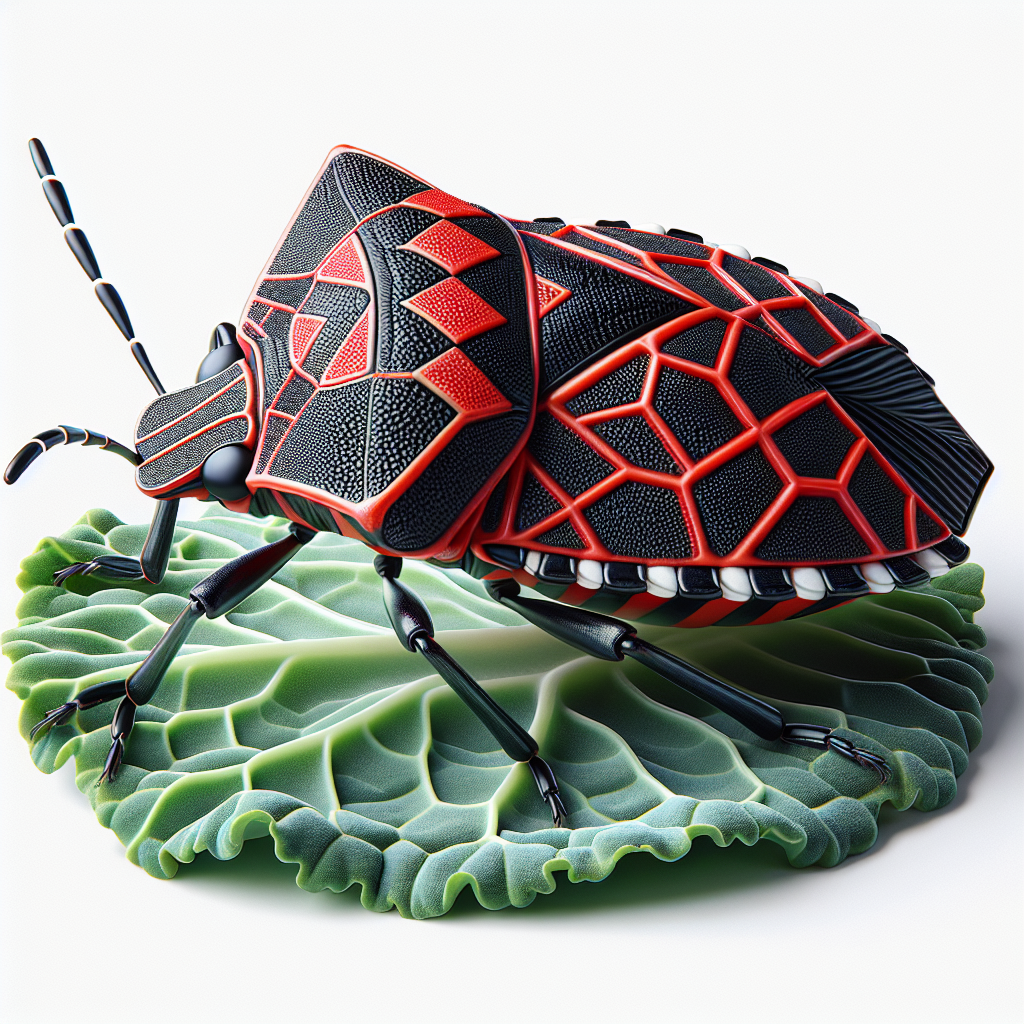
Introduction to Harlequin bugs
Harlequin bugs, scientifically known as Murgantia histrionica, are notorious piercing-sucking pests in the Pentatomidae family, recognizable by their dramatic black, red, and white coloration resembling a harlequin costume. These shield-shaped insects, adults measuring 7-10 mm long, pose a serious threat to vegetable gardens and commercial farms, particularly in the southern United States, Mexico, and Central America. First documented in the U.S. in the 19th century, they have expanded northward with warming climates, now appearing as far as Virginia and Maryland.
These bugs feed by inserting stylets into plant tissues, extracting sap while secreting digestive enzymes that disrupt cellular function. This not only deprives plants of vital nutrients but also introduces toxins leading to rapid tissue death. A single infestation can wipe out young seedlings in days, making harlequin bugs a priority pest for brassica growers. Their mobility allows quick dispersal to nearby fields, and overwintering adults ensure multi-generational attacks per season. Understanding their behavior is crucial for timely intervention, as populations explode in hot, dry conditions. For more on companion planting to deter such pests, check this Fall Companion Planting Guide: Boost Yields and Soil Health for Small Farms and Gardens. Early scouting and integrated management are key to protecting crops like cabbage from devastation.
Identifying Symptoms & Damage
Spotting harlequin bug damage early is essential for effective control. Adults and nymphs cluster on leaf undersides or stems, often in groups of 10-50, emitting a foul odor when disturbed—a classic stink bug trait. Look for shiny black eggs in tight double rows of 12, laid on leaf veins, hatching into red-legged nymphs that resemble smaller, gregarious versions of adults.
Primary symptoms include stippling: tiny white or yellow dots where feeding punctures occur, progressing to necrotic lesions—brownish-black dead spots with yellow halos. Severely affected leaves wilt, curl, and drop prematurely, while stems show bronzing. On brassicas, heads become stunted, loose, and unmarketable; young plants may collapse entirely. Unlike aphids, harlequin bugs leave distinct angular lesions rather than sticky honeydew.
Damage escalates with nymphal feeding, as they consume more sap volume. Scout weekly by shaking plants over white paper—bugs tumble off visibly. Differentiate from stink bugs, which have less vivid markings and broader host ranges. In heavy infestations, entire rows yellow and die, mimicking drought or powdery mildew. Photos of eggs, nymphs, and damage help confirm ID; residue-free plants nearby indicate localized spread.
Lifecycle and Progression of Harlequin bugs
Harlequin bugs complete 1-2 generations annually in temperate zones, up to 4 in subtropics, with a lifecycle of 30-60 days. Overwintering adults emerge in spring (March-May) from leaf litter or crop debris, seeking young brassicas. Females lay 50-150 eggs in clutches, hatching in 4-9 days at 75-85°F.
Nymphs pass five instars over 20-40 days: first instars are bright red (1-2 mm), gregarious feeders; later stages darken to black with red spots, becoming solitary. They molt into adults in 3-5 days, dispersing via flight up to 1 mile. Peak activity aligns with warm spells; cooler nights slow development. Eggs are barrel-shaped, black with red rings; scout undersides diligently.
Adults live 2-6 months, feeding ravenously before mating. Diapause triggers in fall, with bugs aggregating in sheltered spots. Unlike many pests, all stages damage plants equally. Monitor degree-days (base 50°F) for predictions: egg hatch at 100 DD, adult emergence at 500 DD. Destroying egg masses prevents 80% of future generations.
Environmental Triggers & Risk Factors
Harlequin bugs flourish in USDA zones 7-11, preferring temperatures 70-95°F and low humidity, which reduce fungal mortality. Hot, dry springs trigger outbreaks, as adults migrate from weedy borders. Poor sanitation—leaving brassica residues—provides overwintering sites, amplifying spring populations 10-fold.
Risk spikes near wild mustards or volunteer crops acting as reservoirs. Monocultures of susceptible brassicas invite rapid buildup; intercropping dilutes pressure. Drought-stressed plants exude volatiles attracting bugs, worsening damage. Windy conditions aid dispersal from adjacent fields.
Soil type matters little, but sandy loam fields near woods see higher incidence. Climate change extends ranges northward, with earlier emergences. Companion plants like thyme or marigold mask attractants. Avoid planting early in warm regions; delay until peaks pass.
Organic Control & Treatment Plans
Organic management emphasizes prevention and thresholds: treat at 1 egg mass or 2 nymphs/plant. Cultural: Hand-pick clusters into soapy water weekly; till residues post-harvest to expose pupae to predators. Use floating row covers (1/4-inch mesh) from transplant until flowering—100% effective barrier.
Biological: Encourage predators like big-eyed bugs, tachinid flies, and birds. Release ladybugs if aphids coexist, or parasitic wasps. Neem oil (0.5-2% azadirachtin) disrupts molting when sprayed on nymphs evenings; repeat 7 days, 3x max. Insecticidal soap targets soft-bodied nymphs; avoid adults' waxy cuticle.
Trap crops: Plant mustard or radish borders to lure bugs away from cash crops, then flame or bag. Diatomaceous earth around stems abrades exoskeletons in dry weather. Bt (Bacillus thuringiensis) ineffective against bugs—use for caterpillars instead. Rotate non-hosts like tomato or grains 2 years. Threshold: 10% plants infested.
Integrated Plan: Week 1 scout; cover susceptibles. Week 2+ prune/destroy eggs, spray neem. Monitor 2 weeks post-treatment. Success rates: 90% with combined tactics. For AI-enhanced scouting, see Spring Pest Patrol: Organic AI Strategies to Shield Your Crops from Common Invaders. Avoid pyrethroids—they kill predators.
Preventing Harlequin bugs in the Future
Long-term prevention starts with sanitation: deep plow residues >6 inches, disk fields promptly. Plant resistant brassica varieties like 'Cabbage Green' or collards. Time plantings post-peak (June in South); use transplants over seeds.
Diversify: Interplant with repellents like nasturtiums, garlic, or onions—odors deter feeding. Mulch with straw to hide soil pupae from birds. Perimeter traps (yellow sticky + bucket traps with allyl isothiocyanate) capture migrants.
Encourage biodiversity: Maintain hedgerows with yarrow for parasitoids. Solarize soil pre-planting kills overwinterers. Monitor forecasts for heat waves triggering flights. Crop rotation (3+ years) + cover crops like clover break cycles. Annual audits reduce incidence 70%. Educate neighbors for area-wide efforts.
Crops Most Affected by Harlequin bugs
Harlequin bugs target Brassicaceae exclusively: cabbage, kale, broccoli, cauliflower, collards, Brussels sprouts, kohlrabi, turnips, radish, mustards, arugula, horseradish. Seedlings perish fastest; mature heads show cosmetic damage but yield loss 20-50%.
Secondary: bok choy, Chinese cabbage, watercress. Non-hosts: solanums, cucurbits, legumes. Wild relatives like shepherd's purse sustain populations. In kale trials, losses reached 90% untreated. Prioritize protection for high-value organics.