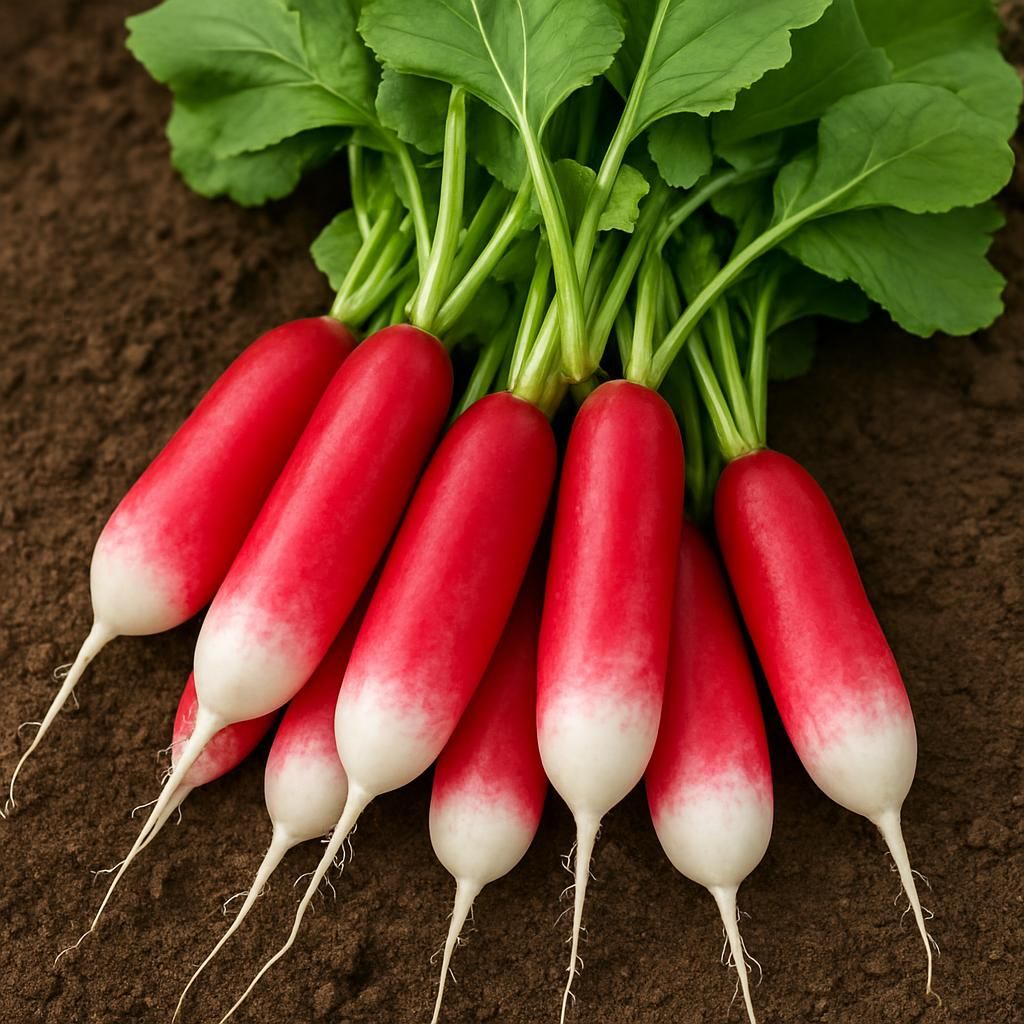
Introduction to Radish (Sparkler White Tip)
Radish (Sparkler White Tip) is a classic cool-season root vegetable that combines visual appeal with reliable performance in both backyard plots and market gardens. This globe-shaped variety matures quickly, typically reaching harvest readiness in 25–30 days, allowing multiple successions throughout spring and fall. Its mild, crisp flavor and attractive scarlet-and-white appearance make it a favorite for fresh eating, salads, and garnishes.
The variety is particularly valued for its uniform size, tender texture, and resistance to pithiness when harvested at peak maturity. Because it grows rapidly and tolerates light frosts, Sparkler White Tip fits well into intensive planting schedules and succession cropping systems. Home gardeners appreciate its quick turnaround while commercial producers benefit from consistent sizing and attractive market presentation.
Botanical Profile of Radish (Sparkler White Tip)
Radish (Sparkler White Tip) belongs to the Brassicaceae family and is botanically classified as Raphanus sativus 'Sparkler White Tip'. The plant produces a swollen taproot that develops into a smooth, globe-shaped bulb measuring 2–3 cm in diameter at maturity. The upper half of the root is bright scarlet while the lower portion remains crisp white, creating the signature “white tip” appearance.
The foliage consists of deeply lobed, dark green leaves arranged in a basal rosette. These leaves are edible and offer a peppery flavor similar to the root. The plant produces a short flowering stalk when allowed to bolt, bearing small white or pale lavender flowers typical of the mustard family. Seed pods (siliques) follow pollination and contain numerous small, round seeds used for future propagation.
Soil, pH, and Climate Requirements for Radish (Sparkler White Tip)
Successful cultivation of Radish (Sparkler White Tip) begins with well-drained, fertile soil that supports rapid root expansion without compaction. The crop prefers loose, friable loam or sandy loam amended with generous quantities of organic matter. Heavy clay soils should be amended with compost or aged manure to improve structure and drainage.
| Parameter | Ideal Range | Notes |
|---|---|---|
| Soil Type | Loamy or sandy loam | Avoid compacted or heavy clay soils |
| Soil pH | 6.0–7.0 | Slightly acidic to neutral |
| Soil Temperature | 45–65 °F (7–18 °C) | Optimal for root development |
| Air Temperature | 50–70 °F (10–21 °C) | Cool-season crop; tolerates light frost |
| Spacing | 1–2 inches (2.5–5 cm) | Thin seedlings to prevent crowding |
| Row Spacing | 8–12 inches (20–30 cm) | Allows good air circulation |
| Sunlight | Full sun to partial shade | Minimum 6 hours direct sun preferred |
Step-by-Step Planting & Propagation
Begin by preparing the seedbed several weeks before the desired planting date. Remove weeds, loosen the top 6–8 inches of soil, and incorporate 2–3 inches of well-rotted compost. Sow seeds directly into the prepared bed when soil temperatures reach at least 45 °F (7 °C). Plant seeds ½ inch deep and 1 inch apart in rows spaced 8–12 inches apart.
Water the seedbed gently immediately after sowing to ensure good seed-to-soil contact. Germination typically occurs within 3–7 days under optimal moisture and temperature conditions. Once seedlings develop their first true leaves, thin them to 1–2 inches apart to allow adequate room for root expansion.
Successive sowings every 7–10 days will provide continuous harvests throughout the cool season. In regions with mild winters, fall plantings can extend production well into early winter. For container growing, choose pots at least 6 inches deep and maintain consistent moisture without waterlogging.
Care & Maintenance regimes for Radish (Sparkler White Tip)
Consistent moisture is critical for tender, crisp roots. Irregular watering can cause cracking or pithy centers. Apply approximately 1 inch of water per week, increasing frequency during warm spells. Mulching with straw or shredded leaves helps retain soil moisture and suppress weeds.
Fertilization should be moderate; excessive nitrogen promotes lush foliage at the expense of root development. A balanced organic fertilizer or side-dressing of compost tea applied once at the two-leaf stage is usually sufficient. Avoid high-nitrogen amendments close to harvest.
| Growth Stage | Watering Schedule | Fertilizer Application | Pruning/Maintenance |
|---|---|---|---|
| Seedling (0–14 days) | Light daily misting to keep moist | None required | Thin seedlings to 1–2" spacing |
| Vegetative (2–4 weeks) | 1 inch/week; keep soil evenly moist | Side-dress with balanced organic fertilizer once | Remove weeds; monitor for pests |
| Root Development (4+ weeks) | Maintain consistent moisture; avoid water stress | No additional fertilizer needed | Harvest promptly at maturity |
Pests, Diseases & Organic Management
Common insect pests of Radish (Sparkler White Tip) include flea beetles, cutworms, and root-knot nematodes. Floating row covers provide effective physical exclusion of flea beetles during early growth. Handpicking cutworms at dusk and applying beneficial nematodes to the soil can reduce larval populations.
Diseases such as Alternaria leaf spot and downy mildew may appear under prolonged cool, wet conditions. Improve air circulation through proper spacing and avoid overhead irrigation late in the day. Crop rotation with non-brassica crops every 2–3 years helps break disease cycles.
Organic controls include neem oil sprays for soft-bodied insects, insecticidal soaps, and the introduction of predatory insects such as lady beetles. Maintaining healthy soil biology through regular compost additions supports natural disease suppression.
Harvesting, Curing & Optimal Storage
Harvest Radish (Sparkler White Tip) when roots reach 1–2 inches in diameter, typically 25–30 days after sowing. Gently loosen the soil around each plant and pull by the foliage to avoid bruising. Prompt harvest prevents pithiness and maintains peak flavor and texture.
Remove the leafy tops immediately after harvest, leaving about ½ inch of stem. Rinse roots gently and allow them to air-dry before storage. Store unwashed roots in perforated plastic bags in the refrigerator crisper drawer at 32–40 °F (0–4 °C) for up to two weeks.
For longer storage, roots can be packed in damp sand or sawdust in a cool root cellar. Avoid freezing, which damages texture. The greens should be used within a few days or refrigerated separately in a loosely sealed bag.
Companion Planting for Radish (Sparkler White Tip)
Radish (Sparkler White Tip) pairs well with many cool-season crops. Planting near Lettuce and Spinach provides mutual benefits through shared moisture needs and pest deterrence. The fast-maturing radish can be intersown between slower-growing crops such as Carrot or Beet to maximize bed utilization.
Herbs including Nasturtium and Thyme help repel aphids and flea beetles. Avoid planting near other brassicas such as Cabbage or Broccoli to reduce shared pest and disease pressure. Radish also benefits from proximity to Onion and Garlic, whose sulfur compounds deter soil-borne pests.
Radish serves as an effective nurse crop, protecting slower seedlings while adding organic matter when tops are incorporated after harvest. This dynamic enhances soil structure and supports subsequent plantings in intensive garden systems.