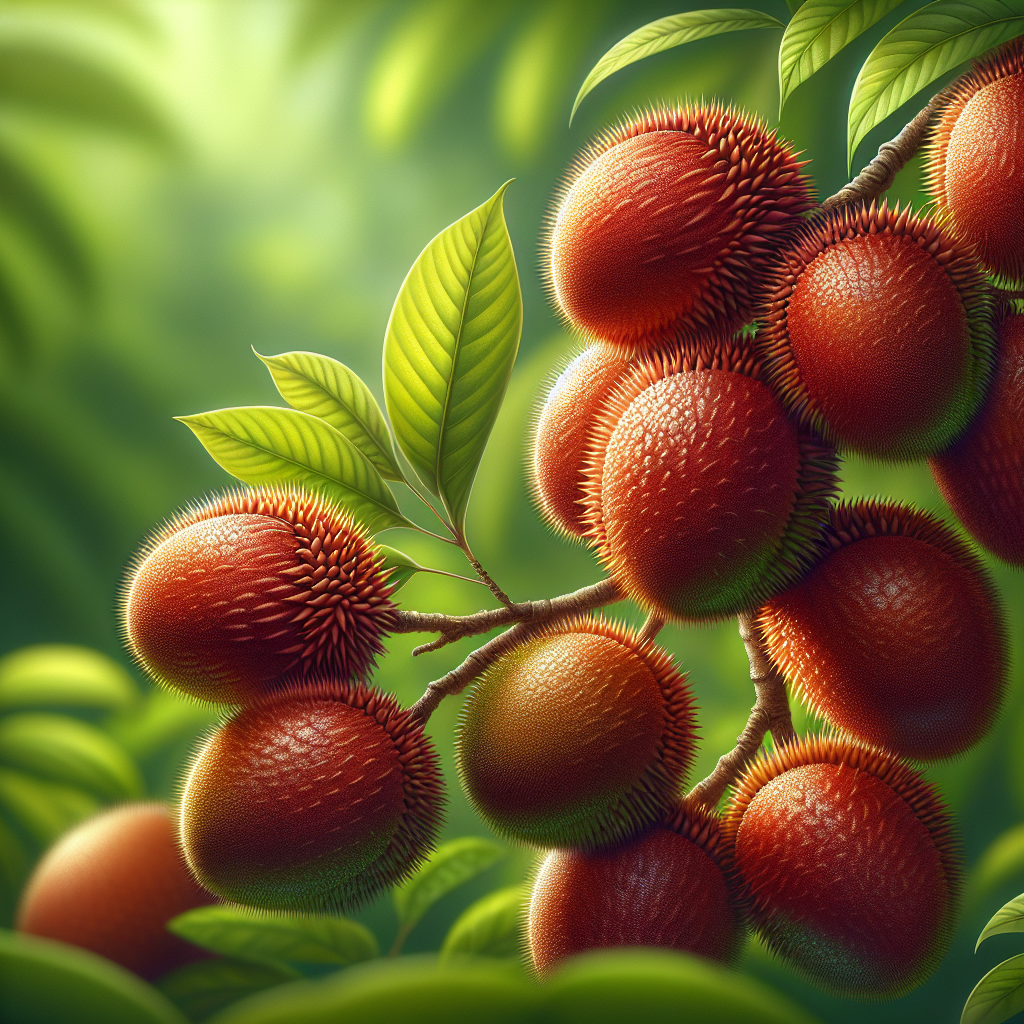
Introduction to Pulassan (Seebabat)
Pulassan (Seebabat), scientifically a variant of Nephelium lappaceum, stands out among tropical fruits for its exceptional sweetness and unique flavor profile that blends hints of grape, lychee, and pear. Unlike its close relative the rambutan, pulassan's thicker, less hairy pericarp makes it easier to handle and store, appealing to both fresh market consumers and processors. Originating from the lush rainforests of Peninsular Malaysia, this evergreen tree can reach 10-15 meters in height, producing clusters of 3-5 cm fruits from May to August in peak seasons.
Farmers value pulassan for its resilience to minor environmental stresses and potential yields of 50-100 kg per mature tree annually. Its aril (edible flesh) is exceptionally juicy with 25-30% sugar content, low acidity, and minimal fiber, making it ideal for fresh eating, juicing, or desserts. Commercial cultivation is expanding in Southeast Asia, Australia, and Hawaii due to rising demand for exotic superfruits. Successful growers emphasize deep, well-drained soils and consistent humidity, with trees entering full production after 5-7 years. This comprehensive guide equips small-scale farmers with professional techniques to maximize productivity while minimizing inputs. For heat management strategies, see Why Summer Heatwaves Are Silently Killing Small Farm Yields - And 7 Organic Strategies to Fight Back.
Botanical Profile of Pulassan (Seebabat)
Pulassan belongs to the Sapindaceae family, sharing lineage with lychee (Litchi chinensis) and longan (Dimocarpus longan). The tree features compound leaves with 4-6 pairs of oblong leaflets, glossy green above and silvery below, measuring 10-20 cm long. New flushes are coppery-red, providing visual appeal in orchards. Flowers are small, greenish-white, and polygamous, forming panicles up to 30 cm long. Pollination relies on bees and flies, with self-incompatibility common—planting multiple clones ensures fruit set.
Fruits develop in loose clusters of 10-20, ripening 100-120 days post-anthesis. The exocarp is tough, leathery, 2-3 mm thick, covered in short, bulbous spines (unlike rambutan's longer hairs). Seeds are 2-3 cm, encased in translucent white aril that separates cleanly. Nutritionally, 100g provides 80 kcal, 20g carbs (mostly sugars), 1g protein, and vitamins C and B-complex. Trees are cauliflorous, bearing fruit on older branches, which supports high-density planting at 6x6m (280 trees/ha). Root systems are shallow but extensive, prone to waterlogging damage. Grafted cultivars like 'Pulassan Merah' and 'Seebabat Putih' dominate commercial groves for uniform ripening and superior flavor.
Soil, pH, and Climate Requirements for Pulassan (Seebabat)
Pulassan demands fertile, well-aerated loamy soils with 20-30% organic matter. Avoid heavy clays; sandy loams amended with compost yield best results. Soil depth should exceed 1.5m to accommodate lateral roots. Optimal pH is 5.5-6.5—slightly acidic to neutral. Test soils pre-planting and amend with dolomite lime if below 5.0 or gypsum for sodic conditions. Drainage is critical; raised beds (1m high) prevent root rot in high-rainfall areas (>2000mm/year).
Climatically, pulassan requires USDA zones 10b-11, with temperatures 24-32°C daytime and >18°C nights. It tolerates brief dips to 10°C but suffers frost damage below 5°C. Annual rainfall of 2000-3000mm, evenly distributed, is ideal; supplemental irrigation during dry spells (<3 months) boosts yields 20-30%. High humidity (70-90%) prevents fruit cracking, while full sun (6-8 hours/day) promotes vigorous growth. Windbreaks of banana or mango trees shield young plants. In marginal areas, black polythene mulch conserves moisture and suppresses weeds.
Step-by-Step Planting & Propagation
Propagation: Seedlings are viable but variable; use them as rootstocks. Commercial propagation employs veneer or cleft grafting onto Nephelium lappaceum rootstocks for vigor and disease resistance. Air-layering (marcotting) yields 80% success: select 2-3 year branches, girdle 5cm wide, apply rooting hormone (IBA 5000ppm), wrap in moist sphagnum moss and black plastic. Roots form in 6-8 weeks. Collect seeds from ripe fruits, clean aril, sow in 50% sand:50% compost beds.
Site Preparation: Clear land, plow to 50cm, incorporate 20kg FYM/m² + 100g TSP. Form basins 1m diameter around planting holes (60x60x60cm filled with topsoil + 5kg compost + 100g superphosphate).
Planting: Best in early rainy season. Space 6-8m apart (150-280 trees/ha). Plant grafts at same depth as nursery, stake firmly. Apply 50g NPK 15-15-15 per tree post-planting. Mulch with 10cm organic matter.
Early Care: Irrigate weekly (40L/tree) first year. Prune to single leader, remove basal suckers. Intercrop with legumes like peanuts for nitrogen fixation.
Care & Maintenance regimes for Pulassan (Seebabat)
Irrigation: Drip systems deliver 20-40L/tree/week, adjusted by tensiometer (40-60kPa). Deficit irrigation during flowering enhances quality but risks drop.
Fertilization: Year 1: 100g N, 50g P, 100g K/tree split 4x. Mature trees: 1-2kg N, 1kg P, 2kg K/ha annually, plus 50kg MgO, 20kg ZnSO4. Foliar sprays (2% urea + micronutrients) post-harvest.
Pruning: Annually remove deadwood, watersprouts, and crowded branches for light penetration. Tip new flushes to induce flowering. Dehorn at 1.5m for harvest access.
Weed Control: Mulch + manual weeding; pre-emergent glyphosate sparingly. Cover crops like clover suppress grasses.
Training: Central leader system with 4-6 scaffold branches at 60-90cm height.
Monitor for nutrient deficiencies: yellow young leaves indicate Zn/Fe lack; interveinal chlorosis signals Mg shortage.
Pests, Diseases & Organic Management
Pests: Aphids and mealybugs cluster on new growth—blast with water or neem oil (2ml/L). Fruit borers (Conopomorpha spp.) tunnel arils; bag clusters at pea-size with newspaper. Leafhoppers vector viruses; yellow sticky traps + kaolin clay. Rodents gnaw low fruits; use metal guards.
Diseases: Anthracnose (Colletotrichum spp.) causes flower blight—copper oxychloride sprays at bud break. Phytophthora root rot in wet soils; improve drainage + fosetyl-Al. Powdery mildew on leaves; sulfur dust. For integrated pest management, refer Why 90% of Small Farms Fail at Pest Management - And 8 Organic Fixes That Actually Work.
Organic Strategies: Beneficial insects (ladybugs, predatory mites), Bacillus thuringiensis for caterpillars, Trichoderma for soil fungi. Sanitation: remove mummies, prune infected parts.
Harvesting, Curing & Optimal Storage
Harvest when skin turns dull red-brown and detaches easily (85-90% ripe). Clip clusters with secateurs, avoiding spine damage. Yields peak years 7-15. Field-cure 2-3 days in shade to reduce moisture.
Postharvest: Cool to 10-13°C immediately (shelf-life 14-21 days at 90% RH). Waxing + fungicide dip extends to 28 days. For export, modified atmosphere bags (5% O2, 5% CO2). Market fresh, or process into jams, wines. Avoid ethylene exposure near papaya.
Companion Planting for Pulassan (Seebabat)
Pair with shade-tolerant undercrops like ginger, turmeric, or pineapple for ground cover and income. Nitrogen-fixers (pigeon pea) improve soil. Repel pests with marigold, thyme, or nasturtium. Avoid water-hungry crops like sugarcane. Interplant young trees with guava for wind protection. This boosts biodiversity, suppresses weeds, and enhances microclimate. See Why Companion Planting Feels Like Guesswork for Small Farms - And How AI Makes It Foolproof.