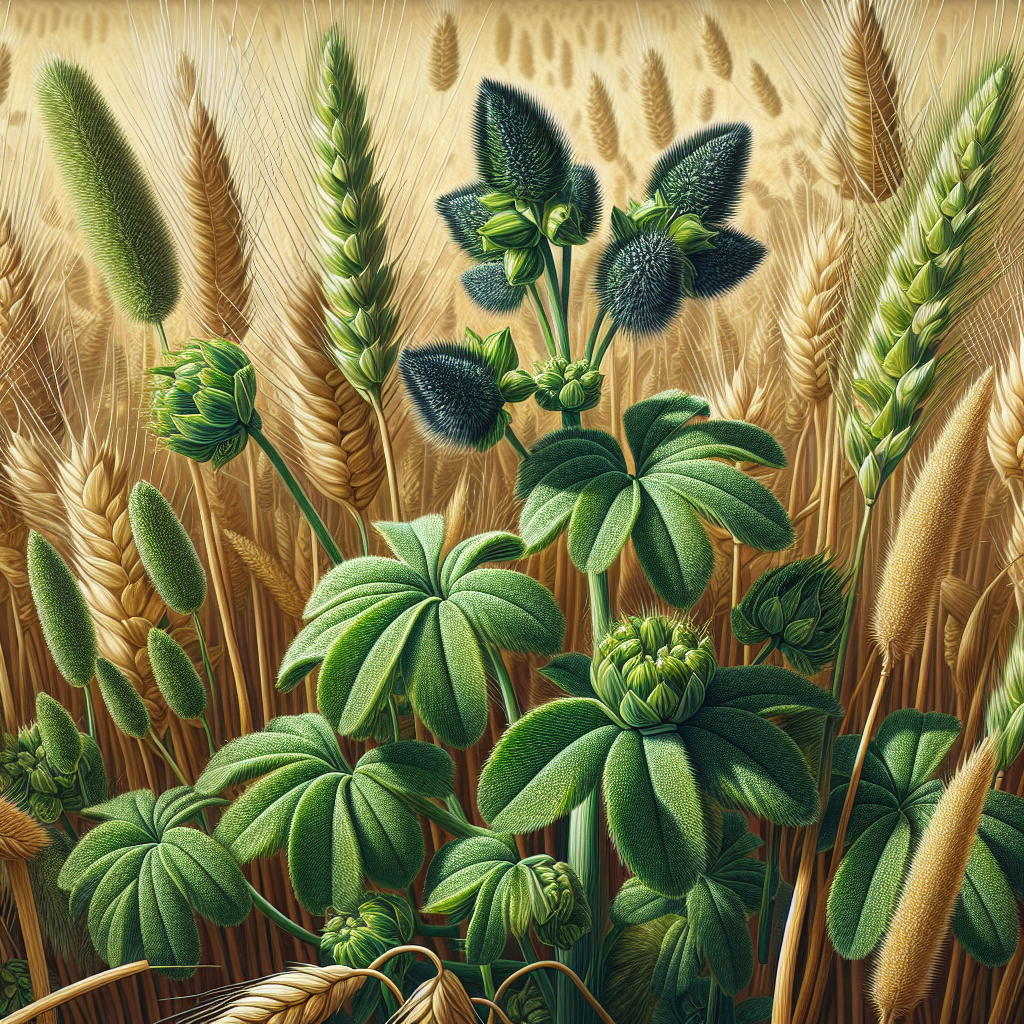
Introduction to perennial ryegrass
Perennial ryegrass (Lolium perenne) is one of the most challenging grassy weeds in temperate agriculture, notorious for its rapid establishment and persistence in croplands, pastures, and turf systems. Native to Europe but now widespread globally, this cool-season perennial grass thrives in fertile, moist soils and can outcompete desirable crops for light, water, and nutrients. Farmers often encounter it as a contaminant in seed lots or from neighboring fields, where it quickly forms dense stands that reduce yields by 20-50% in affected wheat and barley fields.
Unlike annual ryegrass (Lolium multiflorum), perennial ryegrass reproduces both by seed and aggressive tillering, allowing it to survive multiple seasons and develop resistance to common herbicides. Its fine texture and bunch-type growth make it mimic desirable forage grasses, complicating early detection. This guide equips agricultural professionals with diagnostic tools, lifecycle insights, and organic management plans to reclaim fields from perennial ryegrass dominance. Early intervention is critical, as mature infestations can produce over 1,000 seeds per plant annually, perpetuating the cycle. For more on related grasses, see the Perennial Rye (crop) wiki page.
In organic systems, perennial ryegrass poses unique challenges due to limited chemical options, demanding integrated cultural, mechanical, and biological strategies. Yield losses in oats can exceed 30% when tiller density surpasses 50 plants per square meter, underscoring the need for vigilant scouting. This comprehensive resource draws from entomological, botanical, and agronomic expertise to deliver actionable advice tailored for small to large-scale operations.
Identifying Symptoms & Damage
Diagnosing perennial ryegrass requires distinguishing it from crops like rye or volunteer cereals. Key identifiers include shiny, folded leaves with a boat-shaped tip, prominent auricles (ear-like appendages at the leaf base), and no ligule or a very short one. Stems are smooth, round, and hollow, with inflorescences forming flat, spike-like panicles 15-30 cm long, each spikelet containing 4-12 florets.
Damage manifests as competition: seedlings emerge rapidly in fall or spring, forming dark green, fine-textured patches that suppress crop emergence. In corn, ryegrass tillers reduce stand density by shading, leading to thin, elongated stalks and 15-25% yield penalties. Root systems are fibrous and extensive, depleting soil moisture and nitrogen—critical in irrigated fields where ryegrass can extract 20% more water than shallow-rooted crops.
Advanced symptoms include tillering clumps up to 1 meter tall, outcompeting potato rows and harboring pests like armyworms. In pastures, it dominates swards, reducing forage quality due to high fiber and low digestibility. Use a hand lens to confirm auricles; dig roots to assess density (threshold: 5-10 plants/m² warrants action). Yellowing crop borders signal nutrient theft, often coinciding with aphids outbreaks on stressed plants.
Lifecycle and Progression of perennial ryegrass
Perennial ryegrass is a short-lived perennial or biennial, completing its lifecycle in 2-5 years via vegetative tillering and seed production. Germination occurs at soil temperatures of 4-10°C, optimal in fall (autumn) or early spring, with seedlings emerging within 7-14 days. Vegetative growth peaks at 15-25°C, producing 10-50 tillers per plant by mid-spring.
Flowering spans May-July in northern hemispheres, with seeds maturing in 3-4 weeks and shattering readily. A single plant yields 500-3,000 viable seeds, 80% germinating the following season. Rhizomes are absent, but stolons and tillers enable 20-30 cm annual spread. Overwintering occurs as crowns and basal tillers, resuming growth at 5°C.
Progression stages: Seedling (2-4 leaves, cotyledon folded), tillering (4-8 weeks, branching), elongation (stem extension, boot stage), heading (inflorescence emergence), seed set (anthesis to maturity). Dormancy breaks with >10 cm precipitation. In soybeans, fall-emerging cohorts overwinter and compete pre-planting. Monitor with quadrats: >20% ground cover indicates reproductive phase. For timing insights, check Why Timing Kills Small Farm Profits - And How AI Task Scheduling Saves Your Harvests.
Environmental Triggers & Risk Factors
Perennial ryegrass flourishes in cool, moist climates (USDA zones 3-9), pH 5.5-7.0, and medium-textured soils with >1.5% organic matter. Triggers include mild winters (> -10°C), 600-1,200 mm annual rain, and no-till systems retaining residue. Introduced via contaminated clover seed or hay, it exploits disturbed soils post-harvest.
Risk factors: Crop rotations lacking tillage (e.g., continuous corn-soybeans); excessive N fertility (>150 kg/ha boosts tillering); irrigation mimicking coastal fog belts. Drought stress favors it over deep-rooted crops like sorghum. Compaction from heavy machinery creates microsites for germination. Adjacent pastures or turf heighten invasion via seed rain (up to 10,000 seeds/ha/year). Climate shifts extending fall germination windows amplify risks in transitional zones.
Organic Control & Treatment Plans
Organic management emphasizes prevention and cultural disruption, as herbicides are off-limits. Plan 1: Cultural Suppression - Rotate to smother crops like buckwheat or sorghum-sudangrass (planted at 50 kg/ha) for 60-90 days summer fallow, achieving 90% kill via shading. Mow at 5 cm weekly to exhaust reserves; graze heavily with sheep (4-6 AU/ha) to prevent heading.
Plan 2: Mechanical - Tillage at 15-20 cm depth in spring buries crowns; repeated disking every 3 weeks for summerow. Flame weeding at tillering (500 L/ha propane) scalds 70-85% seedlings. Plan 3: Biological - Introduce competitive clover mixes post-emergence; solarization with clear plastic (6 weeks summer, 45-50°C soil) kills 95% seeds.
Integrated plan: Scout weekly; tiller-stage flaming + cover crop; fallow year 2 if needed. Monitor efficacy with density counts (target <2 plants/m²). Combine with Soil Health Mastery: 5 Proven Strategies for Small Farms to Build Fertile Ground Without Breaking the Bank for long-term suppression. Expect 2-3 years for eradication.
Preventing perennial ryegrass in the Future
Prevention hinges on sanitation and barriers. Use certified weed-free seeds (<0.1% contamination); clean equipment with steam (80°C). Establish 2m buffer strips of hairy vetch around fields. Rotate diversely: corn → peas → tillage → wheat. Time planting to avoid fall germination (post-October in north).
Enhance soil health with compost (10 t/ha) to favor crops; avoid over-fertilization. Perennial cover crops like rye (not perennial ryegrass) outcompete seedlings. Scout borders monthly; rogue by hand <5% infestation. Long-term: deep plowing every 3 years disrupts crowns. Integrate with companion planting per Why Companion Planting Feels Like Guesswork for Small Farms - And How AI Makes It Foolproof.
Crops Most Affected by perennial ryegrass
Perennial ryegrass devastates small grains: wheat (30-50% yield loss), barley (25-40%), oats (20-35%). In forages, it invades clover-[alfalfa) stands, reducing protein content. Row crops like corn suffer early competition; soybeans show 15-25% reductions. Turf and pastures face quality decline; potato fields see harvest interference. Cool-season dominance affects triticale and quinoa.