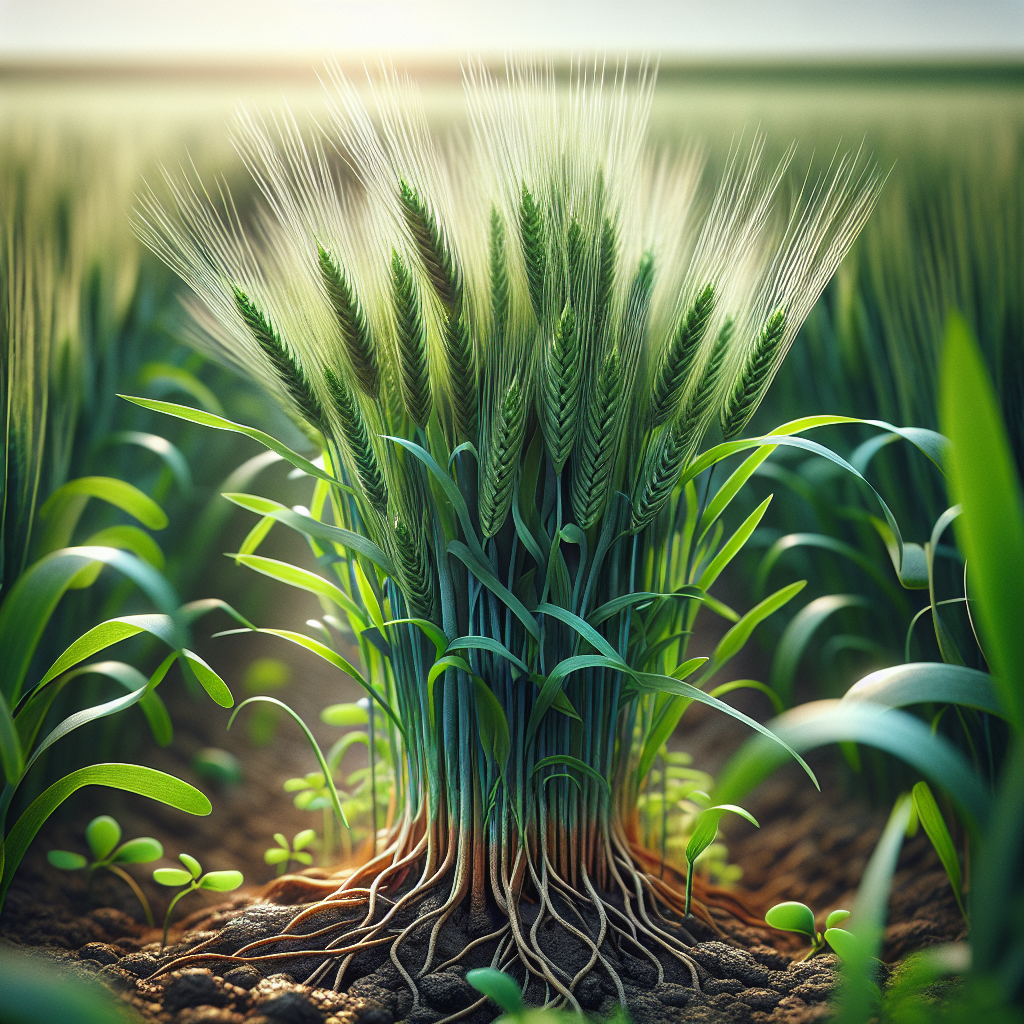
Introduction to Perennial Rye
A cool-season grass native to Europe, western Asia, and North Africa, this species has become one of the most widely planted temperate grasses in the world. It is grown in two main contexts: as a forage grass for grazing and haylage, and as a turf grass for lawns, fairways, athletic fields, and rapid overseeding. Its popularity comes from an unusual combination of traits: quick germination, fine-to-medium leaf texture, high palatability to livestock, dense tillering, and the ability to recover rapidly from wear when properly managed.
Unlike annual ryegrass, perennial rye persists for multiple years when climate and management are favorable. It is a true perennial bunchgrass rather than a sod-forming rhizomatous grass, so its durability depends on maintaining a healthy crown, encouraging tiller production, and preventing thinning caused by drought, disease, scalping, or nutrient depletion. In maritime and mild temperate regions, it can remain productive for years; in hotter continental climates, longevity often declines unless irrigation, fertility, and cultivar selection are excellent.
Modern breeding has dramatically improved perennial rye performance. Turf cultivars are selected for finer leaves, darker color, disease tolerance, and density, while forage cultivars emphasize digestibility, seasonal production, sugar content, and compatibility with legumes. Some forage types are associated with beneficial endophytes that improve persistence and insect tolerance, though livestock producers must pay close attention to endophyte type and animal safety.
For growers comparing temperate grasses, it is often discussed alongside Wheat and other cool-season cereals, but its management is distinct because it is intended to remain vegetative and productive over multiple seasons rather than simply fill grain heads and terminate. For broader system planning, mixed swards and rotation design are also influenced by principles covered in soil health strategies.
Botanical Profile of Perennial Rye
This species belongs to the Poaceae family, the grass family, and is taxonomically classified as Lolium perenne. It is a tufted, cool-season perennial with a fibrous root system and upright to semi-erect growth. Plants spread primarily by tillering, not by aggressive rhizomes or stolons, which explains both its neat appearance and its need for sound stand management.
Key identifying features include glossy undersides on leaves, folded vernation in the shoot, and leaves that are smooth, narrow, and distinctly ribbed on the upper surface. The auricles are small but usually clasping, an important identification feature that distinguishes it from some similar grasses. Seedheads are spikes rather than panicles, with spikelets attached edgewise directly to the rachis.
Typical mature height varies with use. Under turf mowing, plants are maintained at 2 to 7 cm depending on site and objective. Under forage conditions, vegetative growth may reach 30 to 60 cm, and reproductive stems can exceed that. Rooting depth is moderate, usually concentrated in the upper 15 to 30 cm of soil, though roots can penetrate deeper in friable, well-drained soils. Because much of the functional root mass stays relatively shallow, the species responds quickly to rainfall and irrigation but also suffers sooner than deeper-rooted grasses during dry spells.
Botanically, the crown is the critical survival organ. New tillers emerge from basal buds, and each tiller has a productive lifespan. Management that removes too much leaf area or damages crowns reduces carbohydrate reserves and weakens regrowth. This is particularly important in pastures grazed too tightly or sports turf mown below the cultivar's tolerance.
Cultivar differences matter greatly. Turf-type perennial ryegrasses are denser, finer, and often darker green than older utility types. Forage types often have larger leaves, more upright growth, and better seasonal biomass production. Diploid cultivars tend to have denser tillering and often better ground cover; tetraploid forage cultivars usually have larger cells, broader leaves, higher palatability, and improved intake by grazing animals, though sometimes lower sward density. Endophyte-enhanced cultivars may show better resistance to surface-feeding insects and improved stress tolerance.
Soil, pH, and Climate Requirements for Perennial Rye
This grass performs best in fertile, well-aerated, medium-textured soils such as loams, silt loams, and well-structured clay loams. It can grow in sandy soils if fertility and irrigation are carefully managed, but drought stress becomes more likely because sandy profiles dry rapidly. Heavy, compacted, poorly drained clays reduce root health, limit oxygen in the root zone, and predispose stands to crown disease and winter injury.
The ideal soil pH is generally 5.8 to 7.0, with the sweet spot for most production systems around 6.0 to 6.5. It tolerates mildly acidic conditions better than some grasses, but performance declines when pH falls below about 5.5 because phosphorus availability drops, aluminum toxicity can increase, and root development becomes restricted. In alkaline soils above pH 7.5, micronutrient imbalances may appear, especially iron chlorosis on highly calcareous sites.
Drainage is one of the most underestimated requirements. Perennial rye likes consistent moisture but not saturation. Field capacity in the top 10 to 15 cm is ideal during establishment, meaning the soil should feel moist and friable, not sticky or anaerobic. If a squeezed handful forms a slick, shiny mass and smells sour, the site is too wet. If the top 2 to 3 cm becomes powdery and pale between irrigations, seedling stress is likely.
Climatically, perennial rye is best suited to cool-temperate and mild maritime regions. Optimal growth occurs when daytime temperatures range from about 15 to 24°C. Germination can begin at cool soil temperatures near 7 to 10°C, but establishment is faster when soils are 12 to 20°C. Growth slows markedly in heat above 27 to 30°C, especially if nights remain warm. Extended summer heat combined with humidity and moisture stress is one of the main reasons stands decline in warm regions.
Winter hardiness is good in many temperate locations, but less dependable than some other cool-season grasses under extreme freeze-thaw cycles, exposed crowns, or ice sheeting. Snow cover can insulate plants, while open, desiccating winter winds on frozen soil can injure crowns. In very hot climates it is often used as a winter annual overseed rather than a long-lived perennial.
Nutrient demand is moderate to high. Nitrogen strongly influences color, tillering, crude protein, and recovery rate. Phosphorus is important for establishment, and potassium improves stress tolerance, disease resistance, and winter survival. Sulfur may be beneficial in forage systems where tissue protein targets are high.
Step-by-Step Planting & Propagation
Propagation is almost always by seed. Vegetative propagation is impractical outside breeding or research settings.
Test and prepare the site. Begin with a soil test 6 to 12 weeks before sowing. Correct pH if needed, incorporate phosphorus and potassium based on recommendations, and relieve compaction before planting. For turf, create a fine, firm seedbed. For pasture, aim for a level, weed-reduced surface with good seed-soil contact.
Choose the right sowing window. Early autumn is often the best planting season because soils are still warm, weed pressure may be lower than spring, and seedlings can establish before winter. Early spring also works, especially in colder climates, but spring seedings compete more with annual weeds and may face early summer stress.
Select cultivar by end use. For turf, choose disease-resistant turf-type cultivars. For grazing, consider digestibility, heading date, ploidy, and endophyte status. Avoid using generic, low-grade seed if uniformity and longevity matter.
Calibrate seeding rate carefully. Typical turf seeding rates range from about 25 to 40 g per square meter, depending on whether it is a new lawn, overseeding, or sports renovation. For forage, pure stand seeding commonly falls around 15 to 25 kg per hectare, with lower rates when mixed with legumes and higher rates when a rapid dense stand is needed. Excessive rates can cause overcrowding, shallow rooting, and disease-prone seedlings.
Plant shallowly. Seed should be placed about 6 to 12 mm deep. Deeper placement reduces emergence because seedlings have limited energy reserves. The best results come from broadcasting onto a fine seedbed and lightly raking or rolling, or using a drill that places seed uniformly at shallow depth.
Firm the seedbed. A properly firmed bed improves moisture continuity around the seed. A traditional rule is that a footprint should sink no deeper than about 1 cm. Loose soil dries faster and causes uneven emergence.
Manage establishment moisture precisely. During the first 10 to 21 days, keep the top 1 to 2 cm of soil continuously moist. This usually means light, frequent irrigation rather than heavy soakings. On sandy soils in warm weather, that may be 2 to 4 short irrigations per day; on loams in cool weather, once daily or every other day may be enough. The goal is to prevent the germination zone from drying between waterings.
Expect rapid emergence. Under favorable conditions, germination often begins in 5 to 10 days. Uniform green fuzz across the surface indicates good coverage. Patchiness often signals uneven depth, crusting, poor seed quality, or moisture inconsistency.
Transition watering after establishment. Once seedlings reach 3 to 5 cm and are rooted, reduce irrigation frequency and increase depth. This encourages deeper rooting and better stress tolerance.
In mixed forage systems, perennial rye is frequently paired with Clover, especially where growers want nitrogen contribution and improved feed quality. It also fits well with Peas as a temporary nurse or cover companion in some rotational systems.
Care & Maintenance regimes for Perennial Rye
Water management should match growth stage and soil texture. During establishment, the root zone is shallow, so even brief drying can kill seedlings. After establishment, irrigate to moisten the top 10 to 15 cm of soil, then allow the upper few centimeters to dry slightly before watering again. In practical terms, established turf on loam often needs about 25 to 40 mm of water per week from rain plus irrigation during active growth, though hot, windy conditions increase demand. For forage stands, deeper but less frequent irrigation is preferred where irrigation is used.
Signs of underwatering include a dull blue-green cast, folded leaves, reduced rebound after foot traffic, and slower regrowth after cutting or grazing. Signs of overwatering include persistently soft soil, yellowing lower leaves, algae or moss, shallow roots, and a rise in damping-off or root disease. If footprints remain visible long after passing, the surface may be too wet.
Nitrogen management depends on use intensity. Turf often responds to split applications totaling roughly 100 to 250 kg N/ha/year, with higher rates on sports fields and lower rates on home lawns. Forage systems may use 50 to 80 kg N/ha after each harvest or grazing cycle when legumes are absent, adjusted for soil reserves and expected yield. Too much nitrogen produces lush, disease-susceptible growth and can increase nitrate risk in forage under stress conditions.
Mowing and defoliation are central to persistence. In turf, avoid removing more than one-third of the leaf blade in a single mowing. Typical mowing heights are 2.5 to 5 cm for most lawns, higher under heat or shade, and lower only for specialized sports surfaces with elite management. In pastures, begin grazing when plants are well anchored and typically 18 to 25 cm tall, then remove animals when residual height reaches about 5 to 7 cm. Repeated grazing below this weakens crowns and reduces stand life.
For hay or silage, harvest at late vegetative to early boot stage for the best balance between quality and yield. As heads emerge, fiber rises and digestibility declines. Rotational grazing generally preserves quality better than continuous close grazing because it allows leaf area to recover.
Thatch is usually less severe than with some turf species, but dense nitrogen-rich systems can accumulate surface organic matter. Aeration helps where compaction reduces infiltration and gas exchange. Overseeding every 1 to 3 years is common on high-wear turf because bunch-type growth does not fill voids as aggressively as spreading grasses.
Shade tolerance is moderate at best. In low light, plants become thinner, more upright, and less resilient. Increase mowing height, reduce nitrogen excess, and improve air movement in shaded sites.
Pests, Diseases & Organic Management
The major disease pressures depend on climate and use. In turf, Gray leaf spot, Red thread, Dollar spot, Brown patch, Pythium blight, Rusts, and various Leaf spots are the main concerns. In forage, Crown rust, Leaf spots, and stress-related decline can be economically important.
Gray leaf spot is especially destructive in warm, humid conditions with high nitrogen and extended leaf wetness. It appears as small water-soaked lesions that enlarge into gray to tan spots, and whole seedlings may collapse. Brown patch tends to appear during warm nights and humidity, often causing circular patches. Red thread is favored by cool, moist weather and low nitrogen, producing pink-red fungal strands on leaves.
Organic management begins with prevention. Use resistant cultivars, avoid evening irrigation, improve airflow, maintain balanced fertility, and prevent chronic overwatering. Morning irrigation is preferable because it shortens leaf wetness duration. In turf, raising mowing height slightly during disease-conducive periods can reduce stress. In pastures, avoid grazing so tightly that crowns are exposed and weakened.
Insect pests vary by region but may include Billbugs, Sod webworms, Armyworms, Leatherjackets, Aphids, and Root-feeding larvae. Endophyte-associated cultivars can suppress some insect feeding, but endophyte selection must be matched to livestock safety in forage systems. Organic options include encouraging beneficial predators, using biological insecticides such as Bacillus thuringiensis for caterpillar pests when appropriate, and timing mowing or grazing to interrupt pest life cycles.
Weed intrusion usually follows stand thinning rather than causing it initially. Dense establishment, correct fertility, and proper defoliation are the best weed control tools. In mixed swards, companion legumes can occupy gaps and stabilize productivity, but they should be managed so they do not dominate during summer slump or after excessive nitrogen reduction.
Harvesting, Curing & Optimal Storage
Management at harvest depends on whether the crop is used as fresh forage, hay, haylage, seed, or turf sod.
For grazing, the highest feed value comes from leafy vegetative growth. Enter paddocks before stems elongate excessively and rotate quickly enough to keep regrowth young. For mechanical forage harvest, cut at late vegetative to early boot stage for premium digestibility. Delaying into full heading increases tonnage but reduces energy value, protein concentration, and animal intake potential.
For hay production, wilting can be challenging because fine stems dry quickly but dense swaths may trap moisture. Target a final hay moisture of about 15 to 18% for safe small-bale storage and 12 to 16% for larger packages depending on ventilation and density. Baling above safe moisture greatly increases heating and mold risk. If weather is unreliable, haylage or baleage is often a better option, usually ensiled at roughly 40 to 60% moisture depending on system.
If growing for seed, harvest timing is critical because ripe seed can shatter. Seed crops are usually cut or direct-combined when seed moisture reaches the appropriate threshold for the chosen harvest system. Clean and dry seed promptly to around 12% moisture or lower for safe storage, and even lower for long-term carryover.
For turf sod production, harvest when the stand has developed a dense, knitted root mat strong enough to lift intact. This usually requires excellent fertility, irrigation, and mowing management. Avoid harvesting sod when soils are waterlogged because slab integrity declines and rutting damages the field.
Stored forage should be protected from ground moisture, rain infiltration, and poor ventilation. Musty odor, heating, condensation, and dust are warning signs of storage failure. In seed storage, cool and dry conditions preserve viability. Use sealed, rodent-proof containers or clean bulk bins, and monitor regularly for insects or moisture migration.
Companion Planting for Perennial Rye
In pasture and cover-cropping systems, the best companions are usually legumes and deep-rooted broadleaf species that complement perennial rye's dense, fast-establishing canopy. The classic partner is Clover, which contributes biologically fixed nitrogen, improves forage protein, enhances pollinator value when allowed to bloom, and helps maintain productivity where synthetic nitrogen inputs are limited. White clover is often preferred in grazing swards, while red clover can add strong seasonal yield in short-term forage mixtures.
Peas can function as a short-duration companion in cool-season forage blends, especially when the goal is a high-protein early cut. Their upright but less persistent habit means they are more useful in temporary systems than long-lived pasture.
Chickpeas are less common as a direct pasture companion but may play a useful rotational role before or after perennial rye, helping diversify root architecture and disease cycles while contributing residual nitrogen benefits. Likewise, Yarrow can be included in more diverse herbal leys or regenerative pasture mixes where growers want improved insectary value, deep mineral scavenging, and drought resilience in the overall sward.
The guiding principle is not simply mixing species, but choosing companions with compatible growth timing and defoliation tolerance. Perennial rye is highly competitive under fertile, moist conditions, so companion legumes establish best when seeding rates are moderated and nitrogen is not overapplied. In low-input systems, these mixtures often outperform pure stands in resilience, seasonal distribution, and soil biological activity.