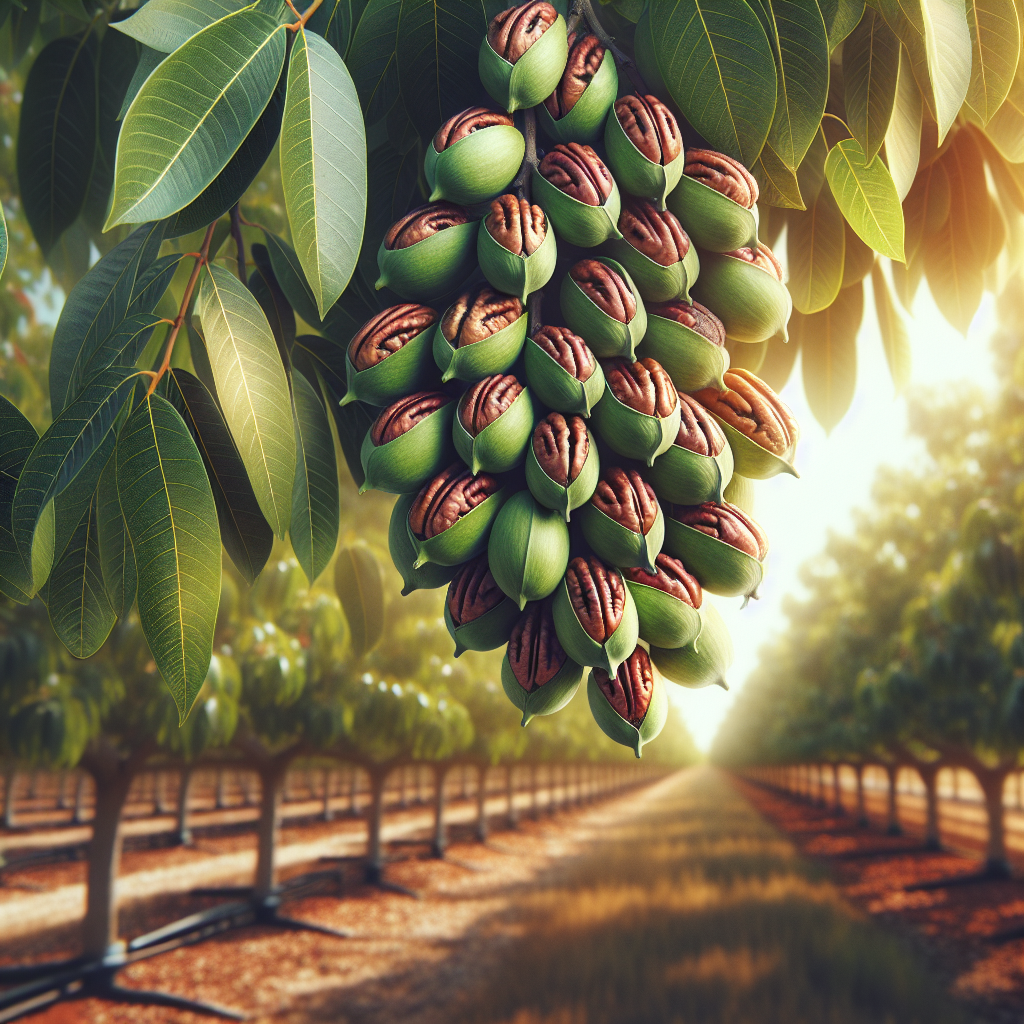
Introduction to Pecan (Pawnee)
A classic North American tree nut, pecan belongs to the hickory family and has become one of the most important orchard crops in the southern United States and comparable warm temperate regions worldwide. 'Pawnee' is a cultivar developed for commercial relevance: it bears relatively early in life, ripens earlier than many standard cultivars, and produces large, high-quality nuts with bright kernels that are highly attractive for shelling and fresh market use. That early maturity is one of its defining strengths because it helps growers harvest before late autumn weather losses, reduces exposure to some late-season disease pressure, and can improve labor scheduling in mixed orchards.
'Pawnee' is often recommended where a grower wants an early-season cultivar with good nut size and strong quality, but it should never be treated as a low-input tree. Pecan production is a long-term investment crop with deep roots, large canopies, heavy nutrient demand, and strong sensitivity to water stress during nut sizing and kernel filling. Young trees establish quickly when managed well, yet mature productivity depends on disciplined irrigation, soil fertility, canopy management, pollination planning, and disease control.
This cultivar is protandrous, meaning it sheds pollen earlier than its female flowers become fully receptive, so orchard planning must include compatible pollinizers. In practical terms, a productive 'Pawnee' block is not just about planting the tree itself; it is about building an orchard ecology that supports pollination, root health, and annual carbohydrate balance. Growers wanting background on the broader crop can compare general species traits in this Pecan guide. For orchard floor strategy and understory management, broad principles in soil health strategies are especially relevant.
Botanical Profile of Pecan (Pawnee)
This cultivar is a grafted selection of Carya illinoinensis, a deciduous, monoecious, wind-pollinated tree native to river bottoms and deep alluvial soils of North America. Mature trees can become very large, commonly exceeding 70 feet in unmanaged settings, though orchard training and spacing influence final crown architecture. Like other pecans, 'Pawnee' develops a strong central leader when young and a broad, high canopy with age.
Leaves are alternate, pinnately compound, and typically composed of 9 to 17 leaflets, with a glossy medium to dark green surface during active growth. Flowers are unisexual but borne on the same tree: male catkins release pollen in spring, while female flowers occur in terminal clusters. Because bloom timing between pollen shed and stigma receptivity does not fully overlap within the same cultivar, cross-pollination from another compatible cultivar is essential for consistent nut set.
'Pawnee' is known for precocity, meaning it tends to come into bearing younger than many traditional cultivars. Nuts are large, oval to oblong, with a relatively thin shell and a high percentage of bright, attractive kernel. Kernel quality is one of the reasons it remains a preferred market cultivar. Another valuable trait is early shuck split and early harvest season. In regions with early frost risk or where late-season rainfall damages nut quality, this can be a major advantage.
One nuance growers must understand is alternate bearing tendency. Like many pecans, 'Pawnee' can produce heavy crops one year and a lighter crop the next if crop load is not balanced and trees are stressed. Excessive production in one season can deplete carbohydrate reserves, reduce return bloom, and shrink nut size. Therefore, a professional management approach aims to maintain tree vigor and avoid severe stress during the years when the crop is heavy.
Soil, pH, and Climate Requirements for Pecan (Pawnee)
This cultivar performs best in deep, well-drained, fertile soils with high moisture-holding capacity and unrestricted rooting depth of at least 5 to 6 feet. Although pecans can survive in a range of textures, the ideal soil is a deep loam, sandy loam, or silt loam with good internal drainage. Heavy clay can work if it is structured, well-aerated, and not prone to prolonged saturation, but shallow hardpan soils, compacted subsoils, or gravelly drought-prone sites are poor choices.
Optimal soil pH is generally 6.0 to 7.0, with best nutrient availability often found near 6.3 to 6.8. Trees can tolerate slightly alkaline soils, but zinc, iron, and manganese deficiencies become more common as pH rises above 7.2. At low pH below about 5.5, aluminum stress and nutrient imbalance can reduce root efficiency. Before planting, conduct a full soil analysis including pH, cation exchange capacity, organic matter, phosphorus, potassium, calcium, magnesium, zinc, and boron. Pecans are especially responsive to zinc management, and in many orchards this becomes a routine foliar nutrition issue rather than a one-time correction.
Climate should be warm temperate with long, hot summers and adequate frost-free days to mature nuts fully. 'Pawnee' is well suited to many pecan belts because of its early maturity, but it still requires a full growing season and significant summer heat. Winter chilling is needed for normal dormancy release, yet severe spring freezes can damage emerging shoots and flowers. The ideal region has mild enough winters to avoid major wood injury, but enough seasonal dormancy to support healthy bud break.
Water availability is a decisive factor. Pecan is not a dryland crop if the goal is commercial-quality nut fill. Seasonal water demand is high, especially from late spring through early autumn. Young orchards need evenly moist root zones for establishment; mature producing trees need sustained moisture during shoot growth, pollination, nut sizing, and kernel filling. Soil should remain moist but oxygenated. As a field target, irrigated orchard soil is often managed around 60-80% of field capacity in the active root zone, avoiding both severe depletion and saturation. If the top 6-8 inches turn powdery and dry while leaves begin dulling or curling slightly at midday, the tree is entering stress. If soil stays soggy, smells anaerobic, or roots sit in standing water more than 24-48 hours, decline and root disease risk rise sharply.
Full sun is mandatory. Shade reduces shoot growth, flower initiation, and nut production. Avoid frost pockets and low basins where cold air settles in spring. Good air movement also helps reduce foliar disease pressure.
Step-by-Step Planting & Propagation
Nearly all 'Pawnee' trees should be established as grafted nursery stock rather than seedlings. Seedling pecans do not come true to type, vary widely in nut quality, and take longer to bear. Buy well-rooted, certified trees from a reputable nursery using appropriate rootstock for your region.
Choose the site carefully. Select deep soil, full sun, and a location with irrigation access. Avoid septic fields, compacted construction areas, and places where mature canopy spread will conflict with buildings or power lines.
Test and prepare the soil 6-12 months ahead. Correct pH if needed. Deep rip compacted layers before planting if the soil profile permits. Incorporate phosphorus and potassium only if the soil test indicates deficiency; these nutrients move slowly and are best corrected before tree establishment.
Plan spacing based on long-term canopy size. Commercial orchards may plant at 35 x 35 feet, 40 x 40 feet, or use temporary higher density systems that are later thinned. For homestead planting, give each tree ample room; crowded pecans become unmanageable and unproductive in the long run.
Include pollinizers. Since 'Pawnee' is protandrous, plant compatible Type II cultivars nearby to ensure overlap of pollen shed and female flower receptivity. Pollinizer placement should account for wind movement, as pecan pollen is wind-borne rather than insect-dependent.
Plant during dormancy. Late winter to early spring is ideal in most regions, after severe freeze danger but before active leaf-out. Container trees can be planted slightly outside that window if irrigation is dependable, but bare-root trees should go in while dormant.
Dig a broad planting hole, not an oversized pit. The hole should be deep enough to accommodate the taproot and lateral roots without bending. Pecans dislike J-rooting. Keep the graft union above the soil line.
Backfill with native soil. Do not create a rich compost pocket that discourages roots from moving outward. Water in thoroughly to settle soil and eliminate air pockets.
Mulch but do not bury the trunk. Apply 3-4 inches of organic mulch in a wide ring, keeping it 4-6 inches away from the bark. This conserves moisture, moderates soil temperature, and reduces weed competition.
Head and train the tree if needed. Many growers maintain a central leader system during early years. Remove damaged roots or broken shoots at planting, but avoid excessive top pruning that reduces early leaf area.
Protect the young trunk. Use guards if rabbits, deer rubbing, sunscald, or herbicide drift are concerns.
Propagation by grafting is standard for nursery production. Techniques such as whip-and-tongue, bark grafting, or patch budding are used on seedling rootstocks. While skilled propagators can topwork established trees to 'Pawnee', this is specialist work requiring careful timing and aftercare.
Care & Maintenance regimes for Pecan (Pawnee)
During the first 3-5 years, the goal is canopy establishment and root expansion, not forcing heavy crop load. Irrigate young trees deeply enough to wet the root zone 18-24 inches down, then re-water before the soil becomes excessively dry. In hot weather on lighter soils, this may mean watering every 3-5 days; on heavier loams, every 7-10 days may suffice. Avoid frequent shallow sprinkling, which promotes surface rooting and weak drought resilience.
For mature orchards, irrigation scheduling should align with phenology. Water stress from bud break through shoot growth reduces canopy development; stress during pollination and early nut set can increase drop; stress from shell hardening through kernel fill causes the most economically important losses, including poorly filled kernels, darkened interiors, and reduced nut weight. Moisture deficits late in summer are especially damaging. A mature tree may use several inches of water per month in peak heat, depending on canopy size, evapotranspiration, and soil type.
Fertilization should be based on annual leaf analysis plus soil tests, not guesswork. Nitrogen is often the main driver of vegetative growth and crop support, but overapplication can worsen aphid pressure, excessive shading, and alternate bearing. Apply nitrogen in split doses where practical, beginning after leaf expansion and adjusting for tree age and crop load. Zinc is frequently required as repeated foliar sprays, especially in high-pH soils; deficiency appears as small, narrow, chlorotic leaves in rosettes with shortened internodes. Potassium is critical for nut fill and tree resilience, while boron supports flowering and nut development but should be applied carefully because the margin between deficiency and toxicity is narrow.
Pruning in pecan is lighter than in many fruit trees but still important. In the training years, maintain a single dominant leader, remove narrow crotch angles, and establish scaffold branches with adequate vertical spacing. In mature trees, prune to remove dead wood, storm damage, rubbing limbs, and occasional overcrowded interior branches that impair light penetration. Excessive pruning stimulates unwanted vegetative growth and delays bearing. Good orchard managers think in terms of light distribution rather than aggressive canopy reduction.
Weed control around young trees is essential. Grass competition can dramatically suppress establishment by stripping moisture and nitrogen from the upper root zone. Maintain a vegetation-free strip at least 3-5 feet around young trunks. In mature orchards, a managed sod alley with a clean tree row is common. Mowing, mulching, and carefully directed organic or conventional methods can all be used depending on the production system.
Crop load matters. 'Pawnee' can set heavily, and unmanaged trees may overbear. Where practical, support tree balance with irrigation, nutrition, and canopy health so return bloom remains acceptable. A healthy leaf canopy after harvest is also important because the tree must rebuild reserves before dormancy.
Pests, Diseases & Organic Management
The most important diseases depend on region, but pecan scab is often the primary threat in humid climates. It affects leaves, shoots, and shucks, causing dark lesions, premature defoliation, poor nut development, and quality losses. 'Pawnee' can produce excellent nuts, but disease pressure in wet, humid areas can be serious. Organic management relies on reducing leaf wetness duration where possible, maintaining airflow, removing heavily infected debris when practical, avoiding excess nitrogen that drives dense susceptible growth, and using approved copper or biological fungicides in a preventive schedule where local regulations and climate justify it.
Other diseases can include powdery mildew, downy leaf spot, vein spot, and various shuck disorders. root diseases become more likely in poorly drained soils, especially where waterlogging occurs. A tree that leafs out weakly, shows chronic chlorosis despite fertilization, or dies back from the top may have root stress as a primary hidden cause.
Insect pests commonly include aphids, pecan nut casebearer, stink bugs, hickory shuckworm, webworms, and mites. aphids reduce photosynthetic area by feeding on leaves and can lead to honeydew and sooty mold. The blackmargined aphid in particular causes angular chlorotic patches between veins. Organic management starts with monitoring. Use pheromone traps where appropriate for key pests like nut casebearer, inspect terminals and clusters weekly during critical windows, and intervene before economic damage escalates.
Encourage beneficial insects by maintaining flowering strips or orchard borders with species such as Yarrow and Clover. These habitats support lacewings, hoverflies, parasitoid wasps, and predatory beetles that can suppress aphids and small larvae. Thyme and Nasturtium may also be useful in diversified systems, though they are more practical in smaller orchards and homestead settings than in broad-acre plantings.
For organic suppression, horticultural oils and insecticidal soaps may help on aphids when coverage is thorough and temperatures are suitable. Bacillus thuringiensis can target some caterpillar pests if applied at the correct larval stage. Kaolin clay can reduce feeding and egg laying for some insects, though coverage and residue management require planning. Sanitation, canopy openness, balanced fertility, and irrigation discipline are foundational because chronically stressed pecans are far more vulnerable to opportunistic pest outbreaks.
Wildlife can also be a major "pest." Crows, squirrels, and rodents may remove large quantities of nuts before harvest. Trunk guards, orchard sanitation, prompt harvest, and exclusion methods are often more effective than attempting control after losses begin.
Harvesting, Curing & Optimal Storage
One of the biggest advantages of this cultivar is its early harvest window. Harvest should begin when the shucks split naturally and nuts separate cleanly from the husk. Do not rely solely on calendar date; maturity varies by region, crop load, and seasonal weather. Kernel development should be complete, with plump interiors and typical golden color.
For small plantings, nuts may be hand-harvested from the ground daily or shaken from branches when shuck split is advanced. In commercial orchards, mechanical trunk shakers and sweepers are standard. The key is speed: once nuts are on the ground, quality declines with rainfall, prolonged dew exposure, insect feeding, and mold contamination.
Remove shucks, leaves, and debris promptly. Then dry nuts to a safe storage moisture, generally around 4-5% kernel moisture for long-term stability. In practical terms, this means curing in a well-ventilated, shaded, low-humidity area with good airflow until shells feel dry and kernels snap rather than bend. Artificial low-heat drying can be used, but excessive heat damages flavor and shortens storage life.
For best eating quality, sort out poorly filled, insect-damaged, or darkened nuts. Sound in-shell pecans store much longer under cool conditions than at room temperature. Refrigeration greatly extends shelf life, and freezing is best for long-term kernel storage. Because pecan kernels are rich in oil, they readily absorb odors and can become rancid if exposed to warmth, oxygen, and light. Use airtight packaging and keep relative humidity moderate to low. Shelled kernels stored cold and sealed retain quality far better than those kept in warm pantries.
If selling, harvest cleanliness matters enormously. Bright kernels, minimal field staining, uniform nut size, and prompt drying command better prices. 'Pawnee' often excels here when picked on time and kept dry.
Companion Planting for Pecan (Pawnee)
Companion planting in pecan systems is less about crowding vegetables under the canopy and more about designing a biologically functional orchard floor. Mature pecans cast substantial shade and compete aggressively for water, so the best companions are usually low-growing, deep-root-compatible, or seasonally timed support plants rather than heavy-feeding annual crops.
Clover is one of the best companions because it acts as a living groundcover, helps reduce erosion, supports pollinators and beneficial insects, and can contribute biologically fixed nitrogen to the orchard floor. It is especially useful in alleyways or non-competitive strips where mowing can manage height.
Yarrow is valuable for attracting predatory insects and parasitoids. Its drought tolerance and extended flowering period make it a practical beneficial-insect plant along orchard borders or in managed islands outside the immediate trunk zone.
Thyme works well in smaller orchards and home plantings where a low aromatic groundcover is desirable. It attracts pollinators when flowering, tolerates lean soils, and does not create the rank growth associated with some taller cover species.
Nasturtium is most useful near young trees in garden-scale settings rather than in commercial orchards. It can function as a trap and distraction plant for certain pests while providing quick seasonal cover. However, in dry climates it should not be allowed to compete with newly planted pecans for irrigation.
Avoid planting thirsty, heavy-feeding crops directly in the active root zone of young trees. Also avoid dense woody shrubs that reduce airflow or create rodent habitat near trunks. The ideal companion system keeps the soil protected, supports beneficial organisms, improves infiltration, and leaves a competition-free ring around the trunk during establishment years.