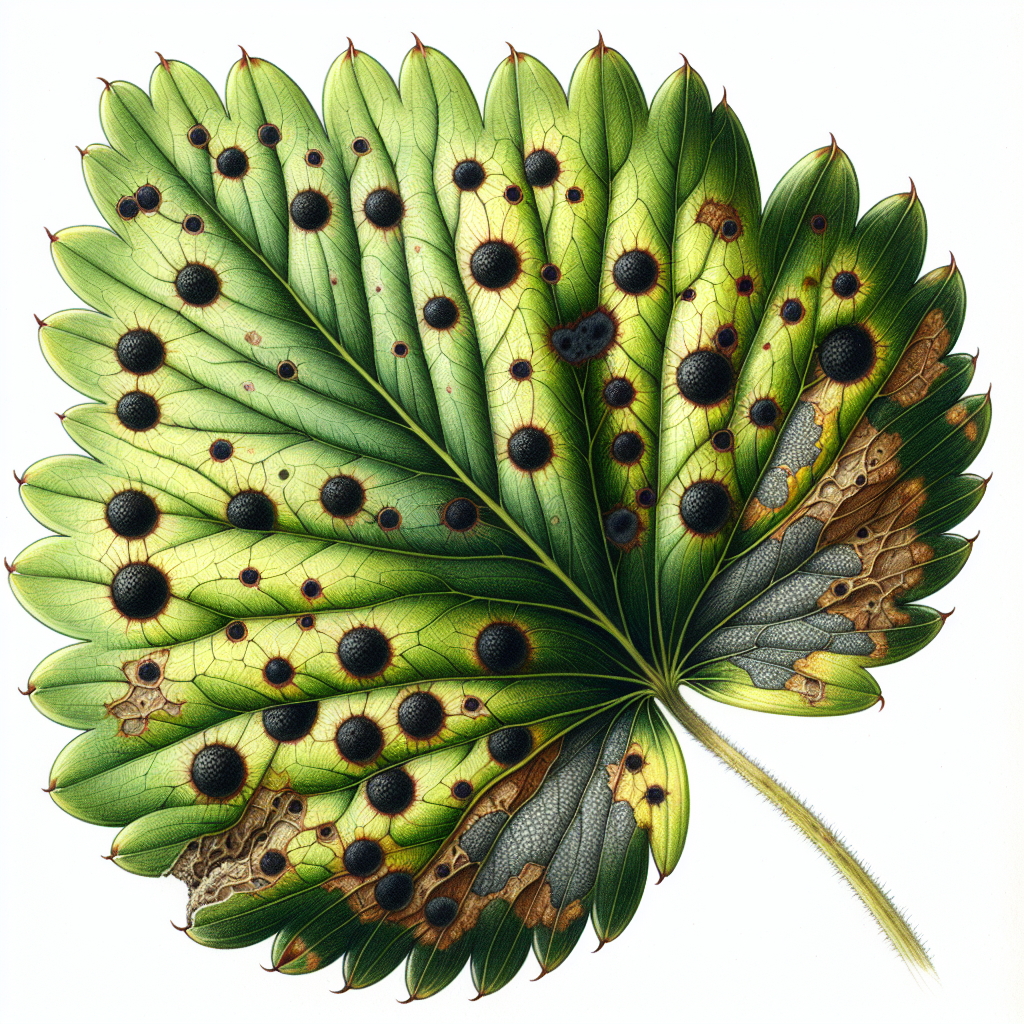
Introduction to vein spot
Vein spot, scientifically known as Cercospora traversiana, is a destructive foliar disease that targets strawberry crops and certain other plants in the Rosaceae family. This fungal pathogen manifests as distinctive dark spots concentrated along the veins of leaves, impairing the plant's ability to photosynthesize effectively. First identified in the early 20th century, vein spot has become a significant concern for commercial strawberry growers worldwide, particularly in regions with high humidity and warm temperatures during the growing season.
The disease can lead to substantial yield reductions of up to 30-50% in severe cases by weakening leaves, promoting secondary infections, and reducing fruit quality. Unlike more generalized leaf spot diseases, vein spot is highly specific in its patterning, making it identifiable once familiar. Understanding its biology, symptoms, and management is crucial for sustainable strawberry production. This guide provides comprehensive diagnostic criteria, lifecycle details, organic control strategies, and prevention tactics optimized for small farms and commercial operations alike.
Strawberry vein spot spreads via spores that are wind-dispersed or splashed by rain, emphasizing the need for vigilant monitoring in dense plantings. While chemical fungicides exist, organic approaches focusing on cultural controls and biological agents are increasingly preferred for their environmental safety and compliance with certification standards. By integrating these practices, growers can protect their Albion Strawberry or Chandler Strawberry varieties effectively.
Identifying Symptoms & Damage
Accurate diagnosis begins with recognizing the hallmark symptoms of vein spot. Initial signs appear on older leaves as small, circular to irregular spots (1-3 mm in diameter) that are dark brown to black, often bordered by a lighter halo. These lesions are predominantly aligned along the leaf veins, giving the characteristic 'vein banding' appearance that distinguishes it from other foliar issues like powdery mildew or Alternaria leaf spot.
As the disease progresses, spots coalesce, forming larger necrotic areas that cause leaves to yellow, wilt, and prematurely senesce. Undersides of leaves may show grayish fungal growth under humid conditions. In advanced stages, petioles and runners exhibit similar spotting, leading to stunted growth and reduced runner production. Fruit quality suffers indirectly through decreased carbohydrate allocation, resulting in smaller, softer berries prone to rot.
Damage assessment involves counting affected leaves per plant; thresholds above 20% incidence warrant intervention. Differentiate from Cercospora leaf spot by the vein-specific distribution—vein spot lesions rarely occur between veins. Use a 10x hand lens to confirm fungal structures: abundant conidia in chains on lesion surfaces. Early symptoms mimic nutrient deficiencies like potassium shortage, but vein alignment is diagnostic. For precise identification, submit samples to local extension services for culturing or PCR testing.
Yield impacts are most severe in annual plasticulture systems where foliage is critical for fruit fill. In perennial beds, chronic infection weakens crowns, increasing susceptibility to root rot complexes. Regular scouting—weekly during warm, wet periods—is essential for timely management.
Lifecycle and Progression of vein spot
Cercospora traversiana follows a typical polycyclic lifecycle adapted to warm, moist environments. Primary inoculum overwinters in infected plant debris as dormant stromata on dead leaves or crowns. Spores (conidia) germinate in spring under prolonged leaf wetness (12-18 hours at 20-28°C), penetrating through stomata or wounds.
The pathogen produces conidiophores on lesion surfaces, releasing conidia that are dispersed by wind or rain splash up to several meters. Each infection cycle lasts 10-14 days, allowing 4-6 generations per season in optimal conditions. Progression accelerates post-flowering when canopy density traps humidity. Symptoms evolve from pinpoint spots (day 7) to full necrosis (day 21), with sporulation peaking at night.
Environmental optima: 25-30°C daytime, >90% RH, free water on leaves. Progression halts below 15°C or during dry spells. Infected debris remains viable for 12-18 months, underscoring sanitation's importance. Secondary spread within fields is rapid via overhead irrigation or heavy dew.
Environmental Triggers & Risk Factors
Vein spot epidemics are driven by specific environmental cues. High humidity (>85% RH) combined with temperatures of 22-28°C creates ideal infection windows. Prolonged leaf wetness from dew, rain, or poor air circulation in dense canopies is the primary trigger. Regions with humid subtropical climates, like Florida or Queensland, report annual outbreaks.
Risk factors include excessive nitrogen fertilization promoting lush foliage, overhead watering, and narrow row spacing (<30 cm). Susceptible varieties like older June-bearing types heighten vulnerability; everbearing cultivars show moderate resistance. Crop rotation gaps <2 years retain inoculum. Companion planting with poor air-flow crops like cabbage exacerbates issues. Soil pH extremes (below 5.5 or above 7.0) stress plants, indirectly favoring disease. Learn more about optimizing spacing in Why Zoning Your Small Farm Chaos into Profit Zones Feels Impossible - And How AI Changes Everything.
Organic Control & Treatment Plans
Organic management emphasizes an integrated approach. Cultural Controls: Remove and destroy infected debris post-harvest; deep plow to bury residue. Space plants 30-45 cm apart for airflow. Avoid overhead irrigation; use drip systems. Apply balanced nutrition, limiting N to 100 kg/ha.
Biological Agents: Apply Trichoderma harzianum or Bacillus subtilis (e.g., Serenade) at 7-10 day intervals pre-symptom onset. Efficacy reaches 60-70% in trials.
Organic Fungicides: Potassium bicarbonate (3-5 kg/ha) or copper octanoate (Milstop) at early symptoms. Rotate with neem oil (1-2%) for anti-sporulant effects. Sulfur-based products (microthiol) at 5-10 kg/ha, avoiding >30°C to prevent phytotoxicity.
Treatment Timeline:
- Preventive: Biocontrols at 50% bloom.
- Early curative: Fungicide at 5% incidence.
- Late season: Sanitation + resistant mulch.
Monitor with sticky traps for spore counts. Threshold: 10% leaves affected. Combine with marigold borders for nematode suppression, reducing stress.
Preventing vein spot in the Future
Long-term prevention hinges on cultural resilience. Select resistant varieties like 'San Andreas' or 'Monterey'. Implement 2-3 year rotation with non-hosts like onion or grains. Mulch with straw (5-10 cm) to suppress splash dispersal and moderate soil moisture.
Enhance airflow via pruning lower leaves and hedging beds. Time planting to avoid peak spore periods (late spring). Soil solarization in off-season kills surface inoculum. Boost plant immunity with compost teas (vermicompost-based, 1:10 dilution, weekly foliar sprays). Scout rigorously using apps for disease forecasting.
Resistant rootstocks and certified clean transplants minimize introduction. Cover crops like clover improve soil health, buffering stress. Annual soil tests guide amendments. Integrated strategies reduce incidence by 80% over time.
Crops Most Affected by vein spot
Strawberries are the primary host, with all varieties susceptible but varying resistance. Commercial cultivars like Albion Strawberry, Chandler, and Camarosa suffer most in production fields. Other Rosaceae including blackberry (Chester Blackberry), raspberry (Heritage Raspberry), and some peach (Elberta Peach) show occasional infections. Rare reports on potato and tomato under wet conditions. Focus protection on strawberry monocultures.