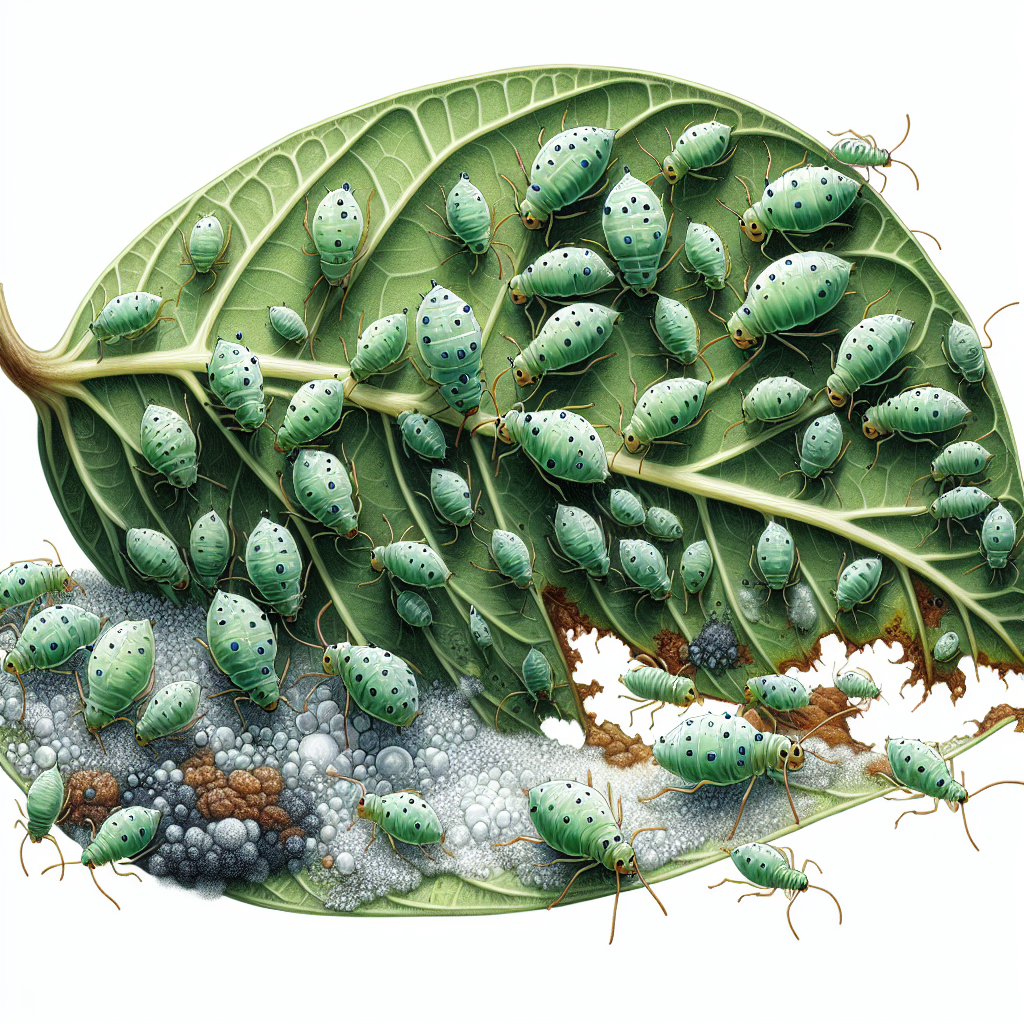
Introduction to blackmargined aphid
The blackmargined aphid, scientifically known as Monellia caryella, is a significant pest in pecan orchards, particularly across the southeastern United States, Texas, and other warm climates where pecans thrive. These small, soft-bodied insects (1-2 mm long) feature a distinctive black margin around their pale green to yellowish bodies, making them identifiable upon close inspection. As phloem feeders, they extract sap from tender leaves and shoots, weakening trees and reducing nut production. Heavy infestations can lead to leaf drop, stunted growth, and secondary issues like sooty mold from their honeydew excretions.
Farmers often overlook early signs, mistaking them for general Aphids pressure, but blackmargined aphids are specialists on pecans and closely related hickories. Their rapid reproduction—up to 10 generations per season—amplifies damage quickly. This guide equips growers with professional diagnostics, lifecycle knowledge, and organic strategies to manage outbreaks effectively. For small farms, timely intervention can preserve 20-50% of yields, as unchecked populations cascade into economic losses exceeding $100 per acre in severe cases. Understanding this pest's biology is key to sustainable pecan production. Check out this Spring Pest Patrol: Organic AI Strategies to Shield Your Crops from Common Invaders for broader organic tips.
Identifying Symptoms & Damage
Spotting blackmargined aphid damage starts with visual scouting on new growth. Primary symptoms include curled, crinkled, or cupped leaves, especially on terminal shoots, due to injected toxins during feeding. Aphids cluster on the undersides of leaves, stems, and buds—up to 200 per leaf in peaks—leaving shiny honeydew trails that attract ants and foster sooty mold, a black fungal growth reducing photosynthesis by 30-50%.
Examine affected leaves: you'll see pale yellowing progressing to necrosis, with premature drop in heavy cases. Shoots appear stunted, with reduced internode length, mimicking nutrient deficiencies or Phytophthora issues. Differentiate from yellow pecan aphids by the black abdominal margins and larger size. Sticky traps near orchard edges catch winged forms migrating from weeds or nearby trees.
Yield impacts are profound: infested trees produce smaller, fewer nuts, with kernel quality dropping due to stress. In young orchards, mortality reaches 10-20% without control. Use a 10x hand lens for confirmation—live aphids flick off when disturbed, unlike scales. Monitor weekly from bud break through kernel fill, focusing on water sprouts and suckers where populations explode. Early diagnosis prevents escalation, saving labor and inputs.
Lifecycle and Progression of blackmargined aphid
Blackmargined aphids overwinter as nymphs or eggs on pecan bark, hatching in early spring (March-April in USDA zones 7-9). Wingless females (stem mothers) colonize buds, birthing live nymphs parthenogenetically every 7-10 days at 75°F. A single female produces 20-50 offspring per generation, with 8-12 cycles yearly in warm regions.
Nymphs (4 instars, 7-10 days) resemble mini adults, darkening margins as they mature. Winged alates form mid-season (June-July) for dispersal, triggered by crowding or host decline. Fall sees sexual forms: males and oviparous females mate, laying overwintering eggs. Peak populations coincide with flush growth, declining with leaf harden-off and natural enemies like ladybugs and parasitoids.
Progression: Scout at pink bud (first nymphs), leaf-out (exponential growth), and nut-set (decline). Temperatures above 90°F or below 45°F suppress activity; humidity >70% boosts outbreaks. Understanding this cycle allows timed interventions, targeting nymphal stages when vulnerable.
Environmental Triggers & Risk Factors
Warm, humid springs (65-85°F, 70%+ RH) ignite blackmargined aphid booms, especially after mild winters sparing eggs. Excessive nitrogen fertilizers promote tender growth, ideal for feeding—avoid >50 lbs/acre post-bud break. Poor airflow in dense canopies traps moisture, concentrating colonies.
Risk spikes near wild hickories or unmanaged borders harboring reservoirs. Ants farming aphids for honeydew worsen spread; drought stress weakens trees, amplifying damage. Companion pests like spider mites compound injury. In pecan monocultures, uniformity heightens vulnerability—diversify with clover understories to foster predators.
Climate shifts extend seasons; monitor via degree-day models (base 50°F). High-risk sites: young orchards (<5 years), irrigated blocks, and low-vigor trees from root rots.
Organic Control & Treatment Plans
Integrated Pest Management (IPM) centers organic tactics. Cultural: Prune for 30-50% canopy openness, destroy water sprouts. Biological: Release Lysiphlebus testaceipes parasitoids (500/acre) and lady beetles. Mechanical: High-pressure water blasts dislodge 70-90% weekly.
Organic Sprays: Insecticidal soaps (2% solution, 3-5 gal/acre) smother on contact—apply evenings to spare predators. Neem oil (0.5-1%) disrupts feeding/molting; rotate with Beauveria bassiana (mycelial fungi). Horticultural oils at dormant bud swell smother eggs (2-3% v/v).
Thresholds: Treat at 20 aphids/leaf (early) or 50 (mid-season). Scout 20 trees/block, hitting 25% infested. For Black pecan aphids co-occurrence, prioritize. Rotate modes to prevent resistance; track via apps. Success: 80-95% control in trials, preserving beneficials.
Preventing blackmargined aphid in the Future
Prevention beats cure. Plant resistant pecan varieties like 'Desirable' or 'Pawnee'. Maintain vigor via balanced fertility (N-P-K 10-10-10) and irrigation scheduling—avoid wet foliage. Border sprays with pyrethrins target migrants.
Encourage predators: yarrow and thyme borders boost lacewings. Reflective mulches deter alates. Dormant oil + sulfur combos kill 95% overwinterers. Annual monitoring from green tip, with sticky traps, flags risks early. Clean tillage buries debris. Long-term: diversify with almond interplants diluting pressure.
Crops Most Affected by blackmargined aphid
Primarily Pecan (Carya illinoinensis), with 90% damage in commercial orchards. Secondary: Hickories (Carya spp.), water hickory. Rare on walnut (walnut) or unrelated nuts like almond. No significant row crop impacts, unlike soybean aphid. Focus patrols on nut trees; young grafts suffer most.