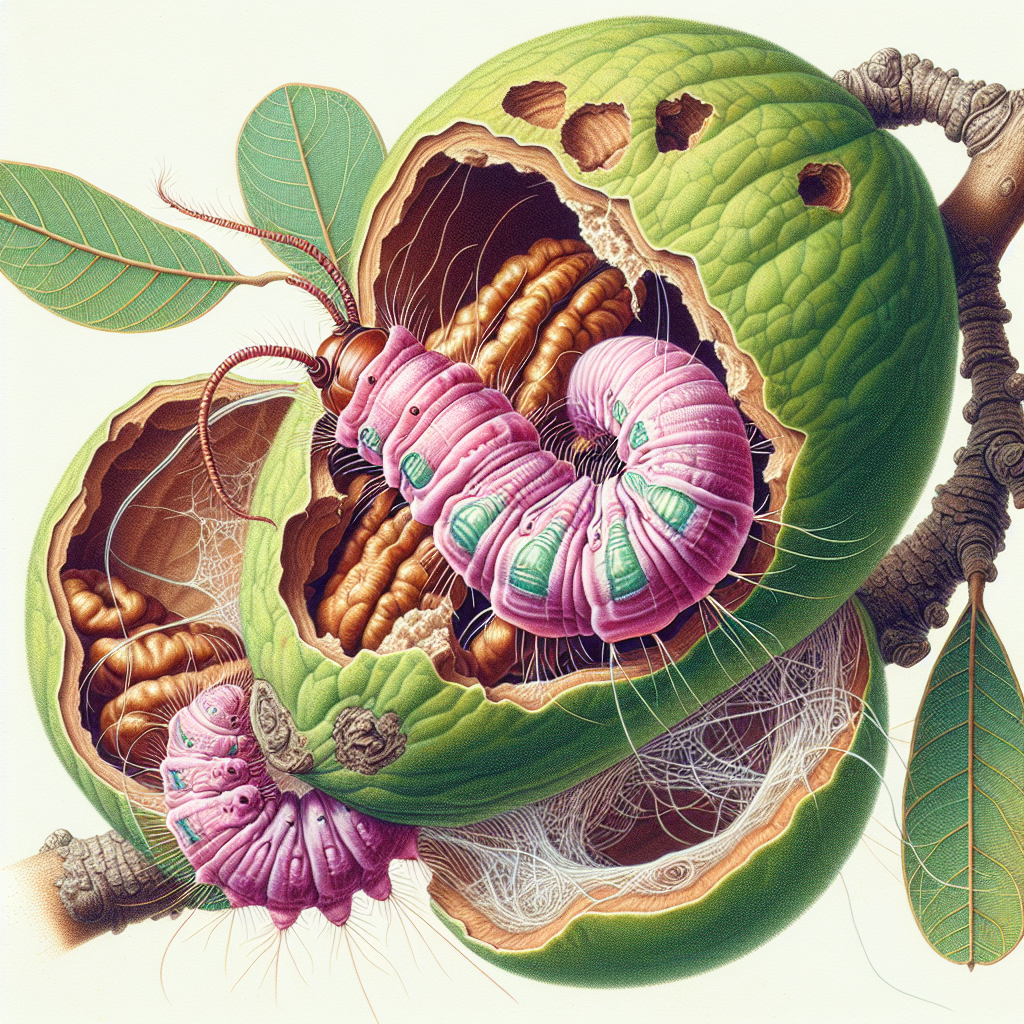
Introduction to hickory shuckworm
The hickory shuckworm, scientifically known as Cydia caryae, stands as one of the most notorious pests in nut orchards, particularly devastating to hickory and pecan trees. Native to North America, this small moth's larvae tunnel into developing nut shucks, leading to significant crop losses that can exceed 50% in unmanaged groves. First identified in the early 20th century, it has plagued growers from the southeastern U.S. to the Midwest, where hickory species like shagbark and pecan thrive.
Understanding this pest is crucial for nut producers, as its cryptic feeding behavior makes early detection challenging. Adult moths are grayish-brown with a wingspan of about 1/2 inch, but the real damage comes from creamy-white to pinkish larvae up to 3/8 inch long, marked by a brown head and five pairs of legs. Infestations weaken trees over time, reducing nut quality and quantity, while secondary fungal infections exacerbate losses. This guide equips farmers with diagnostic tools, lifecycle knowledge, and proven organic strategies to combat hickory shuckworm effectively. For small-scale operations, integrating these methods can safeguard harvests without synthetic chemicals. Recent studies from extension services highlight that vigilant monitoring paired with biological controls yields up to 80% reduction in damage. As climate shifts extend growing seasons, proactive management becomes even more vital for sustainable nut production.
Identifying Symptoms & Damage
Spotting hickory shuckworm damage requires keen observation during nut development stages. Early signs include tiny entry holes (1/16 inch) on green shucks, often frass-filled—silky webbing mixed with nut fragments resembling sawdust. Affected shucks turn brown prematurely, split open, or drop to the orchard floor weeks before maturity, revealing discolored, tunneled kernels inside.
Inspect fallen nuts closely: healthy ones have firm green shucks; infested display ragged edges, black mold (from fungi like Aspergillus entering wounds), and larvae curled within. Larvae may exit via larger holes, leaving pupal cases attached. Severe infestations cause 'shuck bind,' where shucks adhere tightly to shells, preventing proper nut fill and promoting rot. Yield impacts are profound: single larvae can ruin one nut, with populations exceeding 20% infestation triggering 30-70% losses.
Differentiate from similar pests like pecan nut casebearer by shuckworm's silk-lined tunnels and mold association. Use a knife to split suspect shucks—healthy kernels are plump and white; infested are hollow, brown, and webbed. Scout weekly from shuck split (June-July) using beat sheets or pheromone traps. Thresholds: 2-5% infested nuts warrant action. Document patterns via photos for trend analysis, aiding precise interventions. In walnut orchards, similar symptoms may overlap with codling moth, but shuckworm prefers early-season hickories.
Lifecycle and Progression of hickory shuckworm
Cydia caryae completes 1-3 generations annually, synced to host phenology. Adults emerge in late spring (May-June) from overwintered pupae in fallen nuts or bark crevices. Mottled gray moths mate immediately, females laying 50-100 eggs singly on tender shucks or leaves near nuts.
Eggs hatch in 7-10 days into tiny larvae that mine shucks, feeding 3-4 weeks before full maturity (reaching 10 mm). Late instars exit to pupate in litter or shucks, yielding second-generation adults by mid-July. Peak damage occurs August-September from second/third broods, with larvae overwintering in dropped nuts. Full cycle: 45-60 days at 80°F, slower in cooler climates.
Monitor with delta traps baited with sex pheromones (Z-8-dodecenyl acetate), placed 4-5 feet high. First catch signals egglaying; larvae peak 10-14 days later. Degree-day models (base 50°F, 600-800 DD for generations) predict flights accurately. In southern regions, three generations amplify pressure; northern areas see one. Pupae are reddish-brown, 1/4 inch; recognize to disrupt cycles.
Environmental Triggers & Risk Factors
Hickory shuckworm thrives in warm, humid conditions: optimal 75-85°F with >70% RH accelerates development. Drought-stressed trees are vulnerable, as thin shucks invite oviposition. Proximity to wild hickories or unmanaged pecan groves serves as reservoirs, moths dispersing up to 1 mile.
High nitrogen soils promote lush shucks attractive to egglaying. Late-maturing cultivars extend exposure windows. Historical data shows outbreaks post-mild winters, reducing natural mortality. Companion pests like black pecan aphids weaken trees, compounding damage. For insights on hyper-local weather impacts, see Why 80% of Small Farms Battle Weather Disasters - And How Hyper-Local AI Forecasts Can Save Your Harvest.
Soil type matters: sandy loams in river valleys favor infestations via poor litter management. Avoid overwatering, as wet shucks mimic injury sites.
Organic Control & Treatment Plans
Organic management emphasizes IPM: cultural, biological, and targeted botanicals. Start with sanitation—rake and destroy fallen nuts pre-spring (flame or solarize). Disk orchard floors to expose pupae to predators.
Biologicals shine: release Trichogramma wasps (200-300/acre weekly) to parasitize eggs, achieving 40-60% control. Anisopteromalus calandrae targets larvae. Conserve predators like birds, spiders via hedgerows.
Bt kurstaki (e.g., Dipel) at 1-2 lb/acre targets young larvae post-egg hatch, safe for organics (apply evenings, 7-day PHI). Neem oil (0.5-1%) or spinosad disrupts feeding/molting. Pheromone mating disruption with hand-applied ties (400/acre) confuses males, reducing larvae 70%.
Scout-driven sprays: treat at 5% shuck infestation. Kaolin clay (Surround) barriers shucks from egglaying. Success stories report 90% control combining these. Rotate tactics yearly to prevent resistance.
Preventing hickory shuckworm in the Future
Long-term prevention builds resilient orchards. Plant resistant cultivars like 'Desirable' pecan or early-maturing hickories. Prune for airflow, reducing humidity. Mulch minimally; encourage poultry for litter foraging.
Annual trap monitoring forecasts risks. Early harvest unripe nuts if pressure mounts. Cover crops like clover suppress weeds harboring moths. Biodiverse understories attract beneficials. Track via apps for phenology alerts. Year 1 sanitation cuts overwintering by 90%; sustain for multi-year suppression.
Crops Most Affected by hickory shuckworm
Primarily attacks Carya species: shagbark hickory (C. ovata), pignut (C. glabra), and pecan (C. illinoinensis). Pecan suffers most commercially, with shucks ideal for boring. Mockernut and bitternut hickories secondary. Rarely spills to walnut or butternut. Wild stands amplify regional threats to cultivated groves.