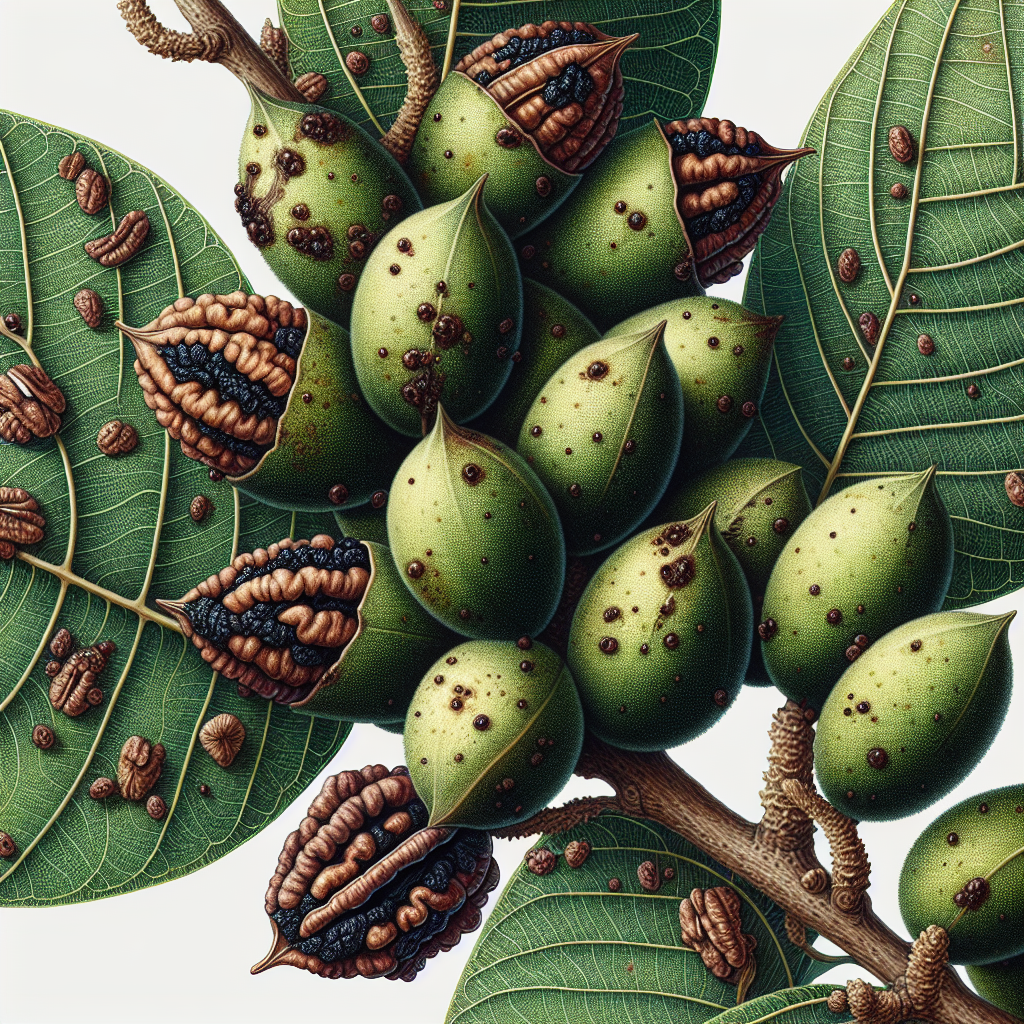
Introduction to pecan scab
Pecan scab, caused by the fungus Cladosporium caryigenum, stands as one of the most economically damaging diseases confronting pecan growers worldwide, particularly in the humid southeastern United States where Pecan production is concentrated. This pathogen thrives in warm, wet conditions, infecting developing nuts, leaves, and rachises, often resulting in black, scab-like lesions that render nuts unmarketable. First identified in the late 19th century, pecan scab has evolved into a persistent challenge, capable of causing 50-100% crop loss in untreated orchards during favorable years. Unlike many foliar diseases, pecan scab's impact extends directly to nut quality, making timely diagnosis and intervention essential for sustaining viable Stuart Pecan and Desirable Pecan yields.
The disease's severity is amplified by its polycyclic nature, producing multiple infection cycles per season, each fueled by rain and high humidity. Growers must integrate cultural practices, resistant varieties, and targeted fungicides to combat it effectively. This definitive guide equips pecan producers with professional-grade diagnostic tools, lifecycle insights, organic management plans, and long-term prevention strategies. By understanding pecan scab's biology and implementing IPM protocols, orchards can achieve consistent, high-quality harvests even in high-risk environments. For small-scale operations, early scouting paired with precision applications minimizes costs while maximizing returns. Check out this Soil Health Mastery blog post for complementary practices that bolster disease resistance.
Identifying Symptoms & Damage
Accurate diagnosis begins with recognizing pecan scab's distinctive symptoms, which manifest differently across plant tissues. On young leaves and leaflets, initial infections appear as small, olive-green spots, roughly 1-3 mm in diameter, often clustered near veins. These lesions darken to black within 7-10 days, developing a velvety fungal mat under humid conditions. Severe foliar infections cause leaf yellowing, premature defoliation, and reduced photosynthesis, weakening tree vigor over multiple seasons.
Nut infections represent the primary economic threat, starting as small, circular, greenish-black spots on shucks during early kernel fill (typically May-June). As lesions expand, they coalesce into large, sunken, corky areas covered in dark fungal spores, imparting a characteristic 'scabbed' appearance. Affected shucks fail to open properly, trapping kernels that blacken and shrivel inside. In advanced cases, entire nut clusters blacken, leading to total crop failure. Rachis and terminal shoots may show elongated lesions, contributing to twig dieback.
Differentiate pecan scab from look-alikes: downy spot (Mycosphaerella caryigena) produces yellow halos absent in scab, while anthracnose features salmon-colored spore masses. Use a 10x hand lens to confirm C. caryigenum's branching conidia. Yield impacts are profound—scab reduces marketable nuts by 30-70% in moderate epidemics, with Grade 1 kernel losses exceeding 50%. Document symptoms with photos during scouting to track progression and inform spray timing. Economic thresholds vary by cultivar susceptibility, with 'Desirable' and 'Stuart' demanding vigilant monitoring.
Lifecycle and Progression of pecan scab
Cladosporium caryigenum follows a polycyclic lifecycle synchronized with pecan phenology, initiating infections from overwintered inoculum on scales, twigs, and fallen debris. Primary spores (conidia) release in spring rains (budbreak to nut set, ~April-May), splashing onto expanding leaves and shucks. Optimal infection occurs at 25-30°C (77-86°F) with leaf wetness exceeding 8 hours, germinating within 6-12 hours to penetrate via stomata or wounds.
Post-infection, mycelium colonizes tissues while producing secondary conidia in acervuli, ready for dispersal by rain splash up to 1 meter. Each wetting event generates new cycles every 2-3 weeks, accumulating 10-20 generations per season. Summer infections peak during 'gel stage' to shell hardening, when shuck stomata remain susceptible. Disease progression accelerates with prolonged leaf wetness (>72 hours cumulative), common in Gulf Coast states.
Overwintering structures include stromata in bark lesions, ensuring annual recurrence without rotation breaks. Spore viability persists through winter, with germination rates >80% in moist conditions. Understanding this cycle informs fungicide timing—protective sprays target pre-infection periods, while curative applications address early lesions. Track degree-days (base 12°C) from budbreak to predict spore release, optimizing scout schedules for commercial Pecan operations.
Environmental Triggers & Risk Factors
Pecan scab epidemics hinge on environmental triggers mirroring the pathogen's niche: prolonged high humidity (>90% RH), frequent rainfall (>25 mm/week), and temperatures 20-32°C. Leaf wetness duration proves most critical—thresholds of 6-9 hours daily sustain infections, extending to 72 hours cumulatively for severe outbreaks. Sandy, poorly drained soils exacerbate issues by promoting splash dispersal and prolonging surface moisture.
Risk factors compound vulnerability: dense canopies trap humidity, while irrigation overhead fosters ideal microclimates. Susceptible cultivars like 'Desirable', 'Stuart', and 'Pawnee' face higher pressure than scab-tolerant 'Elliott' or 'Creek'. Young orchards (<10 years) suffer most due to vigorous flush growth. Nutrient imbalances, particularly excess nitrogen, promote succulent tissues prime for infection. Proximity to wild hickories introduces inoculum bridges.
Climate change intensifies risks with erratic storms and warmer nights sustaining spore production. Monitor downy mildew and anthracnose as co-factors weakening defenses. Soil pH extremes (below 5.8 or above 7.5) stress trees, indirectly favoring scab. Assess site history—fields with prior epidemics retain inoculum for 3-5 years post-clearance.
Organic Control & Treatment Plans
Organic management emphasizes cultural IPM over reliance on synthetic fungicides. Prune for 40-50% canopy openness to enhance drying, targeting watersprouts and deadwood annually. Apply 4-6 inches of organic mulch (pine bark or compost) to suppress soil splash, maintaining 6-inch trunk clearance. Fertilize judiciously—split 100-150 kg/ha N applications avoid lush growth.
Biological controls include Bacillus subtilis (Serenade) and Burkholderia spp. (Vive), applied at 7-10 day intervals from budbreak. Sulfur-based fungicides (e.g., Microthiol Disperss, 5-10 kg/ha) offer moderate protection, rotating with copper hydroxide (Kocide 101, 2-3 kg/ha) to prevent resistance. Neem oil (1-2% emulsions) disrupts spore germination, especially pre-gel stage. Efficacy reaches 60-80% with 12-15 applications timed to wetness events.
Sanitation removes 70% overwinter inoculum—rake debris post-harvest, shred via flail mower, and disk into soil. Companion planting with marigold repels aphids, reducing stress. For outbreaks, strip-pick infected clusters to curb secondary spread. Track via weather stations for 'rainfast' timing—reapply post 25 mm rain. Organic yields match conventional with diligent scouting, sustaining profitability in certified operations.
Preventing pecan scab in the Future
Long-term prevention builds resilient orchards through varietal selection, site preparation, and monitoring. Plant scab-resistant cultivars like 'Elliott', 'Gulf', or 'Sumner' on well-drained, loamy sites with pH 6.0-6.8. Space at 12x12m for airflow, establishing windbreaks to deflect storms. Soil test annually, amending with lime/dolomite for optimal nutrition.
Implement rain guards or micro-sprinklers to minimize wetting. Scout weekly from pink bud to shell split, using 20-tree/10-ha grids; flag 5% incidence triggers sprays. Deploy disease models (e.g., Pecan Scab Forecaster) integrating RH, temp, and wetness for predictive sprays, cutting applications 30%. Rotate OMRI-approved actives; avoid consecutive coppers.
Post-harvest, complete defoliation via flaming or grazing to eliminate inoculum. Cover crop with clover or vetch suppresses splash while fixing nitrogen. Monitor black pecan aphids and hickory shuckworm as synergists. Annual resistance screening via detached leaflet assays guides cultivar upgrades. Integrated approaches yield 20-40% higher marketable nuts over 5 years.
Crops Most Affected by pecan scab
Pecan scab predominantly targets Carya illinoinensis (Pecan), with all commercial cultivars susceptible to varying degrees. Native hickories (C. ovata, C. laciniosa) serve as minor alternate hosts, harboring inoculum near orchards. No significant impact on other nut crops like walnut, almond, or macadamia, though wet conditions favor co-occurring Phytophthora root rot. Water hickory (C. aquatica) shows occasional infections, underscoring host-range limits to genus Carya.